Loading...
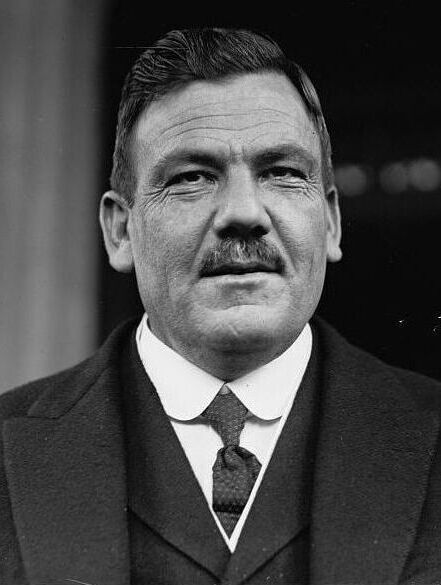
Plutarco Elias Calles
ModernGeneralMexico1877 — 1945
Mexican president who founded the PRI and secularized the state.
Compare Plutarco Elias Calles with another historical figure:
Quick Facts
Born
1877
Died
1945
Country
Mexico
Era
Modern
Occupation
General
Score Overview
Military (10%)40
Political (20%)70
Influence (20%)68
Legacy (20%)40
Leadership (15%)78
Strategy (15%)53
Total Score58.5
Plutarco Elias Calles — Complete Timeline
1915 AD
Governorship of SonoraPolitical Action
Calles served as Governor of Sonora from 1915 to 1919, implementing radical reforms including land redistribution, anti-clerical laws, and labor rights. His governorship established him as a key figure in the Sonoran dynasty and a proponent of revolutionary change.
GovernorshipSonoraReforms
Impact: regionalconstructive
1924 AD
Presidency of MexicoPolitical Action◆ Major
Calles was elected President of Mexico in 1924, serving until 1928. His administration continued revolutionary reforms, including land reform, labor rights, and secularization, but also faced opposition from the Catholic Church and conservative groups.
PresidencyMexican RevolutionReforms
Impact: nationalconstructive
1926 AD
Cristero WarWar◆ Major
Calles enforced anti-clerical laws, including the Calles Law, which restricted the Catholic Church's role in society. This sparked the Cristero War (1926-1929), a violent rebellion by Catholic peasants against the state, resulting in tens of thousands of deaths.
Cristero WarAnti-clericalismReligious Conflict
Impact: nationaldestructive
1928 AD
MaximatoPolitical Action◆ Major
After his presidency, Calles remained the de facto ruler of Mexico during the Maximato (1928-1934), controlling puppet presidents. He continued to influence policy, but his power waned as President L
MaximatoPolitical ControlCárdenas
Impact: national
1929 AD
Founding of the National Revolutionary Party (PNR)Political Action
Calles founded the National Revolutionary Party (PNR) in 1929, which later became the Institutional Revolutionary Party (PRI). This party dominated Mexican politics for over 70 years, institutionalizing the revolution's legacy and centralizing power.
Political PartyPRIInstitutionalization
Impact: nationalconstructive
Detailed Scores
▶View all detailed scores
Military
Strategy
7
Tactics
7
Battles
7
Army Scale
7
War Impact
7
Political
Governance
8
Reform
8
Stability
8
Policy
8
Power
8
Influence
History
9
Global
9
Culture
9
Ideology
10
Legacy
9
People often compare with
See how Plutarco Elias Calles stacks up against other historical figures
Popular Comparisons
Plutarco Elias Calles vs Samori Toure
vs Samori Toure71
Plutarco Elias Calles vs Yitzhak Rabin
vs Yitzhak Rabin66
Plutarco Elias Calles vs Tadeusz Kosciuszko
vs Tadeusz Kosciuszko64
Plutarco Elias Calles vs Nicolas Soult
vs Nicolas Soult63
Plutarco Elias Calles vs Louis Botha
vs Louis Botha61
Plutarco Elias Calles vs Andres de Santa Cruz
vs Andres de Santa Cruz61