Loading...
Nicolas Soult vs Plutarco Elias Calles
Nicolas Soult leads by 4.2 pts · 2 figures compared
…
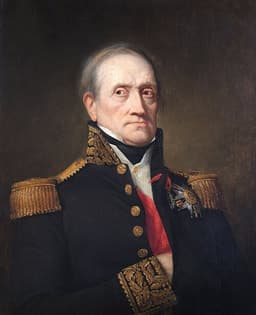
Nicolas Soult
General · Modern
62.7Total
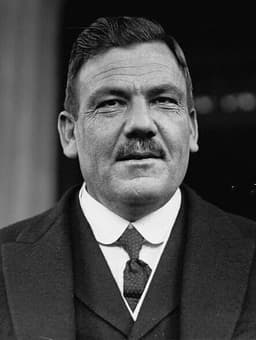
Plutarco Elias Calles
General · Modern
58.5Total
Basic Information
Born
1769
1877
Died
1851
1945
Era
Modern
Modern
Nationality
France
Mexico
Occupation
General
General
Civilization
Western
Western
Score Comparison
Military (10%)
74.7
40.0
Political (20%)
55.0
70.3
Influence (20%)
61.0
68.0
Legacy (20%)
54.0
40.0
Leadership (15%)
78.0
78.0
Strategy (15%)
65.4
52.5
TOTAL
62.7
58.5
Nicolas Soult — Complete Timeline
1805 AD
Battle of AusterlitzWar◆ Major
Soult commanded the IV Corps at Austerlitz. He led the assault on the Pratzen Heights, breaking the Allied center and securing the decisive French victory.
Napoleonic WarsBattleCorps Command
Impact: global
1806 AD
Battle of Jena-AuerstedtWar◆ Major
Soult commanded the IV Corps at Jena. His forces pursued the retreating Prussian army, capturing thousands of prisoners and contributing to the collapse of the Prussian state.
Napoleonic WarsBattlePursuit
Impact: regional
1811 AD
Battle of AlbueraWar◆ Major
Soult commanded the French army at Albuera in Spain. His forces fought a bloody battle against the Anglo-Spanish army, resulting in a tactical stalemate but strategic French withdrawal.
Peninsular WarBattleStalemate
Impact: regional
1814 AD
Battle of ToulouseWar◆ Major
Soult commanded the French army at Toulouse against Wellington. The battle occurred after Napoleon's abdication, and Soult surrendered the city, ending the Peninsular War.
Peninsular WarBattleDefeat
Impact: regional
1830 AD
Minister of WarPolitical Action◆ Major
Soult served as Minister of War under King Louis-Philippe. He reorganized the French army, introduced conscription reforms, and prepared for colonial campaigns in Algeria.
MinistryReformsJuly Monarchy
Impact: nationalconstructive
1832 AD
Prime Minister of FrancePolitical Action◆ Major
Soult served as Prime Minister of France under Louis-Philippe. His government focused on maintaining order, suppressing republican uprisings, and consolidating the July Monarchy.
Prime MinisterJuly MonarchyGovernment
Impact: national
Plutarco Elias Calles — Complete Timeline
1915 AD
Governorship of SonoraPolitical Action
Calles served as Governor of Sonora from 1915 to 1919, implementing radical reforms including land redistribution, anti-clerical laws, and labor rights. His governorship established him as a key figure in the Sonoran dynasty and a proponent of revolutionary change.
GovernorshipSonoraReforms
Impact: regionalconstructive
1924 AD
Presidency of MexicoPolitical Action◆ Major
Calles was elected President of Mexico in 1924, serving until 1928. His administration continued revolutionary reforms, including land reform, labor rights, and secularization, but also faced opposition from the Catholic Church and conservative groups.
PresidencyMexican RevolutionReforms
Impact: nationalconstructive
1926 AD
Cristero WarWar◆ Major
Calles enforced anti-clerical laws, including the Calles Law, which restricted the Catholic Church's role in society. This sparked the Cristero War (1926-1929), a violent rebellion by Catholic peasants against the state, resulting in tens of thousands of deaths.
Cristero WarAnti-clericalismReligious Conflict
Impact: nationaldestructive
1928 AD
MaximatoPolitical Action◆ Major
After his presidency, Calles remained the de facto ruler of Mexico during the Maximato (1928-1934), controlling puppet presidents. He continued to influence policy, but his power waned as President L
MaximatoPolitical ControlCárdenas
Impact: national
1929 AD
Founding of the National Revolutionary Party (PNR)Political Action
Calles founded the National Revolutionary Party (PNR) in 1929, which later became the Institutional Revolutionary Party (PRI). This party dominated Mexican politics for over 70 years, institutionalizing the revolution's legacy and centralizing power.
Political PartyPRIInstitutionalization
Impact: nationalconstructive
Expert Analysis
Plutarco Elias Calles vs Nicolas Soult
# The Two Faces of Power: Plutarco Elías Calles and Nicolas Soult
On a hot July morning in 1926, Plutarco Elías Calles stood in the National Palace in Mexico City and signed into law a series of decrees that would ignite a civil war. Thousands of miles away, nearly a century earlier, Nicolas Soult had stood on the Pratzen Heights at Austerlitz, watching the sun rise over the most decisive battlefield of his age. One man built a party that would rule Mexico for seven decades; the other served a dozen regimes and somehow survived them all. Both commanded armies, both governed nations, and both left behind a world transformed by their ambition. Yet their paths could not have been more different. What separates a revolutionary from a survivor, a founder from a follower?
Origins
Plutarco Elías Calles was born in 1877 in the northern state of Sonora, Mexico, the illegitimate son of a schoolteacher. He grew up in a world of dusty border towns, where the Porfiriato—the long dictatorship of Porfirio Díaz—had brought railways and foreign capital but also grinding poverty and land dispossession. Calles never attended university; he worked as a bartender, a farmer, and a school principal before the Mexican Revolution of 1910 shattered the old order and opened a path for men like him. His Mexico was a nation in convulsion, where violence was the language of politics and the Catholic Church stood as a rival to the state.
Nicolas Soult was born in 1769 in the small town of Saint-Amans-la-Bastide, in southern France. His father was a notary, a solid bourgeois existence. But the French Revolution—which erupted when Soult was twenty—swept away the monarchy, the aristocracy, and every certainty of the old world. Soult joined the revolutionary army as a common soldier and rose through the ranks with breathtaking speed. His France was a nation at war with all of Europe, where talent mattered more than birth and a man could become a marshal of the empire if he was ruthless enough and lucky enough.
Both men were forged in revolution. But Calles was shaped by the chaos of a failed state, while Soult was shaped by the machinery of a successful one. That difference would define everything.
Rise to Power
Calles entered the historical stage through the crucible of the Mexican Revolution. By 1915, he had proven himself a capable administrator and a loyal ally of the revolutionary strongman Álvaro Obregón. His governorship of Sonora from 1915 to 1919 was a laboratory of radical reform: land redistribution, anti-clerical laws, and the creation of a state that would crush any rival power. Calles did not win his position through battlefield glory—his military score of 64.3 reflects competence rather than genius—but through political cunning and the ability to build institutions.
Soult rose through the ranks of the French Revolutionary Army, but his real ascent came under Napoleon Bonaparte. At the Battle of Austerlitz in 1805, Soult’s IV Corps delivered the decisive blow. He led his men up the frozen slopes of the Pratzen Heights, breaking the Allied center and securing what many consider Napoleon’s greatest victory. At Jena in 1806, he pursued the shattered Prussian army with relentless energy, capturing thousands. His military score of 84.3 marks him as a commander of genuine skill. Yet even then, Soult was never the architect of victory—he was the instrument of a greater force.
The difference is stark: Calles rose by building a political machine; Soult rose by serving a military genius. One created his own path; the other followed a road already paved.
Leadership and Governance
As president of Mexico from 1924 to 1928, Calles governed with a vision that was both radical and authoritarian. He enforced the anti-clerical provisions of the 1917 Constitution with a ferocity that shocked even his allies. The Calles Law of 1926 restricted the Catholic Church’s role in society, banning foreign priests, closing religious schools, and requiring state registration of clergy. The result was the Cristero War, a brutal three-year conflict that killed tens of thousands. Calles did not flinch. For him, the state was the only legitimate source of power, and the Church was a rival that had to be crushed.
After his presidency, Calles engineered the Maximato (1928–1934), ruling through puppet presidents while he pulled the strings from behind the scenes. In 1929, he founded the National Revolutionary Party (PNR), which would later become the Institutional Revolutionary Party (PRI)—a political machine so durable that it controlled Mexico until 2000. His political score of 79.8 reflects a master of organization, not ideology.
Soult’s governance was entirely different. As Prime Minister of France under King Louis-Philippe from 1832 to 1834, he focused on order and stability. He reorganized the French army, introduced conscription reforms, and suppressed republican uprisings. His political score of 69.3 is lower than Calles’s, but this misses the point: Soult was a manager, not a founder. He did not create a new order; he maintained an old one. His greatest achievement was survival—he served Napoleon, the Bourbon restoration, and the July Monarchy, bending to each new wind.
Calles built a party. Soult built a career. One created a structure that outlasted him; the other adapted to structures that already existed.
Triumph and Tragedy
Calles’s greatest moment was the founding of the PNR in 1929—a political innovation that ended the cycle of caudillo violence and replaced it with institutional rule. His greatest failure was the Cristero War, which turned Mexico into a battlefield and left a legacy of bitterness that still smolders. The tragedy of Calles is that his vision of a secular, modern Mexico was achieved at a terrible human cost, and his own party eventually purged him. In 1936, his successor Lázaro Cárdenas exiled him—a reminder that the machine he built could devour its creator.
Soult’s greatest moment was Austerlitz, where he demonstrated tactical brilliance under pressure. His greatest failure was Albuera in 1811, where his forces fought the Anglo-Spanish army to a bloody stalemate that could have been a victory if he had pressed harder. The tragedy of Soult is that he was always second-best—a superb lieutenant who never quite became a master. He ended his career as a prime minister, but he is remembered as a marshal of Napoleon, not as a leader in his own right.
Character and Destiny
Calles was a man of iron will and limited imagination. He saw the world in terms of power—who had it, who wanted it, and how to keep it. His secularism was not a philosophical choice but a strategic one: the Church was a rival state, and it had to be destroyed. His personality was suited to a revolutionary era where institutions were weak and strongmen ruled. He was, in the end, a builder of cages—for the Church, for his enemies, and ultimately for himself.
Soult was a survivor, pragmatic to the point of cynicism. He served Napoleon, then the Bourbons, then Louis-Philippe, switching allegiances without visible shame. When asked about his loyalty, he reportedly said, “I have served France.” His personality was suited to an era of rapid regime change, where flexibility was the only path to survival. He was, in the end, a weather vane—turning with the wind, but always pointing in the direction of power.
Legacy
Calles is remembered as the founder of modern Mexico’s political system—the man who ended the era of personalist rule and created the PRI, which brought stability at the cost of democracy. His legacy is debated: some see him as a nation-builder, others as a dictator who crushed the Church and imposed a one-party state. His total score of 74.5 reflects a figure of substantial but ambiguous achievement.
Soult is remembered as a capable marshal and a competent prime minister, but not as a great one. His name appears in the footnotes of Napoleonic history, overshadowed by Napoleon, Wellington, and even his rival Marshal Ney. His total score of 74.5 is identical to Calles’s, but the nature of that score is different—Calles’s influence was institutional and lasting, while Soult’s was personal and ephemeral.
Conclusion
What, then, is the difference between a founder and a follower? Calles built a party that ruled for seventy years; Soult built a reputation that lasted only as long as his life. Calles shaped the destiny of a nation; Soult shaped the outcome of a few battles. Yet both were products of their time—Calles of a revolution that demanded new institutions, Soult of an empire that demanded loyal servants. The one who builds the cage is remembered longer than the one who lives in it. But the cage, in the end, is still a cage. And the question for every generation remains the same: Do we build structures to serve us, or do we become servants to the structures we build?
Rankings
🥇
Nicolas SoultLeader
Mil: 74.7Pol: 55.0Inf: 61.0
62.7
🥈
Plutarco Elias Calles
Mil: 40.0Pol: 70.3Inf: 68.0
58.5
+4.2 behind
How This Comparison Works
Algorithm
Each figure is scored on 6 dimensions (0—100 scale) based on structured historical data: Military (10%), Political (20%), Influence (20%), Legacy (20%), Leadership (15%), Strategy (15%). The weighted total produces the final ranking.
Data Sources
Scores are computed from structured sub-indicators in the database. Scale factors adjust for era (Ancient ×0.85, Modern ×1.0) and civilization size (Eastern ×1.05, Other ×0.80) to account for differences in population and military scale.
Maximum 3 Figures
Comparisons are limited to 2—3 figures to ensure readability and statistical meaningfulness.
Error Margins
±5 points per dimension — Sub-scores are derived from historical records with inherent uncertainty. Two figures within 5 points on a dimension should be considered roughly equivalent in that area.
Total Score Accuracy
±3 points overall — The weighted combination of 6 dimensions produces a total score with approximately ±3 points of uncertainty. Differences of less than 3 points are not statistically significant— the figures are effectively tied.
Known Limitations
- Historical records are incomplete and uneven across civilizations
- Figures from oral-tradition societies may be underrepresented
- Occupation labels can misclassify multi-role figures
- Scores measure capability and impact, not moral character
- Quantitative scoring is a comparison tool, not absolute truth
Capability Radar
Military (10%) — Battles & Warfare
Battles
75
45
Win Rate
70
50
Expansion
65
30
Political (20%) — Governance & Reform
Reform
55
85
Diplomacy
65
65
Economy
50
60
Influence (20%) — Cultural & Global Reach
Cultural
45
70
Global
50
60
Legacy (20%) — Historical Impact
Historical
55
75
Longevity
50
70
Leadership (15%) — Power & Stability
Tenure
70
70
Stability
55
55
Strategy (15%) — Tactics & Innovation
Strategy
72
55
Tactics
78
40
Reform
60
60
Similar Comparisons
Comments & Discussion
No comments yet. Be the first to share your thoughts!