Loading...
Plutarco Elias Calles vs Yitzhak Rabin
Yitzhak Rabin leads by 7.9 pts · 2 figures compared
…
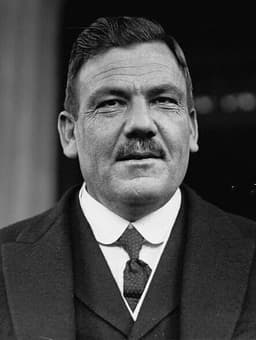
Plutarco Elias Calles
General · Modern
58.5Total
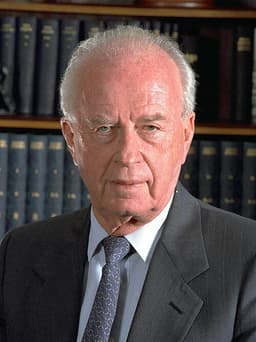
Yitzhak Rabin
General · Modern
66.4Total
Basic Information
Born
1877
1922
Died
1945
—
Era
Modern
Modern
Nationality
Mexico
Israel
Occupation
General
General
Civilization
Western
Middle Eastern
Score Comparison
Military (10%)
40.0
61.7
Political (20%)
70.3
82.0
Influence (20%)
68.0
68.0
Legacy (20%)
40.0
55.0
Leadership (15%)
78.0
78.0
Strategy (15%)
52.5
55.0
TOTAL
58.5
66.4
Plutarco Elias Calles — Complete Timeline
1915 AD
Governorship of SonoraPolitical Action
Calles served as Governor of Sonora from 1915 to 1919, implementing radical reforms including land redistribution, anti-clerical laws, and labor rights. His governorship established him as a key figure in the Sonoran dynasty and a proponent of revolutionary change.
GovernorshipSonoraReforms
Impact: regionalconstructive
1924 AD
Presidency of MexicoPolitical Action◆ Major
Calles was elected President of Mexico in 1924, serving until 1928. His administration continued revolutionary reforms, including land reform, labor rights, and secularization, but also faced opposition from the Catholic Church and conservative groups.
PresidencyMexican RevolutionReforms
Impact: nationalconstructive
1926 AD
Cristero WarWar◆ Major
Calles enforced anti-clerical laws, including the Calles Law, which restricted the Catholic Church's role in society. This sparked the Cristero War (1926-1929), a violent rebellion by Catholic peasants against the state, resulting in tens of thousands of deaths.
Cristero WarAnti-clericalismReligious Conflict
Impact: nationaldestructive
1928 AD
MaximatoPolitical Action◆ Major
After his presidency, Calles remained the de facto ruler of Mexico during the Maximato (1928-1934), controlling puppet presidents. He continued to influence policy, but his power waned as President L
MaximatoPolitical ControlCárdenas
Impact: national
1929 AD
Founding of the National Revolutionary Party (PNR)Political Action
Calles founded the National Revolutionary Party (PNR) in 1929, which later became the Institutional Revolutionary Party (PRI). This party dominated Mexican politics for over 70 years, institutionalizing the revolution's legacy and centralizing power.
Political PartyPRIInstitutionalization
Impact: nationalconstructive
Yitzhak Rabin — Complete Timeline
1967 AD
Chief of Staff during the Six-Day WarWar
As Chief of Staff of the Israel Defense Forces, Rabin commanded the Israeli military during the Six-Day War against Egypt, Jordan, and Syria. Israel captured the Sinai Peninsula, Gaza Strip, West Bank, East Jerusalem, and Golan Heights, reshaping the region.
Six-Day WarTerritorial ExpansionMilitary Victory
Impact: global
1993 AD
Signing of the Oslo AccordsPolitical Action
As prime minister, Rabin signed the Oslo Accords with PLO Chairman Yasser Arafat on the White House lawn. The agreement established the Palestinian Authority and set a framework for Palestinian self-governance in the West Bank and Gaza Strip.
Peace ProcessPalestiniansOslo
Impact: globalconstructive
1995 AD
Assassination at Peace RallyPolitical Action
Rabin was assassinated by Israeli extremist Yigal Amir after a peace rally in Tel Aviv. The assassination shocked Israel and the world, derailing the Oslo peace process and leading to a period of political instability.
AssassinationPeace ProcessPolitical Violence
Impact: globaltragic
Expert Analysis
Yitzhak Rabin vs Plutarco Elias Calles
### The Peacemaker and the Strongman
On a balmy November evening in 1995, Yitzhak Rabin stood on a stage in Tel Aviv, his voice hoarse from singing a song of peace. Moments later, three bullets from an Israeli extremist’s pistol ended his life. Twenty-seven years earlier, in the dusty heat of a Mexican summer, Plutarco Elias Calles was consolidating his grip on a country still bleeding from revolution. One man was assassinated for reaching out to an enemy; the other died in his bed, having built a political machine that would rule Mexico for seven decades. Both were generals who became political architects. But their paths diverged like the desert and the mountain—one seeking reconciliation, the other imposing order through iron will.
### Origins
Yitzhak Rabin was born in 1922 in Jerusalem, then part of British Mandate Palestine, to a family of socialist Zionist pioneers. His father, an immigrant from Ukraine, and his mother, a nurse, instilled in him a pragmatic, secular Zionism. Rabin grew up in a world where survival was the first law—a small Jewish community surrounded by hostile neighbors. He joined the Palmach, the elite strike force of the pre-state Jewish underground, learning war as a farmer-soldier. The land itself taught him patience: the Negev desert yields nothing to haste.
Plutarco Elias Calles, born in 1877 in Guaymas, Sonora, was the son of a failed miner and a mother who died when he was young. Raised by an aunt, he worked as a teacher, a bartender, and a flour mill manager before joining the Mexican Revolution in 1910. His Mexico was a cauldron of feudalism, foreign exploitation, and Catholic power. Calles learned early that power was a thing to be seized, not inherited. He had no reverence for tradition—only for the revolutionary state he would help forge.
### Rise to Power
Rabin’s ascent was methodical, shaped by the existential wars of Israel’s first decades. As a young officer, he commanded the Haganah’s operations in Jerusalem during the 1948 War of Independence. But his defining moment came in 1967, when, as Chief of Staff of the Israel Defense Forces, he oversaw the Six-Day War—a lightning campaign that captured the Sinai, Gaza, the West Bank, and the Golan Heights. Rabin’s military score of 62.0 reflects a commander who was competent but not a genius; his true strength lay in organization and morale. The war made him a national hero, but it also planted seeds of tragedy: the occupation of millions of Palestinians.
Calles rose through the chaos of revolution. As Governor of Sonora from 1915 to 1919, he implemented radical land reforms and crushed the Catholic Church’s influence—earning him enemies among the devout. In 1924, he was elected President of Mexico, his political score of 79.8 signaling a master of the game. Calles understood that power in post-revolutionary Mexico required institutions, not just personalities. He began building a party—the National Revolutionary Party (PNR), founded in 1929—that would transform political feuds into a disciplined machine. Unlike Rabin, whose path was paved by war, Calles’s rise was paved by coalitions and compromises with generals and caciques.
### Leadership & Governance
Rabin’s leadership style was that of a reluctant warrior turned peacemaker. As prime minister in the 1990s, he reversed his own hawkish past, signing the Oslo Accords in 1993 with Yasser Arafat on the White House lawn. The handshake was historic, but Rabin’s military mind saw it as a strategic calculation: Israel could not rule another people forever. His governance was pragmatic, seeking security through territorial compromise. Yet his strategy score of 59.7 suggests that his peace plan was flawed—it left settlements, Jerusalem, and refugees unresolved. Rabin was a general who learned that victory in war is simpler than victory in peace.
Calles governed with the ruthlessness of a revolutionary. His “Calles Law” of 1926 triggered the Cristero War, a bloody three-year conflict in which Catholic rebels fought the state. An estimated 90,000 people died. Calles crushed the rebellion, secularizing education, nationalizing church property, and banning priests from wearing cassocks in public. His leadership score of 75.5 reflects a man who could inspire loyalty and fear in equal measure. But his true innovation was the Maximato—the period from 1928 to 1934 when, though no longer president, he controlled three puppet successors from behind the scenes. Calles built the PRI, a party that would absorb every faction, from generals to labor unions, into a single pyramid of power.
### Triumph & Tragedy
Rabin’s triumph was the Oslo Accords, a moment when hope seemed to conquer history. But his tragedy came on November 4, 1995, when Yigal Amir, a Jewish extremist, shot him at a peace rally in Tel Aviv. Rabin’s death left a void; the peace process collapsed into violence. His legacy score of 68.8 captures a man cut down mid-stride, his work unfinished.
Calles’s triumph was the institutionalization of the Mexican Revolution. He founded a party that would govern Mexico until 2000, stabilizing a nation torn by civil war. But his tragedy was the Maximato’s authoritarianism—the suppression of democracy, the corruption, the one-party rule that stifled dissent. When his chosen successor, Lázaro Cárdenas, exiled him in 1936, Calles died in 1945 in obscurity, a forgotten strongman.
### Character & Destiny
Rabin was a sabra—tough, direct, and introspective. He once said, “You don’t make peace with friends. You make peace with enemies.” His character was forged in the crucible of war, but his destiny was to seek an end to it. He was assassinated because he dared to change.
Calles was a *jefe máximo*—a maximum chief who believed order was the highest virtue. “The revolution is not a bed of roses,” he declared. His destiny was to create a system that outlasted him, but at the cost of freedom. He died knowing his party would survive, but not his name.
### Legacy
Rabin is remembered as a martyr for peace, his image frozen in a photograph with Arafat and Bill Clinton. In Israel, his assassination is a national wound—a reminder of how hatred can destroy hope. The Oslo Accords remain a framework, but the peace they promised is stillborn.
Calles is remembered as the founder of modern Mexico’s political system. The PRI’s long reign brought stability but also corruption and inequality. Today, Mexicans view him ambivalently—a necessary evil who crushed the Church but built the state. His legacy is the party that finally lost power, and the secular Mexico he imposed.
### Conclusion
One general sought to end a conflict; the other sought to control a country. Rabin’s story is a tragedy of a peacemaker killed by his own people. Calles’s story is a cautionary tale of power institutionalized, then calcified. Both men shaped their nations’ destinies with steel and will. But Rabin’s death left a question that still haunts the Middle East: What if he had lived? Calles’s life left a different question: What if he had trusted the people more? In the end, the difference between them is the difference between a peace that was killed and a peace that was never born.
Rankings
🥇
Yitzhak RabinLeader
Mil: 61.7Pol: 82.0Inf: 68.0
66.4
🥈
Plutarco Elias Calles
Mil: 40.0Pol: 70.3Inf: 68.0
58.5
+7.9 behind
How This Comparison Works
Algorithm
Each figure is scored on 6 dimensions (0—100 scale) based on structured historical data: Military (10%), Political (20%), Influence (20%), Legacy (20%), Leadership (15%), Strategy (15%). The weighted total produces the final ranking.
Data Sources
Scores are computed from structured sub-indicators in the database. Scale factors adjust for era (Ancient ×0.85, Modern ×1.0) and civilization size (Eastern ×1.05, Other ×0.80) to account for differences in population and military scale.
Maximum 3 Figures
Comparisons are limited to 2—3 figures to ensure readability and statistical meaningfulness.
Error Margins
±5 points per dimension — Sub-scores are derived from historical records with inherent uncertainty. Two figures within 5 points on a dimension should be considered roughly equivalent in that area.
Total Score Accuracy
±3 points overall — The weighted combination of 6 dimensions produces a total score with approximately ±3 points of uncertainty. Differences of less than 3 points are not statistically significant— the figures are effectively tied.
Known Limitations
- Historical records are incomplete and uneven across civilizations
- Figures from oral-tradition societies may be underrepresented
- Occupation labels can misclassify multi-role figures
- Scores measure capability and impact, not moral character
- Quantitative scoring is a comparison tool, not absolute truth
Capability Radar
Military (10%) — Battles & Warfare
Battles
45
65
Win Rate
50
70
Expansion
30
50
Political (20%) — Governance & Reform
Reform
85
65
Diplomacy
65
85
Economy
60
60
Influence (20%) — Cultural & Global Reach
Cultural
70
55
Global
60
70
Legacy (20%) — Historical Impact
Historical
75
75
Longevity
70
60
Leadership (15%) — Power & Stability
Tenure
70
70
Stability
55
40
Strategy (15%) — Tactics & Innovation
Strategy
55
75
Tactics
40
60
Reform
60
55
Similar Comparisons
Comments & Discussion
Peacemaker Paradox6/16/2026
Rabin’s assassination proves peace is harder than war. He shook Arafat’s hand on the White House lawn in 1993, and three days later a poll showed 61% of Israelis opposed the Oslo Accords. Calles crushed the Cristero War with 50,000 dead—no handshakes needed. Peacemakers die young; strongmen die old. Rabin’s mistake was believing enemies can become partners. Calles knew better: you don’t negotiate with the past, you bury it.
铁腕收割者6/16/2026
卡列斯明白一个真理:墨西哥不需要圣人,需要一个铁匠。他建立了国民革命党,把地方军阀、农民领袖和工会老板全塞进一个笼子里——这个笼子统治了墨西哥71年。拉宾挥舞橄榄枝,结果被自己人用子弹送回1910年。卡列斯在索诺拉沙漠里就学会了一件事:你不把权力铸成铁,它就会化成血。
Oslo’s Lost Soldier6/16/2026
Rabin was a warrior who fell for the oldest trick in history: believing that peace is a destination. His 1994 Nobel Peace Prize came with a naiveté that cost him his life. Calles knew the PRI would outlast him because he built loyalty into the system—patronage, fear, ritual. Rabin left his legacy to an Oslo process that collapsed by 2000. Calles left a dynasty. One died for hope; the other lived to see his machine run Mexico like clockwork.
历史账簿清算人6/16/2026
数据不说谎:拉宾遇刺后,奥斯陆进程存活了五年,直接导致2000年第二次起义,死伤4800人。卡列斯的制度死了吗?没有——今天墨西哥的腐败率、选举舞弊和中央集权全是卡列斯主义的遗产。拉宾是悲剧英雄,但英雄主义不能当政策。卡列斯是操作工,他把革命装进表格里,每天核对数字。别跟我谈理想,看结果。
The Stoic’s Last Lesson6/16/2026
Rabin’s death proves the fatal flaw of secular Zionism: it had no answer to religious absolutism. His assassin, Yigal Amir, cited Halakhic law to justify the kill. Calles faced the Cristeros, a Catholic rebellion, and simply expelled priests and banned Mass. No debate, no dialogue—just state power. Rabin tried to reconcile faith and modernity. Calles knew you can’t reconcile with people who believe God is on their side. He was right.