Loading...
Andres de Santa Cruz vs Plutarco Elias Calles
Andres de Santa Cruz leads by 2.0 pts · 2 figures compared
…
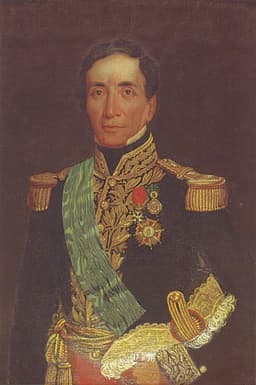
Andres de Santa Cruz
General · Modern
60.5Total
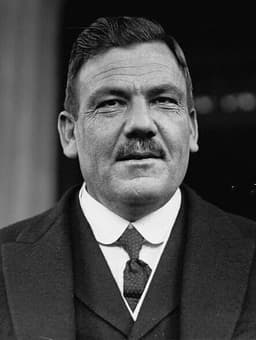
Plutarco Elias Calles
General · Modern
58.5Total
Basic Information
Born
1792
1877
Died
1865
1945
Era
Modern
Modern
Nationality
Bolivia
Mexico
Occupation
General
General
Civilization
Western
Western
Score Comparison
Military (10%)
67.5
40.0
Political (20%)
59.3
70.3
Influence (20%)
62.0
68.0
Legacy (20%)
50.0
40.0
Leadership (15%)
68.0
78.0
Strategy (15%)
66.3
52.5
TOTAL
60.5
58.5
Andres de Santa Cruz — Complete Timeline
1823 AD
Battle of ZepitaWar
Santa Cruz commanded Peruvian forces in a victory over Spanish royalists at Zepita during the Peruvian War of Independence. This battle enhanced his military reputation and contributed to the eventual liberation of Peru from Spanish rule.
Peruvian War of IndependenceBattleLiberation
Impact: regional
1826 AD
Presidency of PeruPolitical Action
Santa Cruz served as President of the Council of Government of Peru from 1826 to 1827, effectively ruling the country. His administration focused on centralizing power and organizing the state, but he was overthrown by a rebellion led by Agust
PresidencyPeruCentralization
Impact: national
1829 AD
Presidency of BoliviaPolitical Action◆ Major
Santa Cruz became President of Bolivia in 1829, serving until 1839. He implemented administrative reforms, stabilized the economy, and modernized the military, establishing Bolivia as a more coherent state after the chaos following independence.
PresidencyBoliviaReforms
Impact: nationalconstructive
1836 AD
War of the ConfederationWar◆ Major
Chile and Argentina declared war on the Peru-Bolivia Confederation, viewing it as a threat to the balance of power. Santa Cruz led the confederation's forces in a conflict that lasted until 1839, ultimately resulting in the confederation's defeat.
WarChileArgentinaConfederation
Impact: regional
Creation of the Peru-Bolivia ConfederationPolitical Action
Santa Cruz established the Peru-Bolivia Confederation, uniting Bolivia and Peru into a single state with himself as Supreme Protector. This confederation aimed to create a powerful Andean nation and challenged the regional influence of Chile and Argentina.
ConfederationUnificationAndean Power
Impact: regional
1839 AD
Battle of YungayWar
Santa Cruz's confederation forces were decisively defeated by the Chilean army at the Battle of Yungay. This defeat led to the dissolution of the Peru-Bolivia Confederation and forced Santa Cruz into exile, ending his political project.
BattleDefeatEnd of Confederation
Impact: regionaltragic
Exile and DeathPolitical Action
After the defeat at Yungay, Santa Cruz fled to Ecuador and later to France. He spent the rest of his life in exile, making unsuccessful attempts to return to power. He died in France in 1865, never regaining his former influence.
ExileDeathFailure
Impact: nationaltragic
Plutarco Elias Calles — Complete Timeline
1915 AD
Governorship of SonoraPolitical Action
Calles served as Governor of Sonora from 1915 to 1919, implementing radical reforms including land redistribution, anti-clerical laws, and labor rights. His governorship established him as a key figure in the Sonoran dynasty and a proponent of revolutionary change.
GovernorshipSonoraReforms
Impact: regionalconstructive
1924 AD
Presidency of MexicoPolitical Action◆ Major
Calles was elected President of Mexico in 1924, serving until 1928. His administration continued revolutionary reforms, including land reform, labor rights, and secularization, but also faced opposition from the Catholic Church and conservative groups.
PresidencyMexican RevolutionReforms
Impact: nationalconstructive
1926 AD
Cristero WarWar◆ Major
Calles enforced anti-clerical laws, including the Calles Law, which restricted the Catholic Church's role in society. This sparked the Cristero War (1926-1929), a violent rebellion by Catholic peasants against the state, resulting in tens of thousands of deaths.
Cristero WarAnti-clericalismReligious Conflict
Impact: nationaldestructive
1928 AD
MaximatoPolitical Action◆ Major
After his presidency, Calles remained the de facto ruler of Mexico during the Maximato (1928-1934), controlling puppet presidents. He continued to influence policy, but his power waned as President L
MaximatoPolitical ControlCárdenas
Impact: national
1929 AD
Founding of the National Revolutionary Party (PNR)Political Action
Calles founded the National Revolutionary Party (PNR) in 1929, which later became the Institutional Revolutionary Party (PRI). This party dominated Mexican politics for over 70 years, institutionalizing the revolution's legacy and centralizing power.
Political PartyPRIInstitutionalization
Impact: nationalconstructive
Expert Analysis
Andres de Santa Cruz vs Plutarco Elias Calles
# The Unifiers and the Strongmen: Andrés de Santa Cruz and Plutarco Elías Calles
In the high Andean passes of Bolivia, a general once dreamed of a vast confederation that would restore the glory of the Inca Empire. In the dusty plains of Sonora, another soldier envisioned a Mexico stripped of clerical power, remade by revolutionary zeal. Andrés de Santa Cruz and Plutarco Elías Calles never met, yet their lives trace a shared arc of ambition, power, and the limits of personal rule. One built a nation only to see it shattered by war; the other built a party that would dominate his country for seven decades. What drives such different outcomes? The answer lies in the soil of their origins, the temper of their times, and the shape of their character.
Origins
Santa Cruz was born in 1792 in La Paz, the son of a Spanish colonel and a Quechua noblewoman. He grew up straddling two worlds—the colonial elite and the indigenous majority—and this dual inheritance would later fuel his grandest vision: a federation that united Peru and Bolivia, blending the old Inca heartland with the new republican order. His education was military, his instincts pragmatic. The wars of independence had shattered Spanish authority, and Santa Cruz saw in the chaos an opportunity to rebuild on a grand scale.
Calles, born in 1877 in the northern state of Sonora, came from a humbler line. His father was a schoolteacher, his mother a devout Catholic; both died when he was young. He worked as a bartender, a teacher, and a miller before the Mexican Revolution swept him into politics. Where Santa Cruz inherited a sense of imperial destiny, Calles inherited a rage against the old order—the haciendas, the Church, the entrenched oligarchy. His Mexico was not a lost empire to be restored, but a broken nation to be remade.
Rise to Power
Santa Cruz’s path was forged in battle. At the Battle of Zepita in 1823, he commanded Peruvian forces against Spanish royalists and won a decisive victory, earning a reputation as a skilled tactician. But his military score of 59.3 suggests he was more a political operator than a battlefield genius. By 1826, he had maneuvered into the presidency of Peru’s Council of Government, effectively ruling the country. Two years later, he became President of Bolivia, and there he found his true stage. He stabilized the economy, reformed the bureaucracy, and built a disciplined army—laying the groundwork for his masterstroke.
Calles rose through the chaos of revolution. As Governor of Sonora from 1915 to 1919, he implemented radical land reforms and crushed Catholic influence with an iron hand. His military score of 64.3 was modest, but his political score of 79.8 reveals the true source of his power: he understood organization. In 1924, he was elected President of Mexico, and he used the office to enforce the anticlerical laws that sparked the Cristero War—a brutal conflict from 1926 to 1929 that pitted the state against Catholic rebels. Calles did not flinch. He saw the Church as a rival to state authority, and he meant to break it.
Leadership & Governance
Santa Cruz governed as a modernizing autocrat. He standardized currency, improved roads, and promoted education. His leadership score of 79.0 reflects a ruler who commanded loyalty through competence and vision. In 1836, he created the Peru-Bolivia Confederation, uniting the two nations under his rule as Supreme Protector. It was a bold experiment in regional integration, designed to counterbalance the power of Argentina and Chile. But his strategy score of 59.3 suggests a weakness: he underestimated the hostility of his neighbors.
Calles governed as a machine builder. After his presidency ended in 1928, he did not retire. Instead, he engineered the Maximato—a period from 1928 to 1934 in which he remained the de facto ruler of Mexico, installing puppet presidents while pulling the strings from behind the scenes. In 1929, he founded the National Revolutionary Party (PNR), which would later become the Institutional Revolutionary Party (PRI). This was his true legacy: a political system that controlled elections, co-opted rivals, and maintained stability for generations. Where Santa Cruz built a state, Calles built a party.
Triumph & Tragedy
Santa Cruz’s triumph was the Confederation itself—a moment when the Andean world seemed poised to reclaim its historical unity. But it was also his tragedy. Chile and Argentina, fearing a rival power, declared war in 1836. The War of the Confederation ended at the Battle of Yungay in 1839, where Santa Cruz’s forces were decisively crushed. He fled to Ecuador, then to France, and died in exile in 1865, a broken dreamer. His total score of 67.8 reflects a life of high ambition undone by strategic miscalculation.
Calles’s triumph was the Cristero War’s end in 1929, which left the Mexican state supreme over the Church. His tragedy was subtler: he created a political machine so effective that it eventually consumed him. In 1934, his chosen successor, Lázaro Cárdenas, turned against him and exiled him to the United States. Calles returned to Mexico in 1941 and died in 1945, a patriarch who outlived his own power. His total score of 74.5 reflects a legacy of institutional strength, but also of authoritarian control.
Character & Destiny
Santa Cruz was a visionary who saw himself as a unifier. His mixed heritage gave him a unique perspective, but it also left him isolated—trusted fully by neither the Spanish nor the indigenous, neither the Peruvians nor the Bolivians. He was a man of grand designs but fragile alliances. His downfall came not from lack of courage, but from lack of political depth. He could build a confederation, but he could not hold it together.
Calles was a builder of systems. He was cold, calculating, and relentless. His anticlericalism was not mere bigotry; it was a tool to centralize power. He understood that revolutions die unless they are institutionalized. Where Santa Cruz dreamed of empires, Calles dreamed of committees. His personality—ruthless, patient, strategic—shaped a nation for decades after his death.
Legacy
Santa Cruz is remembered in Bolivia and Peru as a flawed hero, a man who nearly achieved a great union but failed at the final hurdle. His influence score of 76.2 and legacy score of 68.9 place him as a significant but tragic figure—a warning about the limits of personal ambition in a world of rival states.
Calles is remembered as the father of the PRI, the party that ruled Mexico until 2000. His influence score of 78.0 and legacy score of 72.0 reflect a more enduring impact. But his legacy is also contested: the Cristero War left deep wounds, and the PRI’s authoritarianism stifled democracy for decades. He is a figure of both creation and control.
Conclusion
Santa Cruz and Calles were both products of their age—the age of nation-building in the Americas. One tried to unite two nations and was destroyed by their neighbors; the other built a party that absorbed a nation and endured for generations. The difference lies in their vision: Santa Cruz reached for the past, for an Inca dream of unity; Calles reached for the future, for a system of power that could survive any leader. One left a memory; the other left a machine. In the end, the machine outlasted the dream.
Rankings
🥇
Andres de Santa CruzLeader
Mil: 67.5Pol: 59.3Inf: 62.0
60.5
🥈
Plutarco Elias Calles
Mil: 40.0Pol: 70.3Inf: 68.0
58.5
+2.0 behind
How This Comparison Works
Algorithm
Each figure is scored on 6 dimensions (0—100 scale) based on structured historical data: Military (10%), Political (20%), Influence (20%), Legacy (20%), Leadership (15%), Strategy (15%). The weighted total produces the final ranking.
Data Sources
Scores are computed from structured sub-indicators in the database. Scale factors adjust for era (Ancient ×0.85, Modern ×1.0) and civilization size (Eastern ×1.05, Other ×0.80) to account for differences in population and military scale.
Maximum 3 Figures
Comparisons are limited to 2—3 figures to ensure readability and statistical meaningfulness.
Error Margins
±5 points per dimension — Sub-scores are derived from historical records with inherent uncertainty. Two figures within 5 points on a dimension should be considered roughly equivalent in that area.
Total Score Accuracy
±3 points overall — The weighted combination of 6 dimensions produces a total score with approximately ±3 points of uncertainty. Differences of less than 3 points are not statistically significant— the figures are effectively tied.
Known Limitations
- Historical records are incomplete and uneven across civilizations
- Figures from oral-tradition societies may be underrepresented
- Occupation labels can misclassify multi-role figures
- Scores measure capability and impact, not moral character
- Quantitative scoring is a comparison tool, not absolute truth
Capability Radar
Military (10%) — Battles & Warfare
Battles
60
45
Win Rate
55
50
Expansion
55
30
Political (20%) — Governance & Reform
Reform
65
85
Diplomacy
60
65
Economy
55
60
Influence (20%) — Cultural & Global Reach
Cultural
45
70
Global
35
60
Legacy (20%) — Historical Impact
Historical
50
75
Longevity
40
70
Leadership (15%) — Power & Stability
Tenure
60
70
Stability
40
55
Strategy (15%) — Tactics & Innovation
Strategy
65
55
Tactics
60
40
Reform
50
60
Similar Comparisons
Comments & Discussion
Andean Empire-Builder6/16/2026
Santa Cruz was the better visionary by far. His Peru-Bolivia Confederation wasn’t just fantasy—it nearly worked, uniting key economic zones like Arequipa and Potosí into a military and trade powerhouse. But Chile’s invasion at the Battle of Yungay in 1839 crushed it, driven by Santiago’s fear of a rival. Calles? He just traded his bartender’s apron for a president’s sash, then spent a decade persecuting Catholics and rigging elections. No grand federation, just a machine.
Militia Mechanic6/16/2026
Calles’ pragmatism outshines Santa Cruz’s romantic dreams. The Cristero War from 1926-1929 proves Calles understood power: he starved the Church of funds, nationalized property, and built the PRI to last 71 years. Santa Cruz’s confederation lasted three years before Chile handed him exile. A federation with no sustainable political base? That’s a castle made of alpaca wool. Calles gave Mexico stability through institutions, not Inca nostalgia.
历史质疑者6/16/2026
吹捧卡拉斯的所谓制度?别傻了!他那个国民党(PRI)根本就是独裁披上了民主的马甲。圣克鲁斯至少敢直面查尔斯智利的挑战,战败是军事实力悬殊,不是理想有错。卡拉斯却躲在暗处,用“最高酋长”的虚名操控三任傀儡总统,镇压了3万名农民起义者,还驱逐了教堂里的修女。圣克鲁斯有胆量,卡拉斯只有算计。
双面联邦客6/16/2026
两人都是军阀出身,只是舞台不同。圣克鲁斯继承印加血统,却忘了玻利维亚和秘鲁的山路连信使都跑断腿——1836年建立的联邦,内部关税和语言冲突早埋下伏笔。卡拉斯更毒辣,他知道墨西哥人多信仰圣母,就签了《阿马斯公约》伪装和解,暗地里重组军队清除异己。圣克鲁斯要的是帝国,卡拉斯要的是机器;一个被历史记住,一个被机器吞噬。
Historian2056/16/2026
Placing these two on a Greco-Roman scale, Santa Cruz is Pyrrhus—audacious, culturally hybrid, doomed by his own ambition. Calles is more like Sulla, who reshaped Rome’s constitution to serve his clique before retiring. Both built on blood: Santa Cruz’s war with the Salaverry government in 1835 cost thousands, while Calles’ “maximum dictatorship” left 80,000 dead in the Cristero conflict alone. But while Sulla’s reforms outlived him, Santa Cruz’s project died with his exile in 1843. Legacy favors