Loading...
Louis Botha vs Plutarco Elias Calles
Louis Botha leads by 2.6 pts · 2 figures compared
…
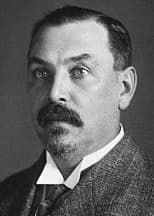
Louis Botha
General · Modern
61.1Total
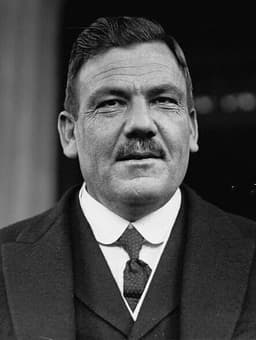
Plutarco Elias Calles
General · Modern
58.5Total
Basic Information
Born
1862
1877
Died
1919
1945
Era
Modern
Modern
Nationality
South Africa
Mexico
Occupation
General
General
Civilization
Other
Western
Score Comparison
Military (10%)
61.7
40.0
Political (20%)
70.0
70.3
Influence (20%)
56.7
68.0
Legacy (20%)
50.0
40.0
Leadership (15%)
79.8
78.0
Strategy (15%)
58.0
52.5
TOTAL
61.1
58.5
Louis Botha — Complete Timeline
1899 AD
Battle of ColensoWar◆ Major
Botha commanded Boer forces at the Battle of Colenso during the Second Boer War. His troops repelled a British attack under General Buller, inflicting heavy casualties and boosting Boer morale.
Second Boer WarBattleVictory
Impact: regional
1900 AD
Boer War Guerrilla CommanderWar◆ Major
After the British captured Pretoria, Botha led Boer guerrilla forces in the Transvaal. He conducted hit-and-run attacks against British columns, prolonging the war and becoming a symbol of Afrikaner resistance.
Second Boer WarGuerrillaResistance
Impact: regional
1902 AD
Signed the Treaty of VereenigingPolitical Action
Botha, as a leading Boer general, signed the Treaty of Vereeniging which ended the Second Boer War. The treaty granted the Boer republics self-government under British sovereignty and promised eventual self-rule.
TreatyPeaceSecond Boer War
Impact: regional
1910 AD
First Prime Minister of the Union of South AfricaPolitical Action
Botha became the first Prime Minister of the newly formed Union of South Africa. He led a coalition government that sought to reconcile Afrikaners and English-speaking whites, while implementing segregationist policies.
Prime MinisterUnion of South AfricaFounding
Impact: nationalconstructive
1914 AD
Suppressed the 1914 RebellionWar◆ Major
Botha personally led government forces to suppress the Maritz Rebellion, an Afrikaner uprising against South Africa's entry into World War I. He defeated the rebels, asserting state authority and maintaining support for the British Empire.
RebellionWorld War ISuppression
Impact: national
1915 AD
Conquered German South West AfricaWar◆ Major
Botha commanded South African forces in the invasion and conquest of German South West Africa. The campaign succeeded, and the territory was later administered by South Africa under a League of Nations mandate.
World War IConquestGerman South West Africa
Impact: regional
Plutarco Elias Calles — Complete Timeline
1915 AD
Governorship of SonoraPolitical Action
Calles served as Governor of Sonora from 1915 to 1919, implementing radical reforms including land redistribution, anti-clerical laws, and labor rights. His governorship established him as a key figure in the Sonoran dynasty and a proponent of revolutionary change.
GovernorshipSonoraReforms
Impact: regionalconstructive
1924 AD
Presidency of MexicoPolitical Action◆ Major
Calles was elected President of Mexico in 1924, serving until 1928. His administration continued revolutionary reforms, including land reform, labor rights, and secularization, but also faced opposition from the Catholic Church and conservative groups.
PresidencyMexican RevolutionReforms
Impact: nationalconstructive
1926 AD
Cristero WarWar◆ Major
Calles enforced anti-clerical laws, including the Calles Law, which restricted the Catholic Church's role in society. This sparked the Cristero War (1926-1929), a violent rebellion by Catholic peasants against the state, resulting in tens of thousands of deaths.
Cristero WarAnti-clericalismReligious Conflict
Impact: nationaldestructive
1928 AD
MaximatoPolitical Action◆ Major
After his presidency, Calles remained the de facto ruler of Mexico during the Maximato (1928-1934), controlling puppet presidents. He continued to influence policy, but his power waned as President L
MaximatoPolitical ControlCárdenas
Impact: national
1929 AD
Founding of the National Revolutionary Party (PNR)Political Action
Calles founded the National Revolutionary Party (PNR) in 1929, which later became the Institutional Revolutionary Party (PRI). This party dominated Mexican politics for over 70 years, institutionalizing the revolution's legacy and centralizing power.
Political PartyPRIInstitutionalization
Impact: nationalconstructive
Expert Analysis
Louis Botha vs Plutarco Elias Calles
# The Revolutionary and the Reconciler
On a dusty afternoon in 1926, Plutarco Elías Calles stood before the Mexican Congress and signed into law a decree that would ignite a firestorm: the Calles Law, stripping the Catholic Church of property rights and restricting religious worship. Thousands of miles away, a decade earlier, Louis Botha had faced his own moment of national fracture—the 1914 Maritz Rebellion, when bitter Afrikaner veterans rose against the Union of South Africa. Botha, himself a former Boer general, did not crush them with ideological fury; he rode out personally, rifle in hand, to bring them back into the fold. Two generals, two nations forged in revolution and war, yet their paths diverged like rivers splitting from the same mountain. Why did one build a party that dominated for seven decades, while the other built a nation that could not hold together?
Origins
Calles was born in 1877 in Guaymas, Sonora, a son of the hardscrabble Mexican north. His father, a schoolteacher, died when Calles was young, leaving him to rise through sheer ambition—first as a bartender, then a school inspector, then a revolutionary. He entered politics under the shadow of Porfirio Díaz’s dictatorship, and the violence of the Mexican Revolution forged in him a conviction that the state must be absolute. The Church, the landed elite, the old order—all were enemies to be broken.
Louis Botha, born in 1862 in Natal, grew up on the South African veld, a child of Boer farmers who had trekked inland to escape British rule. His world was one of isolation, self-reliance, and a deep Calvinist faith. Where Calles saw institutions to be dismantled, Botha saw communities to be defended. The Boer republics were not ideological projects; they were pastoral homelands, and Botha’s loyalty was to his people, not to a doctrine.
Rise to Power
Calles rose through the chaos of revolution. In 1915, as Governor of Sonora, he implemented radical land redistribution and attacked the Catholic Church’s influence—early moves that marked him as a man of uncompromising reform. By 1924, he was elected President of Mexico, inheriting a country still bleeding from a decade of civil war. His power was not given; it was seized from the wreckage.
Botha’s rise was different. He became a military leader in the Second Boer War (1899–1902) at the Battle of Colenso, where his troops repelled a British assault with devastating accuracy. When the war turned to guerrilla fighting, Botha commanded the Transvaal’s Boer forces, striking British supply lines with a ferocity that earned him respect even from his enemies. But when defeat came, Botha did not flee into exile or vow eternal resistance. He signed the Treaty of Vereeniging in 1902, accepting British sovereignty in exchange for promises of self-government. It was a pragmatic choice—a surrender that saved his people from annihilation.
Leadership & Governance
Calles governed as a modernizer with an iron fist. His presidency (1924–1928) continued revolutionary land reforms, expanded education, and built infrastructure, but his defining legacy was the Calles Law of 1926. The Cristero War that followed—a brutal three-year conflict between government forces and Catholic rebels—killed tens of thousands. Calles did not flinch. He saw the Church as a rival state, and he meant to destroy it. After his presidency, he engineered the Maximato (1928–1934), ruling through puppet presidents while founding the National Revolutionary Party (PNR) in 1929. This was his masterstroke: a party that would absorb all factions—generals, labor unions, peasants—into a single, unchallengeable machine.
Botha governed as a conciliator. As first Prime Minister of the Union of South Africa in 1910, he faced the impossible task of uniting Boer and Briton, Afrikaner and English-speaker, after a war that had left deep scars. He formed a coalition government, sought cooperation with British imperial authorities, and in 1915 led South African forces to conquer German South West Africa—a campaign that expanded the Union’s territory and proved his loyalty to the Crown. But his greatest test came in 1914, when bitter Afrikaner veterans rose in rebellion. Botha did not call for mass executions. He rode out personally, leading government forces to suppress the revolt with minimal bloodshed, then offered amnesty to many. He was a general who wielded power to heal, not to crush.
Triumph & Tragedy
Calles’s triumph was the PNR, a political machine so resilient that it evolved into the Institutional Revolutionary Party (PRI), which ruled Mexico uninterrupted until 2000. His tragedy was the Cristero War—a conflict born of his own intransigence, which left a legacy of distrust between church and state that still lingers.
Botha’s triumph was the Union of South Africa itself—a nation born from the ashes of war, where he managed to keep Boer and Briton working together for nearly a decade. His tragedy was that the union he built was built on the exclusion of the black majority. The Treaty of Vereeniging had left the question of African political rights to the future, and Botha, focused on white reconciliation, did nothing to advance them. The seeds of apartheid were sown in his era.
Character & Destiny
Calles was a man of granite. He believed in the state as the sole arbiter of truth, and he would not compromise with what he saw as superstition or privilege. His personality shaped a destiny of conflict: he created a party system that brought stability but at the cost of democracy, and he secularized Mexico but at the cost of a civil war. He was a revolutionary who could not stop being a revolutionary.
Botha was a man of the veld—pragmatic, patient, and deeply tied to his people. He understood that survival required accommodation, not annihilation. His personality shaped a destiny of reconciliation, but also of limitation: he united white South Africans at the expense of black South Africans, and he accepted British dominion rather than risk total ruin. He was a warrior who became a statesman, but he could not see beyond the horizon of his own tribe.
Legacy
Calles is remembered as the "Jefe Máximo" of Mexico—the founder of a party system that brought order but also authoritarian rule. His total score of 74.5 reflects a leader of immense political skill (79.8) but with a military record (64.3) overshadowed by internal conflict. In Mexico, he is both vilified for the Cristero War and credited with creating the modern state.
Botha, with a total score of 73.4, is remembered as a founding father of South Africa—a man of exceptional leadership (89.6) and political acumen (83.0), but whose legacy (66.8) is tainted by the racial order he helped entrench. In South Africa, he is honored by Afrikaners as a unifier, but criticized by others for failing to extend that unity to all.
Conclusion
Calles and Botha faced the same question: how to build a nation from the ruins of war. Calles answered with a party that absorbed all dissent; Botha answered with a union that reconciled old enemies. One created a machine that lasted a century; the other created a nation that could not last a generation. Perhaps the difference lies in what they were willing to sacrifice. Calles sacrificed his people’s faith for the state’s power; Botha sacrificed his people’s future for the present’s peace. In the end, both built something that stood—but neither built something that could stand forever. And that, perhaps, is the tragedy of all nation-builders: they shape the future, but they cannot control it.
Rankings
🥇
Louis BothaLeader
Mil: 61.7Pol: 70.0Inf: 56.7
61.1
🥈
Plutarco Elias Calles
Mil: 40.0Pol: 70.3Inf: 68.0
58.5
+2.6 behind
How This Comparison Works
Algorithm
Each figure is scored on 6 dimensions (0—100 scale) based on structured historical data: Military (10%), Political (20%), Influence (20%), Legacy (20%), Leadership (15%), Strategy (15%). The weighted total produces the final ranking.
Data Sources
Scores are computed from structured sub-indicators in the database. Scale factors adjust for era (Ancient ×0.85, Modern ×1.0) and civilization size (Eastern ×1.05, Other ×0.80) to account for differences in population and military scale.
Maximum 3 Figures
Comparisons are limited to 2—3 figures to ensure readability and statistical meaningfulness.
Error Margins
±5 points per dimension — Sub-scores are derived from historical records with inherent uncertainty. Two figures within 5 points on a dimension should be considered roughly equivalent in that area.
Total Score Accuracy
±3 points overall — The weighted combination of 6 dimensions produces a total score with approximately ±3 points of uncertainty. Differences of less than 3 points are not statistically significant— the figures are effectively tied.
Known Limitations
- Historical records are incomplete and uneven across civilizations
- Figures from oral-tradition societies may be underrepresented
- Occupation labels can misclassify multi-role figures
- Scores measure capability and impact, not moral character
- Quantitative scoring is a comparison tool, not absolute truth
Capability Radar
Military (10%) — Battles & Warfare
Battles
65
45
Win Rate
70
50
Expansion
60
30
Political (20%) — Governance & Reform
Reform
65
85
Diplomacy
70
65
Economy
55
60
Influence (20%) — Cultural & Global Reach
Cultural
45
70
Global
50
60
Legacy (20%) — Historical Impact
Historical
55
75
Longevity
40
70
Leadership (15%) — Power & Stability
Tenure
60
70
Stability
50
55
Strategy (15%) — Tactics & Innovation
Strategy
72
55
Tactics
68
40
Reform
55
60
Similar Comparisons
Comments & Discussion
CartridgeCounter6/16/2026
Botha "rode out personally" like a knight errant, which sounds noble but was a tactical necessity. The Maritz Rebellion wasn't a church war—it was a fractured Afrikaner family feud. Calles had institutional power behind him; Botha had a horse and a prayer. The difference isn’t ideology, it’s logistics: one general controlled railways and telegraphs, the other relied on personal charisma and a Mauser. History romanticizes the rider, but it’s the bureaucrat who wins.
SkepticalScarab6/16/2026
You say Botha "built a nation that could not hold together"? That’s backwards. South Africa lasted sixty years with Botha’s framework—until apartheid cracked it. Calles’ PRI held power seventy-one years, but that’s not a sign of strength, it’s a sign of suffocation. A nation that survives by crushing dissent isn't reconciled, it's pacified. Botha’s open-handed rebellion response, flawed as it was, left room for future Afrikaner leadership. Calles left cemeteries.
古典学派6/16/2026
Calles 是墨西哥的克伦威尔,Botha 是南非的奥利弗·克伦威尔的反面。前者用法律当刀,割掉教会这个“国家的癌症”;后者用个人威望织网,兜住蹦塌的族群。Calles 信的是启蒙主义的理性,把教堂扫进历史的灰烬;Botha 信的是土地与血统,把叛乱者拉回同一口锅里。一个要改造灵魂,一个只求保全骨肉。谁更接近古典意义上的“政治家”?时间说话。
SteppeGhost6/16/2026
Calles lost his father young and became a machine. Botha lost his father young and became a patriarch. Same wound, different sutures. Calles built the PRI like a fortress against chaos—and it became a prison. Botha built the Union of South Africa like a farmhouse, where everyone slept under the same leaky roof. The Calles Law turned churches into ruins; Botha turned rebels into ministers. Which legacy would you rather inherit? I'd take the leaky roof.