Loading...
Plutarco Elias Calles vs Samori Toure
Samori Toure leads by 12.0 pts · 2 figures compared
…
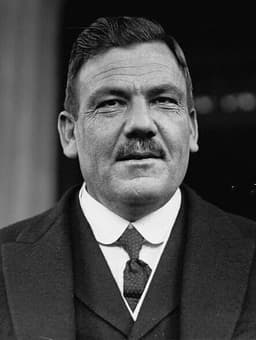
Plutarco Elias Calles
General · Modern
58.5Total
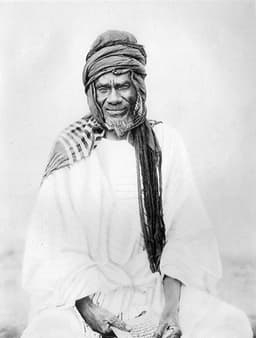
Samori Toure
General · Modern
70.5Total
Basic Information
Born
1877
1830
Died
1945
1900
Era
Modern
Modern
Nationality
Mexico
Wassoulou Empire
Occupation
General
General
Civilization
Western
Other
Score Comparison
Military (10%)
40.0
60.0
Political (20%)
70.3
78.0
Influence (20%)
68.0
68.0
Legacy (20%)
40.0
72.0
Leadership (15%)
78.0
72.0
Strategy (15%)
52.5
70.0
TOTAL
58.5
70.5
Plutarco Elias Calles — Complete Timeline
1915 AD
Governorship of SonoraPolitical Action
Calles served as Governor of Sonora from 1915 to 1919, implementing radical reforms including land redistribution, anti-clerical laws, and labor rights. His governorship established him as a key figure in the Sonoran dynasty and a proponent of revolutionary change.
GovernorshipSonoraReforms
Impact: regionalconstructive
1924 AD
Presidency of MexicoPolitical Action◆ Major
Calles was elected President of Mexico in 1924, serving until 1928. His administration continued revolutionary reforms, including land reform, labor rights, and secularization, but also faced opposition from the Catholic Church and conservative groups.
PresidencyMexican RevolutionReforms
Impact: nationalconstructive
1926 AD
Cristero WarWar◆ Major
Calles enforced anti-clerical laws, including the Calles Law, which restricted the Catholic Church's role in society. This sparked the Cristero War (1926-1929), a violent rebellion by Catholic peasants against the state, resulting in tens of thousands of deaths.
Cristero WarAnti-clericalismReligious Conflict
Impact: nationaldestructive
1928 AD
MaximatoPolitical Action◆ Major
After his presidency, Calles remained the de facto ruler of Mexico during the Maximato (1928-1934), controlling puppet presidents. He continued to influence policy, but his power waned as President L
MaximatoPolitical ControlCárdenas
Impact: national
1929 AD
Founding of the National Revolutionary Party (PNR)Political Action
Calles founded the National Revolutionary Party (PNR) in 1929, which later became the Institutional Revolutionary Party (PRI). This party dominated Mexican politics for over 70 years, institutionalizing the revolution's legacy and centralizing power.
Political PartyPRIInstitutionalization
Impact: nationalconstructive
Samori Toure — Complete Timeline
1878 AD
Establishment of the Wassoulou EmpirePolitical Action
Samori Toure founded the Wassoulou Empire in West Africa, uniting various Mandinka states under his rule. He established a centralized administration and a professional army, creating a powerful state that resisted French expansion.
EmpireWassoulouUnification
Impact: regionalconstructive
1880 AD
Military Reforms and ModernizationReform◆ Major
Samori Toure modernized his army by importing firearms from European traders and establishing a standing army of up to 35,000 men. He organized his forces into regular units and introduced new tactics, making them effective against French troops.
Military ReformFirearmsArmy
Impact: regionalconstructive
1882 AD
First Franco-Wassoulou WarWar◆ Major
Samori Toure's forces fought the French army in the first major conflict between the Wassoulou Empire and France. The war ended with a treaty in 1886, recognizing Samori's control over the Niger River region.
WarFranceTreaty
Impact: regional
1891 AD
Second Franco-Wassoulou WarWar◆ Major
The French resumed hostilities, forcing Samori to retreat eastward. He employed a scorched-earth strategy, destroying villages and crops to deny resources to the French, prolonging the conflict for years.
WarScorched EarthRetreat
Impact: regionaltragic
1898 AD
Capture and ExileWar
Samori Toure was captured by French forces after a long campaign. He was exiled to Gabon, where he died in 1900. His capture ended the Wassoulou Empire and marked the completion of French conquest in West Africa.
CaptureExileEnd of Empire
Impact: regionaltragic
Expert Analysis
Plutarco Elias Calles vs Samori Toure
### The Iron Will and the Unyielding Empire: Samori Touré and Plutarco Elías Calles
On a dusty savanna in West Africa, a man with the eyes of a prophet and the hands of a soldier watched French columns advance, knowing his empire of gunpowder and faith could not outlast the steel of a modern industrial power. Half a world away, in the smoke-filled chambers of Mexico City, another man—cold, calculating, and utterly secular—forged a political machine from the ashes of a revolution, determined to bend a nation to his will. Samori Touré and Plutarco Elías Calles never met, but their stories are mirrors held up to the same brutal question: How does a leader resist the overwhelming tide of history, and what happens when that resistance reshapes a nation forever?
### Origins: The Soil of Struggle
Samori Touré was born around 1830 into a modest Dyula trading family in what is now Guinea. The son of a merchant, he learned the arts of commerce and negotiation before the chaos of regional warfare forced him into soldiery. His world was one of fragmented Mandinka states, where Islam provided a unifying thread and the trans-Saharan slave trade bled the land. When French colonial ambitions began probing inland from Senegal, Samori saw not just a foreign threat but an existential one—a force that would destroy his people’s autonomy and faith. He was a product of the 19th-century scramble for Africa, a time when a local leader could still dream of building an empire from the wreckage of old ones.
Plutarco Elías Calles, born in 1877 in Sonora, Mexico, grew up in a different kind of chaos. His father was a schoolteacher who died young, and Calles worked as a bartender, teacher, and small-time politician before the Mexican Revolution erupted in 1910. Unlike Samori, who inherited a world of tradition, Calles was a child of modernity—a man shaped by positivist ideas, anti-clericalism, and the raw violence of a revolutionary society. He rose through the ranks of the Constitutionalist army under Venustiano Carranza, learning that power was not inherited but seized. His Mexico was a nation bleeding from a decade of civil war, desperate for order but suspicious of any strong hand.
### Rise to Power: The Path of Fire
Samori’s ascent was a masterclass in strategic adaptation. In 1878, he formally established the Wassoulou Empire, uniting Mandinka states through a blend of military conquest and diplomatic marriage. His key move was modernization: by 1880, he imported breech-loading rifles from British and German traders, organized a standing army of up to 35,000 men, and built a network of fortifications. He understood that to fight the French, he had to become more like them—disciplined, armed, and ruthless. Yet his power remained personal, rooted in his status as a *faama* (military leader) and his ability to inspire loyalty among diverse clans.
Calles’s rise was more institutional. After serving as governor of Sonora from 1915, where he redistributed land and attacked the Catholic Church’s influence, he was elected president in 1924. He did not command armies of tens of thousands but rather a coalition of revolutionary factions, labor unions, and agrarian reformers. His genius lay in organization: he built the National Revolutionary Party (PNR) in 1929, a political machine that would dominate Mexico for seven decades. Where Samori sought to hold territory, Calles sought to hold power—and he understood that in the modern world, power flowed through parties, not provinces.
### Leadership & Governance: The General and the Architect
Samori ruled as a warrior-king. His governance was pragmatic: he imposed taxes, standardized weights and measures, and allowed local chiefs autonomy in exchange for tribute. But his primary focus was always military. During the First Franco-Wassoulou War (1882), he fought the French to a stalemate, forcing them to negotiate. When the Second Franco-Wassoulou War erupted in 1891, he executed a brilliant scorched-earth retreat, destroying villages and crops to deny the French supplies, moving his entire empire eastward—a feat of logistics that stunned his enemies. His strategy was a dance of fire and ash, trading land for time.
Calles governed as a secularizing modernizer. His presidency (1924–1928) saw the construction of roads, schools, and irrigation projects, but his most controversial act was the Calles Law of 1926, which severely restricted the Catholic Church—banning foreign priests, closing monasteries, and nationalizing church property. This sparked the Cristero War (1926–1929), a brutal rebellion of Catholic peasants that killed tens of thousands. Calles did not lead from the front; he directed from the capital, using the army and the nascent PNR to crush dissent. His leadership was cold, bureaucratic, and utterly effective.
### Triumph & Tragedy: The Peak and the Fall
Samori’s greatest moment was his escape. In 1891, when the French pressed hard, he moved his capital and army 300 miles east, preserving his state against impossible odds. But his tragedy was the same: he could not outrun the industrial age. In 1898, betrayed by a local ally, he was captured and exiled to Gabon, where he died in 1900 at age 70. His empire dissolved, and French rule settled over West Africa.
Calles’s triumph was the Maximato (1928–1934), the period after his presidency when he ruled through puppet presidents, controlling Mexico from the shadows. He founded the PNR, which became the Institutional Revolutionary Party (PRI), a machine that would govern until 2000. Yet his tragedy was personal: he was eventually exiled by his own protégé, Lázaro Cárdenas, in 1935, dying in 1945 in obscurity. He built a system that outlasted him, but he could not control it.
### Character & Destiny: The Man Who Would Be King
Samori was a man of faith and fire. A devout Muslim, he saw his struggle as a jihad against infidel invaders, yet he was pragmatic enough to ally with non-Muslim groups. His personality was that of a patriarch—stern, visionary, but ultimately inflexible. He could adapt tactics, but not his fundamental goal: to rule a sovereign Mandinka state. This rigidity made him a hero and a martyr.
Calles was a man of steel and smoke. He was known as “El Jefe Máximo” (The Maximum Chief), a title that spoke to his cold pragmatism. He had no ideology beyond order and secularism; he was a revolutionary who became a machine. His personality was that of a manager—calculating, patient, and ruthless. He could compromise on policy but not on power. This flexibility made him a builder and a tyrant.
### Legacy: The Memory of Resistance
Samori Touré is remembered as a symbol of African resistance. In Guinea, Mali, and Côte d’Ivoire, his name is taught in schools as the man who fought the French for 18 years, who modernized an army from nothing, who refused to kneel. His legacy score of 73.9 reflects a man who, though defeated, inspired generations of anti-colonial leaders like Kwame Nkrumah and Sékou Touré.
Plutarco Elías Calles is a more contested figure. His legacy score of 72.0 masks a deep ambivalence: he is credited with stabilizing Mexico and creating the PRI, but also blamed for the Cristero War’s bloodshed and the authoritarianism that followed. In Mexico, he is both a founding father and a cautionary tale. His PNR became the PRI, which brought stability but also corruption.
### Conclusion: Two Paths to the Same Question
Samori Touré and Plutarco Elías Calles stand on opposite shores of history—one a warrior of the old world, the other a bureaucrat of the new. Samori fought with gunpowder and faith; Calles with parties and laws. Samori lost his empire but won a legacy; Calles built a machine but lost his soul. Their stories remind us that leadership is not about victory or defeat, but about the choices made when the world is crumbling. Samori chose to burn his land rather than surrender it; Calles chose to burn his church rather than share it. Both paid the price. And both, in their own way, asked the same question: What is a nation worth, and how far will you go to shape it?
Rankings
🥇
Samori ToureLeader
Mil: 60.0Pol: 78.0Inf: 68.0
70.5
🥈
Plutarco Elias Calles
Mil: 40.0Pol: 70.3Inf: 68.0
58.5
+12.0 behind
How This Comparison Works
Algorithm
Each figure is scored on 6 dimensions (0—100 scale) based on structured historical data: Military (10%), Political (20%), Influence (20%), Legacy (20%), Leadership (15%), Strategy (15%). The weighted total produces the final ranking.
Data Sources
Scores are computed from structured sub-indicators in the database. Scale factors adjust for era (Ancient ×0.85, Modern ×1.0) and civilization size (Eastern ×1.05, Other ×0.80) to account for differences in population and military scale.
Maximum 3 Figures
Comparisons are limited to 2—3 figures to ensure readability and statistical meaningfulness.
Error Margins
±5 points per dimension — Sub-scores are derived from historical records with inherent uncertainty. Two figures within 5 points on a dimension should be considered roughly equivalent in that area.
Total Score Accuracy
±3 points overall — The weighted combination of 6 dimensions produces a total score with approximately ±3 points of uncertainty. Differences of less than 3 points are not statistically significant— the figures are effectively tied.
Known Limitations
- Historical records are incomplete and uneven across civilizations
- Figures from oral-tradition societies may be underrepresented
- Occupation labels can misclassify multi-role figures
- Scores measure capability and impact, not moral character
- Quantitative scoring is a comparison tool, not absolute truth
Capability Radar
Military (10%) — Battles & Warfare
Battles
45
75
Win Rate
50
65
Expansion
30
60
Political (20%) — Governance & Reform
Reform
85
75
Diplomacy
65
80
Economy
60
60
Influence (20%) — Cultural & Global Reach
Cultural
70
65
Global
60
55
Legacy (20%) — Historical Impact
Historical
75
70
Longevity
70
60
Leadership (15%) — Power & Stability
Tenure
70
70
Stability
55
55
Strategy (15%) — Tactics & Innovation
Strategy
55
85
Tactics
40
80
Reform
60
70
Similar Comparisons
Comments & Discussion
IronWillFury6/16/2026
Calles had institutional power, but Samori built an empire from scratch with rifles and sheer grit. Calles crushed the Cristeros with state brutality, while Samori fought the French for 18 years with a mobile army and scorched-earth tactics in the jungles of Guinea. One was a bureaucrat with a pistol, the other a battlefield architect who never surrendered—he died exiled, not defeated. That's the difference between managing a revolution and leading one.
统计幽灵6/16/2026
数据不会撒谎:卡列斯巩固了墨西哥的制度化革命,但萨摩里在1898年仍有8000名士兵装备现代化步枪,面对的是拥有机关枪和炮舰的法国殖民军。卡列斯靠政治清洗和腐败维持权力,萨摩里却在流亡中失去一切。别把办公室阴谋和真正的牺牲混为一谈——一个统治了国家,另一个守护了尊严。
SwordAndProphet6/16/2026
Samori was a late 19th-century Islamic reformer who merged jihad and state-building, creating a centralized empire from Guinea to Ivory Coast. Calles was a secular positivist who banned religious worship and murdered priests. One fought with faith as his compass; the other fought against it. Samori's lesson: resistance is sacred. Calles's legacy: the Inquisition in reverse.
历史深喉6/16/2026
别忘了卡列斯建立国家银行和土地改革,萨摩里则依赖奴隶贸易和强制税收维持他的“帝国”。浪漫化非洲反抗者很容易,但萨摩里的政权更接近封建军阀而非民族英雄。卡列斯至少推动了现代化和工业化,萨摩里却用人力对抗机器——结果被历史碾压。不是所有反抗都是进步的,有时候稳固的官僚机器比浪漫的游击战更持久。
LaughingSkull6/16/2026
Samori's tactical genius—using retreats, ambushes, and fortifications to delay French conquest for 18 years—is a lesson in asymmetric warfare. Calles's genius was creating the PRI, a political machine that ran Mexico for 70 years. One died in exile, his empire erased; the other's system still shapes a nation. Which legacy would you rather have: a footnote in colonial history or the blueprint of a modern state?