Loading...
Winston Churchill vs Yelu Abaoji
Winston Churchill leads by 9.1 pts · 2 figures compared
…
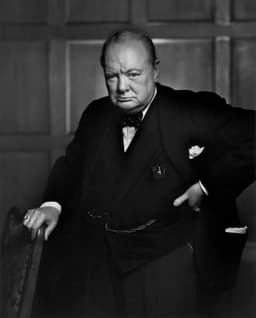
Winston Churchill
Politician · Modern
71.8Total
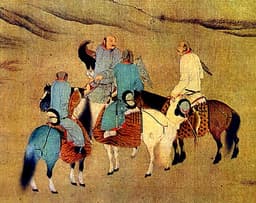
Yelu Abaoji
Emperor · Medieval
62.7Total
Basic Information
Born
1874
872
Died
1965
926
Era
Modern
Medieval
Nationality
United Kingdom
China
Occupation
Politician
Emperor
Civilization
Western
Eastern
Score Comparison
Military (10%)
55.0
77.2
Political (20%)
78.0
59.6
Influence (20%)
75.0
68.0
Legacy (20%)
68.0
40.0
Leadership (15%)
82.0
80.3
Strategy (15%)
65.0
69.6
TOTAL
71.8
62.7
Winston Churchill — Complete Timeline
1940 AD
Appointed Prime Minister of the United KingdomPolitical Action◆ Major
On May 10, 1940, Winston Churchill became Prime Minister of the United Kingdom, replacing Neville Chamberlain. His appointment came as Nazi Germany invaded France and the Low Countries, and Churchill formed a coalition government to lead Britain through World War II.
World War IILeadershipCoalition Government
Impact: globalconstructive
Delivered the 'We Shall Fight on the Beaches' SpeechOther◆ Major
On June 4, 1940, Churchill delivered a speech to the House of Commons following the evacuation of British forces from Dunkirk. He declared that Britain would fight on the beaches, landing grounds, fields, streets, and hills, and never surrender, rallying British morale during the darkest days of World War II.
World War IIOratoryMorale
Impact: nationalconstructive
1941 AD
Signed the Atlantic CharterOther◆ Major
On August 14, 1941, Churchill and U.S. President Franklin D. Roosevelt signed the Atlantic Charter aboard HMS Prince of Wales. This joint declaration outlined post-war goals including self-determination, disarmament, and free trade, and became a foundational document for the Allied war aims and the United Nations.
World War IIAllied CooperationPost-war Planning
Impact: globalconstructive
1945 AD
Attended the Yalta ConferenceOther◆ Major
In February 1945, Churchill attended the Yalta Conference with Roosevelt and Stalin to discuss the post-war reorganization of Europe. The conference agreed on the division of Germany, the establishment of the United Nations, and the fate of Eastern Europe, though Churchill later expressed regret over concessions to Stalin.
World War IIPost-war SettlementBig Three
Impact: global
1946 AD
Delivered the 'Iron Curtain' SpeechOther◆ Major
On March 5, 1946, Churchill delivered a speech at Westminster College in Fulton, Missouri, where he stated that an 'iron curtain' had descended across Europe from Stettin to Trieste. This speech is widely regarded as marking the beginning of the Cold War, as it highlighted the division between Soviet-controlled Eastern Europe and the West.
Cold WarSoviet UnionDivision of Europe
Impact: globaldestructive
1953 AD
Awarded the Nobel Prize in LiteratureOther◆ Major
In 1953, Churchill was awarded the Nobel Prize in Literature for his historical writings, particularly 'The Second World War' and 'A History of the English-Speaking Peoples'. The Nobel committee cited his mastery of historical and biographical description as well as his brilliant oratory in defending human values.
LiteratureNobel PrizeHistorical Writing
Impact: nationalconstructive
Yelu Abaoji — Complete Timeline
907 AD
Unified Khitan tribesPolitical Action◆ Major
Yelu Abaoji was elected khagan of the Khitan tribes, unifying them under his leadership. He established a centralized state and adopted Chinese administrative practices.
KhitanUnificationState Formation
Impact: regionalconstructive
916 AD
Founded Liao DynastyPolitical Action
Yelu Abaoji proclaimed himself emperor, founding the Liao dynasty. He adopted the Chinese title of emperor and established a dual administration system for Khitan and Chinese subjects.
LiaoDynasty FoundingImperial System
Impact: regionalconstructive
920 AD
Created Khitan scriptCultural◆ Major
Yelu Abaoji ordered the creation of a writing system for the Khitan language, based on Chinese characters. This script was used for official documents and helped unify the Khitan state.
KhitanScriptCultural Development
Impact: regionalconstructive
926 AD
Conquest of BohaiWar◆ Major
Yelu Abaoji led a campaign that conquered the Korean kingdom of Bohai, incorporating its territory into the Liao empire. This expanded Liao's influence into Manchuria and Korea.
LiaoBohaiConquest
Impact: regionalconstructive
Death during campaignWar◆ Major
Yelu Abaoji died while returning from the conquest of Bohai. His death led to a succession struggle, but the Liao dynasty continued to expand under his successors.
LiaoDeathSuccession
Impact: regionaltragic
Expert Analysis
Yelu Abaoji vs Winston Churchill
# The Lion and the Dragon Throne
On a cold January morning in 1941, Winston Churchill stood in the bomb-scarred House of Commons, his voice rasping through the static of crackling radios across a beleaguered Britain. “Give us the tools,” he growled, “and we will finish the job.” Half a world away and more than a thousand years earlier, Yelu Abaoji, a Khitan chieftain of the Mongolian steppes, raised a different kind of standard—one embroidered with a golden dragon, declaring himself emperor of a new dynasty that would reshape northern China. One man defended an island against the tide of fascism; the other built an empire from the dust of nomadic tribes. Both were titans of leadership, yet their paths diverged as sharply as the civilizations they commanded.
Origins
Winston Churchill was born into the British aristocracy in 1874, the son of Lord Randolph Churchill, a flamboyant Conservative politician, and Jennie Jerome, an American socialite. His childhood was one of privilege but also emotional distance—a lonely boy sent to boarding schools where he struggled and felt abandoned. The late-Victorian British Empire was at its zenith, and Churchill absorbed its confidence, its sense of mission, and its rigid class structures. He was a product of a stable, maritime, parliamentary democracy that had not been invaded for nearly a millennium.
Yelu Abaoji emerged from a radically different world. Born in 872, he was a Khitan, one of the nomadic peoples of the Mongolian steppe who lived in felt tents, herded sheep, and raided their settled neighbors. The Khitan were a confederation of eight tribes, constantly feuding, with no central authority. Abaoji grew up in a world of shifting alliances, horse archery, and survival of the fittest. The Tang dynasty was collapsing in China, leaving a power vacuum that the Khitan could exploit. Where Churchill inherited stability, Abaoji inherited chaos—and opportunity.
Rise to Power
Churchill’s ascent was long, erratic, and driven by relentless ambition. He entered Parliament in 1900, but his career was marked by controversial decisions—the disastrous Gallipoli campaign in World War I, his opposition to Indian self-rule, his warnings about Nazi Germany that were initially dismissed. He was a man out of step with his own party for much of the 1930s, a political exile on the backbenches. His moment came only in May 1940, when Britain faced annihilation and the old appeasers were discredited. At age sixty-five, Churchill became Prime Minister—a late, desperate gamble by a nation in peril.
Abaoji’s rise was swifter and more brutal. In 907, the Khitan tribes elected him khagan, or supreme leader, in a traditional ceremony on the steppe. But election was not enough—he had to *make* himself emperor. Over the next nine years, he crushed rival Khitan chieftains, absorbed Chinese advisors and administrators, and in 916 formally proclaimed the Liao dynasty, taking the Chinese imperial title. He did not wait for history to call him; he seized the throne with cavalry and steel.
Leadership & Governance
Churchill’s leadership was visceral, rhetorical, and improvisational. He was not a military strategist in the modern sense—his score of 55 in strategy reflects his many wartime blunders, from Norway to the Mediterranean. But his political genius (82) and leadership (85) were extraordinary. He rallied a demoralized nation through radio speeches, toured bombed-out streets, and forged the Grand Alliance with Stalin and Roosevelt. His governance was democratic, messy, and dependent on persuasion. He could not command; he had to convince.
Abaoji ruled as an emperor with absolute power, but he was no simple despot. His political score of 90 reflects a remarkable synthesis of nomadic and Chinese systems. He adopted Chinese bureaucratic structures, built a dual administration—one for Khitan tribes, one for Chinese subjects—and in 920 ordered the creation of a Khitan script, adapting Chinese characters to his people’s language. He was a conqueror who understood that empire required more than swords; it required ink. His conquest of the Korean kingdom of Bohai in 926 was not just a military victory but an administrative absorption.
Triumph & Tragedy
Churchill’s greatest triumph was 1940–41, when Britain stood alone. His finest hour was also his most lonely. But victory in 1945 brought swift rejection—the British electorate voted him out of office that July, a brutal political comedown. He returned as Prime Minister in 1951, but his second term was overshadowed by imperial decline and ill health. His tragedy was that the world he saved no longer wanted his kind of leadership.
Abaoji’s triumph was the creation of the Liao dynasty itself, a steppe empire that would last over two centuries. But his death in 926, while returning from the conquest of Bohai, was sudden and untimely. It triggered a succession crisis—his son had to fight to hold the throne. Yet the dynasty endured. Abaoji’s tragedy was that he died before he could fully consolidate his vision, leaving the work unfinished.
Character & Destiny
Churchill was a man of immense energy, vanity, and melancholy—he called his depression his “black dog.” He was romantic, impulsive, and often wrong, but his stubbornness became a weapon. He believed in destiny, in the heroic role of the English-speaking peoples, and in his own place in history. That self-belief, at times insufferable, was exactly what Britain needed when defeat seemed certain.
Abaoji was colder, more calculating. He was a pragmatist who borrowed Chinese civilization while keeping his Khitan identity. He did not romanticize war; he systematized it. His character was that of a builder—not a defender like Churchill, but a founder. One man’s destiny was to save an old world; the other’s was to create a new one.
Legacy
Churchill is remembered as the quintessential wartime leader—his bulldog image, his V-sign, his speeches are etched into Western memory. Yet his legacy is contested: his views on empire, race, and India are now sharply criticized. He remains a giant, but a flawed one.
Abaoji is less known in the West but foundational in Chinese history. The Liao dynasty established a model for later conquest dynasties like the Yuan and Qing. He showed that a nomadic people could rule China without being absorbed by it. His script, his dual administration, his vision of a multicultural empire—these outlasted his own life.
Conclusion
Churchill and Abaoji never met, never could have understood each other’s worlds. One defended a small island with a navy; the other built a vast empire with horsemen. Yet both faced the essential question of leadership: how to hold a people together when the old order breaks. Churchill answered with words, Abaoji with institutions. One spoke to the heart; the other built for the bones. In the end, both proved that history does not belong to the perfect—it belongs to those who act when the moment demands.
Rankings
🥇
Winston ChurchillLeader
Mil: 55.0Pol: 78.0Inf: 75.0
71.8
🥈
Yelu Abaoji
Mil: 77.2Pol: 59.6Inf: 68.0
62.7
+9.1 behind
How This Comparison Works
Algorithm
Each figure is scored on 6 dimensions (0—100 scale) based on structured historical data: Military (10%), Political (20%), Influence (20%), Legacy (20%), Leadership (15%), Strategy (15%). The weighted total produces the final ranking.
Data Sources
Scores are computed from structured sub-indicators in the database. Scale factors adjust for era (Ancient ×0.85, Modern ×1.0) and civilization size (Eastern ×1.05, Other ×0.80) to account for differences in population and military scale.
Maximum 3 Figures
Comparisons are limited to 2—3 figures to ensure readability and statistical meaningfulness.
Error Margins
±5 points per dimension — Sub-scores are derived from historical records with inherent uncertainty. Two figures within 5 points on a dimension should be considered roughly equivalent in that area.
Total Score Accuracy
±3 points overall — The weighted combination of 6 dimensions produces a total score with approximately ±3 points of uncertainty. Differences of less than 3 points are not statistically significant— the figures are effectively tied.
Known Limitations
- Historical records are incomplete and uneven across civilizations
- Figures from oral-tradition societies may be underrepresented
- Occupation labels can misclassify multi-role figures
- Scores measure capability and impact, not moral character
- Quantitative scoring is a comparison tool, not absolute truth
Capability Radar
Military (10%) — Battles & Warfare
Battles
55
75
Win Rate
60
80
Expansion
40
82
Political (20%) — Governance & Reform
Reform
70
88
Diplomacy
85
75
Economy
60
70
Influence (20%) — Cultural & Global Reach
Cultural
85
60
Global
85
55
Legacy (20%) — Historical Impact
Historical
90
70
Longevity
80
65
Leadership (15%) — Power & Stability
Tenure
75
72
Stability
70
65
Strategy (15%) — Tactics & Innovation
Strategy
85
78
Tactics
65
70
Reform
70
85
Similar Comparisons
Comments & Discussion
碎碎念史官6/16/2026
说丘吉尔和阿保机谁更伟大?简直是在拿金勋章对比青铜战斧。丘吉尔是个活在收音机与雪茄烟雾里的贵族,他的伟大建立在英国海军和跨洋补给线上;阿保机呢,用一把弯刀和一套契丹文,把草原部落磨成一个帝国齿轮。一个是守成之狮,一个是开天辟地的龙。论血肉之躯的创造力,我押阿保机——他连自己的文字都造,丘吉尔连印度独立都没守住。
反讽考据控6/16/2026
别急着吹阿保机多牛,他那套“因俗而治”不过是游牧民族的老把戏,用汉人官僚管汉人,契丹贵族管草原——这叫政治妥协,不是天才创新。丘吉尔至少直面过真正的民主考验:大选输了,体面下台。阿保机死前还在压制亲弟弟的叛乱,家族内斗几乎贯穿他整个统治。一个连继承问题都搞不定的“千古一帝”?省省吧,狮子比龙更懂什么叫制度性稳定。
历史棱镜手6/16/2026
对比两人的“危急时刻”最有趣:1940年伦敦大空袭,丘吉尔冒着炮火走遍废墟,大喊“我们绝不投降”;905年,阿保机在可汗选举宴上设伏,一举斩杀七位部落首领,彻底打破契丹轮流称汗的旧制。一个靠言辞凝聚民心,一个靠铁血终结旧秩序。两种极端领导力,都有效——但只有阿保机的方式能活到统一。狮子吼,龙噬血,得天下者从不犹豫。
Historian2466/16/2026
Churchill inherited an empire; Abaoji created one from scratch. The Khitan chieftain didn't just unify warring tribes—he invented a dual-administration system, balancing nomadic and Chinese governance, a blueprint later copied by the Mongols. Churchill's leadership was reactive, brilliant in crisis, but Abaoji's was foundational, building institutions that outlasted his dynasty. The Bulwark of steppe pragmatism beats the Bulldog's romanticized oratory any day.
OldScholar226/16/2026
Comparing Churchill's 1940 war cabinet to Abaoji's tribal councils is like comparing a Swiss watch to a sundial—different times, different trusts. Churchill's approval ratings fluctuated wildly (79% in 1940, 53% by 1945); Abaoji's authority was absolute, unchallenged by elections or press. But that's the point: context is king. Abaoji's steppe relied on personal loyalty and redistribution, not parliamentary votes. Apples and oranges, people. Let's stop pretending historical supremacy means anyth