Loading...
Mao Zedong vs Winston Churchill
Mao Zedong leads by 7.6 pts · 2 figures compared
…
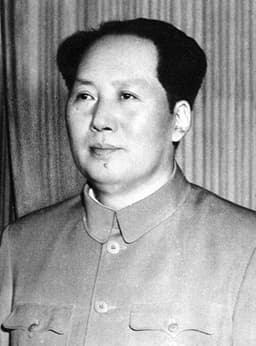
Mao Zedong
Politician · Modern
79.4Total
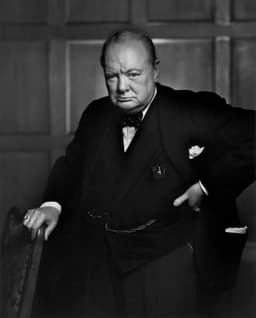
Winston Churchill
Politician · Modern
71.8Total
Basic Information
Born
1893
1874
Died
1976
1965
Era
Modern
Modern
Nationality
China
United Kingdom
Occupation
Politician
Politician
Civilization
Eastern
Western
Score Comparison
Military (10%)
75.0
55.0
Political (20%)
88.0
78.0
Influence (20%)
85.0
75.0
Legacy (20%)
70.0
68.0
Leadership (15%)
85.0
82.0
Strategy (15%)
72.0
65.0
TOTAL
79.4
71.8
Mao Zedong — Complete Timeline
1934 AD
Long MarchWar
Mao Zedong led the Chinese Red Army on a strategic retreat from Nationalist forces, covering approximately 6,000 miles over 370 days. The march solidified Mao's leadership within the Chinese Communist Party and became a foundational myth of the Communist revolution.
Chinese Civil WarCommunist RevolutionRetreat
Impact: national
1949 AD
Proclamation of the People's Republic of ChinaPolitical Action
Mao Zedong declared the founding of the People's Republic of China from Tiananmen Gate in Beijing. This ended the Chinese Civil War and established Communist rule over mainland China, with Mao as Chairman of the Central People's Government.
Founding of PRCCommunist VictoryRevolution
Impact: global
1958 AD
Great Leap ForwardReform◆ Major
Mao launched a campaign to rapidly industrialize China and collectivize agriculture. The policy led to widespread mismanagement, resulting in a famine that caused an estimated 15-45 million deaths between 1959 and 1961.
FamineIndustrializationCollectivization
Impact: nationaldestructive
1960 AD
Sino-Soviet SplitPolitical Action◆ Major
Mao's ideological differences with Soviet leader Nikita Khrushchev led to a breakdown in relations between China and the Soviet Union. The split ended the Sino-Soviet alliance and reshaped global Cold War dynamics, with China pursuing an independent path.
Cold WarIdeological ConflictAlliance Breakdown
Impact: global
1966 AD
Cultural RevolutionPolitical Action
Mao initiated a sociopolitical movement to purge capitalist and traditional elements from Chinese society. The Red Guard youth groups attacked intellectuals and officials, leading to widespread violence, destruction of cultural artifacts, and an estimated 1-2 million deaths.
Political PurgeSocial UpheavalRed Guard
Impact: nationaldestructive
1971 AD
Ping-Pong DiplomacyCultural◆ Major
Mao approved an invitation for the U.S. table tennis team to visit China, initiating a thaw in Sino-American relations. This cultural exchange paved the way for President Nixon's visit to China in 1972 and the eventual normalization of diplomatic ties.
DiplomacyU.S.-China RelationsCultural Exchange
Impact: globalconstructive
Winston Churchill — Complete Timeline
1940 AD
Appointed Prime Minister of the United KingdomPolitical Action◆ Major
On May 10, 1940, Winston Churchill became Prime Minister of the United Kingdom, replacing Neville Chamberlain. His appointment came as Nazi Germany invaded France and the Low Countries, and Churchill formed a coalition government to lead Britain through World War II.
World War IILeadershipCoalition Government
Impact: globalconstructive
Delivered the 'We Shall Fight on the Beaches' SpeechOther◆ Major
On June 4, 1940, Churchill delivered a speech to the House of Commons following the evacuation of British forces from Dunkirk. He declared that Britain would fight on the beaches, landing grounds, fields, streets, and hills, and never surrender, rallying British morale during the darkest days of World War II.
World War IIOratoryMorale
Impact: nationalconstructive
1941 AD
Signed the Atlantic CharterOther◆ Major
On August 14, 1941, Churchill and U.S. President Franklin D. Roosevelt signed the Atlantic Charter aboard HMS Prince of Wales. This joint declaration outlined post-war goals including self-determination, disarmament, and free trade, and became a foundational document for the Allied war aims and the United Nations.
World War IIAllied CooperationPost-war Planning
Impact: globalconstructive
1945 AD
Attended the Yalta ConferenceOther◆ Major
In February 1945, Churchill attended the Yalta Conference with Roosevelt and Stalin to discuss the post-war reorganization of Europe. The conference agreed on the division of Germany, the establishment of the United Nations, and the fate of Eastern Europe, though Churchill later expressed regret over concessions to Stalin.
World War IIPost-war SettlementBig Three
Impact: global
1946 AD
Delivered the 'Iron Curtain' SpeechOther◆ Major
On March 5, 1946, Churchill delivered a speech at Westminster College in Fulton, Missouri, where he stated that an 'iron curtain' had descended across Europe from Stettin to Trieste. This speech is widely regarded as marking the beginning of the Cold War, as it highlighted the division between Soviet-controlled Eastern Europe and the West.
Cold WarSoviet UnionDivision of Europe
Impact: globaldestructive
1953 AD
Awarded the Nobel Prize in LiteratureOther◆ Major
In 1953, Churchill was awarded the Nobel Prize in Literature for his historical writings, particularly 'The Second World War' and 'A History of the English-Speaking Peoples'. The Nobel committee cited his mastery of historical and biographical description as well as his brilliant oratory in defending human values.
LiteratureNobel PrizeHistorical Writing
Impact: nationalconstructive
Expert Analysis
Mao Zedong vs Winston Churchill
# The Lion and the Dragon
In the winter of 1940, as German bombs rained down on London, Winston Churchill stood in the smoking ruins of the House of Commons and declared that Britain would "never surrender." Three thousand miles away, in a cave dwelling in Yan'an, Mao Zedong was writing his treatise *On Protracted War*, arguing that China's struggle against Japan would be won not by force of arms alone, but by the patient mobilization of a billion peasants. Two men, two civilizations, two visions of leadership—both shaped by war, both destined to remake the world in their image. Yet their paths could not have diverged more sharply. Why did Churchill, the aristocrat, lead his nation to victory and a peaceful decline, while Mao, the peasant revolutionary, lifted China from humiliation only to plunge it into decades of turmoil? The answer lies not in their scores—Churchill’s total score of 72.3 versus Mao’s 76.4—but in the soil from which they grew.
Origins
Winston Churchill was born in 1874 into the heart of the British establishment. His father, Lord Randolph Churchill, was a prominent Conservative politician; his mother, Jennie Jerome, was an American heiress. Churchill attended Harrow and Sandhurst, absorbing the certainties of empire: that Britain was destined to rule, that honor was more valuable than life, and that history was a story of great men. His era was one of Victorian confidence, when the sun never set on the Union Jack.
Mao Zedong, born in 1893 in the rural village of Shaoshan, came from the opposite pole. His father was a prosperous but harsh peasant farmer; his mother, a devout Buddhist. Mao’s China was a civilization in collapse—humiliated by foreign powers, torn by warlords, and ravaged by famine. Where Churchill inherited a world order, Mao inherited a world in ashes. The difference is foundational: Churchill’s task was to defend what existed; Mao’s was to destroy what existed and build something new.
Rise to Power
Churchill’s rise was a long, winding staircase of privilege and failure. He entered Parliament in 1900, served as First Lord of the Admiralty in World War I, and was blamed for the disastrous Gallipoli campaign. He spent the 1930s in the political wilderness, warning against Nazi Germany while most of Britain wished for peace. His moment came in 1940, when Neville Chamberlain fell and Churchill, at age sixty-five, became Prime Minister. He was the right man for the crisis—a warrior-poet who understood that words could be weapons.
Mao’s rise was a desperate climb through blood and mud. He was a founding member of the Chinese Communist Party in 1921, but his ideas—that peasants, not workers, would make the revolution—were dismissed by Moscow-trained comrades. In 1934, after the Nationalists nearly annihilated the Communists, Mao led the Long March: a 6,000-mile retreat through some of the most hostile terrain on earth. Of the 100,000 who began, fewer than 8,000 survived. But those survivors became the core of Mao’s army, bound to him by shared suffering. By 1949, when he proclaimed the People’s Republic from Tiananmen Gate, Mao had become something Churchill never was: the living embodiment of a nation’s rebirth.
Leadership & Governance
Churchill’s leadership was theatrical, aristocratic, and improvisational. He roamed the bombed streets of London, cigar in hand, his V-for-Victory sign a symbol of defiance. His political score of 82.0 reflects his genius for coalition-building—he brought Labour and Conservatives together, courted Roosevelt, and Stalin. Yet his military score of 55.0 and strategy score of 55.0 reveal a man who was more inspirational than tactical. He approved disastrous campaigns in Norway, Greece, and Singapore. His greatness lay not in planning but in refusal to surrender.
Mao’s leadership was systematic, ruthless, and ideological. His strategy score of 76.5 reflects his mastery of guerrilla warfare and his understanding that war is politics by other means. He transformed the Red Army into a force that could melt into the countryside and reappear where least expected. But after 1949, his governance turned catastrophic. The Great Leap Forward of 1958, intended to industrialize China overnight, led to mismanagement and famine, costing tens of millions of lives. The Cultural Revolution, launched in 1966, was a sociopolitical movement to purge capitalist and traditional elements from Chinese society. The Red Guard terrorized intellectuals, destroyed temples, and shattered families. Mao’s political score of 82.0 matches Churchill’s, but his legacy score of 69.9 falls below Churchill’s 75.0—a measure of the human cost.
Triumph & Tragedy
Churchill’s greatest moment was June 1944, when he stood on the beaches of Normandy and watched the liberation of Europe begin. His most devastating failure came in 1945, when he was voted out of office just weeks after victory. The man who had saved Britain was dismissed by the people he had saved. It was a bitter irony, but Churchill accepted it with grace. He returned to power in 1951, but his second premiership was a shadow of the first.
Mao’s greatest triumph was October 1, 1949, when he declared, “The Chinese people have stood up.” For the first time in a century, China was unified and independent. His tragedy was that he could not stop. The revolutionary who had liberated his people became the tyrant who consumed them. The Long March hero became the architect of the Great Leap Forward. The Ping-Pong Diplomacy of 1971, which opened China to the world, was a brief moment of sanity in a life of relentless upheaval.
Character & Destiny
Churchill was a man of immense ego and immense sentiment. He wept at the fall of France, raged at the loss of empire, and wrote history as if he were its author. His Nobel Prize in Literature, awarded in 1953, was recognition that his words were as powerful as his deeds. He believed in destiny—that he was born to lead Britain in its finest hour.
Mao was a man of iron will and cold calculation. He wrote poetry about the beauty of struggle and the necessity of sacrifice. He believed in history—that the dialectic of class conflict would inevitably produce a communist utopia, even if millions had to die along the way. Where Churchill saw the world as a stage for heroism, Mao saw it as a laboratory for revolution.
Legacy
Churchill’s legacy is secure: the man who stood against Hitler, who preserved democracy when it seemed doomed. He is remembered in statues, speeches, and the quiet dignity of a nation that chose freedom. His influence score of 72.0 reflects a leader who shaped his time but did not outlive his relevance.
Mao’s legacy is contested. In China, he is still revered as the father of the nation, the man who ended a century of humiliation. His influence score of 79.7 reflects the depth of his impact—China today is his creation, for better or worse. But outside China, he is remembered as a tyrant who starved his people and destroyed his culture. His legacy score of 69.9 is a verdict that history has not yet finished delivering.
Conclusion
Churchill and Mao were both men of war, both men of words, both men who changed the world. But they belonged to different stories. Churchill’s story was about defending a civilization; Mao’s was about creating one. Churchill’s failures were redeemed by his victories; Mao’s victories were overshadowed by his failures. One died in 1965, honored and mourned; the other died in 1976, leaving a nation that would soon abandon his most radical dreams.
Perhaps the deepest difference is this: Churchill believed that politics was the art of the possible, while Mao believed it was the art of the impossible. The first saved his country; the second remade his. Both were giants. But giants, as history shows, can either lift you up or crush you underfoot.
Rankings
🥇
Mao ZedongLeader
Mil: 75.0Pol: 88.0Inf: 85.0
79.4
🥈
Winston Churchill
Mil: 55.0Pol: 78.0Inf: 75.0
71.8
+7.6 behind
How This Comparison Works
Algorithm
Each figure is scored on 6 dimensions (0—100 scale) based on structured historical data: Military (10%), Political (20%), Influence (20%), Legacy (20%), Leadership (15%), Strategy (15%). The weighted total produces the final ranking.
Data Sources
Scores are computed from structured sub-indicators in the database. Scale factors adjust for era (Ancient ×0.85, Modern ×1.0) and civilization size (Eastern ×1.05, Other ×0.80) to account for differences in population and military scale.
Maximum 3 Figures
Comparisons are limited to 2—3 figures to ensure readability and statistical meaningfulness.
Error Margins
±5 points per dimension — Sub-scores are derived from historical records with inherent uncertainty. Two figures within 5 points on a dimension should be considered roughly equivalent in that area.
Total Score Accuracy
±3 points overall — The weighted combination of 6 dimensions produces a total score with approximately ±3 points of uncertainty. Differences of less than 3 points are not statistically significant— the figures are effectively tied.
Known Limitations
- Historical records are incomplete and uneven across civilizations
- Figures from oral-tradition societies may be underrepresented
- Occupation labels can misclassify multi-role figures
- Scores measure capability and impact, not moral character
- Quantitative scoring is a comparison tool, not absolute truth
Capability Radar
Military (10%) — Battles & Warfare
Battles
85
55
Win Rate
80
60
Expansion
85
40
Political (20%) — Governance & Reform
Reform
95
70
Diplomacy
80
85
Economy
70
60
Influence (20%) — Cultural & Global Reach
Cultural
90
85
Global
90
85
Legacy (20%) — Historical Impact
Historical
95
90
Longevity
85
80
Leadership (15%) — Power & Stability
Tenure
95
75
Stability
60
70
Strategy (15%) — Tactics & Innovation
Strategy
85
85
Tactics
75
65
Reform
90
70
Similar Comparisons
Comments & Discussion
历史批判者刘6/16/2026
比较有意思,但太偏心毛了。什么"提升中国"?明明是带着国家走向大饥荒和文化浩劫。 Churchill 守住了民主和自由,死后被国民真心哀悼。毛呢?晚年搞大跃进,饿死几千万农民。输在分数上,但赢在历史良心面前。别美化圣人叙事。