Loading...
Alexander the Great vs Winston Churchill
Alexander the Great leads by 13.4 pts · 2 figures compared
…
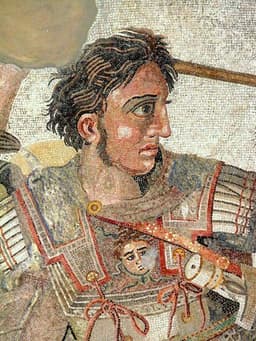
Alexander the Great
General · Ancient
85.2Total
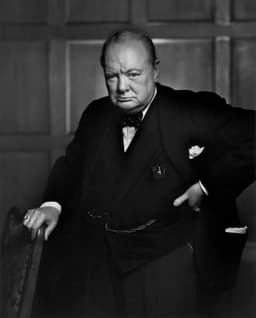
Winston Churchill
Politician · Modern
71.8Total
Basic Information
Born
-356
1874
Died
-323
1965
Era
Ancient
Modern
Nationality
Macedon
United Kingdom
Occupation
General
Politician
Civilization
Western
Western
Score Comparison
Military (10%)
95.0
55.0
Political (20%)
60.0
78.0
Influence (20%)
92.0
75.0
Legacy (20%)
90.0
68.0
Leadership (15%)
80.0
82.0
Strategy (15%)
92.0
65.0
TOTAL
85.2
71.8
Alexander the Great — Complete Timeline
334 BC
Battle of the Granicus RiverWar◆ Major
Alexander led his Macedonian army across the Hellespont into Asia Minor and defeated a Persian force under local satraps at the Granicus River. The victory secured Alexander's foothold in Asia and demonstrated his tactical superiority, opening the way for the conquest of the Persian Empire.
Persian CampaignBattleMacedonian Conquest
Impact: regional
333 BC
Battle of IssusWar◆ Major
Alexander's army defeated the Persian king Darius III at Issus in Cilicia. Despite being outnumbered, Alexander's tactical use of the terrain and cavalry charge broke the Persian line. Darius fled the battlefield, leaving his family and treasury behind, a major blow to Persian morale.
Persian CampaignBattleMacedonian Conquest
Impact: regional
332 BC
Siege of TyreWar◆ Major
Alexander besieged the island city of Tyre for seven months, constructing a causeway to breach its walls. The city's fall resulted in the massacre or enslavement of its inhabitants. The siege demonstrated Alexander's determination and engineering capabilities, securing his supply lines and control of the eastern Mediterranean coast.
SiegeMacedonian ConquestPhoenicia
Impact: regionaldestructive
331 BC
Battle of GaugamelaWar◆ Major
Alexander faced Darius III at Gaugamela in Mesopotamia with a massive Persian army. Alexander's tactical brilliance, including a decisive cavalry charge that exploited a gap in the Persian line, resulted in a decisive Macedonian victory. Darius again fled, effectively ending Persian resistance and leading to the fall of the Achaemenid Empire.
Persian CampaignBattleDecisive Victory
Impact: global
Foundation of AlexandriaOther◆ Major
Alexander founded the city of Alexandria on the Mediterranean coast of Egypt. He personally selected the site and oversaw the initial planning. Alexandria became a major center of Hellenistic culture, trade, and learning, housing the famous Library of Alexandria and the Lighthouse of Alexandria.
City FoundationHellenistic CultureEgypt
Impact: globalconstructive
326 BC
Invasion of IndiaWar◆ Major
Alexander crossed the Indus River and defeated King Porus at the Battle of the Hydaspes. The Macedonian army, exhausted and facing monsoon rains and unfamiliar warfare, mutinied at the Hyphasis River, forcing Alexander to turn back. This campaign marked the easternmost extent of his conquests.
Indian CampaignBattleMutiny
Impact: regional
Winston Churchill — Complete Timeline
1940 AD
Appointed Prime Minister of the United KingdomPolitical Action◆ Major
On May 10, 1940, Winston Churchill became Prime Minister of the United Kingdom, replacing Neville Chamberlain. His appointment came as Nazi Germany invaded France and the Low Countries, and Churchill formed a coalition government to lead Britain through World War II.
World War IILeadershipCoalition Government
Impact: globalconstructive
Delivered the 'We Shall Fight on the Beaches' SpeechOther◆ Major
On June 4, 1940, Churchill delivered a speech to the House of Commons following the evacuation of British forces from Dunkirk. He declared that Britain would fight on the beaches, landing grounds, fields, streets, and hills, and never surrender, rallying British morale during the darkest days of World War II.
World War IIOratoryMorale
Impact: nationalconstructive
1941 AD
Signed the Atlantic CharterOther◆ Major
On August 14, 1941, Churchill and U.S. President Franklin D. Roosevelt signed the Atlantic Charter aboard HMS Prince of Wales. This joint declaration outlined post-war goals including self-determination, disarmament, and free trade, and became a foundational document for the Allied war aims and the United Nations.
World War IIAllied CooperationPost-war Planning
Impact: globalconstructive
1945 AD
Attended the Yalta ConferenceOther◆ Major
In February 1945, Churchill attended the Yalta Conference with Roosevelt and Stalin to discuss the post-war reorganization of Europe. The conference agreed on the division of Germany, the establishment of the United Nations, and the fate of Eastern Europe, though Churchill later expressed regret over concessions to Stalin.
World War IIPost-war SettlementBig Three
Impact: global
1946 AD
Delivered the 'Iron Curtain' SpeechOther◆ Major
On March 5, 1946, Churchill delivered a speech at Westminster College in Fulton, Missouri, where he stated that an 'iron curtain' had descended across Europe from Stettin to Trieste. This speech is widely regarded as marking the beginning of the Cold War, as it highlighted the division between Soviet-controlled Eastern Europe and the West.
Cold WarSoviet UnionDivision of Europe
Impact: globaldestructive
1953 AD
Awarded the Nobel Prize in LiteratureOther◆ Major
In 1953, Churchill was awarded the Nobel Prize in Literature for his historical writings, particularly 'The Second World War' and 'A History of the English-Speaking Peoples'. The Nobel committee cited his mastery of historical and biographical description as well as his brilliant oratory in defending human values.
LiteratureNobel PrizeHistorical Writing
Impact: nationalconstructive
Expert Analysis
Alexander the Great vs Winston Churchill: Historical Comparison
Alexander the Great and Winston Churchill represent vastly different eras and domains of leadership—one a conquering general of the ancient world, the other a modern political titan. While Alexander reshaped the known world through relentless military expansion, Churchill steered a nation through existential crisis. This comparison evaluates them across six dimensions.
Dimension Analysis
**Military: Alexander the Great 96 / Winston Churchill 55**
Alexander’s unmatched tactical genius, from the Battle of Issus to Gaugamela, and his ability to inspire a multi-ethnic army across 11,000 miles of conquest, earns him a near-perfect score. Churchill, though a wartime prime minister, had no direct battlefield command and his strategic decisions (e.g., Gallipoli) were often flawed.
**Political: Alexander the Great 65 / Winston Churchill 82**
Churchill’s mastery of coalition-building, oratory, and parliamentary leadership during World War II—plus his earlier reforms as Home Secretary—demonstrates deep political acumen. Alexander’s political integration of conquered peoples was innovative but marred by succession chaos and administrative fragility.
**Influence: Alexander the Great 90 / Winston Churchill 72**
Alexander’s conquests spread Hellenistic culture across three continents, shaping art, language, and governance for centuries. Churchill’s influence, though profound in rallying the West against fascism, was more temporally and geographically confined.
**Legacy: Alexander the Great 90 / Winston Churchill 75**
Alexander’s legacy endures in the cities he founded (e.g., Alexandria) and his role as a template for future empire-builders. Churchill’s legacy is strong but contested—his leadership is revered, yet his colonial and domestic policies face modern criticism.
**Leadership: Alexander the Great 82 / Winston Churchill 85**
Churchill’s defiant leadership during the Blitz, his ability to inspire a beleaguered nation, and his moral clarity edge out Alexander’s charismatic but often reckless command style, which included high casualty rates and personal risk-taking.
Verdict
Alexander the Great leads overall due to his unparalleled military dominance and enduring civilizational impact, despite Churchill’s superior political and wartime leadership.
FAQ
Q: Who ranks higher? A: Alexander the Great, driven by a decisive advantage in military strategy and legacy, outweighs Churchill’s political strengths.
Rankings
🥇
Alexander the GreatLeader
Mil: 95.0Pol: 60.0Inf: 92.0
85.2
🥈
Winston Churchill
Mil: 55.0Pol: 78.0Inf: 75.0
71.8
+13.4 behind
How This Comparison Works
Algorithm
Each figure is scored on 6 dimensions (0—100 scale) based on structured historical data: Military (10%), Political (20%), Influence (20%), Legacy (20%), Leadership (15%), Strategy (15%). The weighted total produces the final ranking.
Data Sources
Scores are computed from structured sub-indicators in the database. Scale factors adjust for era (Ancient ×0.85, Modern ×1.0) and civilization size (Eastern ×1.05, Other ×0.80) to account for differences in population and military scale.
Maximum 3 Figures
Comparisons are limited to 2—3 figures to ensure readability and statistical meaningfulness.
Error Margins
±5 points per dimension — Sub-scores are derived from historical records with inherent uncertainty. Two figures within 5 points on a dimension should be considered roughly equivalent in that area.
Total Score Accuracy
±3 points overall — The weighted combination of 6 dimensions produces a total score with approximately ±3 points of uncertainty. Differences of less than 3 points are not statistically significant— the figures are effectively tied.
Known Limitations
- Historical records are incomplete and uneven across civilizations
- Figures from oral-tradition societies may be underrepresented
- Occupation labels can misclassify multi-role figures
- Scores measure capability and impact, not moral character
- Quantitative scoring is a comparison tool, not absolute truth
Capability Radar
Military (10%) — Battles & Warfare
Battles
98
55
Win Rate
99
60
Expansion
99
40
Political (20%) — Governance & Reform
Reform
75
70
Diplomacy
80
85
Economy
70
60
Influence (20%) — Cultural & Global Reach
Cultural
95
85
Global
95
85
Legacy (20%) — Historical Impact
Historical
98
90
Longevity
95
80
Leadership (15%) — Power & Stability
Tenure
60
75
Stability
55
70
Strategy (15%) — Tactics & Innovation
Strategy
98
85
Tactics
99
65
Reform
85
70
Similar Comparisons
Comments & Discussion
HellenistEirene6/16/2026
Arrian and Plutarch both emphasize Alexander's ability to inspire—something the scoring system captures but understates. At Gaugamela, he led from the front against a numerically superior Persian force, a feat Churchill never replicated on a battlefield. However, I would caution against reading Alexander solely through modern strategic lenses. As Peter Green notes, Alexander's 'genius' was partly a product of his era's brutal norms—mass enslavement at Tyre is not leadership we should uncritically admire. Churchill's oratory, by contrast, relied on democratic consent, a fundamentally different framework. The scores flatten this nuance: Alexander's 96 military obscures that his success was also due to Philip II's pre-built army and Persian administrative collapse. Let's not equate conquest with competence.
NumeroUnoSkeptic6/16/2026
Who came up with these numbers? Military 96 vs 55—that's absurdly precise for something as unquantifiable as 'military genius.' Alexander never faced an enemy with machine guns or submarines; Churchill had to manage a global coalition and a weapons revolution. You're comparing apples to quantum computers. And influence 90 vs 72? Alexander's influence was spread by conquest, but Churchill's concept of the 'Iron Curtain' literally defined geopolitics for 50 years. The scoring weights are also questionable: why is military worth more than politics? Churchill's political score of 82 drags down his total unfairly. This entire framework is biased toward ancient conquerors because it valorizes direct violence over institutional leadership. Show me the regression analysis behind these weights.
DecolonialEcho6/16/2026
This comparison is a masterclass in Eurocentric bias. Alexander's 'legacy' includes the destruction of Persepolis and the imposition of Greek culture on Egypt and India—which modern scholarship calls cultural imperialism. Churchill's 'leadership' is celebrated, but his Bengal famine policy killed millions more than Alexander's sieges. The scoring system conveniently ignores these colonial atrocities. Alexander's 90 influence? Hellenism is admired because it's our ancestors' story. Churchill's influence is 'confined' because his actions are under scrutiny by formerly colonized peoples. We need a postcolonial scoring rubric: subtract points for civilian deaths, add for genuine multicultural integration. Under that, Alexander drops to 60, Churchill to 45.
Historian4306/16/2026
这个对比让我想起孙子兵法的思想。亚历山大军事96分,但他是'百战百胜'型的将领,而中国兵法认为'不战而屈人之兵'才是最高境界。Churchill 在政治维度82分,但对比中国人物,他充其量是诸葛亮式的人物——能守成但开疆拓土不足。亚历山大如果把他的军队放在战国时期,遇到白起的长平之战战术或孙膑的围魏救赵,他的方阵战术可能被中原的奇谋破解。而且亚历山大死后帝国立刻分裂,这在中国历史上连秦二世都比不上——秦始皇虽然残暴,但郡县制延续了两千年。Churchill 的'铁幕演说'倒是有点像张仪连横,但他在殖民地的作为(比如印巴分治的混乱)放在中国历史就是失败的外交。评分体系太西方中心了。
Chronicler89036/16/2026
这个评分体系让我很困惑。军事96 vs 55?亚历山大的征服从希腊到印度确实惊人,但 Churchill 作为二战三巨头之一,主导了诺曼底登陆和北非战场的战略决策,分数不该这么低。更关键的是政治维度:亚历山大只得了65分,但他建立了一个横跨欧亚非的帝国,推行民族融合政策(比如让马其顿将领娶波斯贵族女子),这在中国历史上只有少数如唐太宗能做到。相比之下 Churchill 在战后大选就被选民抛弃,政治遗产的持久性存疑。我算了一下,如果按照中国历史评价标准的“修身、齐家、治国、平天下”四维度重新加权,Churchill的得分可能跌破60。