Loading...
Otto von Bismarck vs Winston Churchill
Winston Churchill leads by 6.0 pts · 2 figures compared
…
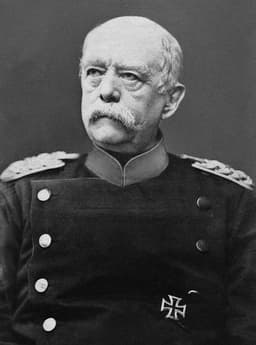
Otto von Bismarck
Politician · Modern
65.8Total
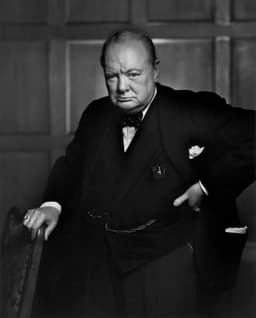
Winston Churchill
Politician · Modern
71.8Total
Basic Information
Born
1815
1874
Died
1898
1965
Era
Modern
Modern
Nationality
Germany
United Kingdom
Occupation
Politician
Politician
Civilization
Western
Western
Score Comparison
Military (10%)
55.0
55.0
Political (20%)
85.0
78.0
Influence (20%)
82.0
75.0
Legacy (20%)
40.0
68.0
Leadership (15%)
80.0
82.0
Strategy (15%)
50.0
65.0
TOTAL
65.8
71.8
Otto von Bismarck — Complete Timeline
1870 AD
Franco-Prussian WarWar
Bismarck provoked France into declaring war by editing the Ems Dispatch to appear insulting. The resulting conflict saw Prussia and its allies decisively defeat France, leading to the fall of Napoleon III, the capture of Paris, and the annexation of Alsace-Lorraine.
WarProvocationAnnexation
Impact: globaldestructive
1871 AD
Unification of Germany ProclaimedPolitical Action
Following the Franco-Prussian War, Bismarck orchestrated the proclamation of the German Empire in the Hall of Mirrors at Versailles. King Wilhelm I of Prussia was declared German Emperor, uniting the German states under Prussian leadership and establishing the Second Reich.
UnificationGerman EmpireNationalism
Impact: globalconstructive
1878 AD
Enactment of the Anti-Socialist LawsPolitical Action◆ Major
After two assassination attempts on Kaiser Wilhelm I, Bismarck pushed through laws banning socialist organizations, publications, and meetings. The laws remained in force until 1890, suppressing the Social Democratic Party while Bismarck simultaneously introduced welfare reforms to undercut its appeal.
RepressionSocialismWelfare State
Impact: nationaldestructive
Congress of BerlinPolitical Action◆ Major
Bismarck hosted the Congress of Berlin to revise the Treaty of San Stefano and resolve the Eastern Crisis. He acted as 'honest broker,' reducing Russian gains, granting independence to Romania, Serbia, and Montenegro, and placing Bosnia-Herzegovina under Austro-Hungarian administration.
DiplomacyBalkansBalance of Power
Impact: global
1883 AD
Establishment of the Welfare StateReform◆ Major
Bismarck introduced the Health Insurance Bill (1883), Accident Insurance Bill (1884), and Old Age and Disability Insurance Bill (1889). These laws created the first modern welfare state, providing workers with social security and aiming to reduce support for socialist movements.
Social ReformWelfareInsurance
Impact: globalprogressive
1890 AD
Dismissal as ChancellorPolitical Action◆ Major
Emperor Wilhelm II forced Bismarck to resign due to policy disagreements, particularly over anti-socialist laws and foreign policy. Bismarck's departure marked the end of an era, leading to a more aggressive German foreign policy and the eventual unraveling of his alliance system.
ResignationWilhelm IIPolicy Shift
Impact: global
Winston Churchill — Complete Timeline
1940 AD
Appointed Prime Minister of the United KingdomPolitical Action◆ Major
On May 10, 1940, Winston Churchill became Prime Minister of the United Kingdom, replacing Neville Chamberlain. His appointment came as Nazi Germany invaded France and the Low Countries, and Churchill formed a coalition government to lead Britain through World War II.
World War IILeadershipCoalition Government
Impact: globalconstructive
Delivered the 'We Shall Fight on the Beaches' SpeechOther◆ Major
On June 4, 1940, Churchill delivered a speech to the House of Commons following the evacuation of British forces from Dunkirk. He declared that Britain would fight on the beaches, landing grounds, fields, streets, and hills, and never surrender, rallying British morale during the darkest days of World War II.
World War IIOratoryMorale
Impact: nationalconstructive
1941 AD
Signed the Atlantic CharterOther◆ Major
On August 14, 1941, Churchill and U.S. President Franklin D. Roosevelt signed the Atlantic Charter aboard HMS Prince of Wales. This joint declaration outlined post-war goals including self-determination, disarmament, and free trade, and became a foundational document for the Allied war aims and the United Nations.
World War IIAllied CooperationPost-war Planning
Impact: globalconstructive
1945 AD
Attended the Yalta ConferenceOther◆ Major
In February 1945, Churchill attended the Yalta Conference with Roosevelt and Stalin to discuss the post-war reorganization of Europe. The conference agreed on the division of Germany, the establishment of the United Nations, and the fate of Eastern Europe, though Churchill later expressed regret over concessions to Stalin.
World War IIPost-war SettlementBig Three
Impact: global
1946 AD
Delivered the 'Iron Curtain' SpeechOther◆ Major
On March 5, 1946, Churchill delivered a speech at Westminster College in Fulton, Missouri, where he stated that an 'iron curtain' had descended across Europe from Stettin to Trieste. This speech is widely regarded as marking the beginning of the Cold War, as it highlighted the division between Soviet-controlled Eastern Europe and the West.
Cold WarSoviet UnionDivision of Europe
Impact: globaldestructive
1953 AD
Awarded the Nobel Prize in LiteratureOther◆ Major
In 1953, Churchill was awarded the Nobel Prize in Literature for his historical writings, particularly 'The Second World War' and 'A History of the English-Speaking Peoples'. The Nobel committee cited his mastery of historical and biographical description as well as his brilliant oratory in defending human values.
LiteratureNobel PrizeHistorical Writing
Impact: nationalconstructive
Expert Analysis
Otto von Bismarck vs Winston Churchill
# The Iron and the Lion
In the winter of 1941, as German bombs rained on London, Winston Churchill stood in the smoking ruins of the House of Commons and declared that Britain would never surrender. Eighty years earlier, in the gilded halls of Berlin, Otto von Bismarck had calmly orchestrated a war that would forge a nation from a patchwork of princely states. One saved his country from annihilation; the other created his country from nothing. Both were titans of Western politics, yet they moved through history on utterly different trajectories—Churchill the romantic warrior, Bismarck the cold calculator. What drove these two men to such divergent fates?
Origins
Winston Churchill was born in 1874 into the heart of the British aristocracy, the son of Lord Randolph Churchill and an American heiress. His childhood was lonely, his school reports dismal, and his relationship with his father distant. But he inherited a visceral belief in the greatness of the British Empire, a faith that never wavered even as that empire crumbled. His was a world of cavalry charges, colonial adventures, and the unshakeable conviction that the English-speaking peoples were destined to lead civilization.
Otto von Bismarck, born in 1815, came from the Prussian Junker class—landed nobility that valued duty, order, and military service above all. His youth was marked by a restless intelligence and a contempt for the liberal revolutions that swept Europe in 1848. Where Churchill was shaped by the romance of empire, Bismarck was forged by the brutal realities of power politics in a fragmented German-speaking world. He saw history not as a moral drama but as a chessboard.
Rise to Power
Churchill entered politics as a Conservative, then crossed the floor to the Liberals, a move that earned him lifelong enemies. His rise was spectacular but erratic. He held high office before the First World War, but the catastrophic Gallipoli Campaign in 1915 nearly destroyed him. He spent the 1920s and 1930s in a political wilderness, warning endlessly about the rise of Nazi Germany while his colleagues dismissed him as a warmonger. It was only in May 1940, when Britain faced its darkest hour, that the old lion was finally summoned.
Bismarck’s ascent was more deliberate. Appointed Minister President of Prussia in 1862, he immediately defied parliament by collecting taxes without approval. His strategy was simple: provoke three wars—against Denmark, Austria, and France—to unify Germany under Prussian domination. Each conflict was carefully engineered. In 1870, he edited the Ems Dispatch to make it appear that the French ambassador had insulted the Prussian king. France declared war, and Bismarck got his victory. The German Empire was proclaimed in the Hall of Mirrors at Versailles in 1871, with Bismarck as its first Chancellor.
Leadership & Governance
Churchill’s leadership was elemental. He did not govern so much as embody the national will. His speeches—“We shall fight on the beaches,” “Their finest hour”—were not mere rhetoric; they were acts of defiance that transformed despair into resolve. He was a man of grand strategy but indifferent to detail, brilliant in crisis but often reckless in peacetime. His military judgment was uneven—he trusted his scientists, backed the codebreakers at Bletchley Park, and understood the importance of the Atlantic alliance, but he also clung to outdated imperial strategies in the Mediterranean.
Bismarck governed with cold precision. He was a master of Realpolitik, a term he practically invented. His domestic policy was as calculating as his foreign policy. After two assassination attempts on Kaiser Wilhelm I, Bismarck enacted the Anti-Socialist Laws of 1878, banning socialist organizations while simultaneously stealing their thunder by introducing the world’s first welfare state—health insurance in 1883, accident insurance in 1884, and old-age pensions in 1889. He gave workers bread so they would not demand revolution. It was genius, and it was cynical.
Triumph & Tragedy
Churchill’s greatest triumph was also his finest hour: leading Britain through the Blitz and standing firm against Hitler when all of Europe had fallen. His tragedy came after victory. In the 1945 election, while he was attending the Potsdam Conference, the British people voted him out of office. The man who had saved his country was dismissed by his own people. He returned as Prime Minister in 1951, but his second term was marked by imperial decline and failing health.
Bismarck’s triumph was the unification of Germany, a feat that reshaped Europe. His tragedy was that he built a system that could not survive him. He kept Europe at peace for two decades through a web of alliances, but when Kaiser Wilhelm II forced his resignation in 1890, the delicate structure collapsed. Within twenty years, Europe was at war—a war that would destroy the very empire Bismarck had created.
Character & Destiny
Churchill was a man of immense appetites—for food, for whiskey, for action. He was romantic, impulsive, and often wrong about the future of the empire. But his flaws were also his strengths. His refusal to accept defeat, his theatrical courage, his almost childlike belief in the triumph of good over evil—these qualities were precisely what Britain needed in 1940. He once said, “Success is not final, failure is not fatal: it is the courage to continue that counts.” He lived that creed.
Bismarck was the opposite: controlled, calculating, and devoid of sentiment. He famously declared that “the great questions of the day will not be decided by speeches and majority decisions—but by blood and iron.” He was a man who saw politics as a game of force and deception, and he played it flawlessly. Yet his very brilliance made him irreplaceable. He built a state that depended on his genius, and when he left, it had no compass.
Legacy
Churchill is remembered as the embodiment of British defiance. His statue stands in Parliament Square, his words are quoted by presidents and prime ministers, and his name still evokes the spirit of a nation that refused to bend. But his legacy is also contested—his views on empire, on India, on race, are now scrutinized with a modern eye. He remains a hero, but a flawed one.
Bismarck’s legacy is more ambiguous. He unified Germany, created the welfare state, and kept Europe stable for a generation. But he also militarized German politics, crushed liberalism, and bequeathed a foreign policy tradition that his successors could not manage. When the historian A.J.P. Taylor wrote that Bismarck “made the German people, but unmade the German soul,” he captured the paradox.
Conclusion
Churchill and Bismarck were both giants, but they belonged to different worlds. Churchill’s greatness was moral—he rallied a nation against evil. Bismarck’s greatness was intellectual—he constructed a state from calculation. One was a lion, the other an iron chancellor. One saved a civilization; the other created a nation that would nearly destroy it. In the end, what separates them is not their achievements but their relationship with history itself. Churchill fought against the tide of time, believing in the eternal values of his island nation. Bismarck tried to master time, bending events to his will. The lion roared; the iron bent. Both were magnificent, and both were, in the end, broken by the forces they tried to command.
Rankings
🥇
Winston ChurchillLeader
Mil: 55.0Pol: 78.0Inf: 75.0
71.8
🥈
Otto von Bismarck
Mil: 55.0Pol: 85.0Inf: 82.0
65.8
+6.0 behind
How This Comparison Works
Algorithm
Each figure is scored on 6 dimensions (0—100 scale) based on structured historical data: Military (10%), Political (20%), Influence (20%), Legacy (20%), Leadership (15%), Strategy (15%). The weighted total produces the final ranking.
Data Sources
Scores are computed from structured sub-indicators in the database. Scale factors adjust for era (Ancient ×0.85, Modern ×1.0) and civilization size (Eastern ×1.05, Other ×0.80) to account for differences in population and military scale.
Maximum 3 Figures
Comparisons are limited to 2—3 figures to ensure readability and statistical meaningfulness.
Error Margins
±5 points per dimension — Sub-scores are derived from historical records with inherent uncertainty. Two figures within 5 points on a dimension should be considered roughly equivalent in that area.
Total Score Accuracy
±3 points overall — The weighted combination of 6 dimensions produces a total score with approximately ±3 points of uncertainty. Differences of less than 3 points are not statistically significant— the figures are effectively tied.
Known Limitations
- Historical records are incomplete and uneven across civilizations
- Figures from oral-tradition societies may be underrepresented
- Occupation labels can misclassify multi-role figures
- Scores measure capability and impact, not moral character
- Quantitative scoring is a comparison tool, not absolute truth
Capability Radar
Military (10%) — Battles & Warfare
Battles
60
55
Win Rate
70
60
Expansion
80
40
Political (20%) — Governance & Reform
Reform
90
70
Diplomacy
95
85
Economy
80
60
Influence (20%) — Cultural & Global Reach
Cultural
65
85
Global
75
85
Legacy (20%) — Historical Impact
Historical
85
90
Longevity
70
80
Leadership (15%) — Power & Stability
Tenure
85
75
Stability
70
70
Strategy (15%) — Tactics & Innovation
Strategy
85
85
Tactics
55
65
Reform
75
70
Similar Comparisons
Comments & Discussion
IronReckoner6/16/2026
Churchill romanticizes defeat; Bismarck engineered victory. The Iron Chancellor unified Germany with three calculated wars, each a masterpiece of realpolitik. Churchill’s finest hour was 1940, but he inherited an empire already weakened by WWI, borrowed American credit, and relied on Stalin crushing the Wehrmacht. Bismarck built lasting structures—universal manhood suffrage, social insurance—while Churchill left Britain bankrupt and decolonized. One created a nation-state; the other presided ove
铁血判官6/16/2026
俾斯麦三场战争搞定德国统一,毛奇总参谋部的铁路调度精确到小时——这才是现代战争之父。丘吉尔1940年喊“永不投降”确实热血,但大英帝国靠美国救济活下去,他还把不列颠战役的胜利浪漫化。看看俾斯麦的宪法设计:联邦院、普选权、帝国银行,连社会医保都搞出来了。一个打造了持久强国的骨架,一个抱着帝国的空壳演莎士比亚。
DataSkeptic_996/16/2026
Comparing body counts reveals a harsh truth: Bismarck’s wars (1864-1871) killed roughly 50,000 total combatants; Churchill’s leadership contributed to over 40 million dead in WWII’s European theater. Causal link is weak but tell me you’re not just vibing on “blood, toil, tears, and sweat” rhetoric. Bismarck achieved maximum output with minimum input—three quick victories, then decades of peace through treaties. Churchill’s coalition lasted five years and ended with an atomic shadow. Efficiency f
数据铁骨头6/16/2026
硬数字说话:俾斯麦的丹麦战争、普奥战争、普法战争加起来死了约5万人,打完德国安生了几十年。丘吉尔呢?他坚决不投降的姿态让欧洲战火多烧三年,光苏联就死了2700万,大轰炸里的德国平民伤亡超过60万。别跟我谈“道德勇气”,统一战争用的是手术刀,全球大战用的是推土机。谁的战略更“值”?普鲁士人省下的每滴血,都算进了经济账。
PericlesAndPipes6/16/2026
Churchill wrote history with a cavalryman’s pen; Bismarck wrote it with a statesman’s calculus. Read Churchill’s *The World Crisis*—it’s epic poetry masquerading as memoir, full of noble blunders. Bismarck’s *Thoughts and Remembrances* is cold prose: “politics is the art of the possible.” Churchill believed in destiny—Bismarck believed in balances. That’s why Churchill failed at Gallipoli (a romantic plan) while Bismarck succeeded at the Congress of Berlin (a cynical masterpiece). Romanticism wi