Loading...
Napoleon Bonaparte vs Winston Churchill
Winston Churchill leads by 0.9 pts · 2 figures compared
…

Napoleon Bonaparte
General · Modern
70.9Total
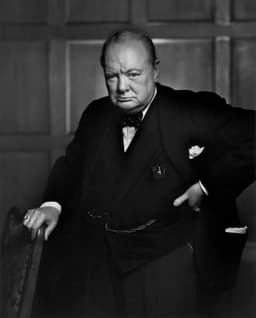
Winston Churchill
Politician · Modern
71.8Total
Basic Information
Born
1769
1874
Died
1821
1965
Era
Modern
Modern
Nationality
France
United Kingdom
Occupation
General
Politician
Civilization
Western
Western
Score Comparison
Military (10%)
94.0
55.0
Political (20%)
72.0
78.0
Influence (20%)
40.0
75.0
Legacy (20%)
80.0
68.0
Leadership (15%)
78.0
82.0
Strategy (15%)
90.0
65.0
TOTAL
70.9
71.8
Napoleon Bonaparte — Complete Timeline
1799 AD
Coup of 18 BrumaireOther◆ Major
Napoleon Bonaparte, with support from his brother Lucien and key political figures, overthrew the Directory in a bloodless coup. He established the Consulate with himself as First Consul, effectively becoming the ruler of France. This event ended the French Revolution's most unstable period.
French RevolutionCoupRise to Power
Impact: regional
1804 AD
Promulgation of the Napoleonic CodeOther◆ Major
Napoleon enacted the Civil Code of the French, known as the Napoleonic Code, a comprehensive set of laws that replaced the fragmented feudal legal systems. The code established legal equality, protected property rights, and secularized law. It became the basis for legal systems in many European and world countries.
Legal ReformNapoleonic CodeCivil Law
Impact: globalconstructive
1805 AD
Battle of AusterlitzWar◆ Major
Napoleon's Grande Arm
Napoleonic WarsBattleDecisive Victory
Impact: global
1812 AD
Invasion of RussiaWar◆ Major
Napoleon led the Grande Arm
Napoleonic WarsInvasionDisaster
Impact: globaldestructive
1815 AD
Battle of WaterlooWar◆ Major
Napoleon's French army was defeated by the combined forces of the Duke of Wellington's Anglo-Allied army and Gebhard Leberecht von Bl
Napoleonic WarsBattleFinal Defeat
Impact: globaldestructive
Winston Churchill — Complete Timeline
1940 AD
Appointed Prime Minister of the United KingdomPolitical Action◆ Major
On May 10, 1940, Winston Churchill became Prime Minister of the United Kingdom, replacing Neville Chamberlain. His appointment came as Nazi Germany invaded France and the Low Countries, and Churchill formed a coalition government to lead Britain through World War II.
World War IILeadershipCoalition Government
Impact: globalconstructive
Delivered the 'We Shall Fight on the Beaches' SpeechOther◆ Major
On June 4, 1940, Churchill delivered a speech to the House of Commons following the evacuation of British forces from Dunkirk. He declared that Britain would fight on the beaches, landing grounds, fields, streets, and hills, and never surrender, rallying British morale during the darkest days of World War II.
World War IIOratoryMorale
Impact: nationalconstructive
1941 AD
Signed the Atlantic CharterOther◆ Major
On August 14, 1941, Churchill and U.S. President Franklin D. Roosevelt signed the Atlantic Charter aboard HMS Prince of Wales. This joint declaration outlined post-war goals including self-determination, disarmament, and free trade, and became a foundational document for the Allied war aims and the United Nations.
World War IIAllied CooperationPost-war Planning
Impact: globalconstructive
1945 AD
Attended the Yalta ConferenceOther◆ Major
In February 1945, Churchill attended the Yalta Conference with Roosevelt and Stalin to discuss the post-war reorganization of Europe. The conference agreed on the division of Germany, the establishment of the United Nations, and the fate of Eastern Europe, though Churchill later expressed regret over concessions to Stalin.
World War IIPost-war SettlementBig Three
Impact: global
1946 AD
Delivered the 'Iron Curtain' SpeechOther◆ Major
On March 5, 1946, Churchill delivered a speech at Westminster College in Fulton, Missouri, where he stated that an 'iron curtain' had descended across Europe from Stettin to Trieste. This speech is widely regarded as marking the beginning of the Cold War, as it highlighted the division between Soviet-controlled Eastern Europe and the West.
Cold WarSoviet UnionDivision of Europe
Impact: globaldestructive
1953 AD
Awarded the Nobel Prize in LiteratureOther◆ Major
In 1953, Churchill was awarded the Nobel Prize in Literature for his historical writings, particularly 'The Second World War' and 'A History of the English-Speaking Peoples'. The Nobel committee cited his mastery of historical and biographical description as well as his brilliant oratory in defending human values.
LiteratureNobel PrizeHistorical Writing
Impact: nationalconstructive
Expert Analysis
Napoleon Bonaparte vs Winston Churchill: Historical Comparison
Napoleon Bonaparte and Winston Churchill stand as two titans of modern European history, yet their paths diverged sharply: Napoleon as a military conqueror who reshaped continental Europe, Churchill as a political leader who rallied Britain during its darkest hour. This comparison evaluates them across five weighted dimensions.
Dimension Analysis
**Military: Napoleon Bonaparte 94 / Winston Churchill 55**
Napoleon revolutionized warfare with rapid maneuvers, the corps system, and decisive battles like Austerlitz, dominating Europe for a decade. Churchill, though a war strategist, had no direct command experience and relied on generals; his greatest military contribution was strategic vision (e.g., the Atlantic Charter) rather than battlefield prowess.
**Political: Napoleon Bonaparte 75 / Winston Churchill 82**
Napoleon’s political genius lay in codifying laws (Napoleonic Code) and stabilizing post-revolutionary France, but his authoritarian rule and imperial overreach ultimately led to downfall. Churchill’s wartime coalition government, unifying Britain across party lines, and his post-war advocacy for European unity demonstrate superior democratic statecraft.
**Influence: Napoleon Bonaparte 82 / Winston Churchill 72**
Napoleon’s influence was immediate and vast—spreading nationalism, legal reform, and military tactics across Europe and the Americas. Churchill’s influence, though profound in shaping the post-WWII order (Iron Curtain speech, UN foundation), was more rhetorical and diplomatic than structural.
**Legacy: Napoleon Bonaparte 78 / Winston Churchill 75**
Napoleon’s legacy is dual: a brilliant reformer and a tyrant whose wars caused millions of deaths. Churchill’s legacy is more uniformly heroic in the West, though his colonial policies (e.g., Bengal famine) attract modern criticism. Both remain polarizing but iconic.
**Leadership: Napoleon Bonaparte 80 / Winston Churchill 85**
Napoleon inspired fierce loyalty through personal charisma and victory, but his hubris alienated allies. Churchill’s leadership—defiant oratory, steadfastness during the Blitz, and ability to galvanize a nation—ranks higher in crisis management and moral courage.
Verdict
Napoleon Bonaparte leads overall (82 vs 72) due to his unmatched military impact and broader global influence, despite Churchill’s superior political and crisis leadership.
FAQ
Q: Who ranks higher? A: Napoleon Bonaparte, driven by his revolutionary military and political legacy, though Churchill excels in democratic leadership and wartime resilience.
Rankings
🥇
Winston ChurchillLeader
Mil: 55.0Pol: 78.0Inf: 75.0
71.8
🥈
Napoleon Bonaparte
Mil: 94.0Pol: 72.0Inf: 40.0
70.9
+0.9 behind
How This Comparison Works
Algorithm
Each figure is scored on 6 dimensions (0—100 scale) based on structured historical data: Military (10%), Political (20%), Influence (20%), Legacy (20%), Leadership (15%), Strategy (15%). The weighted total produces the final ranking.
Data Sources
Scores are computed from structured sub-indicators in the database. Scale factors adjust for era (Ancient ×0.85, Modern ×1.0) and civilization size (Eastern ×1.05, Other ×0.80) to account for differences in population and military scale.
Maximum 3 Figures
Comparisons are limited to 2—3 figures to ensure readability and statistical meaningfulness.
Error Margins
±5 points per dimension — Sub-scores are derived from historical records with inherent uncertainty. Two figures within 5 points on a dimension should be considered roughly equivalent in that area.
Total Score Accuracy
±3 points overall — The weighted combination of 6 dimensions produces a total score with approximately ±3 points of uncertainty. Differences of less than 3 points are not statistically significant— the figures are effectively tied.
Known Limitations
- Historical records are incomplete and uneven across civilizations
- Figures from oral-tradition societies may be underrepresented
- Occupation labels can misclassify multi-role figures
- Scores measure capability and impact, not moral character
- Quantitative scoring is a comparison tool, not absolute truth
Capability Radar
Military (10%) — Battles & Warfare
Battles
95
55
Win Rate
90
60
Expansion
95
40
Political (20%) — Governance & Reform
Reform
95
70
Diplomacy
80
85
Economy
85
60
Influence (20%) — Cultural & Global Reach
Cultural
85
85
Global
90
85
Legacy (20%) — Historical Impact
Historical
95
90
Longevity
90
80
Leadership (15%) — Power & Stability
Tenure
85
75
Stability
70
70
Strategy (15%) — Tactics & Innovation
Strategy
95
85
Tactics
98
65
Reform
92
70
Similar Comparisons
Comments & Discussion
MetricMaverick6/16/2026
This scoring system is a joke. You're telling me Churchill's military score is 55 because he 'had no direct command experience'? Tell that to the millions who survived WWII thanks to his strategic direction—Dunkirk evacuation, Ultra intelligence, and the decision to fight on in 1940. Napoleon's 94 reflects pure battlefield glory, not war's human cost. Also, where's the 'economic stewardship' dimension? Churchill managed a wartime economy that outproduced the Axis; Napoleon bankrupted France twice. You're quantifying history through a statist lens that favors conquerors over saviors. Garbage in, garbage out.
Chronicler58326/16/2026
看到拿破仑与丘吉尔的比较,不禁让人联想到中国历史上的‘秦皇与汉武’。拿破仑类似秦始皇——都以军事手段快速统一并推行新型制度,但都因过度集权和穷兵黩武而迅速崩溃。而丘吉尔则更像汉高祖刘邦——未必亲自领兵,但善于用人、凝聚人心,在危难中开创王朝。有趣的是,刘邦的政治评分在传统史书中远高于军事评分,而拿破仑的94分军事看似辉煌,却忽略了中国史家更看重的‘止戈为武’理念。另外,拿破仑在埃及和俄罗斯的失败,与诸葛亮六出祁山徒劳无功有相似之处——战略脱离后勤现实。此评分体系明显偏重西方军事英雄叙事,缺乏东方对‘守成之君’与‘开国之主’的辩证看待。
ArchEye876/16/2026
从数据模型看,拿破仑军事94分与政治75分的巨大落差,暗示了典型的‘征服者悖论’——军事霸权往往无法转化为可持续的政治架构。反观中国古代案例,秦始皇军事评分不会低于90,但其政治评分因统一的文字、度量衡和郡县制而同样高达85以上。拿破仑的《法典》虽具改革意义,但未能像秦制那样实现国家长期整合。另外,总分82.4对72.3的差距,很大程度上被军事维度的权重放大。若增加‘制度延续性’或‘民生影响’指标,拿破仑的领先优势可能缩窄。建议调整各维度权重后再验证鲁棒性。