Loading...
Winston Churchill vs Wu Zetian
Winston Churchill leads by 1.8 pts · 2 figures compared
…
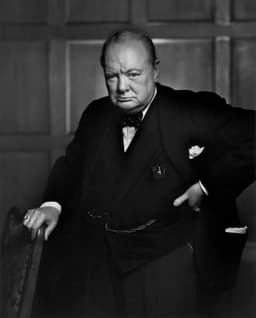
Winston Churchill
Politician · Modern
71.8Total

Wu Zetian
Emperor · Medieval
70.0Total
Basic Information
Born
1874
624
Died
1965
705
Era
Modern
Medieval
Nationality
United Kingdom
China
Occupation
Politician
Emperor
Civilization
Western
Eastern
Score Comparison
Military (10%)
55.0
60.0
Political (20%)
78.0
62.7
Influence (20%)
75.0
65.0
Legacy (20%)
68.0
80.0
Leadership (15%)
82.0
78.0
Strategy (15%)
65.0
66.3
TOTAL
71.8
70.0
Winston Churchill — Complete Timeline
1940 AD
Appointed Prime Minister of the United KingdomPolitical Action◆ Major
On May 10, 1940, Winston Churchill became Prime Minister of the United Kingdom, replacing Neville Chamberlain. His appointment came as Nazi Germany invaded France and the Low Countries, and Churchill formed a coalition government to lead Britain through World War II.
World War IILeadershipCoalition Government
Impact: globalconstructive
Delivered the 'We Shall Fight on the Beaches' SpeechOther◆ Major
On June 4, 1940, Churchill delivered a speech to the House of Commons following the evacuation of British forces from Dunkirk. He declared that Britain would fight on the beaches, landing grounds, fields, streets, and hills, and never surrender, rallying British morale during the darkest days of World War II.
World War IIOratoryMorale
Impact: nationalconstructive
1941 AD
Signed the Atlantic CharterOther◆ Major
On August 14, 1941, Churchill and U.S. President Franklin D. Roosevelt signed the Atlantic Charter aboard HMS Prince of Wales. This joint declaration outlined post-war goals including self-determination, disarmament, and free trade, and became a foundational document for the Allied war aims and the United Nations.
World War IIAllied CooperationPost-war Planning
Impact: globalconstructive
1945 AD
Attended the Yalta ConferenceOther◆ Major
In February 1945, Churchill attended the Yalta Conference with Roosevelt and Stalin to discuss the post-war reorganization of Europe. The conference agreed on the division of Germany, the establishment of the United Nations, and the fate of Eastern Europe, though Churchill later expressed regret over concessions to Stalin.
World War IIPost-war SettlementBig Three
Impact: global
1946 AD
Delivered the 'Iron Curtain' SpeechOther◆ Major
On March 5, 1946, Churchill delivered a speech at Westminster College in Fulton, Missouri, where he stated that an 'iron curtain' had descended across Europe from Stettin to Trieste. This speech is widely regarded as marking the beginning of the Cold War, as it highlighted the division between Soviet-controlled Eastern Europe and the West.
Cold WarSoviet UnionDivision of Europe
Impact: globaldestructive
1953 AD
Awarded the Nobel Prize in LiteratureOther◆ Major
In 1953, Churchill was awarded the Nobel Prize in Literature for his historical writings, particularly 'The Second World War' and 'A History of the English-Speaking Peoples'. The Nobel committee cited his mastery of historical and biographical description as well as his brilliant oratory in defending human values.
LiteratureNobel PrizeHistorical Writing
Impact: nationalconstructive
Wu Zetian — Complete Timeline
655 AD
Became Empress ConsortPolitical Action◆ Major
Wu Zetian was elevated from concubine to empress consort of Emperor Gaozong of Tang in 655. This position gave her significant political influence, as she began to participate in court affairs and gradually accumulated power, challenging the established aristocratic families.
Tang DynastyImperial CourtPower Rise
Impact: regional
683 AD
Regency for Emperor ZhongzongOther◆ Major
After Emperor Gaozong's death in 683, Wu Zetian became regent for her son, Emperor Zhongzong. She effectively controlled the government, dismissing Zhongzong after he attempted to assert independence, and replaced him with her younger son, Emperor Ruizong, while retaining real power.
Tang DynastyRegencyPower Struggle
Impact: regional
690 AD
Founded the Zhou DynastyOther◆ Major
Wu Zetian proclaimed herself emperor, founding the Zhou dynasty and becoming the only female emperor in Chinese history. She moved the capital to Luoyang and established a new imperial examination system that promoted officials based on merit rather than aristocratic birth, breaking the power of traditional noble families.
Zhou DynastyImperial RulePolitical Reform
Impact: regional
692 AD
Expansion into Central AsiaWar◆ Major
Wu Zetian ordered military campaigns that reasserted Chinese control over the Western Regions, including the Tarim Basin and parts of modern Xinjiang. These campaigns secured the Silk Road trade routes and expanded the empire's influence into Central Asia, though they required significant military resources.
Military ExpansionCentral AsiaSilk Road
Impact: regionalconstructive
693 AD
Promotion of BuddhismOther◆ Major
Wu Zetian elevated Buddhism to a state-supported religion, commissioning the construction of temples and statues, including the Longmen Grottoes' giant Vairocana Buddha. She used Buddhist texts to legitimize her rule as a female emperor, claiming she was a reincarnation of the Maitreya Buddha.
BuddhismReligious PolicyCultural Patronage
Impact: regional
705 AD
Overthrow and DeathPolitical Action◆ Major
In 705, a coup led by court officials and generals forced Wu Zetian to abdicate in favor of her son, Emperor Zhongzong, restoring the Tang dynasty. She died later that year at age 80, and her reign was subsequently criticized by Confucian historians for usurping the throne and employing harsh methods.
Tang DynastyCoupAbdication
Impact: regionaldestructive
Expert Analysis
Wu Zetian vs Winston Churchill
# The Unlikely Throne: Wu Zetian and Winston Churchill
In the year 690, a sixty-six-year-old woman in flowing silk robes ascended a golden throne in Luoyang, declaring herself emperor of China—a title no woman had ever claimed before. Twelve centuries later, in May 1940, a sixty-five-year-old man with a cigar clamped between his teeth stood before the British House of Commons and promised nothing but "blood, toil, tears, and sweat." One ruled an ancient empire at its zenith, the other saved a modern democracy at its nadir. Both were outsiders who seized history by the throat. Yet their paths, their methods, and their legacies could not be more different. What drove a Buddhist concubine to become the Son of Heaven, and a Victorian aristocrat to become the voice of a besieged continent?
Origins
Wu Zetian was born in 624, the daughter of a timber merchant who had risen through bureaucratic service. In Tang China, women had no formal political role. At fourteen, she entered the imperial palace as a low-ranking concubine—a fifth-rank "talented lady" among thousands. Her education, however, was exceptional. She could read classical texts, write poetry, and debate Buddhist scripture. This was her only weapon in a world where a woman's fate was decided by men.
Winston Churchill was born in 1874 into the heart of the British aristocracy. His father, Lord Randolph Churchill, was a charismatic but erratic politician; his mother, Jennie Jerome, was an American heiress. Churchill grew up in Blenheim Palace, surrounded by portraits of his ancestor, the Duke of Marlborough, who had defeated Louis XIV. Yet he was a poor student, mocked by his father, and sent to military academy as a last resort. Where Wu Zetian learned to navigate a closed world with subtlety, Churchill learned to charge headlong into battle.
Rise to Power
Wu Zetian's ascent was a masterclass in political survival. After Emperor Taizong died in 649, she was sent to a Buddhist convent—the fate of childless concubines. But she had cultivated a relationship with his son, the new emperor Gaozong. By 655, she had returned to court, borne him children, and orchestrated the removal of his empress. Within a decade, she was co-ruler in all but name. When Gaozong suffered a stroke in 660, she ruled from behind the curtain, issuing edicts and appointing officials. Her method was patience, observation, and the ruthless elimination of rivals—including her own eldest son, whom she accused of treason and forced to commit suicide.
Churchill's rise was a zigzag of glory and catastrophe. He entered Parliament in 1900 as a Conservative, switched to the Liberals, and held high office by his early thirties. But the Gallipoli disaster of 1915—a failed naval campaign he had championed—destroyed his reputation. For two decades, he wandered the political wilderness, writing books and warning of Nazi Germany. His moment came only in 1940, when Neville Chamberlain fell and Britain needed a leader who would never surrender. Churchill was not chosen for his wisdom; he was chosen for his defiance.
Leadership & Governance
Wu Zetian ruled for forty-five years, first as empress consort, then as emperor. She expanded the Chinese empire deep into Central Asia, securing the Silk Road. She reformed the civil service examination system, opening it to commoners and even to women in limited roles. She promoted officials based on merit, not birth—a revolutionary act in a society of rigid hierarchies. Her secret police kept the aristocracy in check, but she also built Buddhist temples, patronized the arts, and stabilized the grain supply. Her governance was pragmatic, not ideological. She knew power derived from control of information, appointments, and the army.
Churchill governed for only five years as wartime prime minister, but those years defined the 20th century. His speeches—"We shall fight on the beaches," "This was their finest hour"—were not rhetoric but strategy. He understood that modern war required civilian morale as much as military hardware. He forged an alliance with Stalin and Roosevelt, attended summit conferences, and oversaw the D-Day invasion. Yet his domestic record was weak. He had little interest in social reform, and his views on empire were stubbornly Victorian. He was a war leader, not a peacetime administrator.
Triumph & Tragedy
Wu Zetian's greatest triumph was her longevity. She died in bed at eighty-one, having outlived her enemies, her sons, and her dynasty's legitimacy. Her greatest tragedy was the Zhou dynasty itself—it collapsed within a year of her death, and her successors erased her official history, painting her as a monstrous usurper. She had no loyal successor, no institutional legacy that survived her.
Churchill's triumph was the defeat of Hitler. His tragedy came after. In 1945, weeks after Germany's surrender, he was voted out of office. The man who had saved Britain was rejected by the British people. He returned as prime minister in 1951, but his second term was marked by imperial decline, strikes, and a stroke. He died in 1965, a national hero, but aware that the world he had defended was fading.
Character & Destiny
Wu Zetian's personality was forged in paranoia. She trusted no one, not even her children. Her intelligence was cold, calculating, and utterly unsentimental. She understood that in a patriarchal system, a woman could only rule by being more ruthless than any man. Churchill's personality was forged in romanticism. He believed in destiny, in the English-speaking peoples, in the heroic narrative. His flaws—arrogance, stubbornness, imperial nostalgia—were the same as his strengths. Both were outsiders, but Wu Zetian was an outsider by gender, Churchill by temperament.
Legacy
Wu Zetian is remembered as a villain and a pioneer. For centuries, Chinese historians condemned her as a "usurper" and "licentious woman." Today, she is celebrated as a symbol of female power, though her methods remain controversial. Her real legacy is the example: she proved that a woman could rule China, even if only once.
Churchill is remembered as the savior of Western civilization. His speeches are quoted, his statues stand, his name evokes the finest hour. Yet his legacy is also contested—for his role in the Bengal famine of 1943, his opposition to Indian independence, his belief in white supremacy. He was not a perfect man, but he was the right man for a perfect storm.
Conclusion
What separates a concubine from a prime minister? Not ambition—both had it in abundance. Not intelligence—both were brilliant. What separates them is the world they inherited and the world they made. Wu Zetian ruled a civilization that had never seen a female emperor; she had to destroy to create. Churchill ruled a democracy that had seen too many would-be dictators; he had to inspire to preserve. One built a throne on blood and bureaucracy. The other built a legacy on words and will. Both remind us that history is not a story of good and evil, but of those who seize the moment and those who are seized by it.
Rankings
🥇
Winston ChurchillLeader
Mil: 55.0Pol: 78.0Inf: 75.0
71.8
🥈
Wu Zetian
Mil: 60.0Pol: 62.7Inf: 65.0
70.0
+1.8 behind
How This Comparison Works
Algorithm
Each figure is scored on 6 dimensions (0—100 scale) based on structured historical data: Military (10%), Political (20%), Influence (20%), Legacy (20%), Leadership (15%), Strategy (15%). The weighted total produces the final ranking.
Data Sources
Scores are computed from structured sub-indicators in the database. Scale factors adjust for era (Ancient ×0.85, Modern ×1.0) and civilization size (Eastern ×1.05, Other ×0.80) to account for differences in population and military scale.
Maximum 3 Figures
Comparisons are limited to 2—3 figures to ensure readability and statistical meaningfulness.
Error Margins
±5 points per dimension — Sub-scores are derived from historical records with inherent uncertainty. Two figures within 5 points on a dimension should be considered roughly equivalent in that area.
Total Score Accuracy
±3 points overall — The weighted combination of 6 dimensions produces a total score with approximately ±3 points of uncertainty. Differences of less than 3 points are not statistically significant— the figures are effectively tied.
Known Limitations
- Historical records are incomplete and uneven across civilizations
- Figures from oral-tradition societies may be underrepresented
- Occupation labels can misclassify multi-role figures
- Scores measure capability and impact, not moral character
- Quantitative scoring is a comparison tool, not absolute truth
Capability Radar
Military (10%) — Battles & Warfare
Battles
55
65
Win Rate
60
70
Expansion
40
75
Political (20%) — Governance & Reform
Reform
70
85
Diplomacy
85
80
Economy
60
85
Influence (20%) — Cultural & Global Reach
Cultural
85
85
Global
85
70
Legacy (20%) — Historical Impact
Historical
90
90
Longevity
80
85
Leadership (15%) — Power & Stability
Tenure
75
90
Stability
70
75
Strategy (15%) — Tactics & Innovation
Strategy
85
75
Tactics
65
60
Reform
70
80
Similar Comparisons
Comments & Discussion
数据流审计员6/16/2026
数据不会说谎:武则天在位期间,唐朝人口从约5000万增长到近7000万,科举录取人数翻了四倍。而丘吉尔在1940-1945年,英国GDP缩水了超过25%,殖民地开始崩盘。我当然知道战时经济不同,但"拯救文明"这种话太方便了——伤亡百万、印度大饥荒饿死300万人时,他的毅力和文采在哪?武皇冷血,但她让帝国更强大;丘吉尔浪漫,却把帝国带进坟墓。数字面前,煽情没啥用。
江湖历史侠6/16/2026
别扯什么"东方女皇 vs 西方铁腕"了,本质就一件事:都是靠危机上位的政治赌徒。武则天勾搭李治扳倒长孙无忌,丘吉尔靠纳粹威胁挤走张伯伦。两个人都清楚,和平时代他们根本没戏——一个女流,一个过气的战地记者,谁稀罕?武皇69岁登基,74岁被政变推翻,死前剥夺所有封号;丘吉尔1945年选举直接输给工党,晚年还中风。辉煌归辉煌,结局都不太好看,这才是真历史。
丝绸与雪茄6/16/2026
丘吉尔和武则天,一个靠老照片上的V字手势骗了全世界,一个靠佛像前的莲花坐折腾了整个官场。说白了都是演技派外交家——丘吉尔在雅尔塔把东欧卖给斯大林,武后在洛阳殿堂上假装大慈大悲。
Historian4786/16/2026
You’re comparing a Chinese emperor to a British prime minister, but the deeper contrast is in how they wielded words. Wu Zetian commissioned the Zhou Yi and used Buddhist sutras as political texts, manipulating metaphysical authority to rewrite reality. Churchill used English rhetoric—Parliamentary speeches, radio broadcasts—to unify a fractured nation. One controlled the narrative through divine decree, the other through democratic appeal. Both were masterful, but Wu’s strategy was bolder: she
Chronicler37876/16/2026
The "blood, toil, tears, and sweat" line is Churchill’s greatest publicity stunt. He gave that speech on May 13, 1940, but Britain was already committed to war—Parliament had voted for it. His real genius was theatrical timing, not strategic novelty. Wu Zetian’s ascent in 690, by contrast, involved actual political engineering: she dismantled the old aristocratic networks, promoted exam-system bureaucrats, and used Buddhist prophecy to justify her reign. Churchill talked a good game; Wu played t