Loading...
Theobald Wolfe Tone vs Vladimir Lenin
Vladimir Lenin leads by 23.4 pts · 2 figures compared
…
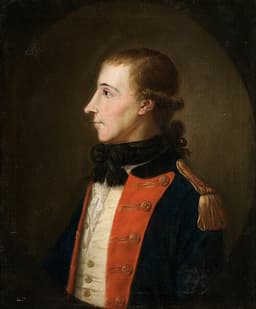
Theobald Wolfe Tone
Revolutionary · Modern
47.8Total
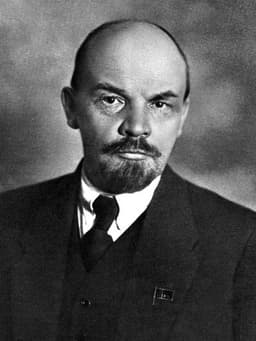
Vladimir Lenin
Revolutionary · Modern
71.2Total
Basic Information
Born
1763
1870
Died
1798
1924
Era
Modern
Modern
Nationality
Ireland
Russia
Occupation
Revolutionary
Revolutionary
Civilization
Western
Western
Score Comparison
Military (10%)
39.9
30.0
Political (20%)
27.9
78.0
Influence (20%)
57.2
82.0
Legacy (20%)
49.2
72.0
Leadership (15%)
57.1
80.0
Strategy (15%)
45.0
60.0
TOTAL
47.8
71.2
Theobald Wolfe Tone — Complete Timeline
1791 AD
Founding of the United IrishmenPolitical Action◆ Major
Tone co-founded the Society of United Irishmen in Belfast, a revolutionary organization seeking parliamentary reform and Catholic emancipation. The society later became a secret republican movement aiming for Irish independence.
Irish RepublicanismFoundingReform
Impact: nationalprogressive
Publication of 'An Argument on Behalf of the Catholics of Ireland'Cultural
Tone published a pamphlet arguing for the inclusion of Catholics in Irish political life. It helped bridge the gap between Protestant radicals and the Catholic majority, broadening the base of the United Irishmen.
PamphletCatholic EmancipationPolitical Thought
Impact: nationalprogressive
1796 AD
Expédition d'IrlandeWar◆ Major
Tone accompanied a French fleet of 43 ships carrying 15,000 troops to invade Ireland. The expedition was scattered by storms off Bantry Bay and failed to land, a major setback for the republican cause.
French InvasionNavalFailure
Impact: nationaltragic
Mission to FrancePolitical Action◆ Major
Tone traveled to France to secure French military support for an Irish rebellion. He persuaded the French Directory to launch an invasion of Ireland, leading to the dispatch of a large expeditionary force.
DiplomacyFrench RevolutionInvasion
Impact: national
1798 AD
Battle of Tory IslandWar◆ Major
Tone was captured aboard a French ship at the Battle of Tory Island, part of a second French invasion attempt. The French squadron was defeated by the Royal Navy, ending French hopes of aiding the Irish Rebellion.
1798 RebellionNaval BattleCapture
Impact: nationaltragic
Trial and SuicidePolitical Action◆ Major
Tone was tried for treason in Dublin and sentenced to death by hanging. Before execution, he cut his own throat to deny the British the spectacle of his hanging, dying from the wound a week later.
TrialSuicideMartyrdom
Impact: nationaltragic
Vladimir Lenin — Complete Timeline
1903 AD
Founding of the Bolshevik PartyPolitical Action
At the Second Congress of the Russian Social Democratic Labour Party in London, Lenin led a split that created the Bolshevik faction. The Bolsheviks advocated for a disciplined vanguard party of professional revolutionaries, a key element of Lenin's political strategy.
Political PartyRevolutionIdeology
Impact: global
1917 AD
April ThesesPolitical Action◆ Major
Lenin returned to Russia from exile and published the April Theses, calling for the overthrow of the Provisional Government, transfer of power to the soviets, and an end to World War I. This document set the Bolshevik agenda for the coming revolution.
RevolutionIdeologyPolitical Strategy
Impact: national
October RevolutionPolitical Action
Lenin led the Bolshevik seizure of power in Petrograd, capturing key government buildings and the Winter Palace. The revolution overthrew the Provisional Government and established the world's first socialist state, the Russian Soviet Federative Socialist Republic.
RevolutionCoupCommunism
Impact: global
1918 AD
Treaty of Brest-LitovskPolitical Action◆ Major
Lenin signed a separate peace treaty with the Central Powers, ceding vast territories including Ukraine, Belarus, and the Baltic states. The treaty ended Russia's involvement in World War I but caused significant territorial losses and internal opposition.
TreatyWorld War ITerritorial Loss
Impact: globaldestructive
1921 AD
New Economic Policy (NEP)Reform◆ Major
Lenin introduced the NEP, allowing limited private enterprise and market mechanisms to revive the war-torn Soviet economy. The policy replaced War Communism, permitting small-scale capitalism while the state retained control of major industries.
Economic ReformPolicyRecovery
Impact: nationalconstructive
1922 AD
Establishment of the Soviet UnionPolitical Action
Lenin oversaw the creation of the Union of Soviet Socialist Republics (USSR), a federation of Soviet republics. The new state consolidated Bolshevik control over much of the former Russian Empire and became a model for communist states worldwide.
State FormationCommunismFederation
Impact: global
Expert Analysis
Vladimir Lenin vs Theobald Wolfe Tone
# The Revolutionary's Gambit
On a cold November morning in 1917, Vladimir Lenin stood before the Smolny Institute in Petrograd, watching his Red Guards seize control of the city. Half a continent away and more than a century earlier, Theobald Wolfe Tone had stood on a French warship in Bantry Bay, watching a storm scatter the invasion fleet that was to liberate Ireland. One man would change the world; the other would die in a prison cell, his revolution stillborn. Both were revolutionaries, both were intellectuals, both sought to overturn the old order—yet their fates diverged as dramatically as the ages they inhabited. What made the difference?
Origins
Lenin was born into privilege in 1870, the son of a school inspector who rose to the rank of nobleman in the Russian imperial bureaucracy. His elder brother Alexander was executed for plotting to assassinate the Tsar—a trauma that hardened young Vladimir into a revolutionary. He devoured Marx, studied law, and spent years in Siberian exile honing his theories. His world was one of industrializing empires, railway networks, and mass politics.
Wolfe Tone was born in 1763 into Dublin’s Protestant Ascendancy, the son of a coachmaker. He studied law at Trinity College, married a young woman against his family’s wishes, and drifted into radical politics through the intoxicating air of the French Revolution. His world was one of small farms, secret societies, and a kingdom ruled from London. Unlike Lenin, he had no personal tragedy to steel him—only the burning injustice of a nation denied its own voice.
The difference in their eras was profound. Lenin lived in an age of mass movements, factory workers, and total war. Tone lived in an age of Enlightenment ideals, agrarian rebellions, and limited warfare. One could dream of a global revolution; the other could only dream of a small island’s freedom.
Rise to Power
Lenin’s path was methodical, almost clinical. In 1903, at the Second Congress of the Russian Social Democratic Labour Party in London, he engineered a split that created the Bolshevik faction—the “majority” that would become his instrument. For fourteen years he waited, wrote, and plotted from exile in Switzerland, building a party of disciplined professional revolutionaries. When the Tsar fell in February 1917, Lenin saw his moment. He returned to Russia in a sealed train, published the April Theses demanding the overthrow of the Provisional Government, and by October had led a coup that seized power in a single night.
Tone’s rise was more desperate, more reliant on others. In 1791, he co-founded the Society of United Irishmen in Belfast, a group that sought parliamentary reform and Catholic emancipation. He published pamphlets arguing for inclusion of Catholics in political life, bridging Ireland’s sectarian divide. But when the British government cracked down, Tone fled to America, then to France. He spent years begging the French Directory for an invasion force, finally securing a fleet of forty-three ships and fifteen thousand troops in 1796. The expedition was scattered by storms before a single soldier landed.
Lenin controlled his own destiny; Tone depended on a foreign power.
Leadership & Governance
As a ruler, Lenin was ruthless, pragmatic, and visionary. He signed the Treaty of Brest-Litovsk in 1918, ceding vast territories to Germany to save his revolution. He unleashed the Red Terror to crush opposition. But he also showed flexibility: in 1921, facing economic collapse, he introduced the New Economic Policy, allowing limited private enterprise and market mechanisms. He understood that ideology must sometimes bend to reality. His military score of 30 reflects his lack of battlefield command, but his political score of 80 captures his genius for organization and propaganda.
Tone never governed. He was a revolutionary in exile, a diplomat in borrowed clothes, a soldier on a French ship. His military score of 36 is slightly higher than Lenin’s, but his political score of 39.5 is half that of his Russian counterpart. He had no state to lead, no army to command, no economy to rebuild. His leadership score of 30 reflects a man who inspired but could not execute.
Triumph & Tragedy
Lenin’s greatest moment was the October Revolution itself—the seizure of power that would create the Soviet Union in 1922, a federation that would span one-sixth of the Earth’s landmass. His greatest tragedy came slowly: the civil war, the famine, the terror that his policies unleashed, and the knowledge that his revolution would be inherited by Joseph Stalin, a man he came to distrust.
Tone’s greatest moment was the 1796 expedition, when he saw the French fleet approach Ireland’s shores, hope flickering in his heart. His greatest tragedy was its failure—and his own end. Captured at the Battle of Tory Island in 1798 during a second French invasion attempt, he was tried for treason in Dublin. Sentenced to hang, he cut his own throat in prison, dying on November 19, 1798. “I have attempted to establish the independence of my country,” he wrote in his final statement. “I have failed.”
Character & Destiny
Lenin was a man of iron will and cold calculation. He could wait years for a moment, then strike with devastating precision. His personality was forged in the crucible of his brother’s execution and the long years of exile. He believed history was on his side, and he was willing to sacrifice millions to prove it.
Tone was a man of passion and eloquence, a writer and speaker who inspired others but could not control events. He was a romantic revolutionary in an age of realism. His personality was shaped by the optimism of the Enlightenment and the despair of defeat. He believed in the power of ideas, but ideas alone could not land an invasion fleet.
Legacy
Lenin’s legacy is vast and contested. He created the Soviet Union, inspired communist movements across the globe, and shaped the entire twentieth century. His influence score of 80 and legacy score of 70 reflect a man who changed the world, for better or worse. His body lies embalmed in Moscow’s Red Square, a monument to a revolution that eventually collapsed under its own weight.
Tone’s legacy is smaller but more poignant. He is remembered as the father of Irish republicanism, his influence score of 73.2 and legacy score of 67.7 reflecting a man who failed in his lifetime but inspired generations. His statue stands in Dublin, and his words are quoted by every Irish nationalist who dreams of a united Ireland.
Conclusion
Lenin and Tone were both revolutionaries, but they lived in different worlds. Lenin had the machinery of a modern state to seize, the theories of Marx to guide him, and the chaos of world war to exploit. Tone had only his eloquence, his courage, and the shifting winds of European politics. One succeeded in building a new world; the other succeeded only in dreaming of one. Yet both understood a fundamental truth: that the old order could be challenged, that ordinary people could rise up, that history could be changed. Lenin proved it could be done. Tone proved it could be attempted. In the end, perhaps that is the difference between a revolutionary who changes the world and one who changes only the imagination.
Rankings
🥇
Vladimir LeninLeader
Mil: 30.0Pol: 78.0Inf: 82.0
71.2
🥈
Theobald Wolfe Tone
Mil: 39.9Pol: 27.9Inf: 57.2
47.8
+23.4 behind
How This Comparison Works
Algorithm
Each figure is scored on 6 dimensions (0—100 scale) based on structured historical data: Military (10%), Political (20%), Influence (20%), Legacy (20%), Leadership (15%), Strategy (15%). The weighted total produces the final ranking.
Data Sources
Scores are computed from structured sub-indicators in the database. Scale factors adjust for era (Ancient ×0.85, Modern ×1.0) and civilization size (Eastern ×1.05, Other ×0.80) to account for differences in population and military scale.
Maximum 3 Figures
Comparisons are limited to 2—3 figures to ensure readability and statistical meaningfulness.
Error Margins
±5 points per dimension — Sub-scores are derived from historical records with inherent uncertainty. Two figures within 5 points on a dimension should be considered roughly equivalent in that area.
Total Score Accuracy
±3 points overall — The weighted combination of 6 dimensions produces a total score with approximately ±3 points of uncertainty. Differences of less than 3 points are not statistically significant— the figures are effectively tied.
Known Limitations
- Historical records are incomplete and uneven across civilizations
- Figures from oral-tradition societies may be underrepresented
- Occupation labels can misclassify multi-role figures
- Scores measure capability and impact, not moral character
- Quantitative scoring is a comparison tool, not absolute truth
Capability Radar
Military (10%) — Battles & Warfare
Battles
5
20
Win Rate
5
35
Expansion
5
70
Political (20%) — Governance & Reform
Reform
30
95
Diplomacy
25
75
Economy
5
60
Influence (20%) — Cultural & Global Reach
Cultural
45
80
Global
40
90
Legacy (20%) — Historical Impact
Historical
50
95
Longevity
55
85
Leadership (15%) — Power & Stability
Tenure
10
55
Stability
5
40
Strategy (15%) — Tactics & Innovation
Strategy
15
55
Tactics
10
30
Reform
20
85
Similar Comparisons
Comments & Discussion
红色账簿6/16/2026
咱们得把账算清楚:列宁同志手里握着的是实实在在的1905年革命经验、流放期间的著作、以及一份精确到小时的行動纲领。托恩呢?他有啥?一腔热血加上几本法语启蒙小册子,结果在巴兰特雷湾被一场暴风雨全搞砸了。这根本不是理想主义对现实主义的对决,这是一份策划周密的企业并购方案跟一份写在餐巾纸上的白日梦在打架。托恩要是活在1917年,我估计他连《火星报》的发行人都当不上。|zh
空想博物馆馆长6/16/2026
我倒是觉得你们这些崇拜“效率”的人漏掉了最关键的东西:托恩的失败恰恰证明了他所处的时代是真正属于人民的起义时代,而不是列宁那种职业革命家夺权的年代。1798年的爱尔兰起义是农民、天主教徒、激进的新教徒为了一个共同的共和国理想走到一起——没有中央委员会,没有政委,没有秘密警察。托恩虽然死在牢里,但他的思想在爱尔兰土地上生根发芽了,而列宁的理想呢?在古拉格里彻底腐烂了。谁才是真正的失败者?|zh
Chronicler68506/16/2026
The real gambit here is historical timing, not personal genius. Lenin rode the wave of a collapsing multi-ethnic empire at war with Germany, while Tone tried to surf a ripple in a stable British state that had just crushed the American rebels. If Tone had been born in 1870 and Lenin in 1763, we'd be calling Tone the father of socialist revolution and Lenin the guy who got his fleet sunk by a gale. History is a capricious mistress, and she favored the man with the
Historian9006/16/2026
Here's what the romantics never tell you: Lenin succeeded because he understood that revolution is a profession, not a passion. He ran the Bolsheviks like a crack military staff—centralized, disciplined, utterly ruthless. Tone was running a book club with muskets. The United Irishmen had no real command structure, no intelligence network, no fallback plan. When the French didn't show, they just... dissolved. Lenin would have had a backup fleet, a secret railway, and a dozen safe houses prepped.
Historian4366/16/2026
The key difference is that Lenin had the railroads and telegraph to actually coordinate a modern coup, while Tone was stuck praying for favorable winds like some 18th-century sailor. You can't build a revolutionary state on the whims of the weather. When Lenin faced a crisis, he could summon the Petrograd Soviet; when Tone faced a storm, he just watched his fleet disperse. That's not courage—that's just bad logistics being romanticized as martyrdom. Tone was brave but he was fighting the wrong w