Loading...
Muhammad ibn Abd al-Karim al-Khattabi vs Theobald Wolfe Tone
Theobald Wolfe Tone leads by 6.1 pts · 2 figures compared
…
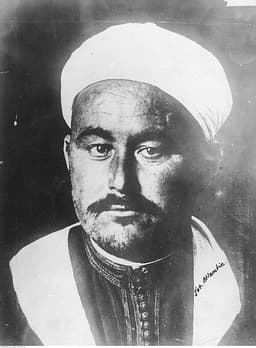
Muhammad ibn Abd al-Karim al-Khattabi
Revolutionary · Modern
41.7Total
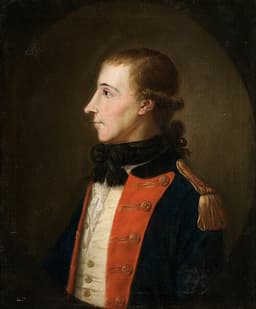
Theobald Wolfe Tone
Revolutionary · Modern
47.8Total
Basic Information
Born
1854
1763
Died
1927
1798
Era
Modern
Modern
Nationality
Sudan
Ireland
Occupation
Revolutionary
Revolutionary
Civilization
Other
Western
Score Comparison
Military (10%)
47.5
39.9
Political (20%)
25.0
27.9
Influence (20%)
52.5
57.2
Legacy (20%)
40.0
49.2
Leadership (15%)
41.5
57.1
Strategy (15%)
38.3
45.0
TOTAL
41.7
47.8
Muhammad ibn Abd al-Karim al-Khattabi — Complete Timeline
1884 AD
Command at the Battle of El TebWar◆ Major
Muhammad ibn Abd al-Karim al-Khattabi led Mahdist forces at the Battle of El Teb against a British relief column. Although the Mahdists were defeated, the battle demonstrated their ability to challenge British military power in Sudan.
Mahdist WarBattle of El TebBritish Relief
Impact: regional
Participation in the Siege of KhartoumWar◆ Major
Al-Khattabi commanded Mahdist forces during the siege of Khartoum. His troops played a key role in the final assault that captured the city and killed General Gordon, contributing to the Mahdist victory.
Siege of KhartoumMahdist WarGordon's Death
Impact: regional
1899 AD
Capture by British ForcesWar◆ Major
Following the fall of the Mahdist state, al-Khattabi was captured by British forces. He was taken prisoner and later exiled, ending his military career and role in the Mahdist movement.
CaptureExileMahdist Defeat
Impact: regionaltragic
Theobald Wolfe Tone — Complete Timeline
1791 AD
Founding of the United IrishmenPolitical Action◆ Major
Tone co-founded the Society of United Irishmen in Belfast, a revolutionary organization seeking parliamentary reform and Catholic emancipation. The society later became a secret republican movement aiming for Irish independence.
Irish RepublicanismFoundingReform
Impact: nationalprogressive
Publication of 'An Argument on Behalf of the Catholics of Ireland'Cultural
Tone published a pamphlet arguing for the inclusion of Catholics in Irish political life. It helped bridge the gap between Protestant radicals and the Catholic majority, broadening the base of the United Irishmen.
PamphletCatholic EmancipationPolitical Thought
Impact: nationalprogressive
1796 AD
Expédition d'IrlandeWar◆ Major
Tone accompanied a French fleet of 43 ships carrying 15,000 troops to invade Ireland. The expedition was scattered by storms off Bantry Bay and failed to land, a major setback for the republican cause.
French InvasionNavalFailure
Impact: nationaltragic
Mission to FrancePolitical Action◆ Major
Tone traveled to France to secure French military support for an Irish rebellion. He persuaded the French Directory to launch an invasion of Ireland, leading to the dispatch of a large expeditionary force.
DiplomacyFrench RevolutionInvasion
Impact: national
1798 AD
Battle of Tory IslandWar◆ Major
Tone was captured aboard a French ship at the Battle of Tory Island, part of a second French invasion attempt. The French squadron was defeated by the Royal Navy, ending French hopes of aiding the Irish Rebellion.
1798 RebellionNaval BattleCapture
Impact: nationaltragic
Trial and SuicidePolitical Action◆ Major
Tone was tried for treason in Dublin and sentenced to death by hanging. Before execution, he cut his own throat to deny the British the spectacle of his hanging, dying from the wound a week later.
TrialSuicideMartyrdom
Impact: nationaltragic
Expert Analysis
Muhammad ibn Abd al-Karim al-Khattabi vs Theobald Wolfe Tone
### The Revolutionary’s Mirror: Two Paths to Defeat
In the summer of 1798, a French warship off the coast of Ireland was battered into surrender. Among the prisoners was a slight, bespectacled man who had once dreamed of uniting Catholic and Protestant against a common English enemy. His name was Theobald Wolfe Tone, and within weeks he would be dead by his own hand, his throat cut in a Dublin cell. Half a world away and nearly a century later, another revolutionary watched his own dream crumble in the Sudanese desert. Muhammad ibn Abd al-Karim al-Khattabi, a commander of the Mahdist state, saw the black smoke of Khartoum’s fall give way to the relentless advance of Anglo-Egyptian rifles. By 1899, he too would be a prisoner, his empire of faith extinguished. Both men fought for liberation against a vast imperial power. Both lost. But the worlds they inhabited—and the defeats they suffered—could not have been more different.
### Origins
Wolfe Tone was born in 1763 into a Protestant middle-class family in Dublin, at a time when Ireland was a subordinate kingdom of Britain. Educated at Trinity College, he trained as a lawyer but found his true calling in the ferment of Enlightenment ideas. The American Revolution had succeeded; the French Revolution was brewing. Tone absorbed the language of natural rights, secularism, and representative government. He saw Ireland’s problem not as a religious war but as a political one: a corrupt Protestant Ascendancy propped up by London. His solution was radical unity—a republic that would embrace Catholic, Protestant, and Dissenter alike.
Al-Khattabi, born in 1854 in the Sudan, inhabited a different moral universe. The Sudan was a vast territory of diverse tribes, held loosely by an Egyptian administration that itself answered to the Ottoman Empire. For centuries, the region had been shaped by Islamic scholarship, Sufi mysticism, and the memory of great caliphates. Al-Khattabi grew up in a world where the ultimate authority was not a constitution but the Quran, and where political legitimacy flowed from religious leadership. The arrival of European colonial powers, via Egypt, was not an invitation to reform but an assault on faith itself. His revolution would be a jihad.
### Rise to Power
Tone’s path was intellectual and diplomatic. In 1791, he co-founded the Society of United Irishmen in Belfast, a club of reformers that quickly became a revolutionary underground. That same year, he published *An Argument on Behalf of the Catholics of Ireland*, a bold pamphlet that sought to bridge the sectarian divide by arguing that Catholic emancipation was essential to Irish liberty. His weapon was the pen; his battlefield, the assembly room.
Al-Khattabi rose through the ranks of the Mahdist movement, a religious uprising led by Muhammad Ahmad, the self-proclaimed Mahdi—a messianic figure who promised to purify Islam and drive out the infidels. Al-Khattabi’s authority came not from argument but from devotion and combat. He was a commander, not a pamphleteer. When the Mahdi’s forces besieged Khartoum in 1884, al-Khattabi led his men in the final assault that killed General Charles Gordon and stunned the British Empire. For a brief, intoxicating moment, the Mahdist state seemed invincible.
### Leadership & Governance
Tone never governed. His leadership was visionary and organizational. He persuaded the French Directory in 1796 to launch a massive invasion of Ireland—43 ships carrying 15,000 troops. But the expedition was scattered by storms, and Tone could only watch from a French deck as his hopes were dashed against the rocks of Bantry Bay. His military score of 36.0 reflects a man who was more strategist than soldier, more agitator than general.
Al-Khattabi, by contrast, was a battlefield commander. His military score of 43.2 and strategy score of 63.7 indicate a man who understood the grim arithmetic of desert warfare. He led at the Battle of El Teb in 1884 against a British relief column, and his forces held the siege of Khartoum for months. But his governance was tied to the Mahdi’s theocratic vision—a state that could mobilize for holy war but struggled to build institutions of peace. His political score of 60.7 suggests a leader who was effective within his own system, but that system had no room for compromise.
### Triumph & Tragedy
Tone’s greatest moment was also his greatest failure. The 1798 rebellion erupted without him, a desperate uprising of peasants and radicals that was crushed in blood. When a second French expedition arrived too late, Tone was captured at the Battle of Tory Island. His trial was a formality; his sentence, death. In his cell, he cut his own throat, dying a week later on November 19, 1798. “I have attempted to establish the independence of my country,” he wrote. “I have failed.”
Al-Khattabi’s triumph was the fall of Khartoum in 1885. But the Mahdi died soon after, and the state he built was brittle. In 1898, an Anglo-Egyptian army under Herbert Kitchener marched south, armed with Maxim guns and modern logistics. At Omdurman, the Mahdist army was annihilated. Al-Khattabi was captured in 1899 and exiled. His world—a caliphate of faith and sword—was dismantled.
### Character & Destiny
Tone was a child of the Enlightenment, believing that reason could unite a fractured land. His tragedy was that the forces he sought to harness—French ambition, Irish sectarianism, British power—were beyond his control. He died a martyr, but his defeat was one of timing and geography.
Al-Khattabi was a child of revelation, believing that divine will could overcome earthly empires. His tragedy was that the modern world, with its industrial weaponry and bureaucratic efficiency, was indifferent to faith. He died a prisoner, but his defeat was one of technology and history.
### Legacy
Tone is remembered as the father of Irish republicanism. His ideas—secular, inclusive, radical—shaped generations of rebels, from the Young Irelanders to the Easter Rising of 1916. Today, his grave in Bodenstown is a pilgrimage site. His legacy score of 67.7 reflects a man whose influence far outlasted his life.
Al-Khattabi is less known outside Sudan, but within it, he is a symbol of resistance. His legacy score of 52.3 suggests a figure whose memory is more localized, bound to the story of the Mahdist state. Yet in the long arc of anti-colonial struggle, he stands alongside other commanders who fought the British Empire and lost—but whose defiance was not forgotten.
### Conclusion
Two revolutionaries, two defeats. Tone died by his own hand, a republican martyr. Al-Khattabi died in exile, a warrior of faith. One sought to build a nation of citizens; the other, a community of believers. Both faced the same empire, but from opposite sides of a world that was rapidly shrinking. Their stories remind us that revolution is not a single idea, but a thousand local dreams—each shaped by its own history, each crushed by its own ironies. The question they leave us is not why they lost, but why we remember.
Rankings
🥇
Theobald Wolfe ToneLeader
Mil: 39.9Pol: 27.9Inf: 57.2
47.8
🥈
Muhammad ibn Abd al-Karim al-Khattabi
Mil: 47.5Pol: 25.0Inf: 52.5
41.7
+6.1 behind
How This Comparison Works
Algorithm
Each figure is scored on 6 dimensions (0—100 scale) based on structured historical data: Military (10%), Political (20%), Influence (20%), Legacy (20%), Leadership (15%), Strategy (15%). The weighted total produces the final ranking.
Data Sources
Scores are computed from structured sub-indicators in the database. Scale factors adjust for era (Ancient ×0.85, Modern ×1.0) and civilization size (Eastern ×1.05, Other ×0.80) to account for differences in population and military scale.
Maximum 3 Figures
Comparisons are limited to 2—3 figures to ensure readability and statistical meaningfulness.
Error Margins
±5 points per dimension — Sub-scores are derived from historical records with inherent uncertainty. Two figures within 5 points on a dimension should be considered roughly equivalent in that area.
Total Score Accuracy
±3 points overall — The weighted combination of 6 dimensions produces a total score with approximately ±3 points of uncertainty. Differences of less than 3 points are not statistically significant— the figures are effectively tied.
Known Limitations
- Historical records are incomplete and uneven across civilizations
- Figures from oral-tradition societies may be underrepresented
- Occupation labels can misclassify multi-role figures
- Scores measure capability and impact, not moral character
- Quantitative scoring is a comparison tool, not absolute truth
Capability Radar
Military (10%) — Battles & Warfare
Battles
35
5
Win Rate
30
5
Expansion
25
5
Political (20%) — Governance & Reform
Reform
15
30
Diplomacy
15
25
Economy
10
5
Influence (20%) — Cultural & Global Reach
Cultural
15
45
Global
10
40
Legacy (20%) — Historical Impact
Historical
20
50
Longevity
10
55
Leadership (15%) — Power & Stability
Tenure
20
10
Stability
10
5
Strategy (15%) — Tactics & Innovation
Strategy
35
15
Tactics
40
10
Reform
20
20
Similar Comparisons
Muhammad ibn Abd al-Karim al-Khattabi vs Abd el-KrimMuhammad ibn Abd al-Karim al-Khattabi vs Bal Gangadhar TilakMuhammad ibn Abd al-Karim al-Khattabi vs Bhagat SinghMuhammad ibn Abd al-Karim al-Khattabi vs Li ZichengMuhammad ibn Abd al-Karim al-Khattabi vs Shamil BasayevMuhammad ibn Abd al-Karim al-Khattabi vs Miguel Hidalgo
Comments & Discussion
No comments yet. Be the first to share your thoughts!