Loading...
Li Zicheng vs Theobald Wolfe Tone
Theobald Wolfe Tone leads by 4.3 pts · 2 figures compared
…
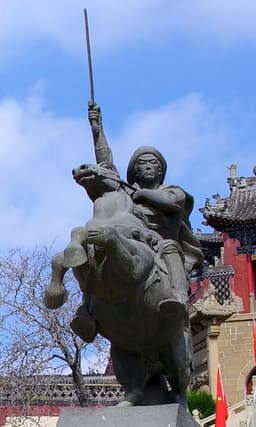
Li Zicheng
Revolutionary · Modern
43.5Total
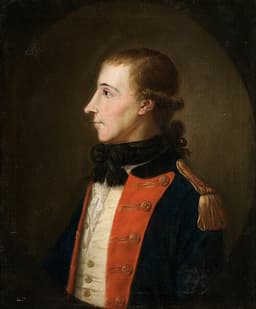
Theobald Wolfe Tone
Revolutionary · Modern
47.8Total
Basic Information
Born
1606
1763
Died
1645
1798
Era
Modern
Modern
Nationality
China
Ireland
Occupation
Revolutionary
Revolutionary
Civilization
Eastern
Western
Score Comparison
Military (10%)
50.0
39.9
Political (20%)
27.9
27.9
Influence (20%)
52.5
57.2
Legacy (20%)
44.2
49.2
Leadership (15%)
39.0
57.1
Strategy (15%)
43.3
45.0
TOTAL
43.5
47.8
Li Zicheng — Complete Timeline
1644 AD
Captured Beijing and Ended the Ming DynastyWar
Li Zicheng led his rebel army to capture Beijing. The Chongzhen Emperor committed suicide, ending the Ming dynasty. Li Zicheng proclaimed the Shun dynasty and briefly ruled from the Forbidden City before being defeated by Qing forces.
Ming-Qing TransitionRebellionBeijing
Impact: globaldestructive
Defeated at the Battle of Shanhai PassWar◆ Major
Li Zicheng's army was defeated by the combined forces of Wu Sangui and the Manchus at the Battle of Shanhai Pass. The defeat forced him to abandon Beijing and retreat westward, effectively ending his control over northern China.
Ming-Qing TransitionBattleDefeat
Impact: globaltragic
Proclaimed the Shun DynastyPolitical Action◆ Major
After capturing Beijing, Li Zicheng formally proclaimed the establishment of the Shun dynasty in Xi'an. He adopted the title of emperor and began implementing his own administrative policies, though his rule was short-lived.
Shun DynastyProclamationRebellion
Impact: nationalconstructive
1645 AD
Killed in Jiugong MountainWar◆ Major
Li Zicheng was killed by a local militia while fleeing through Jiugong Mountain in Hubei province. His death marked the end of the Shun dynasty and the collapse of his rebellion, though some accounts claim he survived and became a monk.
Shun DynastyDeathRebellion
Impact: nationaltragic
Theobald Wolfe Tone — Complete Timeline
1791 AD
Founding of the United IrishmenPolitical Action◆ Major
Tone co-founded the Society of United Irishmen in Belfast, a revolutionary organization seeking parliamentary reform and Catholic emancipation. The society later became a secret republican movement aiming for Irish independence.
Irish RepublicanismFoundingReform
Impact: nationalprogressive
Publication of 'An Argument on Behalf of the Catholics of Ireland'Cultural
Tone published a pamphlet arguing for the inclusion of Catholics in Irish political life. It helped bridge the gap between Protestant radicals and the Catholic majority, broadening the base of the United Irishmen.
PamphletCatholic EmancipationPolitical Thought
Impact: nationalprogressive
1796 AD
Expédition d'IrlandeWar◆ Major
Tone accompanied a French fleet of 43 ships carrying 15,000 troops to invade Ireland. The expedition was scattered by storms off Bantry Bay and failed to land, a major setback for the republican cause.
French InvasionNavalFailure
Impact: nationaltragic
Mission to FrancePolitical Action◆ Major
Tone traveled to France to secure French military support for an Irish rebellion. He persuaded the French Directory to launch an invasion of Ireland, leading to the dispatch of a large expeditionary force.
DiplomacyFrench RevolutionInvasion
Impact: national
1798 AD
Battle of Tory IslandWar◆ Major
Tone was captured aboard a French ship at the Battle of Tory Island, part of a second French invasion attempt. The French squadron was defeated by the Royal Navy, ending French hopes of aiding the Irish Rebellion.
1798 RebellionNaval BattleCapture
Impact: nationaltragic
Trial and SuicidePolitical Action◆ Major
Tone was tried for treason in Dublin and sentenced to death by hanging. Before execution, he cut his own throat to deny the British the spectacle of his hanging, dying from the wound a week later.
TrialSuicideMartyrdom
Impact: nationaltragic
Expert Analysis
Theobald Wolfe Tone vs Li Zicheng
# The Rebel’s Fate: Li Zicheng and Wolfe Tone
In the spring of 1644, a peasant warlord rode through the gates of Beijing’s Forbidden City, the ancient seat of Chinese emperors. Li Zicheng had won. Half a world away and 154 years later, a French warship anchored off the coast of Donegal, carrying a lawyer-turned-revolutionary named Wolfe Tone toward what he hoped would be Ireland’s liberation. One man would rule a dynasty for forty-two days; the other would never set foot on his homeland as a free man again. Both sought to topple empires, but their stories ended in radically different keys—one a brief, bloody triumph, the other a martyr’s quiet tragedy. What drove these two revolutionaries, born worlds apart, to such divergent fates?
Origins
Li Zicheng was born in 1606 into a grinding poverty that defined his early years. His family were peasants in Shaanxi province, a region ravaged by drought, famine, and the crumbling of Ming authority. As a young man, he worked as a shepherd and later as a postal courier—a job that vanished when the Ming government slashed public services to fund wars against Manchu invaders. When a local famine pushed him to desperation, Li joined a rebellion. He had no education, no political philosophy, only a raw hunger and a talent for survival.
Wolfe Tone, born in Dublin in 1763, came from a very different world. His father was a Protestant coach-maker, his mother Catholic. Tone studied law at Trinity College Dublin, where he absorbed the Enlightenment ideals of liberty and popular sovereignty. He was a man of words, not fists—a pamphleteer, a lawyer, a dreamer. While Li Zicheng’s rebellion grew from empty bellies, Tone’s grew from empty promises: the British government had long denied Catholics equal rights, and Irish Protestants like Tone saw their own nation reduced to a colonial afterthought.
Rise to Power
Li Zicheng’s ascent was a brutal, pragmatic climb. By the 1630s, he had joined the rebel army of Gao Yingxiang, a bandit leader. When Gao was captured and executed, Li took command. He proved a master of guerrilla warfare, melting into the mountains, rallying the starving, and offering a simple slogan: “Follow me, and you will eat.” By 1643, he had unified most of China’s peasant rebel factions, declared himself the “Dashing King,” and marched on the Ming capital.
Tone’s rise was intellectual rather than martial. In 1791, he co-founded the Society of United Irishmen, a revolutionary group that sought to unite Catholics, Protestants, and Dissenters behind the goal of Irish independence. His pamphlet “An Argument on Behalf of the Catholics of Ireland” was a masterstroke of political bridge-building, convincing many Protestants that Catholic emancipation was not a threat but a necessity. When the British government suppressed the United Irishmen in 1794, Tone fled to America, then to France, where he lobbied the revolutionary government for military aid. He was a diplomat in exile, not a general in the field.
Leadership & Governance
Li Zicheng’s brief rule in Beijing reveals a man unprepared for power. He entered the Forbidden City in April 1644, proclaimed the Shun dynasty, and immediately faced the impossible task of governing a shattered empire. His army, once disciplined in the field, turned to looting and torture to extract wealth from Ming loyalists. Li himself seemed paralyzed—he issued vague decrees about land reform but never implemented them. He had no administrative experience, no bureaucracy, no vision beyond conquest. When Ming general Wu Sangui, stationed at the Great Wall, refused to surrender, Li’s response was clumsy and vengeful: he executed Wu’s family, sealing his own doom.
Tone, by contrast, never had the chance to govern. His genius was in persuasion, not administration. He convinced the French Directory to launch two invasions of Ireland: the first in 1796, when 15,000 French troops sailed but were scattered by storms; the second in 1798, when a smaller force landed but was crushed at the Battle of Tory Island. Tone was captured aboard the French ship *Hoche*, his dream of a free Ireland drowned in the Atlantic. Yet his leadership was moral, not military—he inspired a movement that would outlive him.
Triumph & Tragedy
Li Zicheng’s greatest moment was also his undoing. Capturing Beijing in 1644 and watching the Ming emperor hang himself from a tree in Coal Hill seemed the ultimate victory. But within weeks, Wu Sangui had allied with the Manchu armies, and at the Battle of Shanhai Pass in May 1644, Li’s forces were routed. He fled west, his army disintegrating. In 1645, while fleeing through Jiugong Mountain in Hubei, he was killed by a local militia—a peasant like himself, but one who saw him as a threat, not a liberator.
Tone’s tragedy was quieter but more profound. After his capture, he was tried for treason in Dublin and sentenced to hang. On the morning of his execution, November 19, 1798, he cut his own throat with a penknife, denying the British the spectacle of his death. He died days later, his final words a defiant whisper: “I have done my duty.” No throne, no dynasty—only a legacy of sacrifice.
Character & Destiny
Li Zicheng was a creature of circumstance—pragmatic, ruthless, but lacking the strategic patience to build a state. His personality was forged in survival: he trusted his instincts, but not his allies. He executed Wu Sangui’s family out of rage, not calculation, handing the Manchus the perfect pretext for invasion. His destiny was to be a destroyer, not a builder.
Tone was a man of principle, a revolutionary who believed in ideas as weapons. He was not a soldier, yet he sailed into battle; he was not a martyr by design, yet he chose death over dishonor. His personality—optimistic, articulate, stubborn—drove him to keep seeking French aid long after hope had faded. His destiny was to be a symbol, not a ruler.
Legacy
Li Zicheng is remembered as a cautionary tale in China: the peasant who climbed too high and fell too fast. His name evokes the chaos of the Ming collapse, the tragedy of a rebel who could not govern. For centuries, Chinese historians have debated whether he was a hero or a bandit. Modern scholarship leans toward the latter: his brief Shun dynasty left no institutions, no reforms, only ashes.
Wolfe Tone’s legacy is the opposite. He is the father of Irish republicanism, a martyr whose ideas survived his death. The United Irishmen’s ideals—secularism, unity, independence—echoed through the 1916 Easter Rising and into modern Ireland. Every year, Irish republicans lay wreaths at his grave in Bodenstown. He failed in his lifetime, but his failure planted seeds that would bloom for two centuries.
Conclusion
Li Zicheng and Wolfe Tone were both revolutionaries who sought to topple empires, but they inhabited different worlds of possibility. Li had the sword but not the vision; Tone had the vision but not the sword. One died in a mountain skirmish, forgotten by history except as a warning; the other died in a prison cell, remembered as a founding father. Their stories remind us that revolution is never just about winning—it is about what you build, what you leave behind, and whether your name survives as a curse or a prayer. In the end, the peasant and the lawyer both lost their battles, but only one of them won the war of memory.
Rankings
🥇
Theobald Wolfe ToneLeader
Mil: 39.9Pol: 27.9Inf: 57.2
47.8
🥈
Li Zicheng
Mil: 50.0Pol: 27.9Inf: 52.5
43.5
+4.3 behind
How This Comparison Works
Algorithm
Each figure is scored on 6 dimensions (0—100 scale) based on structured historical data: Military (10%), Political (20%), Influence (20%), Legacy (20%), Leadership (15%), Strategy (15%). The weighted total produces the final ranking.
Data Sources
Scores are computed from structured sub-indicators in the database. Scale factors adjust for era (Ancient ×0.85, Modern ×1.0) and civilization size (Eastern ×1.05, Other ×0.80) to account for differences in population and military scale.
Maximum 3 Figures
Comparisons are limited to 2—3 figures to ensure readability and statistical meaningfulness.
Error Margins
±5 points per dimension — Sub-scores are derived from historical records with inherent uncertainty. Two figures within 5 points on a dimension should be considered roughly equivalent in that area.
Total Score Accuracy
±3 points overall — The weighted combination of 6 dimensions produces a total score with approximately ±3 points of uncertainty. Differences of less than 3 points are not statistically significant— the figures are effectively tied.
Known Limitations
- Historical records are incomplete and uneven across civilizations
- Figures from oral-tradition societies may be underrepresented
- Occupation labels can misclassify multi-role figures
- Scores measure capability and impact, not moral character
- Quantitative scoring is a comparison tool, not absolute truth
Capability Radar
Military (10%) — Battles & Warfare
Battles
55
5
Win Rate
60
5
Expansion
65
5
Political (20%) — Governance & Reform
Reform
15
30
Diplomacy
20
25
Economy
10
5
Influence (20%) — Cultural & Global Reach
Cultural
40
45
Global
35
40
Legacy (20%) — Historical Impact
Historical
55
50
Longevity
30
55
Leadership (15%) — Power & Stability
Tenure
20
10
Stability
5
5
Strategy (15%) — Tactics & Innovation
Strategy
55
15
Tactics
50
10
Reform
30
20
Similar Comparisons
Comments & Discussion
SirToneTheMartyr6/16/2026
Tone's tragedy is that he actually had a coherent vision—a secular, united Ireland free from sectarian divides. That's more than Li Zicheng ever dreamed of. Li was just a starving peasant who stumbled into power and couldn't hold it. He had no plan beyond loot and revenge. Tone wrote pamphlets, negotiated with France, and died for principles. One was a thinker who failed; the other, a brute who briefly succeeded.
明史猎手6/16/2026
李自成虽然粗鄙,但他代表了底层农民对腐朽明朝的终极一击。1644年他进北京时,百姓夹道欢迎——这不是偶然。崇祯皇帝连赈灾粮都发不出,而李自成喊出“均田免赋”,这口号直接戳中百姓痛点。Tone呢?一个都柏林律师,靠法国军舰撑腰,结果连登陆都没成功。谁更贴近人民,一目了然。
RebelCalculator6/16/2026
Statistically, Li Zicheng achieved more in measurable terms: he physically took the capital, ruled for 42 days, and fielded armies of hundreds of thousands. Tone's entire rebellion was a single failed ship landing with 1,100 French soldiers. By any objective military metric—territory controlled, casualties inflicted, longevity—Li wins. But Tone's ideological impact outlasted his physical failure, while Li's name is now a cautionary tale. Data doesn't lie, but it doesn't tell the whole story eith
古风评弹6/16/2026
我倒是觉得,两人命运反差的关键在于外部敌人。李自成面对的是满清铁骑,吴三桂一降清,他的农民军根本扛不住。Tone面对的是英国本土军队,但他至少争取到了法国盟友。可惜法国人不够给力,1796年的风暴把舰队吹散了。要是那12艘船真能登陆,爱尔兰历史可能改写。英雄和时运,缺一不可。李自成如果也有法国帮忙,说不定能多撑几天。
HistorysUnderdog6/16/2026
Here's what nobody says: Tone's failure was actually more noble because he chose to fight an empire at its peak. Li Zicheng only succeeded because the Ming was already collapsing from corruption and famine—any halfway-competent rebel could've taken Beijing in 1644. Tone took on London when Britain ruled the waves. He knew the odds were terrible but still sailed into Donegal. That takes more guts than kicking a dead dynasty while it's down.