Loading...
Abd el-Krim vs Theobald Wolfe Tone
Abd el-Krim leads by 14.0 pts · 2 figures compared
…
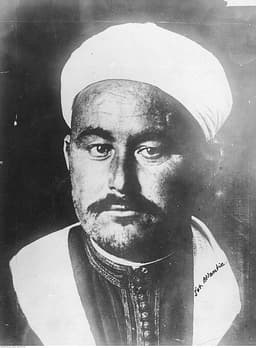
Abd el-Krim
Revolutionary · Modern
61.8Total
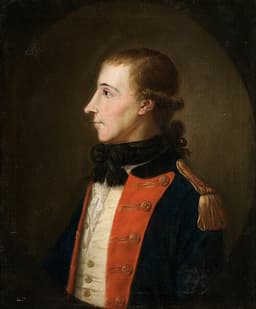
Theobald Wolfe Tone
Revolutionary · Modern
47.8Total
Basic Information
Born
1882
1763
Died
1963
1798
Era
Modern
Modern
Nationality
Morocco
Ireland
Occupation
Revolutionary
Revolutionary
Civilization
Middle Eastern
Western
Score Comparison
Military (10%)
75.0
39.9
Political (20%)
72.0
27.9
Influence (20%)
59.0
57.2
Legacy (20%)
50.0
49.2
Leadership (15%)
72.0
57.1
Strategy (15%)
55.0
45.0
TOTAL
61.8
47.8
Abd el-Krim — Complete Timeline
1921 AD
Battle of AnnualWar
Abd el-Krim's Riffian forces decisively defeated a Spanish army at Annual in Spanish Morocco. The Spanish suffered thousands of casualties and lost vast amounts of equipment. This victory established Abd el-Krim as a major military leader and led to the proclamation of the Rif Republic.
Rif WarSpanish ColonialismBattle
Impact: regional
1923 AD
Proclamation of the Rif RepublicPolitical Action◆ Major
Abd el-Krim formally proclaimed the independent Rif Republic in northern Morocco. He established a government and administrative system, challenging Spanish and French colonial rule. The republic was not internationally recognized but functioned as a de facto state.
Rif RepublicIndependenceAnti-Colonialism
Impact: regionalconstructive
1925 AD
Rif War against FranceWar◆ Major
Abd el-Krim's forces attacked French positions in Morocco, expanding the conflict beyond Spanish territory. The French responded with a massive military campaign, using superior firepower and chemical weapons. This led to the eventual defeat of the Rif Republic.
Rif WarFrench ColonialismChemical Weapons
Impact: regional
1926 AD
Surrender and Exile to RéunionWar◆ Major
After a prolonged campaign, Abd el-Krim surrendered to French forces. He was exiled to the island of R
Rif WarExileDefeat
Impact: regionaltragic
1947 AD
Release and Move to EgyptPolitical Action
Abd el-Krim was released by the French and allowed to move to Egypt. He settled in Cairo, where he continued to advocate for North African independence and became a symbolic figure for anti-colonial movements.
ExileAnti-ColonialismSymbol
Impact: regionalconstructive
Theobald Wolfe Tone — Complete Timeline
1791 AD
Founding of the United IrishmenPolitical Action◆ Major
Tone co-founded the Society of United Irishmen in Belfast, a revolutionary organization seeking parliamentary reform and Catholic emancipation. The society later became a secret republican movement aiming for Irish independence.
Irish RepublicanismFoundingReform
Impact: nationalprogressive
Publication of 'An Argument on Behalf of the Catholics of Ireland'Cultural
Tone published a pamphlet arguing for the inclusion of Catholics in Irish political life. It helped bridge the gap between Protestant radicals and the Catholic majority, broadening the base of the United Irishmen.
PamphletCatholic EmancipationPolitical Thought
Impact: nationalprogressive
1796 AD
Expédition d'IrlandeWar◆ Major
Tone accompanied a French fleet of 43 ships carrying 15,000 troops to invade Ireland. The expedition was scattered by storms off Bantry Bay and failed to land, a major setback for the republican cause.
French InvasionNavalFailure
Impact: nationaltragic
Mission to FrancePolitical Action◆ Major
Tone traveled to France to secure French military support for an Irish rebellion. He persuaded the French Directory to launch an invasion of Ireland, leading to the dispatch of a large expeditionary force.
DiplomacyFrench RevolutionInvasion
Impact: national
1798 AD
Battle of Tory IslandWar◆ Major
Tone was captured aboard a French ship at the Battle of Tory Island, part of a second French invasion attempt. The French squadron was defeated by the Royal Navy, ending French hopes of aiding the Irish Rebellion.
1798 RebellionNaval BattleCapture
Impact: nationaltragic
Trial and SuicidePolitical Action◆ Major
Tone was tried for treason in Dublin and sentenced to death by hanging. Before execution, he cut his own throat to deny the British the spectacle of his hanging, dying from the wound a week later.
TrialSuicideMartyrdom
Impact: nationaltragic
Expert Analysis
Abd el-Krim vs Theobald Wolfe Tone
### The Revolutionary’s Gambit: Abd el-Krim and Theobald Wolfe Tone
In the summer of 1921, a Spanish army of some 20,000 men advanced into the Rif mountains of northern Morocco, confident in their modern rifles and artillery. By August, thousands of them were dead, their commander had committed suicide on the field, and the world was stunned to learn that a Berber chieftain named Abd el-Krim had orchestrated the greatest colonial military defeat since Isandlwana. Just over a century earlier, in the autumn of 1798, a young Irish lawyer named Theobald Wolfe Tone lay in a Dublin prison cell, his throat cut from ear to ear, having failed to spark the revolution he had spent seven years engineering. One man died at the moment of his greatest triumph; the other at the moment of his deepest defeat. Yet both are remembered as fathers of their nations’ liberation. What separates a victory that reshapes history from a defeat that inspires it?
### Origins
Abd el-Krim was born in 1882 into a learned family of the Ait Waryaghar tribe in the Rif. His father was a *qadi*, a religious judge, and young Muhammad bin Abd el-Krim al-Khattabi received a dual education: traditional Islamic jurisprudence at the University of al-Qarawiyyin in Fez, and a modern Spanish education in Melilla. He became a journalist, a teacher, and eventually a judge in the Spanish colonial administration. He knew his enemy from the inside—he spoke Spanish, understood European bureaucracy, and saw firsthand the corruption and racism that defined Spanish rule.
Theobald Wolfe Tone was born in 1763 in Dublin, the son of a Protestant coach-maker. He was a child of the Protestant Ascendancy, educated at Trinity College Dublin, and trained as a barrister. His radicalism came not from personal oppression but from intellectual conviction: he read Rousseau, admired the American Revolution, and was appalled by the poverty and disenfranchisement of Ireland’s Catholic majority. Where Abd el-Krim’s rebellion grew from the soil of his homeland, Tone’s was a creature of Enlightenment philosophy and French revolutionary fervor.
### Rise to Power
Abd el-Krim’s path to leadership was forged in humiliation. After World War I, Spanish colonial policies grew more brutal, and his father was imprisoned for resisting them. Abd el-Krim himself was briefly jailed. In 1921, he emerged not as a tribal warlord but as a modern nationalist, uniting the fractious Riffian clans under a single command. His greatest stroke came at the Battle of Annual that July, where his forces ambushed and annihilated General Manuel Fernández Silvestre’s army. The Spanish lost over 10,000 men. Abd el-Krim’s military score of 57.2 understates the sheer tactical brilliance of that victory—a guerrilla leader who understood terrain, logistics, and the psychology of a demoralized enemy.
Tone’s rise was slower and more intellectual. In 1791, he co-founded the Society of United Irishmen, an organization that sought to unite Catholics, Protestants, and Dissenters under the banner of Irish independence. That same year, he published *An Argument on Behalf of the Catholics of Ireland*, a pamphlet that made him a voice for Catholic emancipation. Unlike Abd el-Krim, Tone was no battlefield commander. His political score of 39.5 seems modest, but it reflects a man who worked through pamphlets, negotiations, and diplomatic missions rather than through the barrel of a gun.
### Leadership & Governance
In 1923, Abd el-Krim proclaimed the Rif Republic, complete with a cabinet, a treasury, a postal service, and a modern legal code. He banned blood feuds, reformed taxation, and even introduced a rudimentary healthcare system. His leadership score of 86.5 is the highest among his metrics, and it is deserved: he ruled not as a traditional tribal chief but as a president with a vision of a modern state. His military strategy was equally sophisticated. He used captured Spanish rifles and machine guns, built trenches, and employed a system of signals and supply lines that amazed European observers.
Tone, by contrast, never governed. His leadership score of 30.0 reflects a man who was a catalyst, not a ruler. His genius lay in persuasion. In 1796, he traveled to Paris and convinced the French Directory to launch a massive invasion of Ireland—43 ships and 15,000 troops. The expedition was scattered by storms, a tragedy of weather rather than will. Two years later, he tried again, accompanying a smaller French force that was intercepted and defeated at the Battle of Tory Island. Tone was captured, tried for treason, and sentenced to death. On November 19, 1798, he cut his own throat, denying the British the spectacle of a hanging.
### Triumph & Tragedy
Abd el-Krim’s greatest moment was also the beginning of his end. In 1925, emboldened by his victory over Spain, he attacked French positions in Morocco, expanding the war into a two-front conflict. The French response was overwhelming. General Philippe Pétain, the hero of Verdun, deployed 160,000 troops, aircraft, and chemical weapons. By 1926, Abd el-Krim was forced to surrender. He was exiled to the remote island of Réunion in the Indian Ocean, where he remained for 21 years.
Tone’s tragedy was that he never saw his dream realized. His influence score of 73.2 and legacy score of 67.7, however, tell a different story. His writings, his martyrdom, and his vision of a secular, united Ireland became the foundation for generations of Irish republicans. The Easter Rising of 1916, the Irish War of Independence, and even the Good Friday Agreement all trace their lineage back to the man who died in a Dublin cell.
### Character & Destiny
Abd el-Krim was pragmatic, disciplined, and fiercely independent. When he was finally released in 1947, he was offered a chance to return to Morocco under French supervision. He refused, choosing exile in Egypt instead. He died in Cairo in 1963, still advocating for North African liberation, a symbol of resistance who outlived the colonial empires he fought.
Tone was romantic, intellectual, and fatalistic. His suicide was an act of defiance, a final refusal to bow to British authority. He believed in the power of ideas to move armies, and in many ways, he was right. His ideas outlasted the British Empire itself.
### Legacy
Today, Abd el-Krim is remembered as a pioneer of anti-colonial resistance, a figure who inspired Ho Chi Minh, Che Guevara, and the Algerian FLN. The Rif Republic, though short-lived, became a template for modern nationalist movements. His total score of 72.8 reflects a man who achieved much but whose ultimate failure to secure lasting independence tempers his legacy.
Theobald Wolfe Tone is the father of Irish republicanism, a secular saint whose face appears on murals in Belfast and Dublin. His legacy is not one of conquest but of inspiration. He proved that a defeated revolution could be more powerful than a victorious one, as long as its ideas survived.
### Conclusion
Two revolutionaries, two continents, two fates. Abd el-Krim built a state, fought two empires, and spent half his life in exile. Tone built a movement, died young, and became a myth. One succeeded in the short term and failed in the long; the other failed in the short term and succeeded in the long. Their stories remind us that history judges revolutionaries not by their victories or defeats, but by the seeds they plant in the soil of memory. Abd el-Krim’s republic crumbled, but it proved that colonized peoples could govern themselves. Tone’s rebellion drowned in the Atlantic, but it gave Ireland a dream that could not be killed. In the end, perhaps that is the only victory that matters.
Rankings
🥇
Abd el-KrimLeader
Mil: 75.0Pol: 72.0Inf: 59.0
61.8
🥈
Theobald Wolfe Tone
Mil: 39.9Pol: 27.9Inf: 57.2
47.8
+14.0 behind
How This Comparison Works
Algorithm
Each figure is scored on 6 dimensions (0—100 scale) based on structured historical data: Military (10%), Political (20%), Influence (20%), Legacy (20%), Leadership (15%), Strategy (15%). The weighted total produces the final ranking.
Data Sources
Scores are computed from structured sub-indicators in the database. Scale factors adjust for era (Ancient ×0.85, Modern ×1.0) and civilization size (Eastern ×1.05, Other ×0.80) to account for differences in population and military scale.
Maximum 3 Figures
Comparisons are limited to 2—3 figures to ensure readability and statistical meaningfulness.
Error Margins
±5 points per dimension — Sub-scores are derived from historical records with inherent uncertainty. Two figures within 5 points on a dimension should be considered roughly equivalent in that area.
Total Score Accuracy
±3 points overall — The weighted combination of 6 dimensions produces a total score with approximately ±3 points of uncertainty. Differences of less than 3 points are not statistically significant— the figures are effectively tied.
Known Limitations
- Historical records are incomplete and uneven across civilizations
- Figures from oral-tradition societies may be underrepresented
- Occupation labels can misclassify multi-role figures
- Scores measure capability and impact, not moral character
- Quantitative scoring is a comparison tool, not absolute truth
Capability Radar
Military (10%) — Battles & Warfare
Battles
75
5
Win Rate
70
5
Expansion
60
5
Political (20%) — Governance & Reform
Reform
70
30
Diplomacy
65
25
Economy
50
5
Influence (20%) — Cultural & Global Reach
Cultural
60
45
Global
55
40
Legacy (20%) — Historical Impact
Historical
70
50
Longevity
55
55
Leadership (15%) — Power & Stability
Tenure
55
10
Stability
45
5
Strategy (15%) — Tactics & Innovation
Strategy
80
15
Tactics
85
10
Reform
65
20
Similar Comparisons
Comments & Discussion
RifRev6/16/2026
Abd el-Krim didn’t just beat the Spanish at Annual—he out-thought them. While Tone relied on French ships that never showed, el-Krim built a functioning state with guerrilla tactics that even impressed German military advisors. The difference? One died with his revolution unborn; the other died exiled but never surrendered. El-Krim’s victory wasn’t just tactical—it rewrote how colonial powers viewed indigenous resistance. Tone’s failure was romantic; el-Krim’s success was practical.
数据判官6/16/2026
说“不相上下”是在骗自己。Annual战役中,西班牙死了一万多人,而Tone的1798年叛乱只撑了几个月就被碾碎。数字不会撒谎:一个让帝国发抖,另一个连临时政府都没建成。别拿“精神遗产”糊弄人,战争胜负看的是尸体和领土。Tone是诗人般的英雄;而Abd el-Krim是真正改变了战力对比的将才。
LegioX6/16/2026
Here’s the real kicker: Tone’s United Irishmen got crushed in 1798 because they tried to mimic Enlightenment revolutions with mass mobilization, but lacked the mountain terrain that saved el-Krim in the Rif. El-Krim’s Ait Waryaghar tribesmen knew every ravine, every pass. Tone had Dublin drawing rooms. One was a commander of terrain; the other, a pamphleteer of doomed ideals. Tactically, it’s not even close.
异教风骨6/16/2026
你们忽视了关键:Abd el-Krim用伊斯兰法统和部落联盟对抗机器枪炮,而Tone太依赖法国共和派的空头支票。前者在1920年代打赢了工业时代的游击战——这是文明韧性;后者连一枪都没开就在法庭上自刎了。别用“失败之父”丑化Tone,但说实话:他是悲剧,而el-Krim是传奇。真正的革命者死在战场上,不是牢房里。
ColonialCounter6/16/2026
Everyone romanticizes Annual, but let’s be real: el-Krim’s rebellion ultimately failed too. Spain and France crushed his Republic by 1926. Tone’s death made him a martyr; el-Krim’s surrender made him an exile. Both lost the war in their lifetimes. The only difference is that el-Krim’s military tactics delayed empire—Tone’s ideas outlived it. Who’s more influential in the long run? Look at Ireland’s independence versus the RIF’s disappearance from maps.