Loading...
Bal Gangadhar Tilak vs Theobald Wolfe Tone
Bal Gangadhar Tilak leads by 5.1 pts · 2 figures compared
…
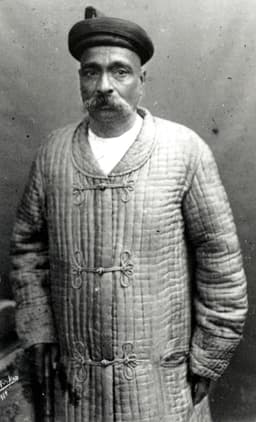
Bal Gangadhar Tilak
Revolutionary · Modern
52.9Total
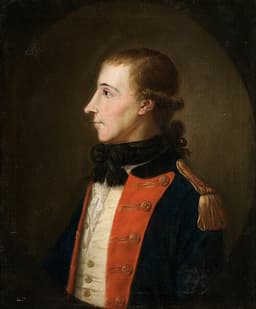
Theobald Wolfe Tone
Revolutionary · Modern
47.8Total
Basic Information
Born
1856
1763
Died
1920
1798
Era
Modern
Modern
Nationality
India
Ireland
Occupation
Revolutionary
Revolutionary
Civilization
Indian
Western
Score Comparison
Military (10%)
50.0
39.9
Political (20%)
48.0
27.9
Influence (20%)
58.3
57.2
Legacy (20%)
56.0
49.2
Leadership (15%)
50.7
57.1
Strategy (15%)
45.0
45.0
TOTAL
52.9
47.8
Bal Gangadhar Tilak — Complete Timeline
1881 AD
Launch of the Maratha and Kesari NewspapersCultural◆ Major
Tilak founded the Marathi-language newspaper 'Kesari' and the English-language 'Maratha' to spread nationalist ideas. These newspapers became influential platforms for criticizing British rule and mobilizing public opinion.
MediaNationalism
Impact: nationalconstructive
1897 AD
Imprisonment for SeditionPolitical Action◆ Major
Tilak was arrested and sentenced to 18 months imprisonment for sedition after publishing articles critical of British rule. His imprisonment increased his popularity and made him a martyr for the nationalist cause.
ImprisonmentSedition
Impact: national
1905 AD
Introduction of Swadeshi MovementPolitical Action◆ Major
Bal Gangadhar Tilak promoted the Swadeshi movement, advocating for the boycott of British goods and the use of Indian-made products. This movement gained widespread support and became a key part of the Indian independence struggle.
NationalismEconomic Boycott
Impact: nationalconstructive
1908 AD
Lucky Ali TrialPolitical Action◆ Major
Tilak was tried and sentenced to six years in Mandalay prison for sedition after defending the use of violence against British officials. His trial and imprisonment further galvanized the Indian independence movement.
TrialImprisonment
Impact: national
1916 AD
Formation of the Home Rule LeaguePolitical Action◆ Major
Tilak founded the Indian Home Rule League in 1916, demanding self-government for India within the British Empire. The movement gained mass support and pressured the British government to consider political reforms.
Political MovementSelf-Government
Impact: nationalconstructive
Theobald Wolfe Tone — Complete Timeline
1791 AD
Founding of the United IrishmenPolitical Action◆ Major
Tone co-founded the Society of United Irishmen in Belfast, a revolutionary organization seeking parliamentary reform and Catholic emancipation. The society later became a secret republican movement aiming for Irish independence.
Irish RepublicanismFoundingReform
Impact: nationalprogressive
Publication of 'An Argument on Behalf of the Catholics of Ireland'Cultural
Tone published a pamphlet arguing for the inclusion of Catholics in Irish political life. It helped bridge the gap between Protestant radicals and the Catholic majority, broadening the base of the United Irishmen.
PamphletCatholic EmancipationPolitical Thought
Impact: nationalprogressive
1796 AD
Expédition d'IrlandeWar◆ Major
Tone accompanied a French fleet of 43 ships carrying 15,000 troops to invade Ireland. The expedition was scattered by storms off Bantry Bay and failed to land, a major setback for the republican cause.
French InvasionNavalFailure
Impact: nationaltragic
Mission to FrancePolitical Action◆ Major
Tone traveled to France to secure French military support for an Irish rebellion. He persuaded the French Directory to launch an invasion of Ireland, leading to the dispatch of a large expeditionary force.
DiplomacyFrench RevolutionInvasion
Impact: national
1798 AD
Battle of Tory IslandWar◆ Major
Tone was captured aboard a French ship at the Battle of Tory Island, part of a second French invasion attempt. The French squadron was defeated by the Royal Navy, ending French hopes of aiding the Irish Rebellion.
1798 RebellionNaval BattleCapture
Impact: nationaltragic
Trial and SuicidePolitical Action◆ Major
Tone was tried for treason in Dublin and sentenced to death by hanging. Before execution, he cut his own throat to deny the British the spectacle of his hanging, dying from the wound a week later.
TrialSuicideMartyrdom
Impact: nationaltragic
Expert Analysis
Bal Gangadhar Tilak vs Theobald Wolfe Tone
# The Revolutionary’s Fate: Why Tone Fell and Tilak Endured
On a gray November morning in 1798, Theobald Wolfe Tone lay bleeding in a Dublin prison cell, his throat cut by his own hand. He had chosen suicide over the hangman’s noose, a final act of defiance from a man who had gambled everything on French warships and Irish rebellion. Twenty-two years later, in August 1920, Bal Gangadhar Tilak died quietly in Bombay, surrounded by family and mourned by millions. One revolutionary perished in defeat at thirty-five; the other died of natural causes at sixty-four, having lived to see his movement reshape a nation. Both men sought freedom from empire. Why did one end in tragedy and the other in triumph?
Origins
Tone was born in 1763 into Dublin’s Protestant Ascendancy, a world of privilege and contradiction. His father was a coachmaker, his mother the daughter of a merchant—respectable but not wealthy. Educated at Trinity College, he studied law but found his true calling in politics. The Enlightenment had swept through Europe, and Tone absorbed its ideas of liberty and representative government. Yet he lived in a Ireland where Catholics—the vast majority—could not vote, hold office, or own land. This injustice gnawed at him.
Tilak was born in 1856 into a Chitpavan Brahmin family in Ratnagiri, on India’s western coast. His father was a schoolteacher and government official. From childhood, Tilak was steeped in Sanskrit, mathematics, and the Hindu scriptures. Unlike Tone, he came from a community that had been educated under British rule but remained excluded from real power. Where Tone saw a Protestant nation denied its rights, Tilak saw an ancient civilization humiliated by foreign domination.
Tone’s world was small—Ireland, France, the Atlantic. Tilak’s India was vast, diverse, and ancient. This scale difference would haunt both men.
Rise to Power
Tone entered politics through the written word. In 1791, he published *An Argument on Behalf of the Catholics of Ireland*, a pamphlet that argued for Catholic emancipation not out of religious sympathy but because “the cause of Ireland” required unity. That same year, he co-founded the Society of United Irishmen in Belfast. His genius was coalition-building: he united Presbyterians and Catholics, radicals and reformers, under the banner of parliamentary reform. But when Britain went to war with revolutionary France in 1793, the government cracked down. Tone’s movement turned underground, and he fled to America, then to France.
Tilak’s rise was slower and more deliberate. In 1881, at twenty-five, he launched two newspapers: *Kesari* in Marathi and *Maratha* in English. He used them to educate, agitate, and organize. Where Tone appealed to Enlightenment reason, Tilak invoked Hindu festivals and historical heroes. He transformed the Ganesh festival from a private ritual into a public rally. He celebrated Shivaji, the Maratha warrior who had defied the Mughals. His message was cultural pride as much as political resistance.
The key difference: Tone sought foreign allies; Tilak built domestic movements.
Leadership & Governance
Tone was a brilliant propagandist but a poor organizer. His greatest achievement was persuading the French Directory to launch a massive invasion of Ireland in 1796. A fleet of forty-three ships carrying fifteen thousand soldiers set sail. But storms scattered the fleet, and the invasion failed. Tone was on board, helpless, watching his plan dissolve in Atlantic gales. His leadership was visionary but fragile—dependent on weather, French politics, and the loyalty of local rebels.
Tilak, by contrast, was a master of sustained agitation. In 1905, when the British partitioned Bengal, he launched the Swadeshi movement—boycotting British goods and promoting Indian-made products. This was not a single uprising but a long campaign of economic pressure, cultural revival, and political organization. He understood that India’s size required patience. He was imprisoned twice: in 1897 for eighteen months, and in 1908 for six years in Mandalay, Burma. Each imprisonment made him more of a martyr.
Tone’s military score is 36.0; Tilak’s is 34.3—both low. But Tilak’s political score of 76.0 dwarfs Tone’s 39.5. Tone was a soldier without an army; Tilak was a politician with a nation.
Triumph & Tragedy
Tone’s moment came in 1798. The Irish Rebellion erupted without French support, and it was crushed with terrible brutality. Tone arrived with a second French expedition in October, only to be captured at the Battle of Tory Island. In his trial, he declared: “I have attempted to establish the independence of my country. I have failed.” He cut his throat on November 19, 1798, dying a week later. His tragedy was that he trusted in foreign intervention more than in the slow work of building a movement.
Tilak’s triumph was the Home Rule League, founded in 1916. He demanded self-government within the British Empire—not immediate independence, but a framework for eventual freedom. He allied with the moderate leader Gopal Krishna Gokhale, and he courted the Muslim League. By 1917, the British were forced to promise “responsible government” for India. Tilak did not live to see independence in 1947, but he died knowing his work had made it possible.
Character & Destiny
Tone was romantic, impulsive, and tragic. He wrote in his diary: “I have made up my mind to die like a man.” His personality was suited to dramatic gestures—the pamphlet, the French alliance, the suicide. He could not tolerate slow compromise.
Tilak was stoic, relentless, and pragmatic. He said: “Swaraj is my birthright, and I shall have it.” He endured prison, poverty, and the hostility of both the British and his own moderates. He understood that revolution in a subcontinent required decades, not days.
Legacy
Tone is remembered as the “Father of Irish Republicanism.” His ideas inspired generations—the Easter Rising of 1916, the Irish War of Independence, and the modern republic. But he is a martyr, not a founder. His legacy is symbolic, not structural.
Tilak is remembered as the “Father of Indian Unrest,” a title the British gave him with contempt and Indians wore with pride. His political score of 76.0 and legacy score of 68.1 reflect a man who built institutions—newspapers, festivals, movements, leagues—that outlasted him. He shaped the Congress Party, inspired Gandhi, and laid the groundwork for a free India.
Conclusion
The difference between Tone and Tilak is the difference between a spark and a flame. Tone ignited a rebellion that burned bright and died fast. Tilak kindled a fire that smoldered for decades, eventually consuming an empire. One man’s tragedy was his impatience; the other’s triumph was his endurance. Both loved their countries. But love alone does not win freedom. It takes, as Tilak understood, the slow, patient work of building a nation, one newspaper, one festival, one prison term at a time.
Rankings
🥇
Bal Gangadhar TilakLeader
Mil: 50.0Pol: 48.0Inf: 58.3
52.9
🥈
Theobald Wolfe Tone
Mil: 39.9Pol: 27.9Inf: 57.2
47.8
+5.1 behind
How This Comparison Works
Algorithm
Each figure is scored on 6 dimensions (0—100 scale) based on structured historical data: Military (10%), Political (20%), Influence (20%), Legacy (20%), Leadership (15%), Strategy (15%). The weighted total produces the final ranking.
Data Sources
Scores are computed from structured sub-indicators in the database. Scale factors adjust for era (Ancient ×0.85, Modern ×1.0) and civilization size (Eastern ×1.05, Other ×0.80) to account for differences in population and military scale.
Maximum 3 Figures
Comparisons are limited to 2—3 figures to ensure readability and statistical meaningfulness.
Error Margins
±5 points per dimension — Sub-scores are derived from historical records with inherent uncertainty. Two figures within 5 points on a dimension should be considered roughly equivalent in that area.
Total Score Accuracy
±3 points overall — The weighted combination of 6 dimensions produces a total score with approximately ±3 points of uncertainty. Differences of less than 3 points are not statistically significant— the figures are effectively tied.
Known Limitations
- Historical records are incomplete and uneven across civilizations
- Figures from oral-tradition societies may be underrepresented
- Occupation labels can misclassify multi-role figures
- Scores measure capability and impact, not moral character
- Quantitative scoring is a comparison tool, not absolute truth
Capability Radar
Military (10%) — Battles & Warfare
Battles
23
5
Win Rate
30
5
Expansion
30
5
Political (20%) — Governance & Reform
Reform
70
30
Diplomacy
60
25
Economy
20
5
Influence (20%) — Cultural & Global Reach
Cultural
65
45
Global
55
40
Legacy (20%) — Historical Impact
Historical
70
50
Longevity
60
55
Leadership (15%) — Power & Stability
Tenure
30
10
Stability
40
5
Strategy (15%) — Tactics & Innovation
Strategy
37
15
Tactics
39
10
Reform
43
20
Similar Comparisons
Comments & Discussion
No comments yet. Be the first to share your thoughts!