Loading...
Miguel Hidalgo vs Theobald Wolfe Tone
Theobald Wolfe Tone leads by 0.8 pts · 2 figures compared
…
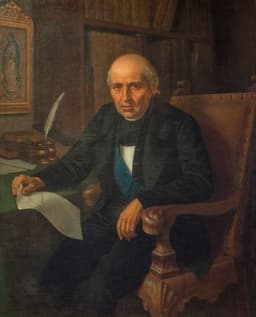
Miguel Hidalgo
Revolutionary · Modern
47.0Total
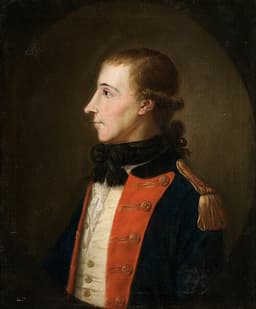
Theobald Wolfe Tone
Revolutionary · Modern
47.8Total
Basic Information
Born
1753
1763
Died
1811
1798
Era
Modern
Modern
Nationality
Mexico
Ireland
Occupation
Revolutionary
Revolutionary
Civilization
Western
Western
Score Comparison
Military (10%)
50.0
39.9
Political (20%)
36.5
27.9
Influence (20%)
55.0
57.2
Legacy (20%)
52.0
49.2
Leadership (15%)
39.0
57.1
Strategy (15%)
39.6
45.0
TOTAL
47.0
47.8
Miguel Hidalgo — Complete Timeline
1810 AD
Captured Guanajuato and massacred SpaniardsWar◆ Major
Hidalgo's army of 80,000 captured the city of Guanajuato on September 28, 1810. After taking the Alh
BattleMassacreViolence
Impact: regionaldestructive
Issued the Grito de DoloresPolitical Action
On September 16, 1810, Father Miguel Hidalgo rang the church bell in Dolores and called for rebellion against Spanish colonial rule. His speech, known as the Grito de Dolores, urged Mexicans to rise up against the Spanish and marked the beginning of the Mexican War of Independence.
IndependenceRebellionGrito de Dolores
Impact: nationalconstructive
1811 AD
Defeated at the Battle of Calderón BridgeWar◆ Major
Hidalgo's poorly trained army was decisively defeated by a smaller Spanish royalist force at the Battle of Calder
DefeatSpanish RoyalistsTurning Point
Impact: regionaltragic
Executed by Spanish authoritiesPolitical Action◆ Major
Hidalgo was captured in Acatita de Baj
ExecutionMartyrdomIndependence Movement
Impact: nationaltragic
Theobald Wolfe Tone — Complete Timeline
1791 AD
Founding of the United IrishmenPolitical Action◆ Major
Tone co-founded the Society of United Irishmen in Belfast, a revolutionary organization seeking parliamentary reform and Catholic emancipation. The society later became a secret republican movement aiming for Irish independence.
Irish RepublicanismFoundingReform
Impact: nationalprogressive
Publication of 'An Argument on Behalf of the Catholics of Ireland'Cultural
Tone published a pamphlet arguing for the inclusion of Catholics in Irish political life. It helped bridge the gap between Protestant radicals and the Catholic majority, broadening the base of the United Irishmen.
PamphletCatholic EmancipationPolitical Thought
Impact: nationalprogressive
1796 AD
Expédition d'IrlandeWar◆ Major
Tone accompanied a French fleet of 43 ships carrying 15,000 troops to invade Ireland. The expedition was scattered by storms off Bantry Bay and failed to land, a major setback for the republican cause.
French InvasionNavalFailure
Impact: nationaltragic
Mission to FrancePolitical Action◆ Major
Tone traveled to France to secure French military support for an Irish rebellion. He persuaded the French Directory to launch an invasion of Ireland, leading to the dispatch of a large expeditionary force.
DiplomacyFrench RevolutionInvasion
Impact: national
1798 AD
Battle of Tory IslandWar◆ Major
Tone was captured aboard a French ship at the Battle of Tory Island, part of a second French invasion attempt. The French squadron was defeated by the Royal Navy, ending French hopes of aiding the Irish Rebellion.
1798 RebellionNaval BattleCapture
Impact: nationaltragic
Trial and SuicidePolitical Action◆ Major
Tone was tried for treason in Dublin and sentenced to death by hanging. Before execution, he cut his own throat to deny the British the spectacle of his hanging, dying from the wound a week later.
TrialSuicideMartyrdom
Impact: nationaltragic
Expert Analysis
Miguel Hidalgo vs Theobald Wolfe Tone
# The Priest and the Protestant: Two Fathers of Independence
On a September morning in 1810, a sixty-year-old priest stepped onto the balcony of his church in the small town of Dolores, Mexico, and rang the bell. The sound that echoed across the cobblestone streets was not a call to mass, but to revolution. Half a world away and twelve years earlier, in a Dublin prison cell in November 1798, a thirty-five-year-old lawyer lay bleeding from a self-inflicted wound to the throat, having chosen to die by his own hand rather than dance at the end of a British rope. Miguel Hidalgo and Theobald Wolfe Tone never met, never corresponded, but they shared a singular, burning conviction: that the old empires of Europe had no right to rule their people. Yet the paths they walked, the armies they raised, and the nations they dreamed into being could not have been more different.
Origins
Miguel Hidalgo y Costilla was born in 1753 into a world of colonial privilege. His father managed a hacienda in Guanajuato, one of the richest silver-mining regions on earth. The young Hidalgo studied at the Colegio de San Nicolás in Valladolid, where he excelled in theology, philosophy, and languages—Latin, French, and even some indigenous tongues. He became a priest, but an unconventional one. He read forbidden Enlightenment texts, questioned Church doctrine, and encouraged his parishioners to grow mulberry trees and raise bees, small acts of economic defiance against Spanish mercantile laws. His was a rebellion that brewed slowly, over decades of quiet frustration.
Theobald Wolfe Tone, born a decade later in 1763, came from a different Ireland entirely. His father was a Protestant coach-maker in Dublin, a member of the Anglican Ascendancy that ruled Ireland in the name of the British Crown. Tone studied law at Trinity College Dublin, but his heart lay elsewhere—in the theater, in pamphleteering, in the intoxicating ideas of the French Revolution. Where Hidalgo was a country priest who stumbled into revolution, Tone was a man of letters who walked into it with eyes wide open. He saw Ireland's problem clearly: a Protestant elite that held all power, a Catholic majority that had none, and a British government that kept them divided.
Rise to Power
Hidalgo's rise was accidental, almost reluctant. In 1810, a conspiracy for independence was uncovered in Querétaro. The conspirators—military officers, intellectuals, and a few priests—had planned a coordinated uprising for December. When word arrived that the plot was betrayed, Hidalgo faced a choice: flee, or act. On the night of September 15, he made his decision. The next morning, he delivered the *Grito de Dolores*—a cry not for independence in the modern sense, but for the restoration of the deposed King Ferdinand VII, an end to bad government, and the expulsion of the hated *gachupines* (Spanish-born elites). Within hours, he had an army.
Tone's path was more deliberate. In 1791, he co-founded the Society of United Irishmen in Belfast, a revolutionary organization that sought to unite Catholics, Protestants, and Dissenters under the banner of parliamentary reform. That same year, he published *An Argument on Behalf of the Catholics of Ireland*, a pamphlet that argued for Catholic emancipation with a clarity and passion that shocked the Protestant establishment. Tone was not a man of the mob; he was a man of the pen. When the British government suppressed the United Irishmen in 1794, he did not raise a flag. He fled to America, then to France, where he spent years persuading the revolutionary government to invade Ireland.
Leadership & Governance
Hidalgo led with charisma, not strategy. His army grew from a few hundred to eighty thousand—peasants, miners, and indigenous villagers armed with machetes, slings, and captured muskets. They marched on Guanajuato, the richest city in Mexico, and captured it on September 28, 1810. What followed was a massacre. Hidalgo's forces stormed the Alhóndiga de Granaditas, the city's granary-fortress, and slaughtered hundreds of Spanish civilians who had taken refuge inside. It was a moment of terrible, uncontrollable fury. Hidalgo had unleashed forces he could not control. His military score of 42.0 and strategy of 45.0 reflect a man who was a preacher, not a general. He had no formal training, no discipline, no supply lines.
Tone, by contrast, was a political operator. His military score of 36.0 and strategy of 30.0 are even lower, but he never pretended to be a soldier. His genius lay in persuasion. In 1796, he convinced the French Directory to launch the *Expédition d'Irlande*—a fleet of 43 ships carrying 15,000 troops. It was the most serious threat to British rule in Ireland since the Spanish Armada. But storms scattered the fleet off the coast of Bantry Bay, and the invasion never landed. Tone watched from the deck of a French ship as his dream dissolved into fog and wind. He tried again in 1798, but by then the United Irishmen had risen prematurely, without French support, and been crushed.
Triumph & Tragedy
Hidalgo's greatest moment was also the beginning of his end. After Guanajuato, he marched toward Mexico City. The capital lay undefended; the Spanish viceroy had fled. But Hidalgo hesitated. No one knows why. Perhaps he feared the massacre that would follow, perhaps he doubted his army's discipline. He turned back, and the opportunity was lost. At the Battle of Calderón Bridge on January 17, 1811, a Spanish force of 6,000 routed his 80,000. The royalists had cannon and cavalry; Hidalgo had faith and fury. He was captured in March, tried by the Inquisition, defrocked, and executed by firing squad on July 30, 1811. His head was displayed in Guanajuato for ten years.
Tone's tragedy was quieter but no less brutal. He was captured aboard a French ship at the Battle of Tory Island in October 1798, part of a second, desperate French invasion attempt. Brought to Dublin in chains, he was tried for treason and sentenced to hang. On the morning of his execution, he asked for a razor to shave. He used it to cut his own throat. It took him a week to die. The British hanged him anyway, just to be sure.
Character & Destiny
Hidalgo was a man of the people, but also a man of his time—a priest who broke his vows, a revolutionary who hesitated at the crucial moment. His political score of 63.2 and influence of 66.7 suggest a leader who inspired devotion but could not translate it into lasting power. He was a catalyst, not a builder. His legacy score of 75.0 reflects the fact that Mexico's independence was eventually won by others, but he lit the fire.
Tone was a man of ideas, a Protestant who championed Catholic rights, a revolutionary who sought French help but dreamed of an Irish republic. His influence score of 73.2 and legacy of 67.7 are remarkable for a man who never commanded an army, never held office, never saw his dream realized. He died believing he had failed. But he gave Irish republicanism its first coherent voice, its first martyr, its first founding myth.
Legacy
Today, Miguel Hidalgo is the father of Mexico. Every September 16, the president of Mexico rings the same bell from the National Palace and repeats the *Grito*. His face appears on coins, statues, and the 1,000-peso note. He is a national saint, a symbol of the moment when a people decided they would no longer be subjects.
Theobald Wolfe Tone is the father of Irish republicanism. His grave in Bodenstown, County Kildare, is a pilgrimage site for republicans from Sinn Féin to the IRA. His name is invoked in every struggle for Irish unity. But his legacy is more contested. He dreamed of a republic that would unite Catholic, Protestant, and Dissenter. That dream remains unfinished.
Conclusion
Hidalgo and Tone were both failures in their own lifetimes. Neither lived to see independence. Neither built a lasting government. But they understood something essential: that the first step toward freedom is the willingness to say no. Hidalgo said it with a bell. Tone said it with a pamphlet. Both paid with their lives. And both, in the long arc of history, won.
Rankings
🥇
Theobald Wolfe ToneLeader
Mil: 39.9Pol: 27.9Inf: 57.2
47.8
🥈
Miguel Hidalgo
Mil: 50.0Pol: 36.5Inf: 55.0
47.0
+0.8 behind
How This Comparison Works
Algorithm
Each figure is scored on 6 dimensions (0—100 scale) based on structured historical data: Military (10%), Political (20%), Influence (20%), Legacy (20%), Leadership (15%), Strategy (15%). The weighted total produces the final ranking.
Data Sources
Scores are computed from structured sub-indicators in the database. Scale factors adjust for era (Ancient ×0.85, Modern ×1.0) and civilization size (Eastern ×1.05, Other ×0.80) to account for differences in population and military scale.
Maximum 3 Figures
Comparisons are limited to 2—3 figures to ensure readability and statistical meaningfulness.
Error Margins
±5 points per dimension — Sub-scores are derived from historical records with inherent uncertainty. Two figures within 5 points on a dimension should be considered roughly equivalent in that area.
Total Score Accuracy
±3 points overall — The weighted combination of 6 dimensions produces a total score with approximately ±3 points of uncertainty. Differences of less than 3 points are not statistically significant— the figures are effectively tied.
Known Limitations
- Historical records are incomplete and uneven across civilizations
- Figures from oral-tradition societies may be underrepresented
- Occupation labels can misclassify multi-role figures
- Scores measure capability and impact, not moral character
- Quantitative scoring is a comparison tool, not absolute truth
Capability Radar
Military (10%) — Battles & Warfare
Battles
30
5
Win Rate
25
5
Expansion
20
5
Political (20%) — Governance & Reform
Reform
60
30
Diplomacy
30
25
Economy
20
5
Influence (20%) — Cultural & Global Reach
Cultural
70
45
Global
60
40
Legacy (20%) — Historical Impact
Historical
75
50
Longevity
70
55
Leadership (15%) — Power & Stability
Tenure
15
10
Stability
10
5
Strategy (15%) — Tactics & Innovation
Strategy
25
15
Tactics
20
10
Reform
10
20
Similar Comparisons
Comments & Discussion
Hidalgo-Whisperer6/16/2026
Hidalgo had the masses; Tone had the pamphlets. The priest mobilized 80,000 untrained peasants with the Virgin of Guadalupe—a medieval crusade. Tone tried to land 1,100 French troops, which isn't a revolution, it's a bar fight with extra steps. Hidalgo lost the Battle of Calderón Bridge because he couldn't control his mob; Tone lost before he even started. But Hidalgo's chaos actually sparked a nation. Tone's poetic suicide note made him a martyr, but nobody in Dublin was farming bees like Hidal
数字侦探6/16/2026
别跟我扯“解放者”的光环。数据不会撒谎:Hidalgo指挥8万人攻下瓜纳华托,但三个月后就被打回原形——专业军事学家都知道,这是宗教狂热当战略用的典型灾难。Tone更可笑,1798年登陆时只有1100名法军,对抗的是全球最强海军。两人的“起义”都是自慰式的理想主义,失败率100%。真正改变历史的,是1838年法国对墨西哥的糕点战争——至少那场打出了赔款。偶像崇拜很浪漫,但战略史上他们只是注脚。
ClassicsCorax6/16/2026
Tone wrote like Cicero but died like Cato—a perfect republican tragedy. He studied Rousseau, admired the French, and crafted the United Irishmen with Enlightenment precision. Hidalgo, meanwhile, quoted Church Fathers to peasant illiterates. Tone's 1795 oath at Cave Hill echoes Brutus's conspiracy; Hidalgo's grito is a medieval call to arms. Both were crushed by empires, but Tone's elegance haunts me. He argued for Catholic emancipation and secularism in one breath—a Jacobin in Dublin, not a prie
田园叛徒6/16/2026
我不同意“宗教狂热”的标签。Hidalgo在Dolores推广养蜂和养蚕时,是个务实的改革者——他尝试打破西班牙的贸易垄断,让贫民自己赚钱。这才是起义的真正基础,不是圣母像那么简单。反观Tone,他靠法国施舍过日子,1798年登陆时带的是异国军队,不是爱尔兰人民。一个外国傀儡,也配叫国父?Hidalgo至少死在墨西哥土地上,Tone割喉在英国监狱里——他是被自己的理想噎死的。务实派胜出。
MapleMusketeer6/16/2026
Let's be real: both were gentry playing rebel. Hidalgo's father owned a hacienda—he wasn't exactly hoeing corn. Tone? A lawyer from Protestant Ascendancy stock. The difference is execution. Hidalgo's 1810 campaign ravaged Guanajuato with indigenous peasants who thought