Loading...
Bhagat Singh vs Theobald Wolfe Tone
Theobald Wolfe Tone leads by 1.0 pts · 2 figures compared
…
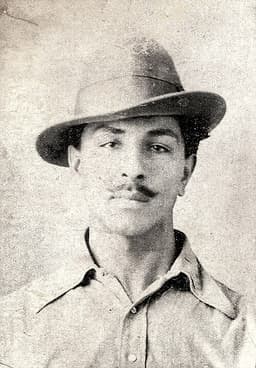
Bhagat Singh
Revolutionary · Modern
46.8Total
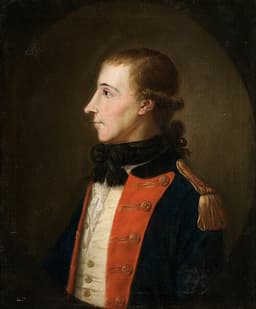
Theobald Wolfe Tone
Revolutionary · Modern
47.8Total
Basic Information
Born
1907
1763
Died
1931
1798
Era
Modern
Modern
Nationality
India
Ireland
Occupation
Revolutionary
Revolutionary
Civilization
Indian
Western
Score Comparison
Military (10%)
30.0
39.9
Political (20%)
25.0
27.9
Influence (20%)
61.0
57.2
Legacy (20%)
50.0
49.2
Leadership (15%)
65.0
57.1
Strategy (15%)
25.0
45.0
TOTAL
46.8
47.8
Bhagat Singh — Complete Timeline
1928 AD
Killing of John SaundersPolitical Action◆ Major
Bhagat Singh and his associates killed British police officer John Saunders in Lahore, mistaking him for James Scott, who had ordered the lathi charge that killed Lala Lajpat Rai. This act of revenge escalated the revolutionary movement.
AssassinationRevolutionary Action
Impact: national
1929 AD
Central Legislative Assembly BombingPolitical Action◆ Major
Bhagat Singh and Batukeshwar Dutt threw bombs in the Central Legislative Assembly in Delhi to protest the Public Safety Bill and Trade Disputes Act. They were arrested and used the trial to propagate revolutionary ideas.
ProtestRevolutionary Action
Impact: national
Hunger Strike in JailPolitical Action◆ Major
Bhagat Singh and fellow prisoners went on a 116-day hunger strike in Lahore jail demanding better treatment for political prisoners. The strike drew national attention and forced the British to make concessions.
ProtestPrison Reform
Impact: national
1931 AD
Execution by HangingPolitical Action◆ Major
Bhagat Singh was executed by hanging at Lahore jail at age 23, along with Rajguru and Sukhdev. His execution sparked widespread protests and made him a martyr for the Indian independence movement.
ExecutionMartyrdom
Impact: nationaltragic
Theobald Wolfe Tone — Complete Timeline
1791 AD
Founding of the United IrishmenPolitical Action◆ Major
Tone co-founded the Society of United Irishmen in Belfast, a revolutionary organization seeking parliamentary reform and Catholic emancipation. The society later became a secret republican movement aiming for Irish independence.
Irish RepublicanismFoundingReform
Impact: nationalprogressive
Publication of 'An Argument on Behalf of the Catholics of Ireland'Cultural
Tone published a pamphlet arguing for the inclusion of Catholics in Irish political life. It helped bridge the gap between Protestant radicals and the Catholic majority, broadening the base of the United Irishmen.
PamphletCatholic EmancipationPolitical Thought
Impact: nationalprogressive
1796 AD
Expédition d'IrlandeWar◆ Major
Tone accompanied a French fleet of 43 ships carrying 15,000 troops to invade Ireland. The expedition was scattered by storms off Bantry Bay and failed to land, a major setback for the republican cause.
French InvasionNavalFailure
Impact: nationaltragic
Mission to FrancePolitical Action◆ Major
Tone traveled to France to secure French military support for an Irish rebellion. He persuaded the French Directory to launch an invasion of Ireland, leading to the dispatch of a large expeditionary force.
DiplomacyFrench RevolutionInvasion
Impact: national
1798 AD
Battle of Tory IslandWar◆ Major
Tone was captured aboard a French ship at the Battle of Tory Island, part of a second French invasion attempt. The French squadron was defeated by the Royal Navy, ending French hopes of aiding the Irish Rebellion.
1798 RebellionNaval BattleCapture
Impact: nationaltragic
Trial and SuicidePolitical Action◆ Major
Tone was tried for treason in Dublin and sentenced to death by hanging. Before execution, he cut his own throat to deny the British the spectacle of his hanging, dying from the wound a week later.
TrialSuicideMartyrdom
Impact: nationaltragic
Expert Analysis
Theobald Wolfe Tone vs Bhagat Singh
# The Revolutionary’s Reckoning
On a cold March morning in 1931, a 23-year-old man walked to the gallows in Lahore jail, his final letter to his brother already written, his legend already secure. Thirty-three years earlier and half a world away, a 35-year-old Irish barrister lay in a Dublin prison cell with his throat cut open, having failed to cheat the hangman’s rope. Bhagat Singh and Theobald Wolfe Tone never met, never corresponded, never knew each other’s names. Yet their lives traced the same desperate arc: young men who chose the bomb and the bullet over the ballot, who sought foreign allies for their cause, and who died in British custody with their revolutions unfinished. Why did one become a martyr whose name still electrifies millions, while the other became a founding father whose legacy remains more ambiguous?
Origins
Bhagat Singh was born in 1907 into a Sikh family in Punjab, a province simmering with resentment after the British partition of Bengal and the Jallianwala Bagh massacre of 1919. His father and uncle were political activists; his village in Lyallpur district had been a hotbed of anti-colonial sentiment. As a child, he watched British soldiers march past his school, and by his teens he had read Marx, Lenin, and the anarchist literature smuggled from Europe. He was a product of the global revolutionary wave that swept the 1920s—young, educated, and convinced that only violence could break the empire’s grip.
Theobald Wolfe Tone was born in 1763 into a Protestant Anglo-Irish family in Dublin, a city where Catholics could not vote, sit in Parliament, or practice law. His father was a coachmaker, his mother a merchant’s daughter. Tone studied law at Trinity College Dublin, but his real education came from the French Revolution, which exploded when he was 26. He watched from across the Irish Sea as a monarchy fell, as rights were declared, as a nation remade itself. For Tone, the question was never whether Ireland should be free, but how to make it so—and who should lead the fight.
The difference in their origins was not merely religious or national. Singh grew up in a world where British rule was an established fact, a machine of repression he could see and touch. Tone grew up in a world where British rule was contested, where the memory of Irish Parliament and the hope of French intervention still flickered. Singh had no model of successful revolution to emulate; Tone had the American and French examples blazing before him.
Rise to Power
Singh entered the historical stage through an act of mistaken violence. In December 1928, he and his associates shot dead John Saunders, a British police officer, in Lahore—intending to kill James Scott, the police superintendent who had ordered the lathi charge that killed the elderly nationalist Lala Lajpat Rai. The killing was a blunder, but it was also a declaration. Singh went underground, grew a beard to evade capture, and planned his next move.
Tone entered politics through the power of the printed word. In 1791, he published *An Argument on Behalf of the Catholics of Ireland*, a pamphlet that argued for Catholic emancipation as the key to Irish unity. It was a radical act for a Protestant to write, and it made him a figure of national significance. That same year, he co-founded the Society of United Irishmen in Belfast, an organization that began as a reform movement and ended as a revolutionary conspiracy.
Their paths diverged in how they sought power. Singh was a man of direct action—the bomb, the pistol, the hunger strike. Tone was a man of political negotiation—the pamphlet, the alliance, the foreign embassy. Singh’s turning point came in April 1929, when he and Batukeshwar Dutt threw bombs into the Central Legislative Assembly in Delhi, not to kill but to protest the Public Safety Bill. They courted arrest, using the trial as a platform for their ideas. Tone’s turning point came in 1796, when he sailed to France and persuaded the Directory to launch an invasion of Ireland. He became a diplomat in revolutionary uniform.
Leadership & Governance
Neither man governed. Neither lived long enough. But both led, and their leadership styles revealed the chasm between their worlds.
Singh led from prison. During his 116-day hunger strike in Lahore jail in 1929, he became the voice of every political prisoner in British India. He wrote letters, smuggled statements, and turned his cell into a command post. His leadership was moral and symbolic: he refused to eat until prisoners were treated as political, not criminal, detainees. The British gave in, and Singh emerged as a folk hero. His military and strategic scores—34.3 and 47.8 respectively—reflect a man who planned operations but never commanded an army.
Tone led from exile. His mission to France in 1796 secured 15,000 troops and 43 ships for the *Expédition d’Irlande*. But the fleet was scattered by storms off Bantry Bay, and the invasion never landed. Tone’s military score of 36.0 and strategy score of 30.0 betray a man who could persuade generals but could not control the weather. His leadership was organizational: he built networks, raised funds, and kept the revolutionary flame alive from across the sea.
The difference was not in ability but in circumstance. Singh led a movement that was already mass-based, with millions of Indians behind him. Tone led a conspiracy that was still elite-based, with a handful of Protestants and a skeptical Catholic Church. Singh could afford to be a symbol; Tone had to be a strategist.
Triumph & Tragedy
Singh’s greatest moment came in his final act. On March 23, 1931, he walked to the gallows with Rajguru and Sukhdev, singing “Mera Rang De Basanti Chola” as the noose tightened. His execution sparked riots across India, from Karachi to Calcutta. The British had made him a martyr, and his photograph—smiling, defiant, in a felt hat—became the icon of Indian independence. His tragedy was that he died at 23, before he could see the freedom he helped create.
Tone’s greatest moment came in his final defeat. In October 1798, he was captured aboard a French ship at the Battle of Tory Island, part of a second invasion attempt that also failed. At his trial in Dublin, he delivered a speech that became the creed of Irish republicanism: “I have subverted no man’s peace, I have injured no man’s property. I have done my duty to my country.” Condemned to hang, he cut his own throat in prison, dying a week later. His tragedy was that he died believing his cause had failed.
Both men were executed by the same empire, but their deaths carried different meanings. Singh’s execution was a political miscalculation that galvanized a nation. Tone’s execution was a legal formality that confirmed the power of the state. Singh died smiling; Tone died bleeding. One became a rallying cry; the other became a footnote.
Character & Destiny
Bhagat Singh was an atheist, a Marxist, and a romantic. He believed in the power of ideas and the necessity of sacrifice. His letters from prison are filled with references to Lenin, Bakunin, and the Russian Revolution. He was disciplined, methodical, and utterly convinced that his death would serve a purpose. His personality drove him to court martyrdom, to turn the courtroom into a theater, to make his life a lesson.
Theobald Wolfe Tone was a Protestant nationalist, a pragmatist, and a diplomat. He believed in the power of alliances and the possibility of compromise. His writings are filled with calculations of French naval strength, Irish Catholic sentiment, and British military response. He was charming, persuasive, and utterly convinced that Ireland could be free if the right combination of forces were assembled. His personality drove him to seek foreign intervention, to negotiate with revolutionaries and generals, to make his life a bridge.
Their character shaped their destiny. Singh’s certainty made him a martyr. Tone’s flexibility made him a founder. Singh’s death was the point; Tone’s death was the end.
Legacy
Bhagat Singh is remembered as a hero of Indian independence, his name invoked by students, politicians, and activists. His influence score of 72.2 and legacy score of 68.4 reflect a figure who transcends history: he is a symbol of resistance, a model of youthful defiance. His photograph hangs in homes across India, his songs sung at protests, his words quoted in speeches. He is the revolutionary who never compromised, who never surrendered, who never lived to see the world he helped create.
Theobald Wolfe Tone is remembered as the father of Irish republicanism, his name carved into the foundation of the Irish state. His influence score of 73.2 and legacy score of 67.7 reflect a figure who is honored but not worshipped. He is a historical figure, not a folk hero. His statue stands in Dublin, his name on streets and schools, but his memory is contested: some see him as a visionary, others as a failure. He is the revolutionary who tried everything, who failed at everything, but who planted the seed that would one day grow.
Conclusion
What drove the difference between these two lives? It was not the men themselves, but the worlds they inhabited. Singh lived in an age of mass politics, where a single death could ignite a nation. Tone lived in an age of elite conspiracy, where a single failure could extinguish a movement. Singh’s India was a civilization of millions, already stirring with nationalist energy. Tone’s Ireland was a colony of a few hundred thousand, still divided by religion and class.
Both men chose the same path—revolution, foreign alliance, martyrdom—but walked it in different centuries. Singh’s revolution succeeded; Tone’s failed. Yet both left the same legacy: the idea that a young person with a gun and a book can change the course of history. In the end, the difference between them is not in their courage, their intelligence, or their commitment. It is in the accident of timing. One died at the dawn of a movement; the other died at its dusk. Both died too young. Both died for the same dream: a free nation, born from the ashes of empire.
Rankings
🥇
Theobald Wolfe ToneLeader
Mil: 39.9Pol: 27.9Inf: 57.2
47.8
🥈
Bhagat Singh
Mil: 30.0Pol: 25.0Inf: 61.0
46.8
+1.0 behind
How This Comparison Works
Algorithm
Each figure is scored on 6 dimensions (0—100 scale) based on structured historical data: Military (10%), Political (20%), Influence (20%), Legacy (20%), Leadership (15%), Strategy (15%). The weighted total produces the final ranking.
Data Sources
Scores are computed from structured sub-indicators in the database. Scale factors adjust for era (Ancient ×0.85, Modern ×1.0) and civilization size (Eastern ×1.05, Other ×0.80) to account for differences in population and military scale.
Maximum 3 Figures
Comparisons are limited to 2—3 figures to ensure readability and statistical meaningfulness.
Error Margins
±5 points per dimension — Sub-scores are derived from historical records with inherent uncertainty. Two figures within 5 points on a dimension should be considered roughly equivalent in that area.
Total Score Accuracy
±3 points overall — The weighted combination of 6 dimensions produces a total score with approximately ±3 points of uncertainty. Differences of less than 3 points are not statistically significant— the figures are effectively tied.
Known Limitations
- Historical records are incomplete and uneven across civilizations
- Figures from oral-tradition societies may be underrepresented
- Occupation labels can misclassify multi-role figures
- Scores measure capability and impact, not moral character
- Quantitative scoring is a comparison tool, not absolute truth
Capability Radar
Military (10%) — Battles & Warfare
Battles
0
5
Win Rate
0
5
Expansion
0
5
Political (20%) — Governance & Reform
Reform
15
30
Diplomacy
5
25
Economy
0
5
Influence (20%) — Cultural & Global Reach
Cultural
55
45
Global
50
40
Legacy (20%) — Historical Impact
Historical
60
50
Longevity
55
55
Leadership (15%) — Power & Stability
Tenure
0
10
Stability
0
5
Strategy (15%) — Tactics & Innovation
Strategy
5
15
Tactics
10
10
Reform
0
20
Similar Comparisons
Comments & Discussion
丧钟为谁6/16/2026
要说理想主义纯度,辛格甩Tone八条街。Tone那套“联合天主教徒与异见者”不过是十八世纪精英权力博弈,辛格却在狱中绝食116天要求政治犯待遇——这不仅是反英,更是对抗殖民监狱的人性异化。Tone写信求法国王侯施舍,辛格在法庭上喊“革命者不需要怜悯”。一个是启蒙思想的投机者,一个是无产觉醒的战士。辛格烧了英国国旗那刻,Tone还在纠结自己的红印鉴呢。
ScoMo’s Ghost6/16/2026
Mate, let’s be real—both failed utterly. Tone slashed his own throat because he couldn’t face the drop; Singh sang “Mera Rang De Basanti” to delay the noose. History romanticizes martyrs, but statist records show zero territory liberated, zero policy reversed. Singh’s Lahore jailbreak killed 21 cops, yet British left India through negotiation—not bullets. Tone’s Irish Republic took 200 years to quasi-exist. They’re inspiring gravestones, not strategists. Give me a Grant or a Wehrmacht commander
梵音驳论6/16/2026
你们跪拜的“烈士史观”全是拼多多叙事。Tone被法国利用当跳板,辛格被苏联思想当枪使——都是帝国棋盘上的弃子。Tone临死前哭诉“我从未想独立爱尔兰”,辛格在《我为什么是无神论者》里大骂宗教,结果被印度教民族主义包装成“马哈拉杰”(圣王)。后人哭坟,先烈打脸。真实历史是:辛格若活到1947,非被政治清算不可;Tone若不死,估计成联合王国股东。革命者最大的宿命不是绞刑架,是沦为符号。
StoaScholar6/16/2026
As a veteran of counter-insurgency ops, I’d pick Tone as the smarter tactician. He risked French naval support—concrete, achievable—while Singh’s Hindustan Socialist Republican Association relied on coin-box bombings and pistols. Tone’s 1796 Bantry Bay expedition nearly landed 15,000 troops; Singh’s 1929 Assembly bombing killed zero. You want empire-breaking? Borrow a navy, not a bloody pamphlet. Tone didn’t die gagged, he died willing—Singh’s legend swelled post-mortem, but execution walls bury
Chronicler87126/16/2026
I see echoes of the Roman “damnatio memoriae” rehab—Singh’s image gets deified, Tone’s gets sanitized. But here’s the kicker: Singh was a Marxist atheist executed