Loading...
Sun Yat-sen vs Theobald Wolfe Tone
Sun Yat-sen leads by 4.7 pts · 2 figures compared
…
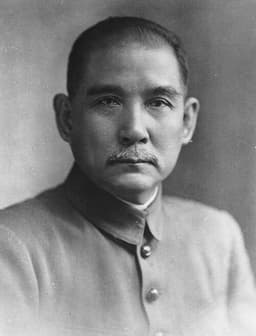
Sun Yat-sen
Revolutionary · Modern
52.5Total
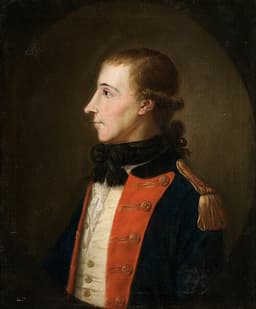
Theobald Wolfe Tone
Revolutionary · Modern
47.8Total
Basic Information
Born
1866
1763
Died
1925
1798
Era
Modern
Modern
Nationality
China
Ireland
Occupation
Revolutionary
Revolutionary
Civilization
Eastern
Western
Score Comparison
Military (10%)
45.0
39.9
Political (20%)
68.0
27.9
Influence (20%)
61.0
57.2
Legacy (20%)
58.0
49.2
Leadership (15%)
33.5
57.1
Strategy (15%)
30.3
45.0
TOTAL
52.5
47.8
Sun Yat-sen — Complete Timeline
1894 AD
Founded the Revive China SocietyPolitical Action◆ Major
Sun Yat-sen founded the Revive China Society (Xingzhonghui) in Honolulu, the first modern revolutionary organization among overseas Chinese. The society aimed to overthrow the Qing dynasty and establish a republic, marking the beginning of organized revolutionary activity.
RevolutionOverseas ChineseRepublic
Impact: nationalconstructive
1911 AD
Led the Xinhai RevolutionPolitical Action
Sun Yat-sen's revolutionary activities culminated in the Wuchang Uprising of October 1911, which sparked the Xinhai Revolution. The uprising spread across China, leading to the abdication of the Qing emperor in 1912 and the end of 2,000 years of imperial rule.
RevolutionQing DynastyRepublic
Impact: globalconstructive
1912 AD
Proclaimed the Republic of ChinaPolitical Action
On January 1, 1912, Sun Yat-sen was inaugurated as the provisional president of the Republic of China in Nanjing. He proclaimed the establishment of the first republic in Asia, based on his Three Principles of the People: nationalism, democracy, and livelihood.
RepublicPresidencyThree Principles
Impact: globalconstructive
Resigned Presidency in Favor of Yuan ShikaiPolitical Action◆ Major
To secure the abdication of the Qing emperor and avoid civil war, Sun Yat-sen resigned the provisional presidency in February 1912 in favor of Yuan Shikai. This decision, while pragmatic, allowed Yuan to consolidate power and later attempt to restore the monarchy.
Power TransferYuan ShikaiCompromise
Impact: national
1919 AD
Reorganized the KuomintangPolitical Action◆ Major
Sun Yat-sen reorganized the Chinese Revolutionary Party into the Kuomintang (KMT) in 1919, with a more centralized structure. He later accepted Soviet aid and CCP members into the party under the policy of 'alliance with Russia and the Communists,' reshaping the revolutionary movement.
KuomintangSoviet AllianceCCP
Impact: nationalconstructive
Theobald Wolfe Tone — Complete Timeline
1791 AD
Founding of the United IrishmenPolitical Action◆ Major
Tone co-founded the Society of United Irishmen in Belfast, a revolutionary organization seeking parliamentary reform and Catholic emancipation. The society later became a secret republican movement aiming for Irish independence.
Irish RepublicanismFoundingReform
Impact: nationalprogressive
Publication of 'An Argument on Behalf of the Catholics of Ireland'Cultural
Tone published a pamphlet arguing for the inclusion of Catholics in Irish political life. It helped bridge the gap between Protestant radicals and the Catholic majority, broadening the base of the United Irishmen.
PamphletCatholic EmancipationPolitical Thought
Impact: nationalprogressive
1796 AD
Expédition d'IrlandeWar◆ Major
Tone accompanied a French fleet of 43 ships carrying 15,000 troops to invade Ireland. The expedition was scattered by storms off Bantry Bay and failed to land, a major setback for the republican cause.
French InvasionNavalFailure
Impact: nationaltragic
Mission to FrancePolitical Action◆ Major
Tone traveled to France to secure French military support for an Irish rebellion. He persuaded the French Directory to launch an invasion of Ireland, leading to the dispatch of a large expeditionary force.
DiplomacyFrench RevolutionInvasion
Impact: national
1798 AD
Battle of Tory IslandWar◆ Major
Tone was captured aboard a French ship at the Battle of Tory Island, part of a second French invasion attempt. The French squadron was defeated by the Royal Navy, ending French hopes of aiding the Irish Rebellion.
1798 RebellionNaval BattleCapture
Impact: nationaltragic
Trial and SuicidePolitical Action◆ Major
Tone was tried for treason in Dublin and sentenced to death by hanging. Before execution, he cut his own throat to deny the British the spectacle of his hanging, dying from the wound a week later.
TrialSuicideMartyrdom
Impact: nationaltragic
Expert Analysis
Sun Yat-sen vs Theobald Wolfe Tone
# The Revolutionary's Dilemma: Sun Yat-sen and Wolfe Tone
In the winter of 1912, Sun Yat-sen stood before the provisional assembly in Nanjing, his hand raised to take the oath as the first president of the Republic of China. The 45-year-old revolutionary had just ended 2,000 years of imperial rule. Across the world and a century earlier, another revolutionary, Theobald Wolfe Tone, sat in a Dublin prison cell in November 1798, his throat cut by his own hand, waiting to die rather than face the hangman's noose. Both men dreamed of freeing their nations from ancient oppression. One lived to see his republic born; the other perished with his rebellion crushed. The difference between triumph and tragedy was not merely luck—it was timing, circumstance, and the brutal logic of power.
Origins
Sun Yat-sen was born in 1866 in a small village in Guangdong province, the son of a poor farming family. His early exposure to Western education in Hawaii and Hong Kong gave him a rare perspective: he understood both the decay of the Qing dynasty and the strength of modern nation-states. China in the late 19th century was a giant humiliated by foreign powers, its ancient system crumbling under internal rebellion and external pressure. Sun grew up in an era when revolution was not just desirable but increasingly inevitable.
Wolfe Tone, born in 1763 in Dublin, came from a middle-class Protestant family. Ireland under British rule was a land of deep religious and political divisions—Protestant Ascendancy, Catholic majority, and a system that denied basic rights to most of the population. Tone was a lawyer and a thinker, not a peasant or a soldier. His Ireland was a nation of simmering grievances but no unified revolutionary tradition. Where Sun saw a civilization in collapse, Tone saw a colony in chains.
Rise to Power
Sun's path to leadership was gradual and organizational. In 1894, he founded the Revive China Society in Honolulu, the first modern revolutionary organization among overseas Chinese. For nearly two decades, he moved between exile, fundraising, and failed uprisings. His great turning point came in 1911, when the Wuchang Uprising ignited the Xinhai Revolution. Sun was in Denver, Colorado, when he heard the news; he rushed back to China and was proclaimed provisional president on January 1, 1912.
Tone's rise was faster and more dramatic. In 1791, he co-founded the Society of United Irishmen in Belfast, a movement demanding parliamentary reform and Catholic emancipation. His pamphlet, *An Argument on Behalf of the Catholics of Ireland*, published that same year, was a masterstroke of political bridge-building, uniting Protestants and Catholics against a common enemy. But Tone's genius was diplomatic, not military. He spent years in exile in France, persuading the revolutionary government to launch an invasion of Ireland. In 1796, he sailed with a French fleet of 43 ships carrying 15,000 troops—only to be scattered by storms off the Irish coast.
Leadership & Governance
Sun Yat-sen was a political visionary, not a military commander. His Three Principles of the People—nationalism, democracy, and livelihood—became the ideological foundation of modern China. But his governing experience was brief and bitter. In February 1912, barely a month after taking office, he resigned the presidency in favor of the warlord Yuan Shikai, hoping to avoid civil war and secure the Qing emperor's abdication. It was a fatal miscalculation: Yuan soon dissolved parliament and declared himself emperor. Sun spent the rest of his life in constant struggle, reorganizing the Kuomintang in 1919 and seeking foreign support.
Tone never governed at all. His leadership was that of a revolutionary organizer and diplomat. He had no army of his own, no territory, no treasury. His strategy depended entirely on French military intervention, a gamble that failed twice. The 1798 rebellion in Ireland erupted without him, a series of desperate local uprisings that were crushed with brutal efficiency. Tone arrived on a second French invasion force in October 1798, only to be captured at the Battle of Tory Island before he could even set foot on Irish soil.
Triumph & Tragedy
Sun's greatest triumph was the Xinhai Revolution itself—the overthrow of the Qing dynasty and the establishment of the Republic of China. It was a world-historical event, the end of an imperial system that had lasted since 221 BC. But his tragedy was that he could not hold his creation together. China descended into warlordism, and Sun died in 1925 at age 58, a revered but frustrated figure, his republic a shell.
Tone's triumph was intellectual and symbolic. He forged a vision of Irish republicanism that transcended religious division, and his mission to France nearly succeeded. His tragedy was total: the rebellion failed, his comrades were executed, and he died by his own hand in a British prison. At his trial, he declared, "I have attempted to establish the independence of my country; I have failed; I have done my duty."
Character & Destiny
Sun Yat-sen was a man of immense personal charisma and persistence. He failed more times than most revolutionaries attempt, yet he never abandoned his vision. His willingness to compromise—resigning the presidency, allying with warlords, seeking Soviet help—was both his strength and his weakness. He understood that revolution required patience, but his patience often cost him control.
Tone was a man of principle and passion, less willing to bend. He believed in the power of ideas and alliances, but he underestimated the raw force of British military power. His character was noble but brittle—when the French fleet scattered, when the rebellion collapsed, he had no Plan B. He chose death over surrender, a romantic end that ensured his immortality in Irish memory but denied him any chance to build.
Legacy
Sun Yat-sen is remembered as the "Father of the Nation" in both the People's Republic of China and the Republic of China (Taiwan). His Three Principles remain official doctrine in Taiwan, while the mainland honors him as a forerunner of the Chinese revolution. His total score of 70.6 reflects a life of profound political impact despite limited military success.
Tone's legacy is equally profound but narrower. He is the father of Irish republicanism, a martyr whose ideas inspired generations of rebels from the Easter Rising of 1916 to the peace process of the 1990s. His score of 48.7 reflects a life cut short, a revolution that failed. Yet in Ireland, his influence rivals Sun's in China—both men shaped national identity, both died before their dreams were realized.
Conclusion
The difference between Sun Yat-sen and Wolfe Tone is not one of courage or vision. Both were extraordinary men who gave everything for their nations. Sun succeeded because China was ready to fall—the Qing dynasty was a hollow shell, and revolution had become a tide no force could stop. Tone failed because Ireland was not ready to rise—British power was overwhelming, and the French alliance was a fragile reed. One man rode history's wave; the other was crushed by it. In the end, both became symbols greater than themselves, proof that revolutionaries are judged not by their victories alone, but by the dreams they leave behind.
Rankings
🥇
Sun Yat-senLeader
Mil: 45.0Pol: 68.0Inf: 61.0
52.5
🥈
Theobald Wolfe Tone
Mil: 39.9Pol: 27.9Inf: 57.2
47.8
+4.7 behind
How This Comparison Works
Algorithm
Each figure is scored on 6 dimensions (0—100 scale) based on structured historical data: Military (10%), Political (20%), Influence (20%), Legacy (20%), Leadership (15%), Strategy (15%). The weighted total produces the final ranking.
Data Sources
Scores are computed from structured sub-indicators in the database. Scale factors adjust for era (Ancient ×0.85, Modern ×1.0) and civilization size (Eastern ×1.05, Other ×0.80) to account for differences in population and military scale.
Maximum 3 Figures
Comparisons are limited to 2—3 figures to ensure readability and statistical meaningfulness.
Error Margins
±5 points per dimension — Sub-scores are derived from historical records with inherent uncertainty. Two figures within 5 points on a dimension should be considered roughly equivalent in that area.
Total Score Accuracy
±3 points overall — The weighted combination of 6 dimensions produces a total score with approximately ±3 points of uncertainty. Differences of less than 3 points are not statistically significant— the figures are effectively tied.
Known Limitations
- Historical records are incomplete and uneven across civilizations
- Figures from oral-tradition societies may be underrepresented
- Occupation labels can misclassify multi-role figures
- Scores measure capability and impact, not moral character
- Quantitative scoring is a comparison tool, not absolute truth
Capability Radar
Military (10%) — Battles & Warfare
Battles
15
5
Win Rate
10
5
Expansion
5
5
Political (20%) — Governance & Reform
Reform
85
30
Diplomacy
60
25
Economy
20
5
Influence (20%) — Cultural & Global Reach
Cultural
70
45
Global
65
40
Legacy (20%) — Historical Impact
Historical
80
50
Longevity
75
55
Leadership (15%) — Power & Stability
Tenure
30
10
Stability
15
5
Strategy (15%) — Tactics & Innovation
Strategy
20
15
Tactics
10
10
Reform
40
20
Similar Comparisons
Comments & Discussion
历史暴论家6/16/2026
把孙中山和沃尔夫·托恩放一起比?这不是搞笑吗?孙中山毕竟推翻了两千年帝制,担任了民国总统;托恩呢?一个法国扶植的叛乱头子,1798年就自杀在牢里,连独立影子都没见到。拿输家比赢家,就像拿蚍蜉撼树的螳螂比填海的精卫,完全不在同一量级。别用空想拉平现实,孙中山的成就可比托恩的悲剧壮烈多了。
SkepticalSam6/16/2026
Both are overhyped failures in strategic terms. Sun Yat-sen had to beg warlords and foreign powers for loans while his republic collapsed within years. Wolfe Tone relied on French invasion fleets that got scattered by storms—twice! Neither achieved their goals through their own actions: China's empire fell due to internal rot plus military defeats, and Tone's rebellion was crushed in one battle. Their romanticized legends just cover up bad planning. Look at outcomes, not speeches.
考据狂人6/16/2026
说孙中山是“国父”没问题,但沃尔夫·托恩在爱尔兰史上地位完全被高估了。1798年起义实际是联合爱尔兰人会领导的农民暴动,托恩本人当时还在法国求援,根本没上战场。他死后爱尔兰反英运动沉寂了半个世纪,直到青年爱尔兰党才复兴。而孙中山至少从1895年起就组织十次起义,亲自枪林弹雨中站过——论革命资历,托恩差远了。别拿民族主义的滤镜美化失败者。
NihilistNick6/16/2026
These men represent the same ancient farce: noble ideas crushed by reality. Sun Yat-sen's “Three Principles” were never implemented—he died knowing his revolution had devolved into warlord chaos. Tone's “brotherhood” dream of uniting Catholic, Protestant, and Dissenter? It ended with sectarian massacres in Wexford. Both were brilliant losers worshipped by nations that moved on without them. The truly successful revolutionaries are the ones who rewrite history, not those who get rewritten into it