Loading...
Sun Tzu vs Vercingetorix
Sun Tzu leads by 10.7 pts · 2 figures compared
…
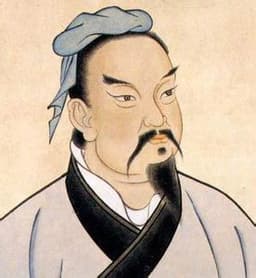
Sun Tzu
General · Ancient
60.8Total
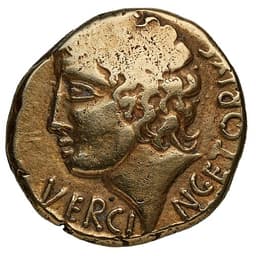
Vercingetorix
General · Ancient
50.1Total
Basic Information
Born
-544
-82
Died
-496
-46
Era
Ancient
Ancient
Nationality
China
Gaul
Occupation
General
General
Civilization
Eastern
Western
Score Comparison
Military (10%)
50.0
60.0
Political (20%)
35.0
29.3
Influence (20%)
85.0
59.0
Legacy (20%)
65.0
54.0
Leadership (15%)
30.0
35.4
Strategy (15%)
85.0
61.3
TOTAL
60.8
50.1
Sun Tzu — Complete Timeline
512 BC
Service as General for King Helü of WuWar◆ Major
Sun Tzu served as a general under King Hel
GeneralWuWar
Impact: regional
506 BC
Battle of BojuWar◆ Major
Sun Tzu is traditionally credited with contributing to the Wu victory at the Battle of Boju, where Wu forces defeated the larger Chu army. The battle demonstrated the application of strategic principles from The Art of War.
BattleWuChu
Impact: regional
500 BC
Composition of The Art of WarCultural
Sun Tzu authored The Art of War, a treatise on military strategy and tactics. The text covers planning, deception, terrain, and leadership, and has been studied for centuries in both military and civilian contexts worldwide.
Military StrategyClassicPhilosophy
Impact: globalconstructive
Vercingetorix — Complete Timeline
52 BC
Gallic revolt against CaesarWar◆ Major
Vercingetorix united the Gallic tribes in a major revolt against Julius Caesar's Roman occupation. He was elected commander-in-chief of the Gallic forces and implemented a scorched-earth strategy to deny supplies to the Roman army, marking the climax of the Gallic Wars.
Gallic WarsRevoltJulius Caesar
Impact: regional
Battle of GergoviaWar◆ Major
Vercingetorix successfully defended the fortified hilltop town of Gergovia against Julius Caesar's Roman legions. Caesar was forced to withdraw after suffering significant losses, marking one of his few tactical defeats in the Gallic Wars and boosting Gallic morale.
Gallic WarsBattleVictory
Impact: regional
Battle of AlesiaWar
Vercingetorix was besieged by Julius Caesar at the oppidum of Alesia. Caesar built extensive fortifications to trap the Gallic army inside and repel a relief force. After a prolonged siege, Vercingetorix surrendered, ending the major Gallic resistance to Roman rule.
Gallic WarsSiegeSurrender
Impact: regionaltragic
Surrender and imprisonmentPolitical Action◆ Major
Vercingetorix surrendered to Julius Caesar at Alesia, reportedly laying down his arms at Caesar's feet. He was taken to Rome as a prisoner and held for six years, awaiting Caesar's triumph. His surrender marked the end of organized Gallic resistance.
Gallic WarsSurrenderImprisonment
Impact: regionaltragic
46 BC
Execution in RomePolitical Action◆ Major
Vercingetorix was executed by strangulation in the Tullianum prison in Rome as part of Julius Caesar's triumph. His death symbolized the final subjugation of Gaul and the consolidation of Roman control over the region.
ExecutionGallic WarsRoman Republic
Impact: regionaltragic
Expert Analysis
Origins
Sun Tzu (c. 544–496 BCE) was born into a turbulent period of Chinese history, the Spring and Autumn period, characterized by constant warfare among feudal states. Little is known of his early life, but he is believed to have been a member of the Wu state's aristocracy. His military education likely began early, and he eventually served as a general under King Helü of Wu. His experiences on the battlefield and study of classical Chinese military thought culminated in his writing of *The Art of War*, a concise treatise of 13 chapters that laid out principles of strategy, tactics, and leadership.
Vercingetorix (c. 82–46 BCE) was born into the Arverni tribe in central Gaul, a region known for its fierce warrior culture. His father, Celtillus, was a chieftain who had sought to rule all Gaul but was executed for his ambition. Vercingetorix inherited a legacy of resistance against Roman expansion. He was likely trained in Gallic warfare, which emphasized individual combat and tribal loyalties. Unlike Sun Tzu, he left no written record; his story is known primarily through the accounts of his enemy, Julius Caesar, in *Commentarii de Bello Gallico*.
Rise to Power
Sun Tzu rose to prominence through his reputation as a strategist. According to tradition, he was recommended to King Helü after presenting his military treatise. The king tested him by commanding him to train a harem of 180 women. Sun Tzu insisted on strict discipline, executing the king's two favorite concubines who laughed at his commands. Afterward, the remaining women obeyed perfectly, and the king recognized Sun Tzu's authority. He was appointed general around 512 BCE and led Wu to victories against the powerful Chu state, notably at the Battle of Boju in 506 BCE, where his use of deception and terrain contributed to a victory against a numerically superior force.
Vercingetorix rose to power during the Gallic Wars (58–50 BCE). In 52 BCE, after the Romans had already subdued much of Gaul, he rallied the Arverni and other tribes in a coordinated revolt. He was elected commander-in-chief at a council of Gallic leaders, leveraging his eloquence, noble lineage, and anti-Roman fervor. His strategy was to unite the fractious tribes and use guerrilla tactics to cut off Roman supply lines. He scored a major victory at the Battle of Gergovia in 52 BCE, where he repelled Caesar's assault, forcing a Roman retreat and boosting Gallic morale.
Leadership & Governance
Sun Tzu's leadership was based on principle over personal charisma. He advocated for a disciplined army where orders are clear, rewards and punishments are consistent, and the general must be adaptable. In *The Art of War*, he emphasized knowing oneself and the enemy, and that the supreme art of war is to subdue the enemy without fighting. His governance approach was indirect: he did not rule a state but advised rulers. His leadership score of 30.0 reflects his theoretical focus; he was more a philosopher of war than a hands-on commander of large forces.
Vercingetorix led by example and personal bravery. He was a charismatic chieftain who inspired loyalty through shared struggle. He implemented a scorched-earth policy to deny Romans supplies, burning towns and crops even at the cost of his own people's hardship. At Alesia, he organized a defense that held out for months. His political score of 29.3 indicates his difficulty in maintaining unity among the tribes, as some Gauls remained pro-Roman. His leadership style was direct and fierce, but ultimately failed against Caesar's logistical and tactical superiority.
Triumph & Tragedy
Sun Tzu's greatest success was authoring *The Art of War*, which scored 85.0 in influence. The text has been studied for over 2,500 years and applied to military, business, and sports. His military success at Boju demonstrated his principles in action. However, his tragedy is the lack of detailed historical records; much of his life is legendary. His personal military achievements are overshadowed by his literary legacy.
Vercingetorix's triumph was uniting Gaul and inflicting a rare defeat on Caesar at Gergovia. His strategy of attrition and terrain use scored 61.3 in strategy. His tragedy was the Battle of Alesia, where despite a massive relief army, he was trapped and starved into surrender. He was paraded in Caesar's triumph and executed by strangulation in 46 BCE. His death ended organized Gallic resistance, and Gaul was Romanized for centuries.
Character & Destiny
Sun Tzu's character was pragmatic and analytical. He valued preparation, deception, and avoiding unnecessary conflict. His destiny was to become a timeless sage, his words studied long after his death. His military score of 50.0 reflects that he is not known for commanding vast armies, but his strategic insights shaped warfare.
Vercingetorix was passionate and stubborn. He chose to fight a superior enemy rather than submit, even when defeat was likely. His destiny was to be a martyr for Gallic independence, remembered as a national hero in France. His military score of 60.0 reflects his battlefield performance, but his overall score of 50.1 is lower due to weaker political and influence metrics.
Legacy
Sun Tzu's legacy is immense. *The Art of War* is a foundational text in military theory, influencing figures like Napoleon, Mao Zedong, and modern business strategists. It scores 65.0 in legacy. His ideas on strategy, such as "all warfare is based on deception," have become proverbial. He is studied worldwide, and his work remains relevant in diverse fields.
Vercingetorix's legacy is as a symbol of resistance. He is celebrated in France as a national hero, with statues and schools named after him. His defeat at Alesia is seen as a tragic turning point that led to Roman rule. His influence score of 59.0 reflects his cultural impact, but his practical legacy is limited: he did not write a treatise, and his tactics, while effective, were not systematically recorded.
Conclusion
Sun Tzu had a greater overall impact than Vercingetorix, with a total score of 60.8 against 50.1. While Vercingetorix demonstrated tactical skill and courage, his influence is confined to a specific historical moment and region. Sun Tzu's *The Art of War* transcends time and culture, providing strategic principles that continue to be applied. His ability to synthesize warfare into a coherent philosophy gives him a lasting edge. Vercingetorix's story is a powerful narrative of resistance, but Sun Tzu's ideas have shaped the very nature of conflict. Therefore, in the comparison of strategy versus rebellion, strategy wins through enduring influence.
Rankings
🥇
Sun TzuLeader
Mil: 50.0Pol: 35.0Inf: 85.0
60.8
🥈
Vercingetorix
Mil: 60.0Pol: 29.3Inf: 59.0
50.1
+10.7 behind
How This Comparison Works
Algorithm
Each figure is scored on 6 dimensions (0—100 scale) based on structured historical data: Military (10%), Political (20%), Influence (20%), Legacy (20%), Leadership (15%), Strategy (15%). The weighted total produces the final ranking.
Data Sources
Scores are computed from structured sub-indicators in the database. Scale factors adjust for era (Ancient ×0.85, Modern ×1.0) and civilization size (Eastern ×1.05, Other ×0.80) to account for differences in population and military scale.
Maximum 3 Figures
Comparisons are limited to 2—3 figures to ensure readability and statistical meaningfulness.
Error Margins
±5 points per dimension — Sub-scores are derived from historical records with inherent uncertainty. Two figures within 5 points on a dimension should be considered roughly equivalent in that area.
Total Score Accuracy
±3 points overall — The weighted combination of 6 dimensions produces a total score with approximately ±3 points of uncertainty. Differences of less than 3 points are not statistically significant— the figures are effectively tied.
Known Limitations
- Historical records are incomplete and uneven across civilizations
- Figures from oral-tradition societies may be underrepresented
- Occupation labels can misclassify multi-role figures
- Scores measure capability and impact, not moral character
- Quantitative scoring is a comparison tool, not absolute truth
Capability Radar
Military (10%) — Battles & Warfare
Battles
30
65
Win Rate
40
55
Expansion
20
40
Political (20%) — Governance & Reform
Reform
10
35
Diplomacy
30
60
Economy
10
20
Influence (20%) — Cultural & Global Reach
Cultural
95
55
Global
95
50
Legacy (20%) — Historical Impact
Historical
98
65
Longevity
99
60
Leadership (15%) — Power & Stability
Tenure
20
30
Stability
10
25
Strategy (15%) — Tactics & Innovation
Strategy
98
60
Tactics
95
70
Reform
85
45
Similar Comparisons
Comments & Discussion
No comments yet. Be the first to share your thoughts!