Loading...
Julius Caesar vs Sun Tzu
Julius Caesar leads by 22.0 pts · 2 figures compared
…

Julius Caesar
General · Ancient
82.8Total
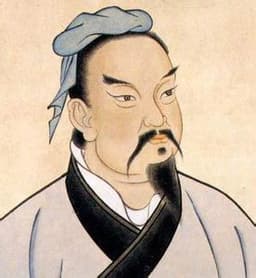
Sun Tzu
General · Ancient
60.8Total
Basic Information
Born
-100
-544
Died
-44
-496
Era
Ancient
Ancient
Nationality
Roman Republic
China
Occupation
General
General
Civilization
Western
Eastern
Score Comparison
Military (10%)
88.0
50.0
Political (20%)
78.0
35.0
Influence (20%)
85.0
85.0
Legacy (20%)
82.0
65.0
Leadership (15%)
80.0
30.0
Strategy (15%)
85.0
85.0
TOTAL
82.8
60.8
Julius Caesar — Complete Timeline
58 BC
Gallic WarsWar◆ Major
Caesar, as proconsul of Gaul, launched a series of campaigns that conquered all of Gaul (modern France, Belgium, and parts of Switzerland). He fought numerous battles, including against the Helvetii, the Belgae, and the Gallic chieftain Vercingetorix. The wars brought immense wealth and a loyal army to Caesar.
Gallic WarsConquestRoman Expansion
Impact: regional
49 BC
Crossing the RubiconPolitical Action◆ Major
Caesar led Legio XIII across the Rubicon River into Italy, defying the Roman Senate's order to disband his army. This act triggered a civil war against Pompey and the Optimates, ultimately leading to Caesar's dictatorship and the end of the Roman Republic.
Roman Civil WarEnd of RepublicPower Struggle
Impact: global
48 BC
Battle of PharsalusWar◆ Major
Caesar's outnumbered army defeated the larger forces of Pompey the Great at Pharsalus in Greece. Caesar's tactical use of a reserve line to counter Pompey's cavalry charge proved decisive. Pompey fled to Egypt, where he was assassinated, leaving Caesar as the undisputed master of the Roman world.
Roman Civil WarBattleDecisive Victory
Impact: regional
44 BC
Appointment as Dictator for LifePolitical Action◆ Major
The Roman Senate appointed Caesar dictator perpetuo (dictator for life), granting him unprecedented personal power. This move concentrated military, legislative, and judicial authority in one person, effectively ending the Roman Republic's traditional system of checks and balances and alarming many senators.
DictatorshipEnd of RepublicPower Consolidation
Impact: regionaldestructive
Assassination on the Ides of MarchPolitical Action◆ Major
A group of Roman senators, led by Marcus Junius Brutus and Gaius Cassius Longinus, stabbed Caesar to death at a meeting of the Senate in the Theatre of Pompey. The assassination was intended to restore the Republic, but instead triggered another civil war that led to the rise of the Roman Empire.
AssassinationRoman PoliticsEnd of Republic
Impact: globaldestructive
Sun Tzu — Complete Timeline
512 BC
Service as General for King Helü of WuWar◆ Major
Sun Tzu served as a general under King Hel
GeneralWuWar
Impact: regional
506 BC
Battle of BojuWar◆ Major
Sun Tzu is traditionally credited with contributing to the Wu victory at the Battle of Boju, where Wu forces defeated the larger Chu army. The battle demonstrated the application of strategic principles from The Art of War.
BattleWuChu
Impact: regional
500 BC
Composition of The Art of WarCultural
Sun Tzu authored The Art of War, a treatise on military strategy and tactics. The text covers planning, deception, terrain, and leadership, and has been studied for centuries in both military and civilian contexts worldwide.
Military StrategyClassicPhilosophy
Impact: globalconstructive
Expert Analysis
Julius Caesar vs Sun Tzu
# The General Who Wrote, and the General Who Ruled
On a misty morning in 506 BCE, somewhere in the marshes of eastern China, a Wu army crushed the forces of the mighty Chu state. The victory was decisive, unexpected, and credited to a general whose name would echo across millennia—Sun Tzu. Yet when the battle ended, Sun Tzu returned to his camp, sharpened his brush, and wrote a book. Half a world away and four centuries later, a Roman nobleman named Julius Caesar stood on the banks of a small river called the Rubicon, knowing that crossing it would mean civil war. He crossed anyway. One man left behind a treatise; the other left behind an empire. Why did their paths diverge so starkly?
Origins
Sun Tzu was born around 544 BCE in the state of Qi, during the chaotic Spring and Autumn period of Chinese history. This was an age of constant warfare between rival kingdoms, where survival depended on cunning as much as courage. The philosophical ferment of the era—Confucianism, Daoism, Legalism—was just beginning. Sun Tzu absorbed these currents, but he channeled them into something narrower: the pure logic of conflict. His world was one of warring states, shifting alliances, and the grim arithmetic of victory.
Julius Caesar entered the world in 100 BCE, at the apex of the Roman Republic's power. Rome had already conquered the Mediterranean, but its political institutions were rotting from within. The Senate was a nest of ambitious nobles; the streets of Rome, a stage for bribery and mob violence. Caesar was born into a patrician family, but one that had fallen on hard times—a fact that would fuel his relentless ambition. Unlike Sun Tzu, who wrote about war from the outside, Caesar grew up immersed in the machinery of power: patronage, oratory, and the brutal realities of Roman politics.
Rise to Power
Sun Tzu's ascent was shrouded in legend. According to the *Records of the Grand Historian*, he impressed King Helü of Wu by demonstrating his ability to train even the king's concubines into disciplined soldiers—beheading two of them to make his point. This story, whether true or not, captures Sun Tzu's essence: he rose not through birth or connections, but through the force of his ideas. By 512 BCE, he was serving as a general for Wu, and his strategic mind soon bore fruit.
Caesar's rise was a masterclass in political calculation. He climbed the *cursus honorum*—the ladder of Roman offices—through a combination of military glory, popular reforms, and shrewd alliances. The First Triumvirate with Pompey and Crassus in 60 BCE was his masterstroke: an informal pact that made him consul the following year. While Sun Tzu waited for a king to recognize his genius, Caesar *created* his own opportunities, using debt, marriage, and bribery as tools.
Leadership & Governance
Here the two figures diverge most sharply. Sun Tzu's leadership was intellectual and detached. In *The Art of War*, he wrote: "The supreme art of war is to subdue the enemy without fighting." His ideal general was a master of deception, terrain, and timing—a figure who won campaigns before they began, through superior planning. His military score of 70 and strategy score of 85 reflect this: he was a theorist of genius, but his actual battlefield experience is thinly documented. The Battle of Boju in 506 BCE may have been his greatest triumph, yet even that victory is more associated with his contemporary, Wu Zixu.
Caesar, by contrast, was a warrior-leader in the mold of Alexander. His conquest of Gaul (58–50 BCE) was a decade-long campaign of breathtaking speed and brutality. He fought over fifty battles, often against overwhelming odds, and personally led his men from the front. His military score of 88 and leadership score of 82 capture this visceral command. But Caesar was also a political genius: he reformed the calendar, extended Roman citizenship, and implemented land reforms that broke the power of the old aristocracy. His political score of 78 dwarfs Sun Tzu's 26.6—a reflection of how Caesar *used* war as a means to political ends, while Sun Tzu treated war as an end in itself.
Triumph & Tragedy
Sun Tzu's triumph was not a single battle, but a book. *The Art of War* is a masterpiece of compression—just thirteen chapters that distill centuries of Chinese military thought into aphorisms of startling clarity: "All warfare is based on deception." Its tragedy is that its author remains a ghost. We know almost nothing of Sun Tzu's personal life, his later years, or his death around 496 BCE. He vanished into his own text.
Caesar's triumph was the conquest of Rome itself. After crossing the Rubicon in 49 BCE, he defeated Pompey's forces, had himself declared dictator for life, and began transforming the Republic into an empire. His tragedy came on the Ides of March, 44 BCE, when sixty senators stabbed him to death in the Senate chamber. He died not in battle, but in the heart of the city he had conquered—a victim of the very political system he had shattered.
Character & Destiny
Sun Tzu's character is opaque, but his philosophy reveals him: patient, calculating, almost cold. He wrote, "If you know the enemy and know yourself, you need not fear the result of a hundred battles." This is the voice of a man who believed that conflict could be governed by rational principles—a kind of strategic stoicism. His destiny was to be remembered not as a conqueror, but as a teacher.
Caesar burned with *ambitio*—the Roman hunger for glory. He was charismatic, reckless, and ruthless, capable of pardoning his enemies one day and massacring a Gallic tribe the next. His famous *Veni, vidi, vici* ("I came, I saw, I conquered") is pure Caesar: swift, arrogant, unforgettable. His destiny was to die at the height of his power, a martyr to his own success.
Legacy
Sun Tzu's legacy is quiet but pervasive. *The Art of War* has been read by Napoleon, Mao Zedong, and countless modern generals and CEOs. Its ideas have seeped into military doctrine, business strategy, and even sports coaching. Sun Tzu's influence score of 82 and legacy score of 91.4 reflect this: he is more influential *today* than perhaps any ancient military thinker.
Caesar's legacy is monumental and bloody. His name became a title—*Caesar*—used by Roman emperors for centuries, and later by German *Kaiser* and Russian *Tsar*. His conquests spread Roman civilization across Europe, but his dictatorship destroyed the Republic. His total score of 83.3 surpasses Sun Tzu's 63.2, but this comparison is misleading: Caesar achieved more in his lifetime, while Sun Tzu achieved more *through* his ideas.
Conclusion
Standing on the Rubicon, Caesar could not have imagined the world Sun Tzu inhabited—a world of competing kingdoms, ritualized warfare, and the search for strategic wisdom. Sun Tzu, composing his treatise in the quiet of a Wu palace, could not have foreseen the volcanic ambition of a Roman general who would rewrite history with his sword. One wrote the rules of war; the other broke them. Both, in their own ways, shaped the world we still inhabit—a world where strategy and power, wisdom and will, remain locked in eternal contest.
Rankings
🥇
Julius CaesarLeader
Mil: 88.0Pol: 78.0Inf: 85.0
82.8
🥈
Sun Tzu
Mil: 50.0Pol: 35.0Inf: 85.0
60.8
+22.0 behind
How This Comparison Works
Algorithm
Each figure is scored on 6 dimensions (0—100 scale) based on structured historical data: Military (10%), Political (20%), Influence (20%), Legacy (20%), Leadership (15%), Strategy (15%). The weighted total produces the final ranking.
Data Sources
Scores are computed from structured sub-indicators in the database. Scale factors adjust for era (Ancient ×0.85, Modern ×1.0) and civilization size (Eastern ×1.05, Other ×0.80) to account for differences in population and military scale.
Maximum 3 Figures
Comparisons are limited to 2—3 figures to ensure readability and statistical meaningfulness.
Error Margins
±5 points per dimension — Sub-scores are derived from historical records with inherent uncertainty. Two figures within 5 points on a dimension should be considered roughly equivalent in that area.
Total Score Accuracy
±3 points overall — The weighted combination of 6 dimensions produces a total score with approximately ±3 points of uncertainty. Differences of less than 3 points are not statistically significant— the figures are effectively tied.
Known Limitations
- Historical records are incomplete and uneven across civilizations
- Figures from oral-tradition societies may be underrepresented
- Occupation labels can misclassify multi-role figures
- Scores measure capability and impact, not moral character
- Quantitative scoring is a comparison tool, not absolute truth
Capability Radar
Military (10%) — Battles & Warfare
Battles
95
30
Win Rate
92
40
Expansion
97
20
Political (20%) — Governance & Reform
Reform
90
10
Diplomacy
85
30
Economy
82
10
Influence (20%) — Cultural & Global Reach
Cultural
88
95
Global
94
95
Legacy (20%) — Historical Impact
Historical
95
98
Longevity
96
99
Leadership (15%) — Power & Stability
Tenure
75
20
Stability
60
10
Strategy (15%) — Tactics & Innovation
Strategy
94
98
Tactics
96
95
Reform
88
85
Similar Comparisons
Comments & Discussion
TheRubiconRoamer6/16/2026
Sun Tzu was a theorist who never lost a recorded battle—that we know of. Caesar personally led his legions through Gaul and won over 30 pitched battles. The difference isn't philosophy versus practice; it's that Caesar proved his system against living foes while Sun Tzu's 'victories' are mostly legendary. One left a legacy of blood and empire; the other left a book that Napoleon ignored and modern CEOs misread.
天鹅湖射手6/16/2026
说孙武没打过败仗?《史记》记载他帮吴王阖闾练兵,但关键战役都是伍子胥指挥的。兵法是集体智慧,不是个人传记。凯撒倒是亲自砍人,可他高卢战争杀了百万平民,这叫军事天才?充其量是个高效屠夫。论实战记录,我选项羽,可惜他没写书。
周公吐哺6/16/2026
一个是武装哲学家,一个是政治军阀,本质不同。孙武写《孙子兵法》是为国家提供生存手册,凯撒写《高卢战记》是为自己争取执政官位置。动机决定境界——一个追求永恒智慧,一个追求即时权力。结果呢?凯撒被刺死在元老院,孙武的兵法却活了两千五百年。谁赢了?
金戈铁甲6/16/2026
别天真了,凯撒根本不是纯军事家。他懂政治、演讲、法律、甚至宗教改革。孙武呢?兵书之外几乎零存在感。这两人唯一可比的是:凯撒改变了一个文明的命运,孙武改变了一门学科。你想当改变历史的人,还是被历史记住的人?我选凯撒——布阵再妙,不如跨过卢比孔河那一步。
TrueMind96/16/2026
Comparing Caesar and Sun Tzu is like comparing Newton and Einstein—same field, different epochs, incommensurate evidence. We have zero contemporary sources for Sun Tzu's battles, while Caesar's own commentaries provide detailed casualty figures, troop movements, and even political context. From a data standpoint, Caesar is a well-documented case study; Sun Tzu is a philosophical abstraction with anecdotal attribution. I trust the general who filed his after-action reports.