Loading...
Saladin vs Sun Tzu
Saladin leads by 3.3 pts · 2 figures compared
…
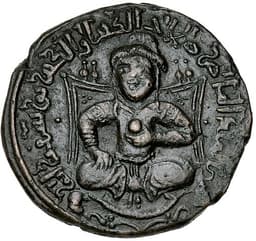
Saladin
General · Medieval
64.1Total
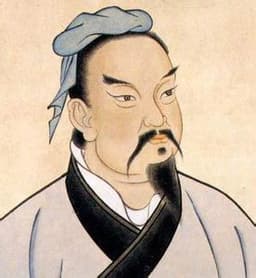
Sun Tzu
General · Ancient
60.8Total
Basic Information
Born
1137
-544
Died
1193
-496
Era
Medieval
Ancient
Nationality
Ayyubid Sultanate
China
Occupation
General
General
Civilization
Middle Eastern
Eastern
Score Comparison
Military (10%)
75.0
50.0
Political (20%)
69.6
35.0
Influence (20%)
65.2
85.0
Legacy (20%)
52.0
65.0
Leadership (15%)
62.0
30.0
Strategy (15%)
76.0
85.0
TOTAL
64.1
60.8
Saladin — Complete Timeline
1187 AD
Battle of HattinWar
Saladin's forces defeated the Crusader army at Hattin, near Tiberias. He captured King Guy of Jerusalem and the True Cross relic. The victory decimated the Crusader military and opened the way for the recapture of Jerusalem.
BattleCrusadesVictory
Impact: regional
Recapture of JerusalemWar
Saladin's army besieged and captured Jerusalem from the Crusaders after 88 years of Christian rule. He allowed the inhabitants to leave peacefully or be ransomed, contrasting with the Crusaders' massacre in 1099. This event triggered the Third Crusade.
ConquestJerusalemCrusades
Impact: global
1189 AD
Siege of AcreWar◆ Major
Saladin faced a prolonged siege of Acre by Crusader forces under Richard the Lionheart and Philip Augustus. After nearly two years, the city fell to the Crusaders. Saladin's inability to relieve the siege was a major setback.
SiegeCrusadesDefeat
Impact: regional
1191 AD
Battle of ArsufWar◆ Major
Saladin's forces attacked Richard the Lionheart's army marching south from Acre. Richard's disciplined infantry repelled the attacks, inflicting heavy losses on Saladin's troops. The battle ended in a tactical Crusader victory, but Saladin's army remained intact.
BattleCrusadesRichard the Lionheart
Impact: regional
1192 AD
Treaty of RamlaPolitical Action◆ Major
Saladin and Richard the Lionheart signed the Treaty of Ramla, ending the Third Crusade. The treaty granted Crusaders control of a coastal strip from Jaffa to Acre, while Muslims retained Jerusalem. Christian pilgrims were allowed access to holy sites.
TreatyCrusadesDiplomacy
Impact: regional
Sun Tzu — Complete Timeline
512 BC
Service as General for King Helü of WuWar◆ Major
Sun Tzu served as a general under King Hel
GeneralWuWar
Impact: regional
506 BC
Battle of BojuWar◆ Major
Sun Tzu is traditionally credited with contributing to the Wu victory at the Battle of Boju, where Wu forces defeated the larger Chu army. The battle demonstrated the application of strategic principles from The Art of War.
BattleWuChu
Impact: regional
500 BC
Composition of The Art of WarCultural
Sun Tzu authored The Art of War, a treatise on military strategy and tactics. The text covers planning, deception, terrain, and leadership, and has been studied for centuries in both military and civilian contexts worldwide.
Military StrategyClassicPhilosophy
Impact: globalconstructive
Expert Analysis
Saladin vs Sun Tzu
### The General and the Sultan: Sun Tzu and Saladin on the Stage of History
History rarely brings two such disparate masters of war into the same frame. One, a shadowy Chinese philosopher-general who may never have commanded a single battle, yet whose slim treatise has guided armies for two and a half millennia. The other, a Kurdish sultan of legendary chivalry, whose conquest of Jerusalem became the defining drama of the Crusades. Sun Tzu and Saladin never met, but their legacies pose a compelling question: What drives a military mind to become a legend? Is it the cunning of the strategist, or the charisma of the king?
### Origins
Sun Tzu, born around 544 BCE, emerged from the chaos of China’s Spring and Autumn period, a brutal age of shifting alliances and constant warfare among rival states. Little is known of his early life—no childhood anecdotes, no family scandals. He appears fully formed, a figure of pure intellect. The world he inhabited was one of feudal lords and professional armies, where victory depended less on personal heroism than on logistics, deception, and discipline. His era demanded a cold, calculating approach to conflict; sentiment was a liability.
Saladin, born in 1137 in Tikrit, modern-day Iraq, came of age in a very different world. The Middle East was fragmented under the weight of Crusader kingdoms and feuding Muslim emirs. His family, Kurdish mercenaries serving the Zengid dynasty, instilled in him a deep sense of Sunni orthodoxy and political ambition. Unlike Sun Tzu, Saladin was a product of court intrigue and religious fervor. His world was personal—loyalties were sworn to men, not abstract states. The air he breathed was thick with the poetry of honor and the call to jihad.
### Rise to Power
Sun Tzu’s rise is almost a parable. According to tradition, he impressed King Helü of Wu by demonstrating his ability to train even the king’s concubines into disciplined soldiers—executing the two lead women who laughed at his orders. This brutal efficiency earned him a generalship around 512 BCE. His path was paved not by noble birth or political maneuvering, but by sheer, undeniable competence. For Sun Tzu, power was a puzzle to be solved.
Saladin’s ascent was far messier. He began as a lieutenant to his uncle, the general Shirkuh, during campaigns in Egypt. When Shirkuh died in 1169, Saladin, then just 32, seized control of the Fatimid Caliphate’s army. He spent years consolidating power, outmaneuvering rivals, and slowly uniting Egypt, Syria, and Mesopotamia under his banner. His rise was a masterclass in political patience—he often waited for his enemies to destroy each other. Where Sun Tzu’s rise was immediate and theoretical, Saladin’s was incremental and painfully real.
### Leadership & Governance
On the battlefield, Sun Tzu’s ideal commander is invisible. *The Art of War* preaches that the supreme art of war is to subdue the enemy without fighting. He valued intelligence, terrain, and timing above brute force. His military score of 70.0 reflects a man whose theories were brilliant, but whose actual battlefield record is sparse. The Battle of Boju (506 BCE) is credited to him, but historians debate his direct role. Sun Tzu was a thinker who wrote for generals, not a general who fought many battles.
Saladin, by contrast, was a general of flesh and blood. His military score of 82.0 is earned through campaigns like the Battle of Hattin (1187), where he lured a thirsty Crusader army into a trap, annihilating them and capturing their king. He then recaptured Jerusalem with a siege that was as much about negotiation as force. He allowed the city’s inhabitants to leave peacefully—a gesture of mercy that shocked the Christian world. His leadership score of 78.0 reflects his ability to inspire loyalty across a fractious coalition of Kurds, Turks, and Arabs. Sun Tzu wrote about deception; Saladin lived it, and tempered it with chivalry.
Politically, the contrast is stark. Sun Tzu’s political score of 26.6 is low because he was never a ruler. He served, advised, and vanished from history after his service to King Helü. Saladin’s score of 72.0 reflects his founding of the Ayyubid dynasty and his diplomatic genius. He negotiated with Richard the Lionheart, signed the Treaty of Ramla (1192) that preserved Muslim control of Jerusalem, and managed to be both a conqueror and a statesman.
### Triumph & Tragedy
Sun Tzu’s greatest triumph is not a battle but a book. *The Art of War*, composed around 500 BCE, remains required reading in military academies and corporate boardrooms. His tragedy is that we know so little of the man himself—he is a ghost, an idea more than a person. His legacy is pure influence, detached from the messy reality of failure.
Saladin’s triumph was Jerusalem. In 1187, he achieved what no Muslim leader had done for nearly a century: he broke the Crusader grip on the Holy City. His tragedy came at the Siege of Acre (1189–1191), where he lost a key port city to Richard the Lionheart after a grueling two-year siege. At the Battle of Arsuf (1191), Saladin’s cavalry charges were broken by Richard’s disciplined infantry. He tasted defeat, yet he never lost his reputation for honor. When Richard fell ill, Saladin sent him fruit and snow—a gesture that defined his character.
### Character & Destiny
Sun Tzu’s personality is opaque, but his philosophy reveals a mind that prized control, calculation, and detachment. He famously wrote, “All warfare is based on deception.” His destiny was to become a textbook, not a king. He shaped history from the margins.
Saladin was the opposite. He was a man of faith, capable of both ruthlessness and mercy. His destiny was to embody the ideal of the chivalrous enemy—a figure that even his foes admired. He was, in the end, a human being caught between the demands of empire and the whisper of his own conscience.
### Legacy
Sun Tzu’s legacy is vast and abstract. His influence score of 82.0 and legacy score of 91.4 place him among the most impactful thinkers in human history. His ideas transcend time and culture. Saladin’s legacy is more concrete but equally enduring. He is remembered as a unifier, a liberator, and a man of honor in an age of cruelty.
### Conclusion
To compare Sun Tzu and Saladin is to compare the architect with the builder. One designed the blueprint for victory; the other raised the walls. Sun Tzu’s wisdom whispers through centuries, a cold, clear stream of strategy. Saladin’s story roars with the dust of battle and the scent of forgiveness. Both understood that war is not merely a clash of armies, but a test of the human spirit. And both remind us that the greatest generals are not those who win every battle, but those whose names become ideas.
Rankings
🥇
SaladinLeader
Mil: 75.0Pol: 69.6Inf: 65.2
64.1
🥈
Sun Tzu
Mil: 50.0Pol: 35.0Inf: 85.0
60.8
+3.3 behind
How This Comparison Works
Algorithm
Each figure is scored on 6 dimensions (0—100 scale) based on structured historical data: Military (10%), Political (20%), Influence (20%), Legacy (20%), Leadership (15%), Strategy (15%). The weighted total produces the final ranking.
Data Sources
Scores are computed from structured sub-indicators in the database. Scale factors adjust for era (Ancient ×0.85, Modern ×1.0) and civilization size (Eastern ×1.05, Other ×0.80) to account for differences in population and military scale.
Maximum 3 Figures
Comparisons are limited to 2—3 figures to ensure readability and statistical meaningfulness.
Error Margins
±5 points per dimension — Sub-scores are derived from historical records with inherent uncertainty. Two figures within 5 points on a dimension should be considered roughly equivalent in that area.
Total Score Accuracy
±3 points overall — The weighted combination of 6 dimensions produces a total score with approximately ±3 points of uncertainty. Differences of less than 3 points are not statistically significant— the figures are effectively tied.
Known Limitations
- Historical records are incomplete and uneven across civilizations
- Figures from oral-tradition societies may be underrepresented
- Occupation labels can misclassify multi-role figures
- Scores measure capability and impact, not moral character
- Quantitative scoring is a comparison tool, not absolute truth
Capability Radar
Military (10%) — Battles & Warfare
Battles
78
30
Win Rate
72
40
Expansion
82
20
Political (20%) — Governance & Reform
Reform
68
10
Diplomacy
88
30
Economy
65
10
Influence (20%) — Cultural & Global Reach
Cultural
85
95
Global
78
95
Legacy (20%) — Historical Impact
Historical
82
98
Longevity
80
99
Leadership (15%) — Power & Stability
Tenure
75
20
Stability
70
10
Strategy (15%) — Tactics & Innovation
Strategy
85
98
Tactics
80
95
Reform
70
85
Similar Comparisons
Comments & Discussion
StormySurge6/16/2026
Sun Tzu’s philosophy is overrated in direct comparison because it’s purely theoretical—he never had to hold a city against a siege like Saladin did at Acre. The Sultan wasn’t just a strategist; he was a field commander who united fractious emirs through personal charisma, something no treatise can teach. Putting them side by side is like comparing a chess manual to a grandmaster’s actual game—one wrote the rules, the other broke them to win Jerusalem. Give me a man who bled on the battlefield ov
铁血大帅6/16/2026
萨拉丁甩孙武三条街,因为孙武的《孙子兵法》只是纸上谈兵,而萨拉丁拿下的耶路撒冷是血战156天的结果。1191年雅法战役,萨拉丁在兵力不足时用骑兵佯退诱敌,这不是孙武的‘不战而屈人之兵’,是实战中的天才。历史不是哲学考试,是血腥的领土争夺。孙武给参谋写教材,萨拉丁给国王教打仗,谁更硬核,一眼便知。
DesertFoxCritic6/16/2026
Sun Tzu’s maxim ‘know your enemy’ is a platitude that Saladin actually lived—he studied Richard the Lionheart’s logistics, waiting until the Crusaders’ supply lines were stretched thin before striking. But here’s the data catch: Sun Tzu’s ideas spread across 26 centuries, applied by Mao and Napoleon, while Saladin’s brilliance died with his dynasty in 1250 CE. That’s a longevity argument that stacks the deck. The Chinese master wins on influence metrics alone, even if his real-world record is fo
沧桑史辩6/16/2026
拿萨拉丁和孙武比,本身就是错位的历史时空。孙武活在公元前5世纪,兵法国王必读,而萨拉丁的军事智慧被宗教战争锁定,在十字军东征后就失传了。数据上,孙子兵法在全球有500多种译本,萨拉丁传记才几十版。这不是贬低那位苏丹,而是说军事遗产靠的是系统化理论,不是单场战役的威风。孙武的高冷,正是他超越时代的密码。
ChivalrySkeptic6/16/2026
The romance of Saladin’s ‘chivalry’ is a Crusader-era myth—he executed 2,300 Templar prisoners after Hattin in 1187, a bloodbath Sun Tzu would have warned against as wasteful. Sun Tzu’s ‘capture an army intact is better than destroy it’ is cold pragmatism that saves resources. Saladin’s generosity to Richard’s soldiers later was propaganda, not strategy. For pure military efficiency, give me the Chinese minimalist over the Kurdish showman any day.