Loading...
Cao Cao vs Sun Tzu
Cao Cao leads by 16.7 pts · 2 figures compared
…
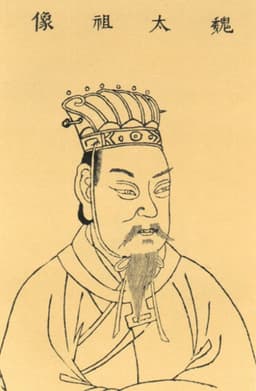
Cao Cao
General · Ancient
77.5Total
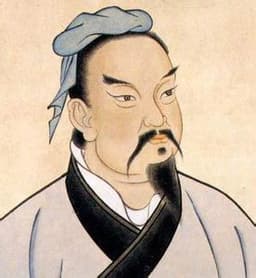
Sun Tzu
General · Ancient
60.8Total
Basic Information
Born
155
-544
Died
220
-496
Era
Ancient
Ancient
Nationality
China
China
Occupation
General
General
Civilization
Eastern
Eastern
Score Comparison
Military (10%)
88.0
50.0
Political (20%)
59.0
35.0
Influence (20%)
82.0
85.0
Legacy (20%)
83.0
65.0
Leadership (15%)
64.4
30.0
Strategy (15%)
89.4
85.0
TOTAL
77.5
60.8
Cao Cao — Complete Timeline
190 AD
Formation of the Coalition against Dong ZhuoPolitical Action
Cao Cao joined a coalition of regional warlords led by Yuan Shao to overthrow the tyrannical chancellor Dong Zhuo, who had seized control of the Han court. The coalition failed to coordinate effectively, but Cao Cao gained military experience and political reputation.
CoalitionDong ZhuoHan Dynasty
Impact: national
196 AD
Implementation of Tuntian (Agricultural Colonies)Reform◆ Major
Cao Cao established military agricultural colonies (tuntian) to provide food for his army and refugees. Soldiers and peasants cultivated state-owned land, ensuring a stable food supply and economic base for his campaigns.
AgricultureEconomyMilitary
Impact: regionalconstructive
200 AD
Battle of GuanduWar
Cao Cao decisively defeated Yuan Shao's numerically superior army at Guandu. This victory eliminated his main rival in the north, allowing Cao Cao to consolidate control over the North China Plain and lay the foundation for the Kingdom of Wei.
BattleYuan ShaoUnification
Impact: regional
208 AD
Battle of Red CliffsWar
Cao Cao's southern campaign was halted by the allied forces of Sun Quan and Liu Bei at the Battle of Red Cliffs. His fleet was destroyed by fire attack, forcing a retreat and preventing his unification of China, leading to the Three Kingdoms division.
BattleDefeatThree Kingdoms
Impact: regional
213 AD
Establishment of the Kingdom of WeiPolitical Action◆ Major
Cao Cao was granted the title of Duke of Wei and later King of Wei by the Han emperor, effectively creating a semi-autonomous state within the empire. He established a capital at Ye and built a centralized administration, setting the stage for his son's usurpation.
WeiStatehoodHan Dynasty
Impact: national
Sun Tzu — Complete Timeline
512 BC
Service as General for King Helü of WuWar◆ Major
Sun Tzu served as a general under King Hel
GeneralWuWar
Impact: regional
506 BC
Battle of BojuWar◆ Major
Sun Tzu is traditionally credited with contributing to the Wu victory at the Battle of Boju, where Wu forces defeated the larger Chu army. The battle demonstrated the application of strategic principles from The Art of War.
BattleWuChu
Impact: regional
500 BC
Composition of The Art of WarCultural
Sun Tzu authored The Art of War, a treatise on military strategy and tactics. The text covers planning, deception, terrain, and leadership, and has been studied for centuries in both military and civilian contexts worldwide.
Military StrategyClassicPhilosophy
Impact: globalconstructive
Expert Analysis
Cao Cao vs Sun Tzu
# The Strategist and the Warlord
On a spring morning in 208 CE, Cao Cao stood on the northern bank of the Yangtze River, watching his vast fleet of warships prepare for the campaign that would unite all of China under his rule. He had every reason to be confident. For two decades, he had outmaneuvered, outwitted, and out-fought every rival who dared challenge him. His armies were the best-fed, his generals the most loyal, his strategies the most cunning. Yet within months, those same ships would burn, and his dream of a unified empire would sink into the muddy waters of Red Cliffs. Five centuries earlier, another Chinese strategist had written the book that Cao Cao studied—but Sun Tzu never faced such a catastrophe. Why did one man’s wisdom become immortal while the other’s ambition ended in ashes?
Origins
Cao Cao was born in 155 CE into a world collapsing under its own weight. The Han dynasty, once the glory of the East, had rotted from within—eunuchs controlled the court, corruption devoured the treasury, and peasant rebellions erupted like sores across the land. His father was the adopted son of a eunuch, a connection that gave Cao Cao access to power but also marked him with a stain of illegitimacy in the eyes of the aristocratic families. From childhood, he learned that respect was something you took, not something you were given.
Sun Tzu, by contrast, was born around 544 BCE into the Spring and Autumn period, when China was a chessboard of competing states but still governed by a shared code of aristocratic warfare. Chariots, rituals, and formal declarations preceded battles. Sun Tzu’s world was one where a general could write a book about strategy because there was a literate elite to read it—and where war, though brutal, followed rules that made it teachable. His family belonged to the shi class, the warrior-scholars who served feudal lords, and his education steeped him in the philosophies of his age.
The difference in their eras explains everything. Sun Tzu lived in a world of stable chaos—many states, but predictable norms. Cao Cao lived in a world of absolute chaos—one empire, but no norms at all.
Rise to Power
Sun Tzu’s entry onto the historical stage is almost mythic. According to the *Records of the Grand Historian*, he impressed King Helü of Wu by drilling a company of the king’s concubines into disciplined soldiers, executing the king’s favorite consorts when they laughed during training. Whether true or legend, the story captures Sun Tzu’s core principle: command is absolute, and mercy is weakness. He served as a general for the Wu state, and his most famous military contribution came at the Battle of Boju around 506 BCE, where Wu forces defeated the powerful Chu state. But Sun Tzu’s real rise was not through battles—it was through a book.
Cao Cao’s rise was pure blood and iron. In 190 CE, he joined the coalition against the tyrant Dong Zhuo, but when the alliance fractured into squabbling warlords, Cao Cao realized that legitimacy meant nothing without power. His turning point came in 196 CE, when he implemented the *tuntian* system—military agricultural colonies where soldiers farmed in peacetime and fought in war. This innovation solved the fundamental problem of his age: feeding an army. While other warlords starved, Cao Cao’s granaries overflowed. The Battle of Guandu in 200 CE sealed his dominance. Facing Yuan Shao’s army of perhaps 100,000 men with barely half that number, Cao Cao used a daring night raid to burn Yuan Shao’s supply wagons at Wuchao. The enemy army disintegrated. By 208 CE, he controlled all of northern China.
Leadership & Governance
Sun Tzu’s *Art of War* is a masterpiece of abstract strategy. “All warfare is based on deception,” he wrote. “Appear weak when you are strong, and strong when you are weak.” He emphasized knowing your enemy and yourself, avoiding protracted war, and winning without fighting when possible. Yet Sun Tzu never ruled a state, never managed a bureaucracy, never faced the mundane horrors of feeding millions of refugees. His leadership was theoretical, distilled into 13 chapters of aphorisms that could apply to any conflict—or none at all.
Cao Cao governed. He wrote poetry about the suffering of the common people: “The bones of the dead lie bleaching in the fields, / No children’s voices echo in the villages.” He reformed the tax system, promoted talented men regardless of birth, and personally led his armies into battle. His military genius was pragmatic and brutal—he used terror as a weapon, massacred entire cities that resisted, and once killed his own steward to prove a point about discipline. But he also rewarded loyalty extravagantly and forgave enemies who surrendered. His rule was a paradox: a tyrant who loved literature, a conqueror who wept for the dead.
Triumph & Tragedy
Sun Tzu’s greatest triumph was not a battle but a book. *The Art of War* became the foundational text of Chinese military thought, studied by generals from the Han dynasty to Mao Zedong, and later by business executives, sports coaches, and military academies worldwide. His tragedy is that we know almost nothing about him as a person. The man is lost behind the text.
Cao Cao’s triumph was the unification of northern China and the establishment of the Kingdom of Wei in 213 CE, which would outlive him and form the basis for the Jin dynasty’s eventual reunification of China. His tragedy was the Battle of Red Cliffs in 208 CE. Confident after years of victory, he underestimated the alliance of Sun Quan and Liu Bei, chained his ships together to prevent seasickness, and watched them burn when the enemy used fire ships. It was a failure of the very humility Sun Tzu preached—the arrogance of a man who thought he had mastered fate.
Character & Destiny
Sun Tzu’s personality is a blank canvas onto which generations have projected their ideals. He is the perfect strategist: calm, calculating, detached. His book teaches that the supreme art of war is to subdue the enemy without fighting—a wisdom that reflects a man who valued intellect over ego.
Cao Cao was the opposite. He was passionate, contradictory, and utterly human. He wrote poems of profound melancholy, then ordered executions without flinching. He was paranoid—he once killed a servant who caught him sleeping with his sword drawn—yet he trusted his generals with absolute authority. His destiny was shaped by his refusal to accept limits. He wanted to be emperor but never took the throne, perhaps fearing the curse of usurpation. He wanted to unite China but died in 220 CE with the south still unconquered, leaving his son to finish the work.
Legacy
Sun Tzu’s legacy is global and timeless. *The Art of War* is read in boardrooms and barracks, translated into dozens of languages, and quoted by everyone from Napoleon to modern CEOs. His influence score of 82.0 and legacy score of 91.4 reflect a figure who transcended his era entirely.
Cao Cao’s legacy is more complex. In Chinese history, he is both a brilliant statesman and a cunning villain, the archetype of the ambitious warlord. His military score of 89.2 and leadership score of 80.0 show a man of immense practical ability, but his political score of 72.7 and total score of 80.4 reveal the limits of his achievement—he built an empire but could not keep it whole. In folklore and opera, he is the white-faced villain, the schemer who said, “I would rather betray the world than have the world betray me.” Yet historians know he was more: a poet, a reformer, a man who held a dying dynasty together with sheer will.
Conclusion
Sun Tzu and Cao Cao represent two faces of Chinese strategic thought. Sun Tzu is the philosopher who asks, “How should war be fought?” Cao Cao is the practitioner who answers, “This is how war is fought.” One wrote the textbook; the other lived the exam. Their differences arise not from talent but from circumstance—Sun Tzu wrote in an age when strategy could be codified, Cao Cao ruled in an age when only survival mattered. The strategist’s wisdom endures because it is abstract; the warlord’s story endures because it is real. Both teach us that the greatest battles are not fought on fields but in the human heart, where ambition meets its match.
Rankings
🥇
Cao CaoLeader
Mil: 88.0Pol: 59.0Inf: 82.0
77.5
🥈
Sun Tzu
Mil: 50.0Pol: 35.0Inf: 85.0
60.8
+16.7 behind
How This Comparison Works
Algorithm
Each figure is scored on 6 dimensions (0—100 scale) based on structured historical data: Military (10%), Political (20%), Influence (20%), Legacy (20%), Leadership (15%), Strategy (15%). The weighted total produces the final ranking.
Data Sources
Scores are computed from structured sub-indicators in the database. Scale factors adjust for era (Ancient ×0.85, Modern ×1.0) and civilization size (Eastern ×1.05, Other ×0.80) to account for differences in population and military scale.
Maximum 3 Figures
Comparisons are limited to 2—3 figures to ensure readability and statistical meaningfulness.
Error Margins
±5 points per dimension — Sub-scores are derived from historical records with inherent uncertainty. Two figures within 5 points on a dimension should be considered roughly equivalent in that area.
Total Score Accuracy
±3 points overall — The weighted combination of 6 dimensions produces a total score with approximately ±3 points of uncertainty. Differences of less than 3 points are not statistically significant— the figures are effectively tied.
Known Limitations
- Historical records are incomplete and uneven across civilizations
- Figures from oral-tradition societies may be underrepresented
- Occupation labels can misclassify multi-role figures
- Scores measure capability and impact, not moral character
- Quantitative scoring is a comparison tool, not absolute truth
Capability Radar
Military (10%) — Battles & Warfare
Battles
95
30
Win Rate
88
40
Expansion
92
20
Political (20%) — Governance & Reform
Reform
88
10
Diplomacy
82
30
Economy
86
10
Influence (20%) — Cultural & Global Reach
Cultural
85
95
Global
75
95
Legacy (20%) — Historical Impact
Historical
92
98
Longevity
90
99
Leadership (15%) — Power & Stability
Tenure
85
20
Stability
78
10
Strategy (15%) — Tactics & Innovation
Strategy
96
98
Tactics
97
95
Reform
90
85
Similar Comparisons
Comments & Discussion
StratagemSkeptic6/16/2026
Facts matter more than legends. Sun Tzu likely never commanded a major battle—his historical record is thin enough to fit on a single page of bamboo. Cao Cao personally led over a dozen campaigns, won decisive victories at Guandu, and governed a territory larger than Sun Tzu’s entire state of Wu. Yet we’re comparing a ghost with a real warlord? Sun Tzu’s “victory without battle” sounds nice in a boardroom, but Cao Cao actually conquered the north through blood, logistics, and ruthlessness. Theor
赤壁灰烬6/16/2026
曹操作战五十年,写注解、编兵书,亲自指挥数十万大军跨江征伐。孙武呢?一个传说人物,连墓在哪都不知道。你拿十三篇兵法说孙武强,我拿官渡之战说曹操更强。战略不是写诗,是死人堆出来的数据。曹操输了赤壁,但赢了整个北方;孙武赢了概念,却输在历史里连个败仗都没留下——那才可疑。
LibationBearer6/16/2026
Classics scholar here: you're missing the genre. *The Art of War* is normative philosophy, not military memoir. Comparing Sun Tzu to Caesar makes sense—both wrote about war as rulers. But Cao Cao was a prime minister turned warlord, not a theorist. Sun Tzu’s text influenced Cao Cao directly—he wrote one of the earliest commentaries on it. So this isn’t a competition between equals; it’s a student versus his master’s ghost. Cao Cao burned his fleet because he ignored Sun Tzu’s core rule: know whe
RevolutionaryGeneral6/16/2026
你们都说孙武是神,曹操是枭雄。我偏要说:孙武算个屁的军事家。他服务的是吴王阖闾,一个靠暗杀上位的暴君。曹操至少是从废墟里重建秩序的人。孙武的兵法被捧成圣经,但吴国最后照样被灭。曹操的战略至少撑起了曹魏四十年江山。理论和实践之间隔着一整条长江。孙武纸上谈兵,曹操横槊赋诗——我选那个真正握过剑的人。
城濮遗风6/16/2026
有人崇拜孙武的智慧,有人歌颂曹操的狠辣。但你们忘了最关键的一点:孙武是春秋时代的人,那时候打仗还讲规矩——战车对冲、贵族对决,赢了一方还礼送败军出境。曹操面对的是黄巾军、吕布、袁绍,根本没规则。他那套“挟天子以令诸侯”的玩法,孙武在《孙子兵法》里一个字都没提。跨时代比较就是耍流氓。两种战场,两种逻辑,各赢各的局。