Loading...
Alexander the Great vs Sun Tzu
Alexander the Great leads by 24.4 pts · 2 figures compared
…
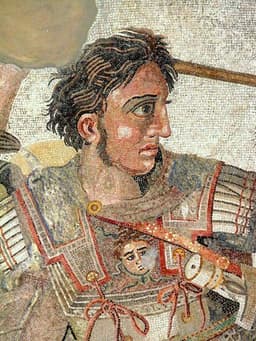
Alexander the Great
General · Ancient
85.2Total
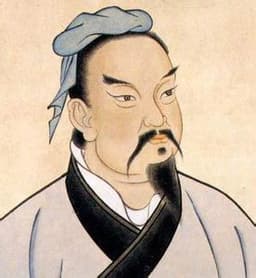
Sun Tzu
General · Ancient
60.8Total
Basic Information
Born
-356
-544
Died
-323
-496
Era
Ancient
Ancient
Nationality
Macedon
China
Occupation
General
General
Civilization
Western
Eastern
Score Comparison
Military (10%)
95.0
50.0
Political (20%)
60.0
35.0
Influence (20%)
92.0
85.0
Legacy (20%)
90.0
65.0
Leadership (15%)
80.0
30.0
Strategy (15%)
92.0
85.0
TOTAL
85.2
60.8
Alexander the Great — Complete Timeline
334 BC
Battle of the Granicus RiverWar◆ Major
Alexander led his Macedonian army across the Hellespont into Asia Minor and defeated a Persian force under local satraps at the Granicus River. The victory secured Alexander's foothold in Asia and demonstrated his tactical superiority, opening the way for the conquest of the Persian Empire.
Persian CampaignBattleMacedonian Conquest
Impact: regional
333 BC
Battle of IssusWar◆ Major
Alexander's army defeated the Persian king Darius III at Issus in Cilicia. Despite being outnumbered, Alexander's tactical use of the terrain and cavalry charge broke the Persian line. Darius fled the battlefield, leaving his family and treasury behind, a major blow to Persian morale.
Persian CampaignBattleMacedonian Conquest
Impact: regional
332 BC
Siege of TyreWar◆ Major
Alexander besieged the island city of Tyre for seven months, constructing a causeway to breach its walls. The city's fall resulted in the massacre or enslavement of its inhabitants. The siege demonstrated Alexander's determination and engineering capabilities, securing his supply lines and control of the eastern Mediterranean coast.
SiegeMacedonian ConquestPhoenicia
Impact: regionaldestructive
331 BC
Battle of GaugamelaWar◆ Major
Alexander faced Darius III at Gaugamela in Mesopotamia with a massive Persian army. Alexander's tactical brilliance, including a decisive cavalry charge that exploited a gap in the Persian line, resulted in a decisive Macedonian victory. Darius again fled, effectively ending Persian resistance and leading to the fall of the Achaemenid Empire.
Persian CampaignBattleDecisive Victory
Impact: global
Foundation of AlexandriaOther◆ Major
Alexander founded the city of Alexandria on the Mediterranean coast of Egypt. He personally selected the site and oversaw the initial planning. Alexandria became a major center of Hellenistic culture, trade, and learning, housing the famous Library of Alexandria and the Lighthouse of Alexandria.
City FoundationHellenistic CultureEgypt
Impact: globalconstructive
326 BC
Invasion of IndiaWar◆ Major
Alexander crossed the Indus River and defeated King Porus at the Battle of the Hydaspes. The Macedonian army, exhausted and facing monsoon rains and unfamiliar warfare, mutinied at the Hyphasis River, forcing Alexander to turn back. This campaign marked the easternmost extent of his conquests.
Indian CampaignBattleMutiny
Impact: regional
Sun Tzu — Complete Timeline
512 BC
Service as General for King Helü of WuWar◆ Major
Sun Tzu served as a general under King Hel
GeneralWuWar
Impact: regional
506 BC
Battle of BojuWar◆ Major
Sun Tzu is traditionally credited with contributing to the Wu victory at the Battle of Boju, where Wu forces defeated the larger Chu army. The battle demonstrated the application of strategic principles from The Art of War.
BattleWuChu
Impact: regional
500 BC
Composition of The Art of WarCultural
Sun Tzu authored The Art of War, a treatise on military strategy and tactics. The text covers planning, deception, terrain, and leadership, and has been studied for centuries in both military and civilian contexts worldwide.
Military StrategyClassicPhilosophy
Impact: globalconstructive
Expert Analysis
Alexander the Great vs Sun Tzu
The General and the King
On a dusty battlefield in 506 BCE, the forces of Wu clashed with the mighty Chu army. The victory that followed would be credited to a strategist whose name would become synonymous with wisdom itself. Nearly two centuries later, in 334 BCE, a young king from Macedon crossed the Hellespont with an army, beginning a campaign of conquest that would stretch from Greece to the Indus. One man wrote a book; the other wrote his name across continents. Sun Tzu and Alexander the Great—both ancient generals, both immortal in reputation, yet as different as the civilizations that produced them. Why did one become a philosopher of war and the other its living embodiment?
Origins
Sun Tzu was born around 544 BCE, during the Spring and Autumn period of Chinese history—a time of fractured states, constant warfare, and intellectual ferment. He emerged from a world where strategy was a craft, where victory could be achieved without bloodshed if one understood the enemy and the terrain. His China valued harmony, order, and the subtle art of outthinking one's opponent. The *Art of War* reflects this: "The supreme art of war is to subdue the enemy without fighting."
Alexander, born in 356 BCE in Pella, Macedon, came from a very different world. His father, Philip II, had transformed Macedon from a backwater into a military powerhouse. Alexander's tutor was Aristotle, who gave him Homer's *Iliad*—a story of heroic combat and personal glory. Where Sun Tzu's world prized collective discipline, Alexander's celebrated individual brilliance. The difference in their upbringing shaped everything that followed.
Rise to Power
Sun Tzu's rise was quiet, almost scholarly. According to tradition, he impressed King Helü of Wu by demonstrating his ability to train even the king's concubines into disciplined soldiers. In 512 BCE, he was appointed general. His campaigns, including the pivotal Battle of Boju in 506 BCE, were successful but limited in scope. He operated within a system, not above it.
Alexander, by contrast, seized power with dramatic force. At twenty, after his father's assassination in 336 BCE, he crushed rebellions, executed rivals, and immediately launched the invasion of Persia. His rise was not a matter of proving competence to a king—he was the king. The difference is profound: Sun Tzu served; Alexander commanded.
Leadership & Governance
As a leader, Sun Tzu was a master of indirect strategy. His *Art of War* emphasizes intelligence, deception, and avoiding prolonged conflict. "All warfare is based on deception," he wrote. His military score of 70 reflects competence, not overwhelming brilliance—but his strategic score of 85 reveals a mind that understood war as a mental exercise. His political score of 26.6, however, is telling. He was a general, not a ruler. He shaped policy through advice, not authority.
Alexander's leadership was the opposite: direct, personal, and charismatic. His military score of 96 and strategy score of 92 are unmatched. He led from the front, wounded in battle multiple times, inspiring his men through sheer presence. At the Battle of Gaugamela in 331 BCE, he broke the Persian Empire with a daring cavalry charge. His political score of 65 shows he understood governance, founding cities like Alexandria and promoting cultural fusion. Yet his methods were brutal—massacres, forced marches, and a relentless drive that cost countless lives.
Triumph & Tragedy
Sun Tzu's greatest triumph was not a single battle but a book. The *Art of War*, composed around 500 BCE, became a timeless text studied by generals, CEOs, and politicians. His tragedy is that we know so little about him—his life is shadowy, his battles uncertain. He succeeded so quietly that history itself nearly lost him.
Alexander's triumphs were spectacular: the conquest of Persia, the founding of Alexandria, the march to India. But tragedy followed. In 323 BCE, at just thirty-two, he died in Babylon—possibly poisoned, possibly from disease. His empire, won in a decade, collapsed immediately. His greatest failure was his own ambition: he had no plan for succession, no system to preserve what he built.
Character & Destiny
Sun Tzu's character was cautious, analytical, and patient. He believed that "if you know the enemy and know yourself, you need not fear the result of a hundred battles." His destiny was to influence, not to rule. He wrote for kings, but never became one.
Alexander's character was impulsive, ambitious, and emotionally intense. He wept when there were no more worlds to conquer. He believed in his own divinity, demanded worship, and killed his closest friends in fits of rage. His destiny was to conquer, but also to destroy—both his enemies and himself.
Legacy
Sun Tzu's legacy is intellectual and enduring. His *Art of War* remains a bestseller, studied in military academies and corporate boardrooms. His influence score of 82 and legacy score of 91.4 reflect a man who shaped how we think about conflict itself.
Alexander's legacy is monumental and immediate. He spread Greek culture across the ancient world, creating the Hellenistic era. His influence score of 90 and legacy score of 90 match Sun Tzu's, but in a different way. Alexander is remembered as a conqueror, a figure of myth and legend—a man who changed the world through action, not words.
Conclusion
Sun Tzu and Alexander represent two poles of human achievement. One wrote a book that taught generals how to win without fighting; the other fought so brilliantly that his battles are still studied. One shaped the mind; the other shaped the map. Their scores tell the story: Sun Tzu's total of 63.2 against Alexander's 84.7, but numbers cannot capture the quiet power of a text that outlasts empires. Perhaps the deepest truth lies in Sun Tzu's own words: "To win one hundred victories in one hundred battles is not the highest skill. To subdue the enemy without fighting is the highest skill." Alexander never learned that lesson—and that is why his empire fell, while Sun Tzu's wisdom endures.
Rankings
🥇
Alexander the GreatLeader
Mil: 95.0Pol: 60.0Inf: 92.0
85.2
🥈
Sun Tzu
Mil: 50.0Pol: 35.0Inf: 85.0
60.8
+24.4 behind
How This Comparison Works
Algorithm
Each figure is scored on 6 dimensions (0—100 scale) based on structured historical data: Military (10%), Political (20%), Influence (20%), Legacy (20%), Leadership (15%), Strategy (15%). The weighted total produces the final ranking.
Data Sources
Scores are computed from structured sub-indicators in the database. Scale factors adjust for era (Ancient ×0.85, Modern ×1.0) and civilization size (Eastern ×1.05, Other ×0.80) to account for differences in population and military scale.
Maximum 3 Figures
Comparisons are limited to 2—3 figures to ensure readability and statistical meaningfulness.
Error Margins
±5 points per dimension — Sub-scores are derived from historical records with inherent uncertainty. Two figures within 5 points on a dimension should be considered roughly equivalent in that area.
Total Score Accuracy
±3 points overall — The weighted combination of 6 dimensions produces a total score with approximately ±3 points of uncertainty. Differences of less than 3 points are not statistically significant— the figures are effectively tied.
Known Limitations
- Historical records are incomplete and uneven across civilizations
- Figures from oral-tradition societies may be underrepresented
- Occupation labels can misclassify multi-role figures
- Scores measure capability and impact, not moral character
- Quantitative scoring is a comparison tool, not absolute truth
Capability Radar
Military (10%) — Battles & Warfare
Battles
98
30
Win Rate
99
40
Expansion
99
20
Political (20%) — Governance & Reform
Reform
75
10
Diplomacy
80
30
Economy
70
10
Influence (20%) — Cultural & Global Reach
Cultural
95
95
Global
95
95
Legacy (20%) — Historical Impact
Historical
98
98
Longevity
95
99
Leadership (15%) — Power & Stability
Tenure
60
20
Stability
55
10
Strategy (15%) — Tactics & Innovation
Strategy
98
98
Tactics
99
95
Reform
85
85
Similar Comparisons
Comments & Discussion
Aegeslayer6/16/2026
Sun Tzu was a brilliant theorist, but Alexander didn’t just win battles—he created an empire that reshaped civilization. You can’t compare a man who wrote a manual against one who crushed the Persian superpower at Gaugamela with 47,000 men versus a million. Strategy books gather dust; Alexander’s conquest built cities and spread Hellenism. Give me the king who bled for his legacy any day.
烽火戏诸侯6/16/2026
评论区吹Alexander的,我怀疑你们根本不懂古代战争的真实成本。他打到印度河时,军队已经哗变了,将领们个个想回家。这叫帝国?这叫透支生命的远征。Sun Tzu讲究"不战而屈人之兵",Alexander有几次做到了?他赢了战场,输了大局,连统一统治都没建立就死了。
DataSkeptic426/16/2026
Let’s talk numbers: Alexander’s "epic" conquest involved maybe 50,000 troops tops, while Sun Tzu advised whole warring states. The Art of War’s supply chain logic is still used in modern military academies—Alexander’s tactics are history lectures. A strategy with 2,500 years of applicability beats a guy who died young from fever. Check the win rates across millennia, not just one campaign.
墨者之剑6/16/2026
大家别忘了,Sun Tzu可能根本就是个传说人物!《史记》说他训练宫女砍国王爱妃,这故事真实性存疑。而Alexander有考古证据、钱币肖像、实打实的战役遗址。别把寓言里的智慧神化和真实统帅比,一个写书的虚拟导师,一个横跨三大洲的实干家,压根不是同级别存在。
HopliteRebel6/16/2026
Sun Tzu’s "don’t fight" ideal sounds nice in a bamboo scroll, but Alexander’s siege of Tyre—seven months to build a causeway under fire—proved that victory sometimes demands brute creative persistence. The Art of War says know your enemy; Alexander knew the Tyrians’ defenses and still had to improvise like a mad engineer. Philosophy is cheap; a ramp to an island city is history.