Loading...
Napoleon Bonaparte vs Sun Tzu
Napoleon Bonaparte leads by 10.1 pts · 2 figures compared
…

Napoleon Bonaparte
General · Modern
70.9Total
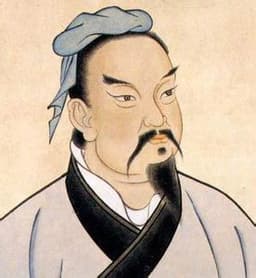
Sun Tzu
General · Ancient
60.8Total
Basic Information
Born
1769
-544
Died
1821
-496
Era
Modern
Ancient
Nationality
France
China
Occupation
General
General
Civilization
Western
Eastern
Score Comparison
Military (10%)
94.0
50.0
Political (20%)
72.0
35.0
Influence (20%)
40.0
85.0
Legacy (20%)
80.0
65.0
Leadership (15%)
78.0
30.0
Strategy (15%)
90.0
85.0
TOTAL
70.9
60.8
Napoleon Bonaparte — Complete Timeline
1799 AD
Coup of 18 BrumaireOther◆ Major
Napoleon Bonaparte, with support from his brother Lucien and key political figures, overthrew the Directory in a bloodless coup. He established the Consulate with himself as First Consul, effectively becoming the ruler of France. This event ended the French Revolution's most unstable period.
French RevolutionCoupRise to Power
Impact: regional
1804 AD
Promulgation of the Napoleonic CodeOther◆ Major
Napoleon enacted the Civil Code of the French, known as the Napoleonic Code, a comprehensive set of laws that replaced the fragmented feudal legal systems. The code established legal equality, protected property rights, and secularized law. It became the basis for legal systems in many European and world countries.
Legal ReformNapoleonic CodeCivil Law
Impact: globalconstructive
1805 AD
Battle of AusterlitzWar◆ Major
Napoleon's Grande Arm
Napoleonic WarsBattleDecisive Victory
Impact: global
1812 AD
Invasion of RussiaWar◆ Major
Napoleon led the Grande Arm
Napoleonic WarsInvasionDisaster
Impact: globaldestructive
1815 AD
Battle of WaterlooWar◆ Major
Napoleon's French army was defeated by the combined forces of the Duke of Wellington's Anglo-Allied army and Gebhard Leberecht von Bl
Napoleonic WarsBattleFinal Defeat
Impact: globaldestructive
Sun Tzu — Complete Timeline
512 BC
Service as General for King Helü of WuWar◆ Major
Sun Tzu served as a general under King Hel
GeneralWuWar
Impact: regional
506 BC
Battle of BojuWar◆ Major
Sun Tzu is traditionally credited with contributing to the Wu victory at the Battle of Boju, where Wu forces defeated the larger Chu army. The battle demonstrated the application of strategic principles from The Art of War.
BattleWuChu
Impact: regional
500 BC
Composition of The Art of WarCultural
Sun Tzu authored The Art of War, a treatise on military strategy and tactics. The text covers planning, deception, terrain, and leadership, and has been studied for centuries in both military and civilian contexts worldwide.
Military StrategyClassicPhilosophy
Impact: globalconstructive
Expert Analysis
Napoleon Bonaparte vs Sun Tzu
# The General and the Emperor
On a misty morning in 1805, Napoleon Bonaparte stood on a hill overlooking the Austrian and Russian armies at Austerlitz. He had spent the night riding among his troops, and now, with the sun rising behind him, he prepared to deliver one of history’s greatest military victories. Twenty-three centuries earlier, on the other side of the world, a Chinese general named Sun Tzu had written that “all warfare is based on deception.” Napoleon had never read that line, yet he lived it. The contrast between these two men, born worlds apart, raises a haunting question: What separates the thinker from the doer, the strategist from the conqueror?
Origins
Sun Tzu was born around 544 BCE, during the chaotic Spring and Autumn period of ancient China. The Zhou dynasty was crumbling, and seven major states fought for supremacy. He came of age in a world where philosophy and warfare were intertwined, where Confucius was a contemporary, and where the art of war was studied as a branch of statecraft. His family belonged to the warrior-aristocracy, but little else is known of his early life—he emerges from history almost as a ghost, a man defined by his ideas rather than his biography.
Napoleon Bonaparte, by contrast, was born in 1769 on the island of Corsica, a year after France purchased it from Genoa. His family were minor nobles, but they were not wealthy. The French Revolution, which erupted when he was twenty, shattered the old order and created opportunities unknown in Sun Tzu’s rigid hierarchy. Where Sun Tzu inherited a world of warring states, Napoleon inherited a world of collapsing thrones. One man was shaped by philosophy; the other, by revolution.
Rise to Power
Sun Tzu entered the historical stage through a famous anecdote. King Helü of Wu, impressed by the general’s writings, asked him to demonstrate his methods by training the king’s concubines. When the women laughed instead of obeying, Sun Tzu executed the two favored concubines—despite the king’s protests—and the rest fell into perfect discipline. The lesson was brutal: strategy requires absolute obedience. By 512 BCE, Sun Tzu had become a general for Wu, leading campaigns against the powerful Chu state.
Napoleon’s rise was faster and more spectacular. A young artillery officer during the Revolution, he seized his moment at the Siege of Toulon in 1793, where his tactical brilliance drove the British from the port. By 1796, at age twenty-six, he commanded the Army of Italy. His Italian campaign of 1796–1797 was a masterclass in speed and aggression: he defeated larger Austrian armies by moving faster than they could react, living off the land, and striking at their flanks. Within five years, he had made himself First Consul of France. Within a decade, he was Emperor of Europe.
Leadership & Governance
Sun Tzu’s leadership was intellectual. He never ruled a state, never commanded a massive army, never reformed a legal code. His military scores—70 for military prowess, 85 for strategy—reflect a man who thought deeply about war but fought few battles. The Battle of Boju in 506 BCE, where Wu defeated Chu, is often credited to his influence, but the evidence is thin. His true genius was *The Art of War*, a treatise that distilled centuries of Chinese military thought into thirteen concise chapters. He taught that “the supreme art of war is to subdue the enemy without fighting”—a philosophy of minimal force, deception, and psychological dominance.
Napoleon was the opposite. His military score of 94 and strategy score of 93 reflect not just thought but action. He fought over sixty battles and lost only seven. At Austerlitz in 1805, he deliberately weakened his right flank to lure the Allies into attacking, then smashed their center—a classic application of Sun Tzu’s principle of “holding out a bait to entice the enemy.” But Napoleon also governed. His Napoleonic Code standardized French law, abolished feudal privileges, and spread revolutionary ideals across Europe. His political score of 75 dwarfs Sun Tzu’s 26.6. Where Sun Tzu wrote for kings, Napoleon became one.
Triumph & Tragedy
Sun Tzu’s greatest moment was not a battle but a book. *The Art of War*, composed around 500 BCE, became one of the most influential texts in human history—read by Mao Zedong, Douglas MacArthur, and modern corporate executives. His tragedy is that we know so little of his life. He remains an outline, a name attached to ideas, not deeds.
Napoleon’s triumph was his empire. By 1810, he controlled most of Europe. His tragedy was his downfall. The invasion of Russia in 1812, where he lost half a million men to winter and starvation, was a catastrophic miscalculation. His final defeat at Waterloo in 1815, where he hesitated at a crucial moment, ended his reign. He died in exile on Saint Helena in 1821, a prisoner of the British. His legacy score of 78, lower than Sun Tzu’s 91.4, reflects the mixed judgment of history: a liberator who became a tyrant, a genius who destroyed himself.
Character & Destiny
Sun Tzu’s personality is opaque, but his writing reveals a man of cold calculation. He advised generals to “be extremely subtle, even to the point of formlessness.” He valued patience, deception, and avoiding unnecessary risk. This caution, combined with his focus on theory, meant he never overreached. He died at age forty-eight, likely of natural causes, his reputation intact.
Napoleon was driven by ambition. “Impossible is a word to be found only in the dictionary of fools,” he once said. He trusted his instincts, took enormous risks, and believed in his own destiny. This confidence gave him victory after victory, but it also led to hubris. The same man who outmaneuvered the Austrians in Italy thought he could conquer Russia. His personality—brilliant, restless, arrogant—shaped his fate.
Legacy
Sun Tzu’s legacy is timeless. *The Art of War* is studied not only in military academies but in business schools, sports locker rooms, and political strategy sessions. His ideas—know your enemy, win without fighting, adapt to circumstances—have become universal principles. He is remembered as the ultimate strategist, a thinker whose influence transcends his era.
Napoleon’s legacy is more complex. He is remembered as a military genius who reshaped Europe, but also as a conqueror whose wars killed millions. The Napoleonic Code influenced legal systems worldwide, yet his return to monarchy betrayed revolutionary ideals. His name evokes both glory and tragedy, ambition and ruin.
Conclusion
Standing at Austerlitz, Napoleon could not have known that a Chinese general, dead for over two thousand years, had written the rules he was following. Sun Tzu, for his part, could not have imagined a man who would turn his theories into an empire. One taught the art of war; the other lived it. One wrote for the ages; the other burned across them. In the end, Sun Tzu’s caution and Napoleon’s ambition represent two poles of human achievement—the thinker who avoids destruction, and the doer who embraces it. Both changed the world. Only one survived to see his own ending.
Rankings
🥇
Napoleon BonaparteLeader
Mil: 94.0Pol: 72.0Inf: 40.0
70.9
🥈
Sun Tzu
Mil: 50.0Pol: 35.0Inf: 85.0
60.8
+10.1 behind
How This Comparison Works
Algorithm
Each figure is scored on 6 dimensions (0—100 scale) based on structured historical data: Military (10%), Political (20%), Influence (20%), Legacy (20%), Leadership (15%), Strategy (15%). The weighted total produces the final ranking.
Data Sources
Scores are computed from structured sub-indicators in the database. Scale factors adjust for era (Ancient ×0.85, Modern ×1.0) and civilization size (Eastern ×1.05, Other ×0.80) to account for differences in population and military scale.
Maximum 3 Figures
Comparisons are limited to 2—3 figures to ensure readability and statistical meaningfulness.
Error Margins
±5 points per dimension — Sub-scores are derived from historical records with inherent uncertainty. Two figures within 5 points on a dimension should be considered roughly equivalent in that area.
Total Score Accuracy
±3 points overall — The weighted combination of 6 dimensions produces a total score with approximately ±3 points of uncertainty. Differences of less than 3 points are not statistically significant— the figures are effectively tied.
Known Limitations
- Historical records are incomplete and uneven across civilizations
- Figures from oral-tradition societies may be underrepresented
- Occupation labels can misclassify multi-role figures
- Scores measure capability and impact, not moral character
- Quantitative scoring is a comparison tool, not absolute truth
Capability Radar
Military (10%) — Battles & Warfare
Battles
95
30
Win Rate
90
40
Expansion
95
20
Political (20%) — Governance & Reform
Reform
95
10
Diplomacy
80
30
Economy
85
10
Influence (20%) — Cultural & Global Reach
Cultural
85
95
Global
90
95
Legacy (20%) — Historical Impact
Historical
95
98
Longevity
90
99
Leadership (15%) — Power & Stability
Tenure
85
20
Stability
70
10
Strategy (15%) — Tactics & Innovation
Strategy
95
98
Tactics
98
95
Reform
92
85
Similar Comparisons
Comments & Discussion
AUSTERLITZ_ACHE6/16/2026
People romanticize the "if-Sun-Tzu-fought-Napoleon" fantasy, but it's ahistorical nonsense. Napoleonic warfare depended on mass conscription, rapid-fire artillery, and a logistical revolution that could move 200,000 men across Europe. Sun Tzu's world had chariots and bronze spears. The gap isn't tactical—it's industrial. Comparing them is like asking who'd win between a master archer and a sniper. Same principles, utterly different realities.
战场老狗6/16/2026
拿破仑不是战略家,他是战术投机家。博罗季诺一战,他明知库图佐夫挖了战壕还要硬冲,结果法军伤亡五万,只换来一座空城。孙武说过“先为不可胜,以待敌之可胜”,拿破仑却总想靠一仗解决所有问题。滑铁卢更是证明:他赌赢了无数局,最后一把输光。战略家不会把帝国押在格鲁希的援军上。
NUMBERS_NEMESIS6/16/2026
Myth-busting alert: Sun Tzu didn't write a secret gospel of victory—he wrote a 6,000-character text that's 70% vague metaphors about water and terrain. Napoleon's actual track record? 70 battles, roughly 45 wins. Napoleon PROVED his doctrine under conditions of mass mobilization, multinational coalitions, and sieges. Sun Tzu left zero verified battle commands. We're comparing a historical ghost with a literal emperor. Call me when Sun Tzu's “unorthodox methods” beat a Prussian line.
史海钓沉6/16/2026
一个人写了书,一个人打了仗,这本身就不公平。但别忘了,拿破仑的“战略”很大程度上是抄别人的:他的师团制继承自格里博瓦尔,他的机动战术源自布塞罗,连奥斯特里茨的迂回都是模仿汉尼拔的坎尼战。孙武的《孙子兵法》却是自己写下的原创体系。一个是集大成者,一个是开山祖师。我会选祖师,因为他不需要后代帮忙赢。
FLAGGED_BUFF6/16/2026
The ultimate chasm? Leadership philosophy. Napoleon said “a soldier without ambition is nothing”—he promoted based on talent, famously stating every soldier carried a marshal's baton in his knapsack. Sun Tzu demanded his soldiers “focus on the smell of burning wood” and get beheaded for insubordination. Napoleon built a meritocracy that inspired fanatical loyalty. Sun Tzu built a discipline system that executed concubines to prove a point. I know which army I'd rather fight for.