Loading...
Shaka Zulu vs Sun Tzu
Shaka Zulu leads by 9.4 pts · 2 figures compared
…
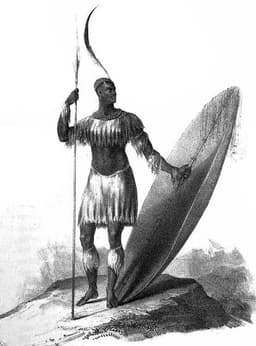
Shaka Zulu
General · Modern
70.2Total
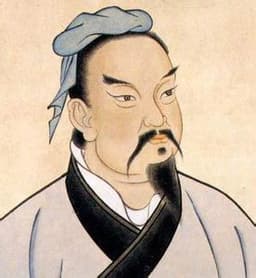
Sun Tzu
General · Ancient
60.8Total
Basic Information
Born
1787
-544
Died
1828
-496
Era
Modern
Ancient
Nationality
Zulu Kingdom
China
Occupation
General
General
Civilization
Other
Eastern
Score Comparison
Military (10%)
80.0
50.0
Political (20%)
72.0
35.0
Influence (20%)
68.0
85.0
Legacy (20%)
68.0
65.0
Leadership (15%)
62.0
30.0
Strategy (15%)
80.8
85.0
TOTAL
70.2
60.8
Shaka Zulu — Complete Timeline
1816 AD
Introduction of the iklwa and horns of the buffalo formationReform
Shaka introduced the iklwa, a short stabbing spear, and the 'horns of the buffalo' tactical formation to the Zulu army. These innovations replaced the traditional throwing assegai and allowed for close-quarters combat, significantly increasing the Zulu's military effectiveness and enabling rapid conquest.
Military InnovationTacticsZulu Warfare
Impact: regional
1819 AD
Conquest of the Ndwandwe KingdomWar◆ Major
Shaka's Zulu army defeated the Ndwandwe kingdom at the Battle of Gqokli Hill, a decisive victory that eliminated a major rival. This conquest allowed Shaka to consolidate control over a large territory in present-day KwaZulu-Natal, marking the rise of the Zulu as a dominant regional power.
ConquestZulu ExpansionNdwandwe
Impact: regional
1828 AD
Assassination of ShakaPolitical Action◆ Major
Shaka was assassinated by his half-brothers Dingane and Mhlangana, with the support of his aunt Mkabayi. The coup ended his reign of terror and expansionist wars, leading to a period of instability and the eventual rise of Dingane as king.
AssassinationSuccession CrisisZulu Kingdom
Impact: regionaltragic
Sun Tzu — Complete Timeline
512 BC
Service as General for King Helü of WuWar◆ Major
Sun Tzu served as a general under King Hel
GeneralWuWar
Impact: regional
506 BC
Battle of BojuWar◆ Major
Sun Tzu is traditionally credited with contributing to the Wu victory at the Battle of Boju, where Wu forces defeated the larger Chu army. The battle demonstrated the application of strategic principles from The Art of War.
BattleWuChu
Impact: regional
500 BC
Composition of The Art of WarCultural
Sun Tzu authored The Art of War, a treatise on military strategy and tactics. The text covers planning, deception, terrain, and leadership, and has been studied for centuries in both military and civilian contexts worldwide.
Military StrategyClassicPhilosophy
Impact: globalconstructive
Expert Analysis
Shaka Zulu vs Sun Tzu
# The Strategist and the Storm
On a misty morning in the sixth century BCE, a Chinese general stood before the king of Wu, demonstrating his military philosophy by executing a seemingly impossible test: training the king’s concubines into soldiers. Two thousand years later, in the rolling hills of southern Africa, a Zulu king drilled his warriors into a fearsome fighting force, transforming a minor clan into an empire. Sun Tzu and Shaka Zulu—separated by millennia, continents, and civilizations—both rewrote the rules of war. Yet their paths, their personalities, and their legacies could not be more different. Why did one leave behind a timeless text, while the other left behind a shattered kingdom?
Origins
Sun Tzu was born around 544 BCE, during the tumultuous Spring and Autumn period of ancient China, when rival states vied for supremacy. He emerged from a world steeped in Confucian philosophy, where warfare was seen as a necessary evil, governed by ritual and restraint. His background remains shadowy—some scholars even question his historicity—but he was clearly a product of a literate, bureaucratic civilization that valued strategy over brute force.
Shaka Zulu came into the world in 1787, a child of the Nguni-speaking peoples of southeastern Africa. His birth was illegitimate—his father, Senzangakhona, was a minor chief who rejected both Shaka and his mother, Nandi. Shaka grew up in exile, mocked by other children, hardened by hardship. His world was one of clan warfare, cattle raiding, and constant insecurity. Where Sun Tzu learned from scrolls and court debates, Shaka learned from the sting of rejection and the necessity of survival.
Rise to Power
Sun Tzu’s rise was intellectual. He secured an audience with King Helü of Wu around 512 BCE by presenting his military ideas—likely an early version of what would become *The Art of War*. The famous concubine demonstration, whether legend or fact, established his authority. He was appointed general, but his power remained that of an advisor, not a sovereign. His influence depended on the king’s favor.
Shaka’s rise was visceral. After years of serving as a warrior under the powerful Dingiswayo of the Mthethwa, he returned to his father’s Zulu clan in 1816. Upon Senzangakhona’s death, Shaka seized power with Dingiswayo’s backing. He immediately began transforming the Zulu army, discarding the long throwing spear for the short stabbing *iklwa* and introducing the “horns of the buffalo” formation—an encircling tactic that maximized shock and slaughter. Within months, he had turned a small clan into a military machine.
Leadership & Governance
Sun Tzu governed through ideas. His *Art of War*, composed around 500 BCE, is a masterpiece of indirect strategy: “All warfare is based on deception,” he wrote. “Supreme excellence consists in breaking the enemy’s resistance without fighting.” He emphasized intelligence, terrain, timing, and the psychological state of both soldiers and commanders. His leadership was coldly rational—a general should be like a “serpent that strikes with its whole body.” Yet his political score, at 26.6, reflects that he never ruled a state; he served one.
Shaka ruled through force and charisma. He centralized power, absorbing conquered clans into the Zulu nation through a system of *amabutho*—age-regiment barracks that dissolved old loyalties and forged new ones. He was ruthless: those who resisted were annihilated, and his own subjects lived in terror of his whims. Yet his political score of 70.5 shows he was more than a brute. He built a functioning state, complete with trade networks and administrative structures. His military score of 83.4 and strategy score of 83.2 reflect a master of direct, decisive warfare—the opposite of Sun Tzu’s subtlety.
Triumph & Tragedy
Sun Tzu’s greatest moment may have been the Battle of Boju in 506 BCE, when Wu forces, allegedly under his guidance, defeated the mighty Chu state. It was a textbook example of speed, deception, and exploiting enemy weaknesses. But his tragedy is one of obscurity: we know almost nothing of his later life. He vanished from history, leaving only his book.
Shaka’s triumph was the conquest of the Ndwandwe kingdom at the Battle of Gqokli Hill in 1819. Outnumbered and surrounded, his new tactics prevailed. The *iklwa* and buffalo horns had proven their worth. But his tragedy was personal and political. By 1828, his paranoia had grown monstrous. He executed warriors for weeping at a friend’s death, and ordered the killing of thousands of Zulu women to keep his soldiers focused. His half-brothers Dingane and Mhlangana, aided by his aunt Mkabayi, assassinated him that same year. The empire he built was already cracking.
Character & Destiny
Sun Tzu’s character was one of detachment. He wrote, “If your opponent is of choleric temper, irritate him. Pretend to be weak, that he may grow arrogant.” He saw war as a chess game, to be won with the mind. This coolness allowed his ideas to transcend his own time and place.
Shaka’s character was one of fire. He was shaped by rejection, and he became a figure of overwhelming will—both inspiring and terrifying. He could not delegate, could not trust, and ultimately could not survive his own success. His personality forged an empire but also ensured its fragility. He was a force of nature, not a philosopher.
Legacy
Sun Tzu’s legacy is the most influential military treatise ever written, with a legacy score of 91.4. *The Art of War* has been studied by generals from Napoleon to Mao Zedong, and by modern business leaders. It is a text of timeless principles, not specific tactics.
Shaka’s legacy is more ambiguous, with a legacy score of 78.0. He is remembered as a military genius who created the Zulu nation—but also as a tyrant whose *mfecane* (forced migrations) caused immense suffering. In South Africa, he is both a symbol of African resistance and a cautionary tale of power’s corruption.
Conclusion
Sun Tzu and Shaka Zulu represent two poles of military genius: the philosopher and the conqueror. One wrote a book that outlasted his bones; the other built an empire that crumbled within a generation. Sun Tzu taught that the highest victory requires no battle. Shaka proved that victory through battle can be swift—but so can defeat. Perhaps the deepest lesson is that strategy, without the wisdom to govern, becomes a weapon that turns on its wielder. And wisdom, without the courage to act, remains only words.
Rankings
🥇
Shaka ZuluLeader
Mil: 80.0Pol: 72.0Inf: 68.0
70.2
🥈
Sun Tzu
Mil: 50.0Pol: 35.0Inf: 85.0
60.8
+9.4 behind
How This Comparison Works
Algorithm
Each figure is scored on 6 dimensions (0—100 scale) based on structured historical data: Military (10%), Political (20%), Influence (20%), Legacy (20%), Leadership (15%), Strategy (15%). The weighted total produces the final ranking.
Data Sources
Scores are computed from structured sub-indicators in the database. Scale factors adjust for era (Ancient ×0.85, Modern ×1.0) and civilization size (Eastern ×1.05, Other ×0.80) to account for differences in population and military scale.
Maximum 3 Figures
Comparisons are limited to 2—3 figures to ensure readability and statistical meaningfulness.
Error Margins
±5 points per dimension — Sub-scores are derived from historical records with inherent uncertainty. Two figures within 5 points on a dimension should be considered roughly equivalent in that area.
Total Score Accuracy
±3 points overall — The weighted combination of 6 dimensions produces a total score with approximately ±3 points of uncertainty. Differences of less than 3 points are not statistically significant— the figures are effectively tied.
Known Limitations
- Historical records are incomplete and uneven across civilizations
- Figures from oral-tradition societies may be underrepresented
- Occupation labels can misclassify multi-role figures
- Scores measure capability and impact, not moral character
- Quantitative scoring is a comparison tool, not absolute truth
Capability Radar
Military (10%) — Battles & Warfare
Battles
85
30
Win Rate
90
40
Expansion
88
20
Political (20%) — Governance & Reform
Reform
85
10
Diplomacy
60
30
Economy
65
10
Influence (20%) — Cultural & Global Reach
Cultural
80
95
Global
70
95
Legacy (20%) — Historical Impact
Historical
85
98
Longevity
75
99
Leadership (15%) — Power & Stability
Tenure
70
20
Stability
55
10
Strategy (15%) — Tactics & Innovation
Strategy
90
98
Tactics
95
95
Reform
98
85
Similar Comparisons
Comments & Discussion
IronSun6/16/2026
Shaka Zulu *was* a military genius, but Sun Tzu wrote *The Art of War*, a study in human psychology applied to conflict. Calling them equals is like comparing a master swordsmith to a chess grandmaster—both talented, but their tools and domains are worlds apart. Shaka’s iklwa short spear and bullhorn formation slaughtered enemies in the field; Sun Tzu’s “know your enemy” won wars without a single death. One shaped a kingdom, the other shaped civilization.
战争墨客6/16/2026
Shaka是个战术家,但Sun Tzu才是战略家。想想看,Shaka靠个人魅力和残酷训练打造了Zulu帝国,但死后十年就被英国人用枪炮碾碎了。Sun Tzu呢?他的思想统治了东亚战场两千年,现在还被西方商学院奉为经典。Shaka输在没留下文字,他的“智慧”随着他烧命般的征服烟消云散了。别被“非洲拿破仑”的噱头骗了,拿破仑失败也没人吹他是世界第一军事家。