Loading...
Sun Tzu vs Tokugawa Ieyasu
Tokugawa Ieyasu leads by 21.0 pts · 2 figures compared
…
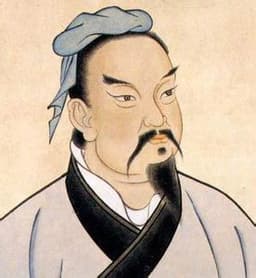
Sun Tzu
General · Ancient
60.8Total
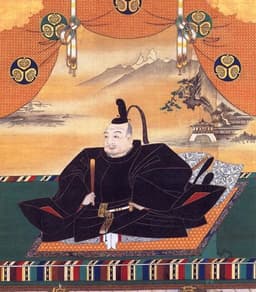
Tokugawa Ieyasu
General · Modern
81.8Total
Basic Information
Born
-544
1543
Died
-496
1616
Era
Ancient
Modern
Nationality
China
Japan
Occupation
General
General
Civilization
Eastern
Eastern
Score Comparison
Military (10%)
50.0
78.0
Political (20%)
35.0
82.0
Influence (20%)
85.0
88.0
Legacy (20%)
65.0
75.0
Leadership (15%)
30.0
85.0
Strategy (15%)
85.0
82.0
TOTAL
60.8
81.8
Sun Tzu — Complete Timeline
512 BC
Service as General for King Helü of WuWar◆ Major
Sun Tzu served as a general under King Hel
GeneralWuWar
Impact: regional
506 BC
Battle of BojuWar◆ Major
Sun Tzu is traditionally credited with contributing to the Wu victory at the Battle of Boju, where Wu forces defeated the larger Chu army. The battle demonstrated the application of strategic principles from The Art of War.
BattleWuChu
Impact: regional
500 BC
Composition of The Art of WarCultural
Sun Tzu authored The Art of War, a treatise on military strategy and tactics. The text covers planning, deception, terrain, and leadership, and has been studied for centuries in both military and civilian contexts worldwide.
Military StrategyClassicPhilosophy
Impact: globalconstructive
Tokugawa Ieyasu — Complete Timeline
1600 AD
Battle of SekigaharaWar
Tokugawa Ieyasu led the Eastern Army to victory over Ishida Mitsunari's Western Army at Sekigahara. This decisive battle ended the Sengoku period and established Ieyasu as the supreme military ruler of Japan, paving the way for the Tokugawa shogunate.
Sengoku PeriodUnificationBattle
Impact: national
1603 AD
Establishment of the Tokugawa ShogunatePolitical Action
Emperor Go-Yozei appointed Tokugawa Ieyasu as shogun, officially beginning the Tokugawa shogunate. Ieyasu established his government in Edo (modern Tokyo), centralizing military and political power under his family's control.
ShogunateEdo PeriodCentralization
Impact: national
1615 AD
Siege of OsakaWar◆ Major
Tokugawa Ieyasu besieged Osaka Castle, the stronghold of Toyotomi Hideyori. The castle fell, and Hideyori committed suicide. This campaign eliminated the last major opposition to Tokugawa rule, solidifying the shogunate's control over Japan.
Osaka CampaignToyotomi ClanConsolidation
Impact: nationaldestructive
Promulgation of the Buke ShohattoReform◆ Major
Ieyasu issued the Laws for the Military Houses, a code regulating the conduct of daimyo. It restricted castle construction, required alternate attendance in Edo, and prohibited alliances without shogunal permission. This law helped control the feudal lords.
Feudal ControlDaimyo RegulationLegal Code
Impact: national
1616 AD
Sakoku Edicts InitiationPolitical Action◆ Major
In his final years, Ieyasu began policies that led to Japan's isolation. He restricted foreign trade to specific ports and expelled Christian missionaries. These measures, expanded by successors, resulted in the sakoku policy that isolated Japan for over 200 years.
IsolationismForeign PolicyChristianity
Impact: national
Expert Analysis
Tokugawa Ieyasu vs Sun Tzu
# The Strategist and the Unifier: Sun Tzu and Tokugawa Ieyasu
Imagine two men, separated by two millennia, each holding a brush in their hand. One writes a scroll in the lamplight of a Warring States camp, distilling the essence of victory into elegant aphorisms. The other signs a decree that will seal his nation from the world for two and a half centuries. One leaves behind a book; the other, a dynasty. Both are giants of Eastern history, yet their paths could not be more different. Sun Tzu, the shadowy sage of strategy, and Tokugawa Ieyasu, the patient architect of peace—what drove one to write the rules of war, and the other to end it?
Origins
Sun Tzu was born around 544 BCE, in the twilight of China’s Spring and Autumn period. The world he knew was a crucible of competing states, where alliances shifted like sand and a general’s life was measured in battles won. Little is known of his early years—he emerges from history almost as a myth, a figure whose biography is sketched in fragments. His era was one of philosophical ferment, where thinkers like Confucius were asking how to order society, while Sun Tzu asked how to unmake an enemy. The chaos of his time demanded a mind that could see patterns in carnage.
Tokugawa Ieyasu, born in 1543, entered a Japan equally violent but far more desperate. The Ashikaga shogunate had collapsed, and the *Sengoku* period—the age of warring states—had turned the archipelago into a patchwork of feuding lords. Ieyasu’s childhood was a hostage’s life: his father sent him as a pawn to the Imagawa clan, where he learned patience by surviving. While Sun Tzu’s origins are philosophical, Ieyasu’s were practical. He grew up not with scrolls, but with the daily reality of betrayal, siege, and the knife’s edge of diplomacy.
Rise to Power
Sun Tzu’s ascent is almost too neat to be true. According to tradition, he impressed King Helü of Wu by training a harem of concubines into soldiers, executing the king’s favorite consorts for insubordination. Whether legend or fact, the story captures his core belief: discipline is the foundation of power. By 512 BCE, Sun Tzu served as a general, and by 506 BCE, he is credited with contributing to the Wu victory at the Battle of Boju, where Wu forces defeated the mighty Chu state. His rise was not through inheritance or alliance, but through a single, brilliant idea: that war could be reduced to a science.
Tokugawa Ieyasu’s rise was a marathon of shifting allegiances. He allied with Oda Nobunaga, then with Toyotomi Hideyoshi, always waiting, always calculating. Unlike Sun Tzu, who sought victory through decisive action, Ieyasu understood that power often comes from doing nothing. After Hideyoshi’s death, Japan fractured into two camps. At the Battle of Sekigahara in 1600, Ieyasu led the Eastern Army to a decisive victory over Ishida Mitsunari’s Western forces. It was not a battle of genius, but of betrayal—Ieyasu had turned key enemy lords to his side beforehand. Where Sun Tzu would have called this “winning without fighting,” Ieyasu called it survival.
Leadership & Governance
Sun Tzu’s leadership is intellectual, almost detached. In *The Art of War*, he writes, “The supreme art of war is to subdue the enemy without fighting.” His military score of 70 and strategy score of 85 reflect a mind that valued deception, terrain, and timing over brute force. Yet his political score is a mere 26.6—he was a strategist, not a ruler. He advised kings, but never wore the crown. His reforms were ideas, not institutions. The Battle of Boju may have been his finest hour, but it was a king’s victory, not his own.
Tokugawa Ieyasu governed with the weight of a man who had seen too much war. After becoming shogun in 1603, he issued the *Buke Shohatto* (Laws for the Military Houses) in 1615, restricting castle construction and controlling the daimyo. He initiated the *Sakoku* edicts, isolating Japan from the world to preserve stability. His military score of 78 is high, but his political score of 82 and leadership score of 85 reveal a ruler who understood that war is only a means to peace. The Siege of Osaka in 1615, where he crushed Toyotomi Hideyori and ended the last resistance, was not a triumph of strategy but of relentless, grinding pressure. Ieyasu did not write about war; he ended it.
Triumph & Tragedy
Sun Tzu’s greatest triumph is not a battle, but a book. *The Art of War*, composed around 500 BCE, became a cornerstone of Eastern military thought, influencing generals from Cao Cao to Mao Zedong. Its legacy score of 91.4 and influence score of 82 place it among history’s most enduring texts. Yet his tragedy is that we know so little of the man. He vanishes after his service to King Helü, leaving no empire, no family, only words. His life is a paradox: a general whose victories are debated, whose existence is half-legend.
Ieyasu’s triumph was Sekigahara, a battle that reshaped Japan. But his tragedy was the isolation he imposed. The *Sakoku* policies, initiated in his final years, kept Japan peaceful but stagnant for centuries. By 1616, when he died, he had secured his dynasty—the Tokugawa shogunate would rule for 250 years—but at the cost of closing his nation to the world. His victory was complete, yet it contained the seeds of future decline.
Character & Destiny
Sun Tzu’s character is elusive, almost impersonal. He wrote, “If you know the enemy and know yourself, you need not fear the result of a hundred battles.” This is not a man driven by ambition or ego, but by clarity. His destiny was to be a voice, not a king. He shaped history through ideas, not actions.
Tokugawa Ieyasu was the opposite: patient, cunning, and ruthlessly pragmatic. A famous saying attributed to him is, “The strong man is the one who can conquer his own emotions.” He waited decades for his moment, enduring defeats and betrayals. His destiny was to build a structure that would outlast him. Where Sun Tzu saw war as a chess game, Ieyasu saw it as a necessary evil to be overcome.
Legacy
Sun Tzu’s legacy is global. *The Art of War* is read by generals, CEOs, and athletes. His influence score of 82 and legacy score of 91.4 reflect a reach that transcends time and culture. Yet his impact is abstract—he taught people how to think, not how to rule.
Tokugawa Ieyasu’s legacy is concrete: the Edo period, a golden age of peace, cultural flourishing, and isolation. His total score of 80.7 surpasses Sun Tzu’s 63.2, but this is deceptive. Ieyasu built a system; Sun Tzu built a mirror. One gave Japan stability, the other gave the world a lens through which to see conflict.
Conclusion
Standing at the edge of their stories, one wonders: which is more powerful, the man who writes the rules of war, or the man who ends it? Sun Tzu’s words still echo in boardrooms and war rooms, a ghost whispering strategy. Tokugawa Ieyasu’s peace is a memory, a long quiet after centuries of storm. Perhaps the answer is that both are necessary. The strategist shows us how to win; the unifier shows us why peace is worth winning. In the end, Sun Tzu teaches us to see the battlefield, while Ieyasu teaches us to leave it.
Rankings
🥇
Tokugawa IeyasuLeader
Mil: 78.0Pol: 82.0Inf: 88.0
81.8
🥈
Sun Tzu
Mil: 50.0Pol: 35.0Inf: 85.0
60.8
+21.0 behind
How This Comparison Works
Algorithm
Each figure is scored on 6 dimensions (0—100 scale) based on structured historical data: Military (10%), Political (20%), Influence (20%), Legacy (20%), Leadership (15%), Strategy (15%). The weighted total produces the final ranking.
Data Sources
Scores are computed from structured sub-indicators in the database. Scale factors adjust for era (Ancient ×0.85, Modern ×1.0) and civilization size (Eastern ×1.05, Other ×0.80) to account for differences in population and military scale.
Maximum 3 Figures
Comparisons are limited to 2—3 figures to ensure readability and statistical meaningfulness.
Error Margins
±5 points per dimension — Sub-scores are derived from historical records with inherent uncertainty. Two figures within 5 points on a dimension should be considered roughly equivalent in that area.
Total Score Accuracy
±3 points overall — The weighted combination of 6 dimensions produces a total score with approximately ±3 points of uncertainty. Differences of less than 3 points are not statistically significant— the figures are effectively tied.
Known Limitations
- Historical records are incomplete and uneven across civilizations
- Figures from oral-tradition societies may be underrepresented
- Occupation labels can misclassify multi-role figures
- Scores measure capability and impact, not moral character
- Quantitative scoring is a comparison tool, not absolute truth
Capability Radar
Military (10%) — Battles & Warfare
Battles
30
85
Win Rate
40
90
Expansion
20
75
Political (20%) — Governance & Reform
Reform
10
90
Diplomacy
30
85
Economy
10
88
Influence (20%) — Cultural & Global Reach
Cultural
95
85
Global
95
70
Legacy (20%) — Historical Impact
Historical
98
90
Longevity
99
95
Leadership (15%) — Power & Stability
Tenure
20
95
Stability
10
95
Strategy (15%) — Tactics & Innovation
Strategy
98
92
Tactics
95
88
Reform
85
80
Similar Comparisons
Comments & Discussion
SHOGUN_SCHOLAR6/16/2026
Ieyasu wins hands down—Sun Tzu wrote theory from a safe distance, while Ieyasu outlasted Oda Nobunaga and Toyotomi Hideyoshi, two of history’s most ruthless warlords. No “know your enemy” maxim taught him to survive his own allies’ poison plots. Sun Tzu’s *Art of War* is elegant poetry for armchair generals; Ieyasu’s Battle of Sekigahara was a chess match where one wrong move meant seppuku. Theory fades—empires last.
棋局之狐6/16/2026
说太阳是理论家?他写的“不战而屈人之兵”直接成了孙子兵法的核心,而德川家康用了两代人打垮丰臣家,最后还靠阴谋削弱各大名。战争艺术不是比谁活得更久,而是比谁更懂人心。家康的闭关锁国封死了日本的发展,太阳的智慧跨越两千年还在被研究。历史不是比命长,是比影响力。
DATA_SKEPTIC6/16/2026
Let’s be real: comparing a semi-mythical figure to a well-documented shogun is a fool’s errand. Sun Tzu’s existence is debated—some scholars think *The Art of War* was compiled centuries after his alleged life. Ieyasu has letters, battle records, and a castle. One is a brand, the other a man. We can’t even prove Sun Tzu won a single real battle against a real enemy. Ieyasu unified Japan through concrete coalitions. I need data, not fables.
史海沉钩6/16/2026
家康的忍辱负重被吹过头了——他投靠信长、臣服秀吉,本质是机会主义者的生存术。太阳说“善战者无赫赫之功”,家康正好相反:他每次崛起都踩在别人尸体上。家康建立幕府后收缴刀狩,太阳却认为“兵者诡道”。一个倡和平之道,一个用铁腕治天下。比较?不如说太阳是药方,家康是手术刀——有人适合治病,有人适合动刀。
DURABLE_STRATEGIST6/16/2026
Ieyasu’s military record is solid but not brilliant—he lost at Mikatagahara to Takeda Shingen and only won Sekigahara because of betrayal and luck. Sun Tzu would’ve called that poor positioning. Meanwhile, *The Art of War* taught Mao Zedong and modern business leaders how to outmaneuver opponents. Ieyasu’s peace lasted 250 years, sure, but Sun Tzu’s ideas have shaped strategy for 2,500. Longevity wins. Leave the shogun to his Edo gardens.