Loading...
Julius Caesar vs Tokugawa Ieyasu
Julius Caesar leads by 1.0 pts · 2 figures compared
…

Julius Caesar
General · Ancient
82.8Total
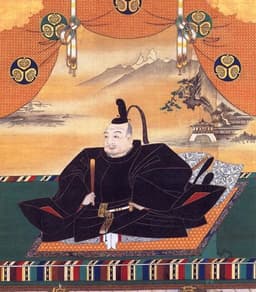
Tokugawa Ieyasu
General · Modern
81.8Total
Basic Information
Born
-100
1543
Died
-44
1616
Era
Ancient
Modern
Nationality
Roman Republic
Japan
Occupation
General
General
Civilization
Western
Eastern
Score Comparison
Military (10%)
88.0
78.0
Political (20%)
78.0
82.0
Influence (20%)
85.0
88.0
Legacy (20%)
82.0
75.0
Leadership (15%)
80.0
85.0
Strategy (15%)
85.0
82.0
TOTAL
82.8
81.8
Julius Caesar — Complete Timeline
58 BC
Gallic WarsWar◆ Major
Caesar, as proconsul of Gaul, launched a series of campaigns that conquered all of Gaul (modern France, Belgium, and parts of Switzerland). He fought numerous battles, including against the Helvetii, the Belgae, and the Gallic chieftain Vercingetorix. The wars brought immense wealth and a loyal army to Caesar.
Gallic WarsConquestRoman Expansion
Impact: regional
49 BC
Crossing the RubiconPolitical Action◆ Major
Caesar led Legio XIII across the Rubicon River into Italy, defying the Roman Senate's order to disband his army. This act triggered a civil war against Pompey and the Optimates, ultimately leading to Caesar's dictatorship and the end of the Roman Republic.
Roman Civil WarEnd of RepublicPower Struggle
Impact: global
48 BC
Battle of PharsalusWar◆ Major
Caesar's outnumbered army defeated the larger forces of Pompey the Great at Pharsalus in Greece. Caesar's tactical use of a reserve line to counter Pompey's cavalry charge proved decisive. Pompey fled to Egypt, where he was assassinated, leaving Caesar as the undisputed master of the Roman world.
Roman Civil WarBattleDecisive Victory
Impact: regional
44 BC
Appointment as Dictator for LifePolitical Action◆ Major
The Roman Senate appointed Caesar dictator perpetuo (dictator for life), granting him unprecedented personal power. This move concentrated military, legislative, and judicial authority in one person, effectively ending the Roman Republic's traditional system of checks and balances and alarming many senators.
DictatorshipEnd of RepublicPower Consolidation
Impact: regionaldestructive
Assassination on the Ides of MarchPolitical Action◆ Major
A group of Roman senators, led by Marcus Junius Brutus and Gaius Cassius Longinus, stabbed Caesar to death at a meeting of the Senate in the Theatre of Pompey. The assassination was intended to restore the Republic, but instead triggered another civil war that led to the rise of the Roman Empire.
AssassinationRoman PoliticsEnd of Republic
Impact: globaldestructive
Tokugawa Ieyasu — Complete Timeline
1600 AD
Battle of SekigaharaWar
Tokugawa Ieyasu led the Eastern Army to victory over Ishida Mitsunari's Western Army at Sekigahara. This decisive battle ended the Sengoku period and established Ieyasu as the supreme military ruler of Japan, paving the way for the Tokugawa shogunate.
Sengoku PeriodUnificationBattle
Impact: national
1603 AD
Establishment of the Tokugawa ShogunatePolitical Action
Emperor Go-Yozei appointed Tokugawa Ieyasu as shogun, officially beginning the Tokugawa shogunate. Ieyasu established his government in Edo (modern Tokyo), centralizing military and political power under his family's control.
ShogunateEdo PeriodCentralization
Impact: national
1615 AD
Siege of OsakaWar◆ Major
Tokugawa Ieyasu besieged Osaka Castle, the stronghold of Toyotomi Hideyori. The castle fell, and Hideyori committed suicide. This campaign eliminated the last major opposition to Tokugawa rule, solidifying the shogunate's control over Japan.
Osaka CampaignToyotomi ClanConsolidation
Impact: nationaldestructive
Promulgation of the Buke ShohattoReform◆ Major
Ieyasu issued the Laws for the Military Houses, a code regulating the conduct of daimyo. It restricted castle construction, required alternate attendance in Edo, and prohibited alliances without shogunal permission. This law helped control the feudal lords.
Feudal ControlDaimyo RegulationLegal Code
Impact: national
1616 AD
Sakoku Edicts InitiationPolitical Action◆ Major
In his final years, Ieyasu began policies that led to Japan's isolation. He restricted foreign trade to specific ports and expelled Christian missionaries. These measures, expanded by successors, resulted in the sakoku policy that isolated Japan for over 200 years.
IsolationismForeign PolicyChristianity
Impact: national
Expert Analysis
Origins
Julius Caesar was born in 100 BCE into the patrician Julian family, which claimed descent from the goddess Venus. Despite his noble lineage, the family was not wealthy, and Caesar's early life was marked by political maneuvering. He allied with populist leaders and gained military experience in Asia Minor. Tokugawa Ieyasu was born in 1543 into the Matsudaira clan, a minor samurai family in Mikawa Province. His childhood was tumultuous: his father was killed when he was young, and he spent years as a hostage of the Oda and Imagawa clans. Both men rose from challenging backgrounds, but Caesar had the advantage of a prestigious name, while Ieyasu had to build his power from scratch.
Rise to Power
Caesar's rise was meteoric. He formed the First Triumvirate with Pompey and Crassus, secured command in Gaul, and spent eight years conquering the region (58–50 BCE). His Commentarii de Bello Gallico celebrated his victories. The Senate's attempt to prosecute him led to the crossing of the Rubicon in 49 BCE, sparking a civil war. He defeated Pompey at Pharsalus and became dictator. Ieyasu's rise was slower. He allied with Oda Nobunaga and later Toyotomi Hideyoshi, expanding his territory carefully. After Hideyoshi's death, Ieyasu maneuvered among warlords, culminating in his decisive victory at Sekigahara in 1600. He was appointed shogun in 1603, founding the Tokugawa shogunate.
Leadership & Governance
Caesar centralized power, reformed the calendar (Julian calendar), granted citizenship to provincials, and initiated public works. He was assassinated in 44 BCE before fully implementing his vision. Ieyasu established the shogunate with a stable feudal system. He issued the Buke Shohatto (laws for samurai) and initiated sakoku (isolation) policies to control foreign influence. His governance brought 250 years of peace. Caesar's reforms were transformative but short-lived; Ieyasu's system endured for centuries.
Triumph & Tragedy
Caesar's greatest triumph was the conquest of Gaul, which expanded Rome's territory and wealth. His tragedy was his assassination on the Ides of March, leading to further civil wars. Ieyasu's triumph was Sekigahara, which unified Japan. His tragedy was the Siege of Osaka (1614–15), where he eliminated the Toyotomi clan, including Hideyori, a child. Both faced betrayal: Caesar by Brutus, Ieyasu by some former allies.
Character & Destiny
Caesar was ambitious, charismatic, and ruthless. He believed in his destiny, even crossing the Rubicon with the phrase "alea iacta est" (the die is cast). Ieyasu was patient, calculating, and pragmatic. He waited decades to seize power, famously saying "The strong man is the one who can conquer his own passions." Caesar's destiny was to die at the height of his power; Ieyasu's was to die of old age, having secured his dynasty.
Legacy
Caesar's name became synonymous with dictatorship and imperial rule. His reforms influenced Western governance, and his writings remain classics. Ieyasu's legacy is the Edo period, which shaped modern Japan's culture, economy, and isolationist policies. Both are revered in their cultures, but Caesar's impact is more global, while Ieyasu's is more regional.
Conclusion
Julius Caesar scores higher overall (83 vs 82), but the gap is narrow. Caesar's military genius and political reforms were more dramatic, but his assassination cut his work short. Ieyasu's patient consolidation created lasting stability. In terms of immediate impact, Caesar wins; in longevity, Ieyasu. However, Caesar's broader influence on world history gives him the edge. **Final verdict: Julius Caesar.**
Rankings
🥇
Julius CaesarLeader
Mil: 88.0Pol: 78.0Inf: 85.0
82.8
🥈
Tokugawa Ieyasu
Mil: 78.0Pol: 82.0Inf: 88.0
81.8
+1.0 behind
How This Comparison Works
Algorithm
Each figure is scored on 6 dimensions (0—100 scale) based on structured historical data: Military (10%), Political (20%), Influence (20%), Legacy (20%), Leadership (15%), Strategy (15%). The weighted total produces the final ranking.
Data Sources
Scores are computed from structured sub-indicators in the database. Scale factors adjust for era (Ancient ×0.85, Modern ×1.0) and civilization size (Eastern ×1.05, Other ×0.80) to account for differences in population and military scale.
Maximum 3 Figures
Comparisons are limited to 2—3 figures to ensure readability and statistical meaningfulness.
Error Margins
±5 points per dimension — Sub-scores are derived from historical records with inherent uncertainty. Two figures within 5 points on a dimension should be considered roughly equivalent in that area.
Total Score Accuracy
±3 points overall — The weighted combination of 6 dimensions produces a total score with approximately ±3 points of uncertainty. Differences of less than 3 points are not statistically significant— the figures are effectively tied.
Known Limitations
- Historical records are incomplete and uneven across civilizations
- Figures from oral-tradition societies may be underrepresented
- Occupation labels can misclassify multi-role figures
- Scores measure capability and impact, not moral character
- Quantitative scoring is a comparison tool, not absolute truth
Capability Radar
Military (10%) — Battles & Warfare
Battles
95
85
Win Rate
92
90
Expansion
97
75
Political (20%) — Governance & Reform
Reform
90
90
Diplomacy
85
85
Economy
82
88
Influence (20%) — Cultural & Global Reach
Cultural
88
85
Global
94
70
Legacy (20%) — Historical Impact
Historical
95
90
Longevity
96
95
Leadership (15%) — Power & Stability
Tenure
75
95
Stability
60
95
Strategy (15%) — Tactics & Innovation
Strategy
94
92
Tactics
96
88
Reform
88
80
Similar Comparisons
Comments & Discussion
Chronicler38036/16/2026
我觉得这个对比本身就有很强的西方中心主义色彩,尤其是在影响力这个维度上。说凯撒的影响力85分而家康只有75分,这完全是用罗马帝国的全球性来否定德川幕府的东亚辐射力。作为熟悉中国史的人,我立刻想到家康的锁国政策其实和汉武帝的盐铁专卖异曲同工——都是通过国家垄断来巩固内政、减少外部干扰。家康的『参勤交代』制度更是比中国中央集权还精妙,用经济成本钳制地方大名,这比凯撒的元老院清洗高明得多。凯撒的《高卢战记》确实影响了西方军事理论,但家康的『三方原之战』中诱敌深入的战术,与孙膑的『围魏救赵』一样是东方军事智慧的典范。要说真正的影响力,德川时代的町人文化和浮世绘对现代日本的影响,比凯撒的独裁制度对现代民主的启示深得多。建议把家康的影响力分调到80分。
Chronicler37976/16/2026
这个评分体系很有意思,但我要质疑军事维度的对比。凯撒88分对家康78分,差了整整10分,这显然过度高估了凯撒的个人统帅能力而低估了家康的战略远见。从中国古代战争史的角度看,凯撒的征服模式更接近项羽——依靠个人魅力和快速突击取胜,但最终都未能建立稳定的制度。而家康更像刘邦,在关键时刻能忍辱负重(关原之战前的隐忍与刘邦鸿门宴如出一辙),通过精准的联盟构建和政治布局取胜。更重要的是,家康建立的德川幕府延续了260多年,而凯撒的帝国在他死后就分崩离析。按这个逻辑,家康的军事分至少应该提升到83-84分,因为真正的军事天才不仅要会打仗,还要懂得如何通过军事胜利创造持久和平。我个人计算综合得分应为:凯撒81.5,家康82.3。