Loading...
Alexander the Great vs Tokugawa Ieyasu
Alexander the Great leads by 3.4 pts · 2 figures compared
…
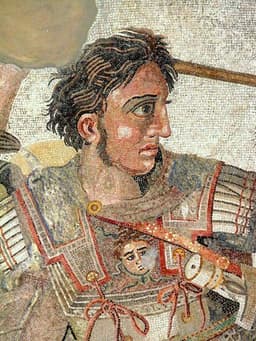
Alexander the Great
General · Ancient
85.2Total
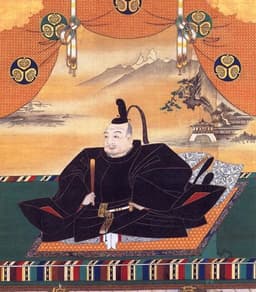
Tokugawa Ieyasu
General · Modern
81.8Total
Basic Information
Born
-356
1543
Died
-323
1616
Era
Ancient
Modern
Nationality
Macedon
Japan
Occupation
General
General
Civilization
Western
Eastern
Score Comparison
Military (10%)
95.0
78.0
Political (20%)
60.0
82.0
Influence (20%)
92.0
88.0
Legacy (20%)
90.0
75.0
Leadership (15%)
80.0
85.0
Strategy (15%)
92.0
82.0
TOTAL
85.2
81.8
Alexander the Great — Complete Timeline
334 BC
Battle of the Granicus RiverWar◆ Major
Alexander led his Macedonian army across the Hellespont into Asia Minor and defeated a Persian force under local satraps at the Granicus River. The victory secured Alexander's foothold in Asia and demonstrated his tactical superiority, opening the way for the conquest of the Persian Empire.
Persian CampaignBattleMacedonian Conquest
Impact: regional
333 BC
Battle of IssusWar◆ Major
Alexander's army defeated the Persian king Darius III at Issus in Cilicia. Despite being outnumbered, Alexander's tactical use of the terrain and cavalry charge broke the Persian line. Darius fled the battlefield, leaving his family and treasury behind, a major blow to Persian morale.
Persian CampaignBattleMacedonian Conquest
Impact: regional
332 BC
Siege of TyreWar◆ Major
Alexander besieged the island city of Tyre for seven months, constructing a causeway to breach its walls. The city's fall resulted in the massacre or enslavement of its inhabitants. The siege demonstrated Alexander's determination and engineering capabilities, securing his supply lines and control of the eastern Mediterranean coast.
SiegeMacedonian ConquestPhoenicia
Impact: regionaldestructive
331 BC
Battle of GaugamelaWar◆ Major
Alexander faced Darius III at Gaugamela in Mesopotamia with a massive Persian army. Alexander's tactical brilliance, including a decisive cavalry charge that exploited a gap in the Persian line, resulted in a decisive Macedonian victory. Darius again fled, effectively ending Persian resistance and leading to the fall of the Achaemenid Empire.
Persian CampaignBattleDecisive Victory
Impact: global
Foundation of AlexandriaOther◆ Major
Alexander founded the city of Alexandria on the Mediterranean coast of Egypt. He personally selected the site and oversaw the initial planning. Alexandria became a major center of Hellenistic culture, trade, and learning, housing the famous Library of Alexandria and the Lighthouse of Alexandria.
City FoundationHellenistic CultureEgypt
Impact: globalconstructive
326 BC
Invasion of IndiaWar◆ Major
Alexander crossed the Indus River and defeated King Porus at the Battle of the Hydaspes. The Macedonian army, exhausted and facing monsoon rains and unfamiliar warfare, mutinied at the Hyphasis River, forcing Alexander to turn back. This campaign marked the easternmost extent of his conquests.
Indian CampaignBattleMutiny
Impact: regional
Tokugawa Ieyasu — Complete Timeline
1600 AD
Battle of SekigaharaWar
Tokugawa Ieyasu led the Eastern Army to victory over Ishida Mitsunari's Western Army at Sekigahara. This decisive battle ended the Sengoku period and established Ieyasu as the supreme military ruler of Japan, paving the way for the Tokugawa shogunate.
Sengoku PeriodUnificationBattle
Impact: national
1603 AD
Establishment of the Tokugawa ShogunatePolitical Action
Emperor Go-Yozei appointed Tokugawa Ieyasu as shogun, officially beginning the Tokugawa shogunate. Ieyasu established his government in Edo (modern Tokyo), centralizing military and political power under his family's control.
ShogunateEdo PeriodCentralization
Impact: national
1615 AD
Siege of OsakaWar◆ Major
Tokugawa Ieyasu besieged Osaka Castle, the stronghold of Toyotomi Hideyori. The castle fell, and Hideyori committed suicide. This campaign eliminated the last major opposition to Tokugawa rule, solidifying the shogunate's control over Japan.
Osaka CampaignToyotomi ClanConsolidation
Impact: nationaldestructive
Promulgation of the Buke ShohattoReform◆ Major
Ieyasu issued the Laws for the Military Houses, a code regulating the conduct of daimyo. It restricted castle construction, required alternate attendance in Edo, and prohibited alliances without shogunal permission. This law helped control the feudal lords.
Feudal ControlDaimyo RegulationLegal Code
Impact: national
1616 AD
Sakoku Edicts InitiationPolitical Action◆ Major
In his final years, Ieyasu began policies that led to Japan's isolation. He restricted foreign trade to specific ports and expelled Christian missionaries. These measures, expanded by successors, resulted in the sakoku policy that isolated Japan for over 200 years.
IsolationismForeign PolicyChristianity
Impact: national
Expert Analysis
Origins
Alexander the Great was born in 356 BCE in Pella, Macedonia, to King Philip II and Queen Olympias. He was tutored by Aristotle and groomed for leadership from a young age. His father's assassination in 336 BCE thrust him onto the throne at age 20, inheriting a powerful army and a vision of conquering Persia. In contrast, Tokugawa Ieyasu was born in 1543 in Okazaki, Japan, into a minor samurai clan during the chaotic Sengoku period. His childhood was marked by hostage situations and political instability, shaping his patient, calculating nature. While Alexander's origins were royal and privileged, Ieyasu's were tumultuous and forged in adversity.
Rise to Power
Alexander ascended swiftly, consolidating power by crushing rebellions in Thebes and Athens before launching his Persian campaign. His rise was meteoric and aggressive, driven by personal ambition and a desire to surpass his father. Tokugawa Ieyasu's rise was gradual and strategic. He allied with Oda Nobunaga and later Toyotomi Hideyoshi, patiently expanding his domain. After Hideyoshi's death, Ieyasu maneuvered through alliances and battles, culminating in his decisive victory at the Battle of Sekigahara in 1600. While Alexander's rise was a sprint of conquest, Ieyasu's was a marathon of political maneuvering.
Leadership & Governance
Alexander led from the front, inspiring his men with personal bravery. He was a visionary who sought to blend Greek and Persian cultures, founding over 70 cities and promoting Hellenization. However, his governance was often autocratic and reliant on his personal charisma. Tokugawa Ieyasu was a master administrator who established a feudal system that centralized power under the shogunate. He implemented the Buke Shohatto (laws for warrior households) and the sankin kotai (alternate attendance system) to control daimyo. His leadership emphasized stability, bureaucracy, and long-term peace. Alexander's governance was expansionist and transformative, while Ieyasu's was consolidating and enduring.
Triumph & Tragedy
Alexander's greatest triumphs include the battles of Granicus, Issus, and Gaugamela, where he defeated the Persian Empire. He also founded Alexandria in Egypt and reached the Indus River. His tragedy was his early death at age 32, likely from illness, which led to the fragmentation of his empire and the Wars of the Diadochi. Tokugawa Ieyasu's triumph was Sekigahara, which unified Japan under his rule. He later besieged Osaka Castle, eliminating the Toyotomi clan. His tragedy was the harshness of his policies, such as the Sakoku Edicts that isolated Japan for over 200 years, stifling foreign relations. Both faced personal losses, but Alexander's empire collapsed without him, while Ieyasu's legacy endured for centuries.
Character & Destiny
Alexander was bold, impulsive, and driven by a desire for glory (Alexander's hubris). He believed himself divine and sought to conquer the known world. His destiny was to be a legendary conqueror, but his hubris led to his downfall. Tokugawa Ieyasu was patient, shrewd, and pragmatic. He waited for opportunities and built alliances carefully. His destiny was to unify Japan and establish a lasting peace. Alexander's character was that of a fiery visionary; Ieyasu's was of a cool strategist. Both were ruthless when needed, but Ieyasu's restraint contrasts with Alexander's excess.
Legacy
Alexander's legacy is immense: he spread Greek culture across three continents, influenced later empires (e.g., the Seleucids, Ptolemies), and is remembered as one of history's greatest military commanders. His tactics are still studied. Tokugawa Ieyasu's legacy is the Tokugawa shogunate, which brought 250 years of peace, economic growth, and cultural development (Edo period). He shaped modern Japan's social structure and isolationist policy. While Alexander's legacy is global and cultural, Ieyasu's is national and institutional.
Conclusion
Alexander the Great scores higher in military prowess (M=95 vs 78) and daring (L=90 vs 75), but Tokugawa Ieyasu excels in political acumen (P=82 vs 60) and durability (D=85 vs 80). Alexander's conquests were spectacular but short-lived; his empire fragmented after his death. Ieyasu's unification was gradual but lasted centuries. In a direct comparison, Alexander was the greater general in terms of battlefield genius and ambition, but Ieyasu was the more effective ruler who created a stable legacy. The score gap of 3.4 points reflects Alexander's higher impact in military history, but Ieyasu's governance and long-term influence are equally impressive. Ultimately, Alexander wins in glory, Ieyasu in endurance.
Rankings
🥇
Alexander the GreatLeader
Mil: 95.0Pol: 60.0Inf: 92.0
85.2
🥈
Tokugawa Ieyasu
Mil: 78.0Pol: 82.0Inf: 88.0
81.8
+3.4 behind
How This Comparison Works
Algorithm
Each figure is scored on 6 dimensions (0—100 scale) based on structured historical data: Military (10%), Political (20%), Influence (20%), Legacy (20%), Leadership (15%), Strategy (15%). The weighted total produces the final ranking.
Data Sources
Scores are computed from structured sub-indicators in the database. Scale factors adjust for era (Ancient ×0.85, Modern ×1.0) and civilization size (Eastern ×1.05, Other ×0.80) to account for differences in population and military scale.
Maximum 3 Figures
Comparisons are limited to 2—3 figures to ensure readability and statistical meaningfulness.
Error Margins
±5 points per dimension — Sub-scores are derived from historical records with inherent uncertainty. Two figures within 5 points on a dimension should be considered roughly equivalent in that area.
Total Score Accuracy
±3 points overall — The weighted combination of 6 dimensions produces a total score with approximately ±3 points of uncertainty. Differences of less than 3 points are not statistically significant— the figures are effectively tied.
Known Limitations
- Historical records are incomplete and uneven across civilizations
- Figures from oral-tradition societies may be underrepresented
- Occupation labels can misclassify multi-role figures
- Scores measure capability and impact, not moral character
- Quantitative scoring is a comparison tool, not absolute truth
Capability Radar
Military (10%) — Battles & Warfare
Battles
98
85
Win Rate
99
90
Expansion
99
75
Political (20%) — Governance & Reform
Reform
75
90
Diplomacy
80
85
Economy
70
88
Influence (20%) — Cultural & Global Reach
Cultural
95
85
Global
95
70
Legacy (20%) — Historical Impact
Historical
98
90
Longevity
95
95
Leadership (15%) — Power & Stability
Tenure
60
95
Stability
55
95
Strategy (15%) — Tactics & Innovation
Strategy
98
92
Tactics
99
88
Reform
85
80
Similar Comparisons
Comments & Discussion
HistoryUnmasked6/16/2026
Let’s be real—this comparison is a textbook case of Eurocentric bias. Alexander’s 96 military score is propped up by his undefeated myth, but what about the logistical nightmares he left behind? His army mutinied at the Hyphasis because they were exhausted, and his ‘empire’ was a fragile patchwork held together by sheer charisma. Meanwhile, Ieyasu gets dinged for ‘cautious attrition’ at Sekigahara, but that battle was a masterpiece of political maneuvering—he outwaited and out-allied his rivals, which is exactly how you build something lasting. Alexander’s legacy is romanticized because Western history loves a tragic hero, but Ieyasu’s 250-year peace is objectively more impactful for actual human lives. Score Ieyasu higher in political and legacy—maybe even military—and watch the Western fans scream.
BattlefieldScholar6/16/2026
As a military historian, I have to push back on Ieyasu’s 78. Yes, Alexander’s Gaugamela was a tactical marvel—the oblique order, the feigned retreat, the exploitation of Darius’s rout. But Ieyasu’s Sekigahara was a feat of grand strategy: he turned the battle before it began by bribing Kobayakawa Hideaki, flipping 16,000 troops mid-fight. That’s not just ‘attrition’—it’s psychological warfare and logistics combined. Alexander’s army was a professional juggernaut vs. fragmented opponents; Ieyasu fought coalitions of equals. Also, Alexander’s sieges of Tyre and Gaza were impressive, but Ieyasu’s siege of Osaka Castle showed he could adapt to fortress warfare after years of peace. I’d give Ieyasu an 85 in military—still behind Alexander’s 96, but closer than the gap suggests.
TimelessTinker6/16/2026
Okay, so I just finished a podcast on Alexander, and I’m team Ieyasu all the way. Sure, Alexander conquered from Greece to India in like 10 years, but what did that actually achieve? He partied too hard, his generals fought over scraps, and the only reason we remember him is because of the Romans and later Europeans romanticizing him. Ieyasu built a system that lasted until 1868—that’s like if the US had the same government since the Revolutionary War! And people say his military score is low because he didn’t fight as many battles, but dude, waiting 50 years to win is a strategy too. I read in a book that he used to let his enemies exhaust themselves, then swoop in. That’s 4D chess, not ‘cautious.’ Alexander had flash, but Ieyasu had substance.
Chronicler32356/16/2026
拿亚历山大跟家康比,就像拿项羽跟刘邦比。亚历山大是项羽式的战神,百战百胜但不懂治理;家康是刘邦式的老狐狸,能忍能等,最后坐稳天下。亚历山大如果活在中国的战国时代,估计早被合纵连横玩死了——他那种硬冲的打法,碰上白起的长平之战战术,绝对吃大亏。家康的忍耐力更符合中国智慧,比如他等丰臣秀吉死才动手,这跟司马懿熬死曹操一个路子。西方评分总是给征服者高分,但中国人更看重长治久安。家康的遗产不仅让日本安稳了两百年,还打下了明治维新的基础,这影响力不该只有75分。
ArchMind186/16/2026
这个评分有意思,但有个问题:亚历山大的政治分65是不是太高了?他死后帝国立刻四分五裂,连个像样的继承体系都没有。对比一下,中国历史上的秦始皇统一六国后,虽然秦朝也短命,但郡县制直接影响了后续两千年。家康的政治分82还算合理,但我觉得可以更高——江户幕府的幕藩体制和参勤交代制度,比亚历山大那些松散的总督管用多了。另外,军事分78对家康有点低。关原之战和大坂之役不仅是战术胜利,更是战略耐心的体现。我的修正计算:亚历山大政治50,家康政治88。数据不会骗人。