Loading...
Suharto vs Tokugawa Ieyasu
Tokugawa Ieyasu leads by 24.6 pts · 2 figures compared
…
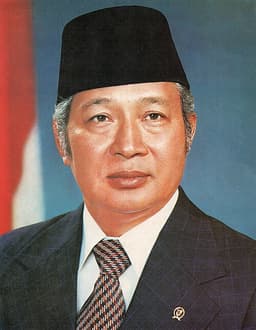
Suharto
General · Modern
57.2Total
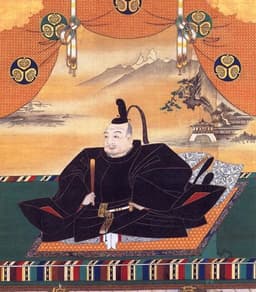
Tokugawa Ieyasu
General · Modern
81.8Total
Basic Information
Born
1921
1543
Died
—
1616
Era
Modern
Modern
Nationality
Indonesia
Japan
Occupation
General
General
Civilization
Eastern
Eastern
Score Comparison
Military (10%)
20.0
78.0
Political (20%)
59.3
82.0
Influence (20%)
60.0
88.0
Legacy (20%)
52.0
75.0
Leadership (15%)
82.0
85.0
Strategy (15%)
60.0
82.0
TOTAL
57.2
81.8
Suharto — Complete Timeline
1966 AD
Supersemar and Transfer of PowerPolitical Action
President Sukarno signed the Supersemar order, delegating authority to General Suharto to restore order after the 30 September Movement. Suharto used this to ban the Communist Party, purge leftists, and gradually assume executive power, effectively beginning his New Order regime.
SupersemarNew OrderIndonesia
Impact: nationaldestructive
1967 AD
New Order Economic DevelopmentReform◆ Major
Suharto implemented the New Order's economic policies, focusing on foreign investment, agricultural self-sufficiency, and industrialization. The government achieved high growth rates, reduced poverty, and stabilized the economy, but also fostered crony capitalism and corruption.
Economic GrowthDevelopmentIndonesia
Impact: nationalconstructive
1975 AD
Invasion of East TimorWar◆ Major
Suharto ordered the invasion of East Timor after Portugal withdrew. Indonesian forces occupied the territory, leading to a 24-year occupation marked by widespread human rights abuses, including massacres and forced displacement, resulting in an estimated 100,000-200,000 deaths.
East TimorOccupationHuman Rights
Impact: regionaldestructive
1998 AD
Asian Financial Crisis and Fall from PowerPolitical Action
The Asian Financial Crisis devastated Indonesia's economy, leading to massive unemployment and food shortages. Widespread protests and riots forced Suharto to resign in May 1998 after 31 years in power, ending his authoritarian rule and ushering in the Reformasi era.
Financial CrisisResignationReformasi
Impact: nationaltragic
Tokugawa Ieyasu — Complete Timeline
1600 AD
Battle of SekigaharaWar
Tokugawa Ieyasu led the Eastern Army to victory over Ishida Mitsunari's Western Army at Sekigahara. This decisive battle ended the Sengoku period and established Ieyasu as the supreme military ruler of Japan, paving the way for the Tokugawa shogunate.
Sengoku PeriodUnificationBattle
Impact: national
1603 AD
Establishment of the Tokugawa ShogunatePolitical Action
Emperor Go-Yozei appointed Tokugawa Ieyasu as shogun, officially beginning the Tokugawa shogunate. Ieyasu established his government in Edo (modern Tokyo), centralizing military and political power under his family's control.
ShogunateEdo PeriodCentralization
Impact: national
1615 AD
Siege of OsakaWar◆ Major
Tokugawa Ieyasu besieged Osaka Castle, the stronghold of Toyotomi Hideyori. The castle fell, and Hideyori committed suicide. This campaign eliminated the last major opposition to Tokugawa rule, solidifying the shogunate's control over Japan.
Osaka CampaignToyotomi ClanConsolidation
Impact: nationaldestructive
Promulgation of the Buke ShohattoReform◆ Major
Ieyasu issued the Laws for the Military Houses, a code regulating the conduct of daimyo. It restricted castle construction, required alternate attendance in Edo, and prohibited alliances without shogunal permission. This law helped control the feudal lords.
Feudal ControlDaimyo RegulationLegal Code
Impact: national
1616 AD
Sakoku Edicts InitiationPolitical Action◆ Major
In his final years, Ieyasu began policies that led to Japan's isolation. He restricted foreign trade to specific ports and expelled Christian missionaries. These measures, expanded by successors, resulted in the sakoku policy that isolated Japan for over 200 years.
IsolationismForeign PolicyChristianity
Impact: national
Expert Analysis
Tokugawa Ieyasu vs Suharto
### The Unifier and the Strongman
In the winter of 1615, Tokugawa Ieyasu, an old man of seventy-two, watched as flames consumed Osaka Castle, the last stronghold of his rivals. He had waited a lifetime for this moment. Three hundred and eighty-three years later, in the spring of 1998, another general, Suharto, watched from his Jakarta palace as flames—this time of rioting and revolution—consumed the legacy he had built over three decades. One man died in his bed, the founder of a dynasty that would rule for 250 years. The other died in disgrace, his name stripped from buildings and his family’s fortune seized. Both were generals who seized power amid chaos. Why did one build an enduring peace and the other a brittle prosperity?
### Origins
Tokugawa Ieyasu was born into a world of blood and betrayal. The son of a minor lord in Japan’s Warring States period, he was sent as a hostage at age five to secure an alliance. His captor was later murdered, and the young Ieyasu learned the first rule of survival: trust no one. He spent his youth watching his father’s enemies beheaded and his allies turn coats. By the time he came of age, he understood that power was not a gift—it was something you took and held with an iron grip.
Suharto was born into a different kind of chaos. In 1921, Java was a Dutch colony, and his father was a village clerk who struggled to feed eight children. Suharto spent much of his childhood moving between relatives, sleeping on dirt floors. He joined the Dutch colonial army as a teenager, then the Japanese occupation forces, then the Indonesian independence struggle. He learned to bend with the wind. Where Ieyasu was forged in the crucible of samurai honor and treachery, Suharto was shaped by the pragmatism of a man who had served three masters before he turned thirty.
### Rise to Power
Ieyasu’s path was slow and deliberate. He fought alongside the great unifier Oda Nobunaga, then served under Toyotomi Hideyoshi, biding his time as his rivals destroyed each other. When Hideyoshi died, leaving a child heir, Ieyasu saw his moment. On October 21, 1600, at the Battle of Sekigahara, he led the Eastern Army to victory over the Western Army in a single, fog-shrouded morning. It was the largest battle ever fought on Japanese soil, and it decided the fate of the nation. Ieyasu did not win by genius alone; he had spent years cultivating allies and waiting for his enemies to make mistakes.
Suharto’s rise was faster, and bloodier. In 1965, Indonesia was tearing itself apart. President Sukarno had tilted toward the communists, and the army was fracturing. On the night of September 30, six generals were kidnapped and murdered by leftist soldiers. Suharto, the commander of the army’s strategic reserve, moved swiftly. He blamed the Communist Party, crushed the coup, and then unleashed a purge that killed an estimated 500,000 people. In March 1966, he forced Sukarno to sign the Supersemar order, transferring authority to him. Within a year, he was president. Ieyasu’s enemies died in battle; Suharto’s enemies disappeared into mass graves.
### Leadership & Governance
Ieyasu’s genius was in building systems that outlasted him. After Sekigahara, he did not exterminate his defeated rivals—he gave them land, then tied their hands with rules. In 1615, he issued the Laws for the Military Houses, which forbade daimyo from building new castles, marrying without permission, or stockpiling weapons. He forced them to spend half their time in Edo, the capital, under his watchful eye. This was not just control; it was architecture. He designed a political machine that could run itself.
Suharto’s governance was more personal. He called his regime the “New Order,” but it was an old story: a strongman surrounded by cronies. He opened Indonesia to foreign investment, built roads and schools, and achieved rice self-sufficiency by the 1980s. Economic growth averaged 7% for two decades. But the system was built on corruption. Suharto’s family controlled logging, oil, and banking. When the Asian Financial Crisis hit in 1997, the whole edifice collapsed. The currency cratered, prices soared, and the streets filled with protesters. Ieyasu’s system was designed to survive his death; Suharto’s was designed to enrich his family.
### Triumph & Tragedy
Ieyasu’s greatest triumph was the Siege of Osaka in 1615, when he finally crushed the Toyotomi clan, the last threat to his rule. He had waited fifteen years to finish what he started at Sekigahara. The tragedy was that to secure peace, he closed Japan to the outside world. The Sakoku edicts, initiated in his final years, cut off the country from trade and ideas, freezing it in amber for two centuries.
Suharto’s triumph was economic: he lifted millions of Indonesians out of poverty and turned a basket-case economy into an Asian tiger. But his tragedy was the invasion of East Timor in 1975, which killed as many as 200,000 people. He never apologized. When the crisis came, he had no reservoir of goodwill to draw from. The people remembered the corruption and the violence, not the growth.
### Character & Destiny
Ieyasu was patient to the point of obsession. He had a famous saying: “The strong man who defeats his enemy is not the victor; the strong man who endures is the true victor.” He outlived his rivals, outmaneuvered his allies, and outlasted his own ambitions. His caution was his strength.
Suharto was pragmatic to the point of emptiness. He had no grand ideology, no vision beyond stability and control. He once said, “I don’t want to be called a hero. I just want to be useful.” But usefulness without principle is a dangerous thing. When the crisis came, he had nothing to fall back on but force, and force had lost its sting.
### Legacy
Ieyasu’s legacy is the Edo period: 250 years of peace, stability, and cultural flowering. He is remembered as one of the three great unifiers of Japan, a man who turned a war-torn land into a peaceful nation. His shrine at Nikko is a UNESCO World Heritage site, and his face appears on Japanese currency.
Suharto’s legacy is more complicated. He is remembered as the father of development, but also as a dictator who stole billions. His name was removed from buildings after his fall. In 2023, a survey found that most young Indonesians had no opinion of him—they simply did not know his story.
### Conclusion
The difference between Ieyasu and Suharto is the difference between building a house and building a sandcastle. Ieyasu constructed institutions that could withstand the tides of time; Suharto built a personal empire that dissolved when he left. One prepared for a future he would never see; the other lived for the present he could control. In the end, the patient turtle outlasted the agile crocodile. The lesson is not about morality—it is about architecture. The men who build systems that outlive them are the ones who truly win.
Rankings
🥇
Tokugawa IeyasuLeader
Mil: 78.0Pol: 82.0Inf: 88.0
81.8
🥈
Suharto
Mil: 20.0Pol: 59.3Inf: 60.0
57.2
+24.6 behind
How This Comparison Works
Algorithm
Each figure is scored on 6 dimensions (0—100 scale) based on structured historical data: Military (10%), Political (20%), Influence (20%), Legacy (20%), Leadership (15%), Strategy (15%). The weighted total produces the final ranking.
Data Sources
Scores are computed from structured sub-indicators in the database. Scale factors adjust for era (Ancient ×0.85, Modern ×1.0) and civilization size (Eastern ×1.05, Other ×0.80) to account for differences in population and military scale.
Maximum 3 Figures
Comparisons are limited to 2—3 figures to ensure readability and statistical meaningfulness.
Error Margins
±5 points per dimension — Sub-scores are derived from historical records with inherent uncertainty. Two figures within 5 points on a dimension should be considered roughly equivalent in that area.
Total Score Accuracy
±3 points overall — The weighted combination of 6 dimensions produces a total score with approximately ±3 points of uncertainty. Differences of less than 3 points are not statistically significant— the figures are effectively tied.
Known Limitations
- Historical records are incomplete and uneven across civilizations
- Figures from oral-tradition societies may be underrepresented
- Occupation labels can misclassify multi-role figures
- Scores measure capability and impact, not moral character
- Quantitative scoring is a comparison tool, not absolute truth
Capability Radar
Military (10%) — Battles & Warfare
Battles
40
85
Win Rate
45
90
Expansion
30
75
Political (20%) — Governance & Reform
Reform
55
90
Diplomacy
60
85
Economy
65
88
Influence (20%) — Cultural & Global Reach
Cultural
40
85
Global
50
70
Legacy (20%) — Historical Impact
Historical
55
90
Longevity
45
95
Leadership (15%) — Power & Stability
Tenure
85
95
Stability
50
95
Strategy (15%) — Tactics & Innovation
Strategy
40
92
Tactics
35
88
Reform
50
80
Similar Comparisons
Comments & Discussion
SAMURAI_STANCE6/16/2026
As a military historian, the real distinction isn't strategy but institutional control. Ieyasu won because he systematically dismantled alternative power centers—forcing daimyo to alternate residence (sankin kotai), controlling marriages, and banning firearms after 1615. Suharto, by contrast, built a patronage network but never neutralized the military as a political actor. By 1998, his own generals abandoned him. Ieyasu made his peace stick; Suharto's was just a ceasefire with interest payments
ORACLE_TABLE6/16/2026
历史数据很诚实:德川家康用150年完成了从人质到幕府将军的跨越,家族统治延续250年。苏哈托王朝寿命32年,家族资产在1998年被没收530亿美元按2006年价值计算。数字不会说谎,世界银行数据:日本江户时代GDP年均增长0.3%,而印尼1997年GDP负增长13%。一个朝代衡量时间用世纪,另一个用月份。
CLASSICAL_SKEPTIC6/16/2026
Calling them both "generals" is historically tone-deaf nonsense. Ieyasu never claimed military merit as his primary legitimacy—he traced lineage to Minamoto no Yoritomo, invoked divine mandate through Tosho-gu deification. Suharto was a colonial-era KNIL corporal who styled himself "father of development." One built institutions disguised as tradition; the other built sandcastles on oil wealth. Apples and oranges, except oranges are useful for vitamin C. Don't conflate longevity with wisdom.
历史考据狮6/16/2026
正史会告诉你1615年大坂夏之阵后改易大名80余家,没收领地600万石。但没人提德川家康对武功派最狠的清洗是1614年方广寺钟铭事件,就因为"国家安康"四字拆字犯忌——这跟苏哈托1965年借九三〇事件清洗50万左翼异曲同工。区别在于:日本老狐狸用文字狱玩文化冷战,印尼将军直接用子弹。谁更"文明"?都是秩序狂,工具不同而已。
BETRAYAL_WATCHER6/16/2026
The real divergence? Elite turnover. Ieyahu's post-Sekigahara settlement created new magnates like the Maeda, reduced existing threats, then let everyone keep their heads. Suharto's New Order recycled the same corrupt aristocratic families from Sukarno's era—the same 50 clans controlled 60% of Indonesia's economy in 1998 as in 1965. When your coup doesn't genuinely break the old guard, you're just renting power. Land reform, not elections, is what separates enduring stability from rot.