Loading...
Francisco Morazan vs Suharto
Francisco Morazan leads by 0.8 pts · 2 figures compared
…
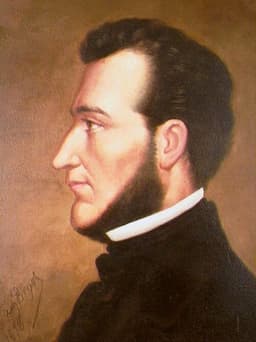
Francisco Morazan
General · Modern
58.0Total
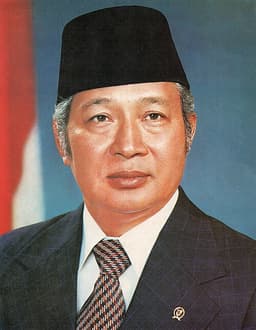
Suharto
General · Modern
57.2Total
Basic Information
Born
1792
1921
Died
1842
—
Era
Modern
Modern
Nationality
Honduras
Indonesia
Occupation
General
General
Civilization
Western
Eastern
Score Comparison
Military (10%)
52.5
20.0
Political (20%)
60.0
59.3
Influence (20%)
62.0
60.0
Legacy (20%)
50.0
52.0
Leadership (15%)
68.0
82.0
Strategy (15%)
55.0
60.0
TOTAL
58.0
57.2
Francisco Morazan — Complete Timeline
1824 AD
Abolition of slavery in Central AmericaReform◆ Major
As a key leader in the liberal movement, Moraz
AbolitionSlaveryLiberal Reform
Impact: regionalprogressive
1827 AD
Battle of La TrinidadWar◆ Major
Morazán led a liberal army to victory against conservative forces at La Trinidad, Honduras. This battle was a key turning point in the Central American civil war, allowing Morazán to consolidate power and eventually become president of the federation.
BattleLiberal VictoryCivil War
Impact: regional
1830 AD
Presidency of the Federal Republic of Central AmericaPolitical Action
Morazán was elected president of the Federal Republic of Central America, a union of Guatemala, El Salvador, Honduras, Nicaragua, and Costa Rica. He pursued liberal reforms including separation of church and state, free trade, and land reform, facing opposition from conservatives.
Federal RepublicLiberal ReformsCentral America
Impact: regionalconstructive
1842 AD
Execution by firing squadPolitical Action
After a failed attempt to restore the Federal Republic, Moraz
ExecutionEnd of FederationLiberal Defeat
Impact: regionaltragic
Suharto — Complete Timeline
1966 AD
Supersemar and Transfer of PowerPolitical Action
President Sukarno signed the Supersemar order, delegating authority to General Suharto to restore order after the 30 September Movement. Suharto used this to ban the Communist Party, purge leftists, and gradually assume executive power, effectively beginning his New Order regime.
SupersemarNew OrderIndonesia
Impact: nationaldestructive
1967 AD
New Order Economic DevelopmentReform◆ Major
Suharto implemented the New Order's economic policies, focusing on foreign investment, agricultural self-sufficiency, and industrialization. The government achieved high growth rates, reduced poverty, and stabilized the economy, but also fostered crony capitalism and corruption.
Economic GrowthDevelopmentIndonesia
Impact: nationalconstructive
1975 AD
Invasion of East TimorWar◆ Major
Suharto ordered the invasion of East Timor after Portugal withdrew. Indonesian forces occupied the territory, leading to a 24-year occupation marked by widespread human rights abuses, including massacres and forced displacement, resulting in an estimated 100,000-200,000 deaths.
East TimorOccupationHuman Rights
Impact: regionaldestructive
1998 AD
Asian Financial Crisis and Fall from PowerPolitical Action
The Asian Financial Crisis devastated Indonesia's economy, leading to massive unemployment and food shortages. Widespread protests and riots forced Suharto to resign in May 1998 after 31 years in power, ending his authoritarian rule and ushering in the Reformasi era.
Financial CrisisResignationReformasi
Impact: nationaltragic
Expert Analysis
Francisco Morazan vs Suharto
The General and the Reformer: Two Paths to Power, Two Destinies
In March 1966, a little-known general named Suharto stood in the presidential palace in Jakarta, watching as President Sukarno—the charismatic founder of Indonesia—signed a piece of paper that would change everything. The document, known as Supersemar, delegated authority to restore order. It was a quiet, bureaucratic transfer of power. Across the globe and more than a century earlier, in November 1827, a young Honduran officer named Francisco Morazán led a ragged liberal army into battle at La Trinidad. The clash was bloody and decisive, and it catapulted him onto the stage of Central American history. One man seized power through a signature; the other, through a sword. Yet both were generals, both were reformers, and both came to rule—and ultimately to fall—in ways that reveal the deepest currents of their times.
Origins
Suharto was born in 1921 in a small village in Java, into a world of Dutch colonial rule, rice paddies, and Javanese mysticism. His father was a minor official, his mother a peasant. He grew up poor, raised partly by relatives, and learned early the arts of survival and deference—traits that would serve him well in the labyrinth of Indonesian politics. The Japanese occupation of World War II gave him his first real military training, and the Indonesian revolution against the Dutch forged his identity as a soldier. His world was one of hierarchy, patronage, and the quiet manipulation of power.
Francisco Morazán, born in 1792 in Tegucigalpa, Honduras, came from a very different world. His family was creole—of Spanish descent but born in the Americas—and he received a classical education in the Enlightenment ideas of Rousseau, Voltaire, and the French Revolution. The Spanish Empire was crumbling, and the air was thick with talk of liberty, republics, and constitutions. Where Suharto learned to bow, Morazán learned to argue. Where Suharto absorbed the fatalism of Javanese tradition, Morazán drank deeply from the well of rational progress.
Rise to Power
Suharto’s path to power was a masterclass in patience. After the Indonesian revolution, he rose slowly through the ranks of the army, never the most brilliant commander but always the most reliable. The turning point came in 1965, when a mysterious coup attempt—the 30 September Movement—killed six top generals. Suharto, who had been conveniently absent from the list of targets, crushed the rebellion and then used the ensuing chaos to destroy the Communist Party, his main rival. He did not seize power in a dramatic coup; he let it drift toward him. By 1966, Sukarno was a figurehead, and Suharto held the real authority. His rise was not a storm but a tide.
Morazán’s rise was far more romantic—and far more dangerous. In 1827, he was a young liberal officer in a Central America torn between conservatives who wanted a centralized, church-dominated state and liberals who dreamed of a federal republic. After a conservative coup ousted the liberal government, Morazán raised an army. At the Battle of La Trinidad, he defeated a larger, better-equipped force through sheer tactical audacity. Victory made him a hero. By 1830, at age 38, he was elected president of the Federal Republic of Central America—a union of five states that he hoped would become a beacon of progress in the New World.
Leadership & Governance
Suharto’s rule, which lasted 31 years, was built on three pillars: economic development, military control, and a carefully managed political system called the New Order. He opened Indonesia to foreign investment, achieved rice self-sufficiency, and presided over a period of rapid growth that lifted millions out of poverty. His political wisdom was ruthless: he crushed dissent, jailed opponents, and created a system where power flowed upward to him and patronage flowed downward to his supporters. His military score of 45.5 reflects that he was no great battlefield commander, but his leadership score of 80.7 shows a man who understood the mechanics of control.
Morazán governed very differently. As president, he abolished slavery in 1824, granted freedom of the press, promoted public education, and reduced the power of the Catholic Church. He was a true liberal reformer, believing that laws and institutions could remake society. But his political wisdom—rated at 72.0—could not overcome the fractures in Central America. The conservatives, backed by the church and local caudillos, saw him as a foreign interloper. His reforms were brilliant on paper but fragile in practice.
Triumph & Tragedy
Suharto’s greatest triumph was the transformation of Indonesia from a chaotic, impoverished nation into a stable, growing economy. By the 1990s, foreign investors praised the “Asian miracle,” and Suharto was feted by world leaders. But his greatest tragedy came in 1975, when he ordered the invasion of East Timor. The occupation would last 24 years, cost tens of thousands of lives, and stain his legacy forever. And then came 1998: the Asian Financial Crisis shattered Indonesia’s economy. Unemployment soared, food prices spiked, and the streets filled with protesters. After three decades, Suharto fell—not to a coup, but to a crowd.
Morazán’s triumph was the dream of a united Central America. For a few years, he held the federation together, winning battles and passing reforms. But the tragedy was inevitable. The conservatives never accepted him, and the states drifted apart. In 1842, after a failed attempt to restore the union, he was captured in Costa Rica and executed by firing squad. His last words were reportedly: “I die with the conviction that posterity will do me justice.”
Character & Destiny
Suharto was a man of masks. In public, he was the smiling father of development; in private, he was a calculating survivor. His Javanese upbringing taught him that power was something to be held close and used quietly. He avoided grand gestures and dramatic confrontations. His strategy score of 58.2 suggests he was not a grand strategist but a master tactician of the everyday. His downfall came because he could not adapt to a new world of globalized finance and democratic protest.
Morazán was the opposite: passionate, principled, and doomed by his own idealism. He believed that reason and reform could conquer tradition and interest. He fought brilliantly—his military score of 65.4 reflects real skill—but he could not build the political machinery to sustain his vision. His strategy score of 55.6 hints at a man who was better at winning battles than at winning the long war of state-building.
Legacy
Today, Suharto is a contested figure. His economic achievements are undeniable, but so are the corruption, the human rights abuses, and the authoritarianism. In Indonesia, some remember him as the father of development; others, as a dictator who stole a nation’s future. His legacy score of 67.1 captures this ambiguity.
Morazán is remembered as the “Simón Bolívar of Central America”—a hero of liberal reform, but also a symbol of a failed dream. In Honduras, El Salvador, and Costa Rica, statues honor him; his face appears on currency. But the union he fought for never returned. His legacy score of 68.9 is slightly higher than Suharto’s, perhaps because failure with principle is often more romantic than success with compromise.
Conclusion
Two generals, two centuries, two worlds. Suharto ruled for 31 years and built a nation; Morazán ruled for 12 and lost a federation. Yet both were undone by forces they could not control: Suharto by a financial crisis, Morazán by the stubborn power of local loyalties. One died in comfortable retirement; the other before a firing squad. Their stories remind us that leadership is never just about the leader—it is about the stage on which they perform, the audience that watches, and the script that history has already begun to write. In the end, both men were prisoners of their times, and both left the rest of us to wonder: what would have happened if the tide had turned just a little differently?
Rankings
🥇
Francisco MorazanLeader
Mil: 52.5Pol: 60.0Inf: 62.0
58.0
🥈
Suharto
Mil: 20.0Pol: 59.3Inf: 60.0
57.2
+0.8 behind
How This Comparison Works
Algorithm
Each figure is scored on 6 dimensions (0—100 scale) based on structured historical data: Military (10%), Political (20%), Influence (20%), Legacy (20%), Leadership (15%), Strategy (15%). The weighted total produces the final ranking.
Data Sources
Scores are computed from structured sub-indicators in the database. Scale factors adjust for era (Ancient ×0.85, Modern ×1.0) and civilization size (Eastern ×1.05, Other ×0.80) to account for differences in population and military scale.
Maximum 3 Figures
Comparisons are limited to 2—3 figures to ensure readability and statistical meaningfulness.
Error Margins
±5 points per dimension — Sub-scores are derived from historical records with inherent uncertainty. Two figures within 5 points on a dimension should be considered roughly equivalent in that area.
Total Score Accuracy
±3 points overall — The weighted combination of 6 dimensions produces a total score with approximately ±3 points of uncertainty. Differences of less than 3 points are not statistically significant— the figures are effectively tied.
Known Limitations
- Historical records are incomplete and uneven across civilizations
- Figures from oral-tradition societies may be underrepresented
- Occupation labels can misclassify multi-role figures
- Scores measure capability and impact, not moral character
- Quantitative scoring is a comparison tool, not absolute truth
Capability Radar
Military (10%) — Battles & Warfare
Battles
55
40
Win Rate
60
45
Expansion
40
30
Political (20%) — Governance & Reform
Reform
70
55
Diplomacy
45
60
Economy
50
65
Influence (20%) — Cultural & Global Reach
Cultural
45
40
Global
35
50
Legacy (20%) — Historical Impact
Historical
50
55
Longevity
40
45
Leadership (15%) — Power & Stability
Tenure
55
85
Stability
30
50
Strategy (15%) — Tactics & Innovation
Strategy
55
40
Tactics
50
35
Reform
45
50
Similar Comparisons
Comments & Discussion
Sukarno's Shadow6/16/2026
Suharto's Supersemar wasn't a reform—it was a constitutional coup d'état wrapped in ink. Morazán at least fought for liberal federalism, while Suharto built a family dictatorship for 32 years using the military as his personal LLC. Compare battles to signatures? That's giving Suharto too much credit for a quiet theft of sovereignty.
唐胖书虫6/16/2026
说两人都是改革家?笑话!苏哈托是贪污大师,莫拉桑是理想主义疯子。一个靠笔杆子偷政权,一个靠子弹打江山。要说真改革,莫拉桑至少敢解散教会财产,苏哈托连贪污都懒得掩饰。印尼的贫富差距就是苏哈托的遗产,而中美洲联邦的崩溃来自莫拉桑的固执。两个将军,一个清廉到穷死,一个富到退休还偷。
Kris the Skeptic6/16/2026
The comparison glosses over the body count. Suharto oversaw the 1965-66 massacres of up to a million alleged communists before even taking power. Morazán died in a firing squad in 1842 after exhausting his political capital. One killed on a grand scale, the other was killed. That's not "two paths"—that's a chasm between a butcher and a martyr.
历史碎骨者6/16/2026
别被“改革者”的标签骗了。莫拉桑的军队是破鞋装备,他的改革全靠个人魅力;苏哈托的军队是美国养大的,他的统治靠官僚系统和恐怖。莫拉桑失败是因为他太理想主义,居然想统一中美洲;苏哈托成功是因为他太务实,知道如何把权力当生意做。结果?一个被枪决,一个善终。权力真会选人。
Return of the Isthmus6/16/2026
Morazán was a gambler who lost everything—his liberal reforms, the Central American Federation, even his life—fighting for a dream that never fit the region's brutal reality. Suharto, by contrast, won the long game: stability, growth, and the ruthless destruction of any alternative. We can hate the outcome, but Suharto understood power; Morazán only understood ideals. And ideals lose wars.