Loading...
J. B. M. Hertzog vs Suharto
Suharto leads by 1.1 pts · 2 figures compared
…
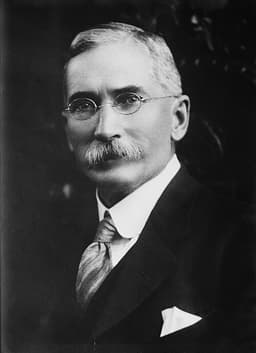
J. B. M. Hertzog
General · Modern
56.1Total
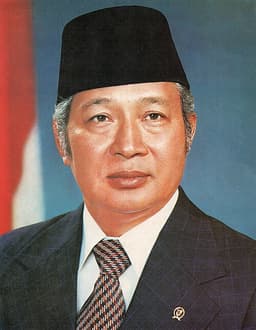
Suharto
General · Modern
57.2Total
Basic Information
Born
1866
1921
Died
1942
—
Era
Modern
Modern
Nationality
South Africa
Indonesia
Occupation
General
General
Civilization
Other
Eastern
Score Comparison
Military (10%)
25.0
20.0
Political (20%)
60.0
59.3
Influence (20%)
56.7
60.0
Legacy (20%)
50.0
52.0
Leadership (15%)
79.8
82.0
Strategy (15%)
60.0
60.0
TOTAL
56.1
57.2
J. B. M. Hertzog — Complete Timeline
1899 AD
Boer War GeneralWar◆ Major
Hertzog served as a Boer general in the Second Boer War, commanding forces in the Orange Free State. He participated in several battles and became a prominent Afrikaner military leader.
Second Boer WarGeneralMilitary
Impact: regional
1914 AD
Founded the National PartyPolitical Action
Hertzog broke away from the South African Party and founded the National Party, which championed Afrikaner nationalism and opposed British imperial influence. The party would later implement apartheid.
National PartyAfrikaner NationalismFounding
Impact: nationalconstructive
1924 AD
Prime Minister of South AfricaPolitical Action◆ Major
Hertzog became Prime Minister after his National Party won the general election in coalition with the Labour Party. His government implemented policies to protect white workers and promote Afrikaner interests, including the 'civilized labour' policy.
Prime MinisterAfrikaner RightsLabour Policy
Impact: national
1934 AD
Merged with Smuts to Form United PartyPolitical Action◆ Major
Hertzog merged his National Party with Jan Smuts' South African Party to form the United Party. The coalition aimed to address the economic crisis of the Great Depression and promote national unity, but it alienated hardline Afrikaner nationalists.
United PartyCoalitionNational Unity
Impact: nationalconstructive
1936 AD
Passed the Representation of Natives ActReform◆ Major
Hertzog's government passed the Representation of Natives Act, which removed Black voters from the common voters' roll in the Cape Province and allowed them to elect white representatives instead. This further entrenched racial segregation.
SegregationDisenfranchisementLegislation
Impact: nationaldestructive
1939 AD
Resigned Over Neutrality in WWIIPolitical Action◆ Major
Hertzog advocated for South African neutrality in World War II, but his cabinet voted to enter the war on the Allied side. He resigned as Prime Minister and was succeeded by Jan Smuts, splitting the United Party.
World War IINeutralityResignation
Impact: national
Suharto — Complete Timeline
1966 AD
Supersemar and Transfer of PowerPolitical Action
President Sukarno signed the Supersemar order, delegating authority to General Suharto to restore order after the 30 September Movement. Suharto used this to ban the Communist Party, purge leftists, and gradually assume executive power, effectively beginning his New Order regime.
SupersemarNew OrderIndonesia
Impact: nationaldestructive
1967 AD
New Order Economic DevelopmentReform◆ Major
Suharto implemented the New Order's economic policies, focusing on foreign investment, agricultural self-sufficiency, and industrialization. The government achieved high growth rates, reduced poverty, and stabilized the economy, but also fostered crony capitalism and corruption.
Economic GrowthDevelopmentIndonesia
Impact: nationalconstructive
1975 AD
Invasion of East TimorWar◆ Major
Suharto ordered the invasion of East Timor after Portugal withdrew. Indonesian forces occupied the territory, leading to a 24-year occupation marked by widespread human rights abuses, including massacres and forced displacement, resulting in an estimated 100,000-200,000 deaths.
East TimorOccupationHuman Rights
Impact: regionaldestructive
1998 AD
Asian Financial Crisis and Fall from PowerPolitical Action
The Asian Financial Crisis devastated Indonesia's economy, leading to massive unemployment and food shortages. Widespread protests and riots forced Suharto to resign in May 1998 after 31 years in power, ending his authoritarian rule and ushering in the Reformasi era.
Financial CrisisResignationReformasi
Impact: nationaltragic
Expert Analysis
J. B. M. Hertzog vs Suharto
# The Iron Grip and the Stubborn Boer: Suharto and Hertzog in the Shadow of Power
On a sweltering March morning in 1966, President Sukarno of Indonesia signed a single sheet of paper known as the Supersemar order. It was meant to be a temporary delegation of authority to restore order after a failed coup. Instead, it became the legal skeleton for thirty-one years of authoritarian rule. Half a world away and thirty years earlier, in 1936, another general-turned-politician, J. B. M. Hertzog, signed the Representation of Natives Act into law in Cape Town. That piece of paper did not give him power—it stripped it from millions. Both men were generals who became heads of state, both ruled for decades, and both left nations scarred by their ambitions. Yet their paths diverged in ways that reveal the deep currents of history, geography, and personal character.
Origins
Suharto was born into a world of Javanese peasant poverty in 1921, in a small village near Yogyakarta. His father was a minor irrigation official who disappeared early from his life; his mother struggled to raise him. The Dutch colonial system offered few paths for a Javanese boy, but the Japanese occupation of 1942 opened the military as a ladder. Suharto learned early that survival meant obedience, patience, and a careful reading of who held power. He was a man shaped by the shadows of empire, not by books or ideology.
Hertzog, by contrast, was born in 1866 on a farm in the Cape Colony, the son of a prosperous Afrikaner family. He studied law at the University of Amsterdam, returning to South Africa as a lawyer and a man of letters. Where Suharto learned to bow, Hertzog learned to argue. The Boer War of 1899, in which he served as a general in the Orange Free State, forged his identity. He fought the British Empire with rifle and rhetoric, and the experience left him with a burning commitment to Afrikaner independence—and a chilling indifference to the rights of anyone else.
Rise to Power
Suharto’s ascent was a masterclass in opportunism. The chaotic years after Indonesia’s independence left the military fragmented and politicized. When the 30 September Movement in 1965 attempted a coup, killing six generals, Suharto—then commander of the Army’s Strategic Reserve—moved with cold precision. He crushed the rebellion, then systematically sidelined President Sukarno. The Supersemar order of 1966 was his legal key. He did not seize power in a dramatic coup; he absorbed it, like water seeping through cracks. His political score of 68.8 reflects this patient, tactical cunning.
Hertzog’s rise was more straightforward and more ideological. He founded the National Party in 1914 after breaking with the South African Party, appealing directly to Afrikaner resentment against British dominance and black labor competition. He won the prime ministership in 1924, not through a palace intrigue, but at the ballot box. His political score of 73.0 is slightly higher than Suharto’s, and it is deserved: Hertzog played the democratic game, even as he undermined its principles.
Leadership & Governance
Suharto’s New Order, launched in 1967, was a paradox. He crushed political dissent, imprisoned hundreds of thousands without trial, and invaded East Timor in 1975, an act that would lead to decades of occupation and an estimated 200,000 deaths. Yet his economic policies—opening Indonesia to foreign investment, achieving rice self-sufficiency, building roads and schools—lifted millions from poverty. His leadership score of 80.7 reflects this brutal effectiveness. He governed like a Javanese king: invisible, inscrutable, and unquestioned.
Hertzog governed as a lawyer and a nationalist. He passed laws to protect white workers, subsidized Afrikaner farmers, and broke British economic dominance. But his greatest tragedy was the 1936 Representation of Natives Act, which removed black voters from the common roll in the Cape Province. It was a legal masterpiece of exclusion, a precursor to apartheid. His military score of 48.1 and strategy score of 55.9 are lower than Suharto’s, but his political maneuvering was sophisticated. He was not a brute; he was a builder of cages.
Triumph & Tragedy
Suharto’s greatest triumph was economic: by the early 1990s, Indonesia was a darling of international finance, with growth rates exceeding 7% annually. His tragedy came in 1998, when the Asian Financial Crisis shattered the economy. Unemployment soared, food prices exploded, and the streets filled with students. In May 1998, after 31 years, he resigned in disgrace. The man who had crushed every enemy was brought down by rice prices.
Hertzog’s triumph was the unification of white South Africa. In 1934, he merged his National Party with Jan Smuts’ South African Party to form the United Party, a grand coalition that promised stability. His tragedy came in 1939, when he insisted on neutrality in World War II. His cabinet voted to join the Allies; Hertzog resigned, his career ended by a moral question he could not answer. He died in 1942, a bitter man watching a war he had tried to avoid.
Character & Destiny
Suharto was opaque, patient, and utterly pragmatic. He had no grand ideology, only a hunger for control. His strategy score of 58.2 is surprisingly low for a man who ruled for three decades, but it reveals a truth: he was not a strategic genius, but a master of incremental power. He survived by never committing to anything until he had to.
Hertzog was stubborn, principled, and rigid. He believed in Afrikaner rights with religious fervor, but that same rigidity blinded him to the moral catastrophe of racial exclusion. He could merge with Smuts for political gain, but he could not bend on neutrality. His character was his destiny: a man who fought for his people by building walls around them.
Legacy
Suharto’s legacy is a wound that has not healed. Indonesia’s economy grew under him, but its democracy was hollowed out. The invasion of East Timor remains a crime against humanity. Today, his name is spoken with caution—some remember the rice, others the bodies. His total score of 67.7 places him just below Hertzog’s 68.1, but numbers cannot capture the weight of 31 years.
Hertzog’s legacy is the architecture of apartheid. He did not invent racial segregation, but he gave it legal form. His statue in Bloemfontein was defaced in 2020; his name is being erased from streets and schools. He is remembered as a champion of Afrikanerdom and a father of injustice.
Conclusion
Two generals, two nations, two centuries of pain. Suharto and Hertzog both believed that power was a tool to be wielded without mercy. One ruled through silence, the other through law. One fell to economics, the other to conscience. In the end, they remind us that the difference between a tyrant and a democrat is not always a matter of intention—it is a matter of who is allowed to speak, and who is forced to listen.
Rankings
🥇
SuhartoLeader
Mil: 20.0Pol: 59.3Inf: 60.0
57.2
🥈
J. B. M. Hertzog
Mil: 25.0Pol: 60.0Inf: 56.7
56.1
+1.1 behind
How This Comparison Works
Algorithm
Each figure is scored on 6 dimensions (0—100 scale) based on structured historical data: Military (10%), Political (20%), Influence (20%), Legacy (20%), Leadership (15%), Strategy (15%). The weighted total produces the final ranking.
Data Sources
Scores are computed from structured sub-indicators in the database. Scale factors adjust for era (Ancient ×0.85, Modern ×1.0) and civilization size (Eastern ×1.05, Other ×0.80) to account for differences in population and military scale.
Maximum 3 Figures
Comparisons are limited to 2—3 figures to ensure readability and statistical meaningfulness.
Error Margins
±5 points per dimension — Sub-scores are derived from historical records with inherent uncertainty. Two figures within 5 points on a dimension should be considered roughly equivalent in that area.
Total Score Accuracy
±3 points overall — The weighted combination of 6 dimensions produces a total score with approximately ±3 points of uncertainty. Differences of less than 3 points are not statistically significant— the figures are effectively tied.
Known Limitations
- Historical records are incomplete and uneven across civilizations
- Figures from oral-tradition societies may be underrepresented
- Occupation labels can misclassify multi-role figures
- Scores measure capability and impact, not moral character
- Quantitative scoring is a comparison tool, not absolute truth
Capability Radar
Military (10%) — Battles & Warfare
Battles
45
40
Win Rate
40
45
Expansion
20
30
Political (20%) — Governance & Reform
Reform
60
55
Diplomacy
55
60
Economy
50
65
Influence (20%) — Cultural & Global Reach
Cultural
50
40
Global
45
50
Legacy (20%) — Historical Impact
Historical
55
55
Longevity
40
45
Leadership (15%) — Power & Stability
Tenure
65
85
Stability
45
50
Strategy (15%) — Tactics & Innovation
Strategy
50
40
Tactics
45
35
Reform
30
50
Similar Comparisons
Comments & Discussion
No comments yet. Be the first to share your thoughts!