Loading...
Sitiveni Rabuka vs Yelu Abaoji
Yelu Abaoji leads by 11.0 pts · 2 figures compared
…
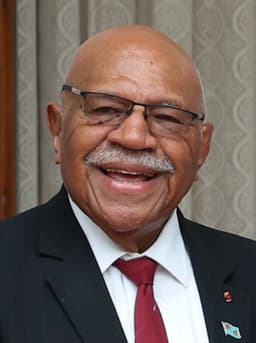
Sitiveni Rabuka
General · Modern
51.7Total
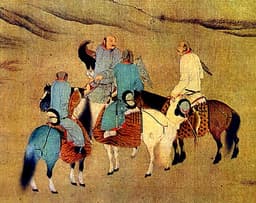
Yelu Abaoji
Emperor · Medieval
62.7Total
Basic Information
Born
1948
872
Died
—
926
Era
Modern
Medieval
Nationality
Fiji
China
Occupation
General
Emperor
Civilization
Other
Eastern
Score Comparison
Military (10%)
10.2
77.2
Political (20%)
60.0
59.6
Influence (20%)
53.3
68.0
Legacy (20%)
46.7
40.0
Leadership (15%)
85.0
80.3
Strategy (15%)
39.6
69.6
TOTAL
51.7
62.7
Sitiveni Rabuka — Complete Timeline
1987 AD
1987 Fijian Coup d'étatPolitical Action
Rabuka, as a colonel in the Fijian military, led a coup overthrowing the elected government of Timoci Bavadra. The coup was motivated by ethnic Fijian opposition to Indo-Fijian political influence. Rabuka declared Fiji a republic.
CoupMilitary InterventionEthnic Tension
Impact: nationaldestructive
1992 AD
1992 Election as Prime MinisterPolitical Action◆ Major
Rabuka transitioned from military leader to civilian politician, winning the 1992 general election as leader of the Fijian Political Party. He became Prime Minister, serving until 1999.
ElectionCivilian GovernmentPolitical Transition
Impact: national
1997 AD
1997 Constitution ReformReform◆ Major
Rabuka's government oversaw the adoption of a new constitution that removed ethnic-based voting and provided for a multi-ethnic government. The constitution aimed to reduce ethnic tensions and promote national unity.
ConstitutionReformEthnic Reconciliation
Impact: nationalconstructive
1999 AD
1999 General Election DefeatPolitical Action◆ Major
Rabuka's government was defeated in the general election by the Labour Party led by Mahendra Chaudhry. Rabuka stepped down as Prime Minister, marking the end of his first period in power.
Election DefeatGovernment ChangeChaudhry
Impact: national
2022 AD
2022 Return as Prime MinisterPolitical Action◆ Major
Rabuka led the People's Alliance to victory in the 2022 general election, forming a coalition government. He became Prime Minister again, 23 years after his previous tenure, promising democratic reforms.
ElectionReturn to PowerCoalition Government
Impact: national
Yelu Abaoji — Complete Timeline
907 AD
Unified Khitan tribesPolitical Action◆ Major
Yelu Abaoji was elected khagan of the Khitan tribes, unifying them under his leadership. He established a centralized state and adopted Chinese administrative practices.
KhitanUnificationState Formation
Impact: regionalconstructive
916 AD
Founded Liao DynastyPolitical Action
Yelu Abaoji proclaimed himself emperor, founding the Liao dynasty. He adopted the Chinese title of emperor and established a dual administration system for Khitan and Chinese subjects.
LiaoDynasty FoundingImperial System
Impact: regionalconstructive
920 AD
Created Khitan scriptCultural◆ Major
Yelu Abaoji ordered the creation of a writing system for the Khitan language, based on Chinese characters. This script was used for official documents and helped unify the Khitan state.
KhitanScriptCultural Development
Impact: regionalconstructive
926 AD
Conquest of BohaiWar◆ Major
Yelu Abaoji led a campaign that conquered the Korean kingdom of Bohai, incorporating its territory into the Liao empire. This expanded Liao's influence into Manchuria and Korea.
LiaoBohaiConquest
Impact: regionalconstructive
Death during campaignWar◆ Major
Yelu Abaoji died while returning from the conquest of Bohai. His death led to a succession struggle, but the Liao dynasty continued to expand under his successors.
LiaoDeathSuccession
Impact: regionaltragic
Expert Analysis
Yelu Abaoji vs Sitiveni Rabuka
### The Khagan and the Colonel
In the winter of 1987, a Fijian colonel in his late thirties stormed the parliament building in Suva, overthrowing a democratically elected government. Eleven hundred years earlier and half a world away, a Khitan chieftain in his fifties stood on a windswept plateau in Inner Mongolia, accepting the allegiance of nine fractious tribes, thereby birthing an empire that would outlast his own bones by two centuries. Both men were warriors who seized power; both would end their lives as heads of state. Yet the chasm between them—between the founding of the Liao dynasty and the troubled birth of a modern Pacific republic—is not merely a matter of time. It is a story of what happens when a leader builds from clay versus one who builds from sand.
### Origins
Yelu Abaoji was born in 872 into a world of tribal flux. The Khitan people, nomadic herders on the Mongolian steppe, lived in the shadow of the collapsing Tang dynasty. Their society was organized around clans, with a khagan elected by a council of chieftains. Abaoji’s rise was not preordained; his father was a minor tribal leader, and his early years were spent learning the brutal calculus of steppe politics—alliances, betrayals, and the constant threat of starvation or invasion. The era demanded a leader who could think in centuries, not seasons.
Sitiveni Rabuka, born in 1948, came of age in a different kind of frontier: a British colony where indigenous Fijians, Indo-Fijian descendants of indentured laborers, and European settlers jostled for power under a crown that was already loosening its grip. Rabuka was a commoner by birth, the son of a schoolteacher, who found his path through the military—a classic colonial ladder. He rose through the ranks of the Fijian army, serving as a peacekeeper in Lebanon and Sinai. The world he inherited was one of constitutions, coups, and cold war geopolitics. Where Abaoji faced a blank map, Rabuka faced a crowded, contested one.
### Rise to Power
Abaoji’s ascent was a slow, patient encirclement. By 907, after years of maneuvering, he was elected khagan of all Khitan tribes. But election was only the beginning. He spent the next decade centralizing power, crushing rivals, and adopting Chinese administrative techniques. In 916, he proclaimed himself emperor, founding the Liao dynasty. The turning point was not a single battle but a sustained campaign of institutional creation: he built a dual-administration system, one side for nomadic Khitans, another for sedentary Chinese subjects. He understood that to rule an empire, you must first imagine it.
Rabuka’s rise was a sudden, violent rupture. On May 14, 1987, as a colonel, he led a coup against the newly elected government of Timoci Bavadra, an ethnic Fijian and a commoner, whose coalition included Indo-Fijian members. Rabuka’s stated motive was to protect indigenous Fijian land rights and political dominance. The coup shocked the world and shattered Fiji’s image as a stable democracy. Within months, Rabuka staged a second coup to consolidate power. He was not building an empire; he was trying to preserve a racial hierarchy in a shrinking world.
### Leadership & Governance
As a ruler, Abaoji was a master of synthesis. His political score of 90.0 reflects a man who understood that power must be written down. In 920, he commissioned the creation of a Khitan script—a writing system based on Chinese characters but adapted to the Khitan language. This was not mere vanity; it was statecraft. A people with a script could record laws, tax subjects, and transmit orders across vast distances. He also conquered the Korean kingdom of Bohai in 926, absorbing its agricultural wealth and bureaucratic expertise. His military score of 73.3 is solid but not spectacular; he was a general who preferred to annex rather than annihilate.
Rabuka’s leadership is a study in contradiction. His military score of 19.9 indicates a man who never fought a war, only a coup. Yet his political score of 72.0 shows an ability to adapt. After his first coup, he faced international isolation and economic sanctions. In 1992, he won a democratic election as prime minister, trading his uniform for a suit. His greatest achievement was the 1997 constitution reform, which removed ethnic-based voting and created a multi-racial parliamentary system. It was a remarkable act of political repentance—a recognition that a coup leader could become a democrat. But his strategy score of 44.6 suggests he was often reactive, not visionary. He governed by compromise, not design.
### Triumph & Tragedy
Abaoji’s greatest triumph was the conquest of Bohai, a sophisticated kingdom with a thousand-year history. He absorbed its territory and its people, doubling the Liao’s agricultural base. But tragedy struck immediately: he died in 926 while returning from the campaign. His death triggered a succession crisis, but the dynasty he founded survived for another two centuries. His personal tragedy was that he did not live to see his creation mature.
Rabuka’s triumph was the 1997 constitution, which won him praise from the international community and a Nobel Peace Prize nomination. His tragedy was that it did not last. In 1999, his government was defeated in a general election by Mahendra Chaudhry, the first Indo-Fijian prime minister. Rabuka stepped down peacefully—a rare act for a former coup leader. Yet the ethnic tensions he had inflamed would erupt again in 2000, when another coup ousted Chaudhry. Rabuka spent years in the political wilderness, watching his legacy unravel. In 2022, at age 74, he staged a remarkable comeback, returning as prime minister in a coalition government. It was a second act that neither erased nor redeemed his first.
### Character & Destiny
Abaoji was a builder. He saw the steppe not as a battleground but as a foundation. His character was patient, calculating, and ruthless when necessary. He understood that a leader must create institutions that outlive his own ambition. Rabuka was a breaker who became a fixer. His character was impulsive, proud, and ultimately capable of self-reflection. He began as a man who used a gun to solve a problem and ended as a man who used a ballot. Their destinies were shaped by their eras: Abaoji could forge a new civilization from the wreckage of an old one; Rabuka could only try to repair a broken democracy in a world that no longer tolerated empires.
### Legacy
Abaoji is remembered as the founder of the Liao dynasty, one of the great conquest dynasties of Chinese history. His legacy score of 70.8 is modest by imperial standards, but his influence on Khitan identity and statecraft was profound. The script he created, the dual administration he pioneered, and the territory he conquered became the foundation for a dynasty that ruled northern China for two centuries. He is a name known to historians, not to the public—a quiet architect of a lost world.
Rabuka’s legacy is more contested. His influence score of 70.3 and leadership score of 77.4 reflect a man who shaped a nation’s trajectory, for better and worse. He is remembered as a coup leader who later championed democracy, a contradiction that Fijians still wrestle with. In 2023, he sits as prime minister, a figure of reconciliation for some, a symbol of instability for others. His story is unfinished.
### Conclusion
Standing at the edge of history, we see two men who reached for power with different hands. Abaoji grasped the future and built an empire that lasted; Rabuka seized the present and spent the rest of his life trying to put it back together. One created a script; the other rewrote a constitution. One died on a campaign he had won; the other lives to see his own legacy questioned. The difference is not in their ambition—both wanted to rule—but in the nature of the world they ruled. Abaoji’s world was malleable, a block of marble waiting for a sculptor. Rabuka’s world was already carved, crowded with histories and grievances. In the end, the Khagan built a dynasty. The colonel built a bridge. Both, in their own ways, crossed a river no one else dared to cross.
Rankings
🥇
Yelu AbaojiLeader
Mil: 77.2Pol: 59.6Inf: 68.0
62.7
🥈
Sitiveni Rabuka
Mil: 10.2Pol: 60.0Inf: 53.3
51.7
+11.0 behind
How This Comparison Works
Algorithm
Each figure is scored on 6 dimensions (0—100 scale) based on structured historical data: Military (10%), Political (20%), Influence (20%), Legacy (20%), Leadership (15%), Strategy (15%). The weighted total produces the final ranking.
Data Sources
Scores are computed from structured sub-indicators in the database. Scale factors adjust for era (Ancient ×0.85, Modern ×1.0) and civilization size (Eastern ×1.05, Other ×0.80) to account for differences in population and military scale.
Maximum 3 Figures
Comparisons are limited to 2—3 figures to ensure readability and statistical meaningfulness.
Error Margins
±5 points per dimension — Sub-scores are derived from historical records with inherent uncertainty. Two figures within 5 points on a dimension should be considered roughly equivalent in that area.
Total Score Accuracy
±3 points overall — The weighted combination of 6 dimensions produces a total score with approximately ±3 points of uncertainty. Differences of less than 3 points are not statistically significant— the figures are effectively tied.
Known Limitations
- Historical records are incomplete and uneven across civilizations
- Figures from oral-tradition societies may be underrepresented
- Occupation labels can misclassify multi-role figures
- Scores measure capability and impact, not moral character
- Quantitative scoring is a comparison tool, not absolute truth
Capability Radar
Military (10%) — Battles & Warfare
Battles
5
75
Win Rate
5
80
Expansion
5
82
Political (20%) — Governance & Reform
Reform
50
88
Diplomacy
45
75
Economy
40
70
Influence (20%) — Cultural & Global Reach
Cultural
30
60
Global
20
55
Legacy (20%) — Historical Impact
Historical
40
70
Longevity
30
65
Leadership (15%) — Power & Stability
Tenure
55
72
Stability
35
65
Strategy (15%) — Tactics & Innovation
Strategy
10
78
Tactics
10
70
Reform
5
85
Similar Comparisons
Comments & Discussion
太平洋浪尖客6/16/2026
拉布卡不是圣人,但他在2018年为自己1967年那场政变道歉了。阿保机活到54岁,史书里没一句道歉,只有“平诸弟之乱”的功绩。权力交接最见品性:拉布卡交过总理权杖,阿保机死前儿子们就已经在抄家伙了。谦卑,比青铜面具稀罕多了。
Yelü Chastiser6/16/2026
You revisionists romanticize Abaoji as a “unifier,” but he was a cold-blooded tribal eliminator who murdered rivals at feasts like a Khitan Vito Corleone. The Liao dynasty didn’t rise from statesmanship but from steppe-era mafia tactics. Rabuka at least overthrew a government for stated ethnic grievances; Abaoji slaughtered clans for personal power. Don’t conflate empire-building with nation-building—one builds institutions, the other builds terror.|
草原铁蹄评论员6/16/2026
阿保机再牛也只是个部落军阀,靠屠杀和联姻拼凑的草原帝国,两百年就塌了。拉布卡搞政变再乱,好歹1987年政变后没靠屠城维稳,现在还当了民选总理。比什么比?一个靠血统,一个靠民意,层析根本不对等。|
ClassicsStatCounter6/16/2026
You’re comparing a steppe warlord who couldn’t invent a writing system that lasted (Khitan scripts died with the empire) with a modern colonel who proved cohabitation between Fijian and Indo-Fijian parties IS possible—if messy. Abaoji left a graveyard; Rabuka left a working constitution. Don’t honor the monument-maker and ignore the mediator.|
枫林史书记6/16/2026
阿保机最大的遗产是契丹大字,结果换两朝就失传了,现在还得靠猜。拉布卡至少把斐济原住民的权利写进了宪法,虽然1997年那版争议不断,但它还能被修改。要我说,能流变的制度比固化的文字更有生命。别拿千年尺子量五十年事,量不准的。|
EliteBiasBreaker6/16/2026
Yelü Abaoji’s “unification” of nine tribes was just one dude absorbing others via arranged marriages and decapitation. Compare that to Rabuka, who literally put his body between armed soldiers and civilians during the 2000 coup attempt. One built a dynasty by killing; the other stopped a coup by talking. We need more colonels who de-escalate, not more khagans who colonize.|