Loading...
J. B. M. Hertzog vs Sitiveni Rabuka
J. B. M. Hertzog leads by 4.4 pts · 2 figures compared
…
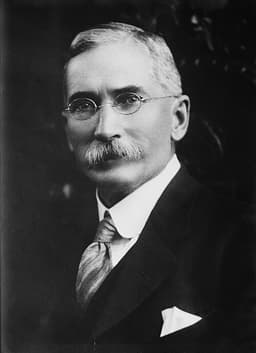
J. B. M. Hertzog
General · Modern
56.1Total
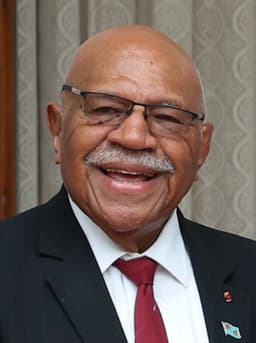
Sitiveni Rabuka
General · Modern
51.7Total
Basic Information
Born
1866
1948
Died
1942
—
Era
Modern
Modern
Nationality
South Africa
Fiji
Occupation
General
General
Civilization
Other
Other
Score Comparison
Military (10%)
25.0
10.2
Political (20%)
60.0
60.0
Influence (20%)
56.7
53.3
Legacy (20%)
50.0
46.7
Leadership (15%)
79.8
85.0
Strategy (15%)
60.0
39.6
TOTAL
56.1
51.7
J. B. M. Hertzog — Complete Timeline
1899 AD
Boer War GeneralWar◆ Major
Hertzog served as a Boer general in the Second Boer War, commanding forces in the Orange Free State. He participated in several battles and became a prominent Afrikaner military leader.
Second Boer WarGeneralMilitary
Impact: regional
1914 AD
Founded the National PartyPolitical Action
Hertzog broke away from the South African Party and founded the National Party, which championed Afrikaner nationalism and opposed British imperial influence. The party would later implement apartheid.
National PartyAfrikaner NationalismFounding
Impact: nationalconstructive
1924 AD
Prime Minister of South AfricaPolitical Action◆ Major
Hertzog became Prime Minister after his National Party won the general election in coalition with the Labour Party. His government implemented policies to protect white workers and promote Afrikaner interests, including the 'civilized labour' policy.
Prime MinisterAfrikaner RightsLabour Policy
Impact: national
1934 AD
Merged with Smuts to Form United PartyPolitical Action◆ Major
Hertzog merged his National Party with Jan Smuts' South African Party to form the United Party. The coalition aimed to address the economic crisis of the Great Depression and promote national unity, but it alienated hardline Afrikaner nationalists.
United PartyCoalitionNational Unity
Impact: nationalconstructive
1936 AD
Passed the Representation of Natives ActReform◆ Major
Hertzog's government passed the Representation of Natives Act, which removed Black voters from the common voters' roll in the Cape Province and allowed them to elect white representatives instead. This further entrenched racial segregation.
SegregationDisenfranchisementLegislation
Impact: nationaldestructive
1939 AD
Resigned Over Neutrality in WWIIPolitical Action◆ Major
Hertzog advocated for South African neutrality in World War II, but his cabinet voted to enter the war on the Allied side. He resigned as Prime Minister and was succeeded by Jan Smuts, splitting the United Party.
World War IINeutralityResignation
Impact: national
Sitiveni Rabuka — Complete Timeline
1987 AD
1987 Fijian Coup d'étatPolitical Action
Rabuka, as a colonel in the Fijian military, led a coup overthrowing the elected government of Timoci Bavadra. The coup was motivated by ethnic Fijian opposition to Indo-Fijian political influence. Rabuka declared Fiji a republic.
CoupMilitary InterventionEthnic Tension
Impact: nationaldestructive
1992 AD
1992 Election as Prime MinisterPolitical Action◆ Major
Rabuka transitioned from military leader to civilian politician, winning the 1992 general election as leader of the Fijian Political Party. He became Prime Minister, serving until 1999.
ElectionCivilian GovernmentPolitical Transition
Impact: national
1997 AD
1997 Constitution ReformReform◆ Major
Rabuka's government oversaw the adoption of a new constitution that removed ethnic-based voting and provided for a multi-ethnic government. The constitution aimed to reduce ethnic tensions and promote national unity.
ConstitutionReformEthnic Reconciliation
Impact: nationalconstructive
1999 AD
1999 General Election DefeatPolitical Action◆ Major
Rabuka's government was defeated in the general election by the Labour Party led by Mahendra Chaudhry. Rabuka stepped down as Prime Minister, marking the end of his first period in power.
Election DefeatGovernment ChangeChaudhry
Impact: national
2022 AD
2022 Return as Prime MinisterPolitical Action◆ Major
Rabuka led the People's Alliance to victory in the 2022 general election, forming a coalition government. He became Prime Minister again, 23 years after his previous tenure, promising democratic reforms.
ElectionReturn to PowerCoalition Government
Impact: national
Expert Analysis
Sitiveni Rabuka vs J. B. M. Hertzog
### The General Who Came Home
In 1987, a Fijian colonel in military fatigues strode into parliament and told the elected government they were finished. In 1939, a South African prime minister in a business suit walked out of his own cabinet meeting, never to return. Both men were generals who became national leaders. Both championed the rights of their own people against perceived threats. Yet one ended his career as a democratic elder statesman, while the other left a legacy stained by racial division. The difference lay not in their uniforms, but in how they chose to wear them.
### Origins
Sitiveni Rabuka was born in 1948 on the island of Vanua Levu, into a Methodist family of modest means. Fiji was then a British colony, a patchwork of indigenous Fijians and Indo-Fijian descendants of indentured laborers. Rabuka grew up in a world where ethnic identity was the defining political fact—and where indigenous Fijians, though numerically dominant, felt increasingly anxious about Indo-Fijian economic power.
James Barry Munnik Hertzog was born in 1866 near Wellington, South Africa, to a Boer farming family. He came of age during the aftermath of the Great Trek, when Afrikaners—descendants of Dutch settlers—nursed deep grievances against British imperialism. He studied law in Amsterdam and returned to the Orange Free State, where he became a judge. The Boer War was coming.
Both men were shaped by the raw wound of colonialism, but in different ways. For Hertzog, the enemy was the British Empire. For Rabuka, the enemy was more intimate: his own countrymen, the Indo-Fijians, who had arrived under British rule and now seemed to threaten indigenous dominance.
### Rise to Power
Hertzog’s path ran through gunfire. In the Second Boer War of 1899, he commanded Boer forces in the Orange Free State with skill and tenacity. When the war ended in British victory, he turned to politics. In 1914, he broke from the South African Party to found the National Party, a vehicle for Afrikaner nationalism. His military record gave him credibility; his political instincts gave him power.
Rabuka’s rise was faster and more violent. In 1987, as a 39-year-old colonel, he led a coup against the newly elected government of Timoci Bavadra, which was dominated by Indo-Fijians. Rabuka claimed he was protecting indigenous Fijian rights. The coup succeeded in hours. But unlike many coup leaders, Rabuka did not cling to power. He handed authority to a civilian government, then ran for office himself.
The contrast is telling. Hertzog built a political party over a decade before winning power. Rabuka seized power first, then learned politics.
### Leadership & Governance
Hertzog became Prime Minister of South Africa in 1924, leading a coalition with the Labour Party. He governed for fifteen years, and his achievements were substantial: he entrenched Afrikaans as an official language, protected white workers with labor laws, and negotiated greater autonomy from Britain. In 1934, he merged his National Party with Jan Smuts’ South African Party to form the United Party, a grand coalition meant to heal old wounds.
But his legacy has a shadow. In 1936, his government passed the Representation of Natives Act, which removed Black South Africans from the common voters’ roll. This was a foundational step toward apartheid. Hertzog was not the architect of full apartheid—that came later—but he built the scaffolding.
Rabuka’s first term as Prime Minister, from 1992 to 1999, was marked by a remarkable reversal. The man who had led a coup to protect ethnic Fijian supremacy oversaw the 1997 Constitution Reform, which removed ethnic-based voting and created a multiracial electoral system. It was an act of political courage. Yet his government was defeated in 1999, and he stepped down gracefully.
Then, in 2022, at age 74, Rabuka returned. He led the People’s Alliance to victory and became Prime Minister again, this time as a democratic elder statesman. His journey from coup leader to constitutional democrat is almost unprecedented.
### Triumph & Tragedy
Hertzog’s greatest moment was probably the 1934 merger with Smuts, which seemed to unite white South Africa. His greatest tragedy was the 1936 Natives Act, which poisoned the future. And his final act—resigning in 1939 when his cabinet voted to enter World War II against his wishes—was both principled and futile. He wanted neutrality; his country chose the Allies. He died in 1942, watching the war from the sidelines.
Rabuka’s triumph was the 1997 constitution, which proved that a coup leader could become a reformer. His tragedy was the 1987 coup itself—the violence that first brought him to power and the ethnic division it deepened. He spent the rest of his career trying to undo what he had done.
### Character & Destiny
Hertzog was stubborn, principled, and deeply Afrikaner. He believed in racial separation not as a temporary measure but as a natural order. His personality drove him to break with allies and hold firm to his convictions, even when those convictions led him to the wrong side of history. He was a man of his time, but his time was narrowing.
Rabuka was more pragmatic. He admitted mistakes. He apologized for the coup. He learned. His personality allowed him to change—and that change made his second premiership possible. He was a man who grew beyond his time.
### Legacy
Hertzog is remembered as a founder of Afrikaner nationalism and a precursor to apartheid. His statues have been removed, his name contested. His military score of 48.1 reflects a competent but not brilliant general; his political score of 73.0 shows a skilled but flawed leader. His legacy score of 66.8 places him in the middle—neither vilified nor celebrated.
Rabuka’s legacy is more complex. His total score of 61.0 is lower than Hertzog’s 68.1, but his trajectory is more hopeful. He began as a coup leader and ended as a democrat. His influence score of 70.3 and leadership score of 77.4 reflect a figure who shaped Fiji’s destiny, for better and for worse.
### Conclusion
Hertzog and Rabuka were both generals who became prime ministers, both champions of their ethnic groups, both products of colonial wounds. But one hardened his convictions into a system of exclusion, while the other softened his into a constitution of inclusion. The difference was not in their origins but in their capacity for change. Hertzog could not imagine a South Africa beyond racial separation. Rabuka learned to imagine a Fiji beyond ethnic division. In the end, the general who surrendered his old beliefs became the greater statesman.
Rankings
🥇
J. B. M. HertzogLeader
Mil: 25.0Pol: 60.0Inf: 56.7
56.1
🥈
Sitiveni Rabuka
Mil: 10.2Pol: 60.0Inf: 53.3
51.7
+4.4 behind
How This Comparison Works
Algorithm
Each figure is scored on 6 dimensions (0—100 scale) based on structured historical data: Military (10%), Political (20%), Influence (20%), Legacy (20%), Leadership (15%), Strategy (15%). The weighted total produces the final ranking.
Data Sources
Scores are computed from structured sub-indicators in the database. Scale factors adjust for era (Ancient ×0.85, Modern ×1.0) and civilization size (Eastern ×1.05, Other ×0.80) to account for differences in population and military scale.
Maximum 3 Figures
Comparisons are limited to 2—3 figures to ensure readability and statistical meaningfulness.
Error Margins
±5 points per dimension — Sub-scores are derived from historical records with inherent uncertainty. Two figures within 5 points on a dimension should be considered roughly equivalent in that area.
Total Score Accuracy
±3 points overall — The weighted combination of 6 dimensions produces a total score with approximately ±3 points of uncertainty. Differences of less than 3 points are not statistically significant— the figures are effectively tied.
Known Limitations
- Historical records are incomplete and uneven across civilizations
- Figures from oral-tradition societies may be underrepresented
- Occupation labels can misclassify multi-role figures
- Scores measure capability and impact, not moral character
- Quantitative scoring is a comparison tool, not absolute truth
Capability Radar
Military (10%) — Battles & Warfare
Battles
45
5
Win Rate
40
5
Expansion
20
5
Political (20%) — Governance & Reform
Reform
60
50
Diplomacy
55
45
Economy
50
40
Influence (20%) — Cultural & Global Reach
Cultural
50
30
Global
45
20
Legacy (20%) — Historical Impact
Historical
55
40
Longevity
40
30
Leadership (15%) — Power & Stability
Tenure
65
55
Stability
45
35
Strategy (15%) — Tactics & Innovation
Strategy
50
10
Tactics
45
10
Reform
30
5
Similar Comparisons
Comments & Discussion
GENERAL TURNABOUT6/16/2026
Rabuka’s arc from coup plotter to democratic mediator is praiseworthy but over-romanticized. Compare their legacies: Hertzog’s 1936 Representation of Natives Act disenfranchised Black South Africans permanently, while Rabuka’s 1997 constitution actually enfranchised Indo-Fijians. Yet Rabuka’s 1987 coup directly caused the 2000 coup. These men aren’t moral opposites—they’re both authoritarian pragmatists who bent democracy to ethnic fears. Let’s not canonize Rabuka just because he apologized late
种族刻度师6/16/2026
Hertzog是阿非利卡人政治的灵魂人物,但他那种“白人优先”的种族工程学,与Rabuka的斐济原住民特权推动有惊人的结构相似性。1924年Hertzog推行《文明劳工政策》系统性地用白人取代黑人矿工,而Rabuka的1987年政变直接否定了Indo-Fijian的选举胜利。区别不是道德——是肤色。Hertzog的歧视是法律化的种族等级,Rabuka的是族群防御。两人都选择了恐惧而非自由,只是目标群体换了个标签。
THE COLONIAL MIRROR6/16/2026
Here’s what revisionists miss: Hertzog fought British imperialism, Rabuka fought Indian economic dominance. Both claimed victimhood while disenfranchising minorities. Hertzog’s 1914 Afrikaner rebellion against the Crown parallels Rabuka’s 2000 civilian coup support—both framed ethnic survival as legitimate rebellion. The real tragedy? They didn’t learn from the other’s mistakes. Rabuka could have studied Hertzog’s apartheid descent and chosen differently. Instead, Fiji got its own slow-motion ra
文化考古员6/16/2026
比较这两人要穿透表面:Rabuka成长于英殖民末期,Hertzog经历布尔战争后的英帝国压制。两人都精通殖民者的政治语言——Hertzog在阿姆斯特丹学法律,Rabuka在桑赫斯特皇家军事学院受训。他们的“本土保护”叙事完全是殖民框架的翻版。Hertzog的《土著土地法》效仿了英帝国的保留地制度,Rabuka的1990年宪法借鉴了南非的族群分区逻辑。讽刺的是,他们用殖民者的工具反抗殖民遗产。