Loading...
Huang Xing vs Sitiveni Rabuka
Huang Xing leads by 5.8 pts · 2 figures compared
…
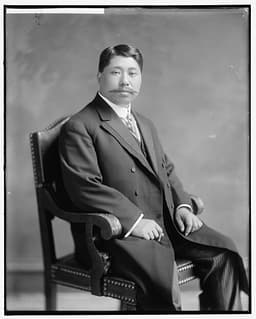
Huang Xing
General · Modern
57.5Total
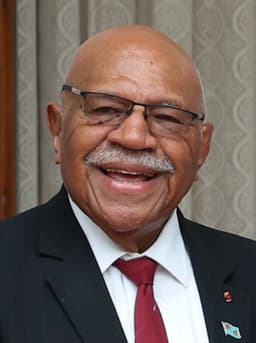
Sitiveni Rabuka
General · Modern
51.7Total
Basic Information
Born
1874
1948
Died
1916
—
Era
Modern
Modern
Nationality
China
Fiji
Occupation
General
General
Civilization
Eastern
Other
Score Comparison
Military (10%)
46.7
10.2
Political (20%)
53.8
60.0
Influence (20%)
62.0
53.3
Legacy (20%)
56.0
46.7
Leadership (15%)
62.0
85.0
Strategy (15%)
60.0
39.6
TOTAL
57.5
51.7
Huang Xing — Complete Timeline
1905 AD
Co-founded the TongmenghuiPolitical Action◆ Major
Huang Xing co-founded the Tongmenghui (Revolutionary Alliance) in Tokyo with Sun Yat-sen. He became its military leader, organizing armed uprisings against the Qing dynasty.
TongmenghuiRevolutionMilitary
Impact: nationalconstructive
1911 AD
Led the Wuchang UprisingWar
Huang Xing led the Wuchang Uprising, which sparked the Xinhai Revolution. He commanded revolutionary forces against Qing troops, securing initial victories that led to the dynasty's collapse.
Xinhai RevolutionUprisingMilitary
Impact: nationalconstructive
1912 AD
Served as Minister of War in the RepublicPolitical Action◆ Major
Huang Xing served as Minister of War in the provisional government of the Republic of China. He worked to organize a national army and defend the republic against counter-revolutionary forces.
GovernmentMilitaryRepublic
Impact: nationalconstructive
1913 AD
Led the Second Revolution Against Yuan ShikaiWar◆ Major
Huang Xing led the Second Revolution, an armed uprising against President Yuan Shikai's authoritarian rule. The rebellion failed due to lack of coordination and military inferiority, forcing Huang into exile.
Second RevolutionYuan ShikaiExile
Impact: nationaltragic
1916 AD
Died in Exile in ShanghaiPolitical Action
Huang Xing died in Shanghai after returning from exile in Japan and the United States. His death marked the loss of a key military leader of the Chinese revolution, though his legacy endured.
DeathExileRevolution
Impact: nationaltragic
Sitiveni Rabuka — Complete Timeline
1987 AD
1987 Fijian Coup d'étatPolitical Action
Rabuka, as a colonel in the Fijian military, led a coup overthrowing the elected government of Timoci Bavadra. The coup was motivated by ethnic Fijian opposition to Indo-Fijian political influence. Rabuka declared Fiji a republic.
CoupMilitary InterventionEthnic Tension
Impact: nationaldestructive
1992 AD
1992 Election as Prime MinisterPolitical Action◆ Major
Rabuka transitioned from military leader to civilian politician, winning the 1992 general election as leader of the Fijian Political Party. He became Prime Minister, serving until 1999.
ElectionCivilian GovernmentPolitical Transition
Impact: national
1997 AD
1997 Constitution ReformReform◆ Major
Rabuka's government oversaw the adoption of a new constitution that removed ethnic-based voting and provided for a multi-ethnic government. The constitution aimed to reduce ethnic tensions and promote national unity.
ConstitutionReformEthnic Reconciliation
Impact: nationalconstructive
1999 AD
1999 General Election DefeatPolitical Action◆ Major
Rabuka's government was defeated in the general election by the Labour Party led by Mahendra Chaudhry. Rabuka stepped down as Prime Minister, marking the end of his first period in power.
Election DefeatGovernment ChangeChaudhry
Impact: national
2022 AD
2022 Return as Prime MinisterPolitical Action◆ Major
Rabuka led the People's Alliance to victory in the 2022 general election, forming a coalition government. He became Prime Minister again, 23 years after his previous tenure, promising democratic reforms.
ElectionReturn to PowerCoalition Government
Impact: national
Expert Analysis
Sitiveni Rabuka vs Huang Xing
# The General Who Became His Country's Phoenix
In the sweltering heat of Suva, May 1987, a 39-year-old colonel in a starched uniform strode into Parliament House and arrested the Prime Minister. Half a world away and nearly a century earlier, a young scholar-soldier named Huang Xing was rallying students in Tokyo, plotting the overthrow of an empire that had ruled China for 268 years. Both men were generals who reshaped their nations. But one died in exile, his revolution incomplete; the other lived to govern twice, his legacy a study in redemption.
Origins
Sitiveni Rabuka was born in 1948 on the island of Vanua Levu, into a Methodist family deeply rooted in Fijian chiefly traditions. His world was one of communal land ownership, ethnic hierarchy, and the quiet conviction that indigenous Fijians were the rightful stewards of their islands. He joined the military young, rising through a force that was itself a mirror of colonial divisions—almost entirely indigenous Fijian in its ranks, trained to protect order, not to question it.
Huang Xing was born in 1874 in Hunan province, a region known for producing fierce revolutionaries. His father was a scholar-official in the dying Qing dynasty. Huang studied the Confucian classics, but the humiliations of China—defeated in wars, carved up by foreign powers—turned him toward something more radical. He went to Japan, where exiled Chinese intellectuals dreamed of a republic. Where Rabuka grew up in a stable, if stratified, island society, Huang came of age in a civilization crumbling under its own weight.
Rise to Power
Rabuka’s path to power was sudden and violent. In 1987, Fiji had just elected its first government led by Indo-Fijians, descendants of indentured laborers brought by the British. To Rabuka and many indigenous Fijians, this was not democracy but dispossession. He staged his coup in May 1987, then a second in September, declaring Fiji a republic and tearing up the constitution. He was a coup leader who genuinely believed he was saving his people—but he had no plan for governing.
Huang Xing’s rise was slower, built over years of clandestine organization. In 1905, he co-founded the Tongmenghui with Sun Yat-sen, becoming its military commander. While Sun was the visionary, Huang was the doer—the man who raised funds, smuggled weapons, and recruited soldiers. When the Wuchang Uprising erupted in October 1911, Huang rushed to lead it. The revolution succeeded, and in 1912, he became the Republic of China’s first Minister of War. But the new republic was fragile, and Yuan Shikai, the former Qing general, was already circling.
Leadership & Governance
Rabuka’s first term as Prime Minister, from 1992 to 1999, was marked by contradiction. He had seized power to protect ethnic Fijian supremacy, yet as a civilian leader he pushed through the 1997 Constitution, which removed ethnic-based voting and created a multiracial parliament. It was an act of political maturity that surprised everyone—including, perhaps, himself. But his government was plagued by corruption scandals, and in 1999, he was soundly defeated by the Labour Party. He stepped down gracefully, a rarity among coup leaders.
Huang Xing’s governance was brief and tragic. As Minister of War, he tried to build a national army loyal to the republic, but the provincial warlords who had helped overthrow the Qing refused to disarm. When Yuan Shikai turned dictator, Huang led the Second Revolution in 1913—a doomed uprising that collapsed in weeks. He fled to Japan, then the United States, returning to Shanghai in 1916 only to die that same year, at 42, of a liver ailment. His failure was not in vision but in timing: China was not yet ready for the republic he imagined.
Triumph & Tragedy
Rabuka’s greatest moment came not in battle but in penance. After losing power in 1999, he spent two decades in the wilderness—as a farmer, a rugby administrator, a lay preacher. He apologized for the coups, acknowledged the suffering he caused, and rebuilt his political reputation from scratch. In 2022, at age 74, he led the People’s Alliance to victory and became Prime Minister again, this time as a democrat. It was a resurrection almost without precedent in modern politics.
Huang Xing’s triumph was the Wuchang Uprising itself—the spark that ended 2,000 years of imperial rule. His tragedy was that he could not protect what he had helped create. He died knowing that Yuan Shikai had crushed the republic, that China was sliding into warlord chaos, and that his friend Sun Yat-sen was still in exile. His body was buried with honors, but his revolution was incomplete.
Character & Destiny
Rabuka was pragmatic and adaptable. He could admit error, learn from defeat, and change course. His coup was a mistake, but he had the courage to say so—and the patience to earn back trust over decades. Huang Xing was idealistic and fierce, a man of action who trusted in the righteousness of his cause. He could not compromise with Yuan, could not build the alliances that might have saved the republic. His integrity was his strength and his limitation.
Legacy
Today, Sitiveni Rabuka is remembered as a flawed but genuine democrat—a man who broke his country and then helped mend it. His 1997 Constitution remains the foundation of Fiji’s multiracial democracy. Huang Xing is honored in China as a founding father of the republic, but his name is less known than Sun Yat-sen’s. His military scores are modest (42.1), his political ones higher (62.7), but his influence (70.6) and legacy (66.6) reflect his role as the muscle behind the revolution.
Conclusion
One general seized power to preserve an old order, then spent decades learning to build a new one. The other general fought to destroy an old order, then died before he could build anything at all. Rabuka’s story is about the possibility of change, even for those who begin as villains. Huang Xing’s story is about the tragedy of being right too soon. Both remind us that history is not written by the strong alone, but by those who endure—and by those who, in their own way, try again.
Rankings
🥇
Huang XingLeader
Mil: 46.7Pol: 53.8Inf: 62.0
57.5
🥈
Sitiveni Rabuka
Mil: 10.2Pol: 60.0Inf: 53.3
51.7
+5.8 behind
How This Comparison Works
Algorithm
Each figure is scored on 6 dimensions (0—100 scale) based on structured historical data: Military (10%), Political (20%), Influence (20%), Legacy (20%), Leadership (15%), Strategy (15%). The weighted total produces the final ranking.
Data Sources
Scores are computed from structured sub-indicators in the database. Scale factors adjust for era (Ancient ×0.85, Modern ×1.0) and civilization size (Eastern ×1.05, Other ×0.80) to account for differences in population and military scale.
Maximum 3 Figures
Comparisons are limited to 2—3 figures to ensure readability and statistical meaningfulness.
Error Margins
±5 points per dimension — Sub-scores are derived from historical records with inherent uncertainty. Two figures within 5 points on a dimension should be considered roughly equivalent in that area.
Total Score Accuracy
±3 points overall — The weighted combination of 6 dimensions produces a total score with approximately ±3 points of uncertainty. Differences of less than 3 points are not statistically significant— the figures are effectively tied.
Known Limitations
- Historical records are incomplete and uneven across civilizations
- Figures from oral-tradition societies may be underrepresented
- Occupation labels can misclassify multi-role figures
- Scores measure capability and impact, not moral character
- Quantitative scoring is a comparison tool, not absolute truth
Capability Radar
Military (10%) — Battles & Warfare
Battles
35
5
Win Rate
30
5
Expansion
20
5
Political (20%) — Governance & Reform
Reform
60
50
Diplomacy
55
45
Economy
30
40
Influence (20%) — Cultural & Global Reach
Cultural
40
30
Global
40
20
Legacy (20%) — Historical Impact
Historical
55
40
Longevity
45
30
Leadership (15%) — Power & Stability
Tenure
40
55
Stability
25
35
Strategy (15%) — Tactics & Innovation
Strategy
45
10
Tactics
40
10
Reform
50
5
Similar Comparisons
Comments & Discussion
PHOENIX_RISES6/16/2026
Rabuka is the more fascinating figure—a general who staged a coup, then came back as a democratically elected PM. That's a redemption arc Huang Xing never got. Rabuka actually governed for years, shaping Fiji's constitution in 1997, while Huang died in 1916 with his revolution stalling after Yuan Shikai's betrayal. Give me the leader who survived his own mistakes over the martyr who never had to face the mess of peacetime governance.
帝国碎梦者6/16/2026
黄兴才是真正的革命实干家,不是靠政变上台的军阀。他亲手策划了十次起义,武昌起义时从前线冲锋,同盟会解散后还在护国战争中奔命。拉布卡不过是捡了殖民时代军队的便宜,枪杆子里出政权。黄兴要是有斐济那点体量的地盘,早建起一个共和國了,哪轮得到搞什么传统酋长制回潮?
DATA_DIGGER6/16/2026
Let's talk body counts—Rabuka's 1987 coup had zero fatalities, minimal violence. Huang Xing's 1911 Guangzhou Uprising ("Second Guangzhou") left 86 dead revolutionaries and countless Qing loyalists. One was a disciplined officer who kept his nation stable; the other was a romantic who burned young lives for a dream that took decades to materialize. Rabuka wins by the simple metric of fewer dead countrymen.
书生意气论6/16/2026
拿黄兴和拉布卡比,本身就是在侮辱历史维度。黄兴面对的是三千年的帝制,拉布卡继承的是英国留下的斐济行政班底。黄兴两次刺杀摄政王载沣失败,东京留学时天天被日本警察盯梢,这种地下革命的孤独,拉布卡在斐济军营里端着威士忌能懂?一个掌权后被赦免的政变者,永远比不上绝笔写着"天下为公"的殉道者。