Loading...
Sitiveni Rabuka vs Yitzhak Rabin
Yitzhak Rabin leads by 14.7 pts · 2 figures compared
…
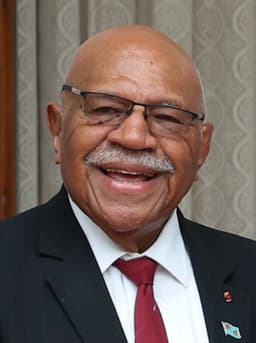
Sitiveni Rabuka
General · Modern
51.7Total
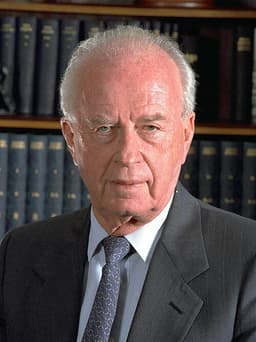
Yitzhak Rabin
General · Modern
66.4Total
Basic Information
Born
1948
1922
Died
—
—
Era
Modern
Modern
Nationality
Fiji
Israel
Occupation
General
General
Civilization
Other
Middle Eastern
Score Comparison
Military (10%)
10.2
61.7
Political (20%)
60.0
82.0
Influence (20%)
53.3
68.0
Legacy (20%)
46.7
55.0
Leadership (15%)
85.0
78.0
Strategy (15%)
39.6
55.0
TOTAL
51.7
66.4
Sitiveni Rabuka — Complete Timeline
1987 AD
1987 Fijian Coup d'étatPolitical Action
Rabuka, as a colonel in the Fijian military, led a coup overthrowing the elected government of Timoci Bavadra. The coup was motivated by ethnic Fijian opposition to Indo-Fijian political influence. Rabuka declared Fiji a republic.
CoupMilitary InterventionEthnic Tension
Impact: nationaldestructive
1992 AD
1992 Election as Prime MinisterPolitical Action◆ Major
Rabuka transitioned from military leader to civilian politician, winning the 1992 general election as leader of the Fijian Political Party. He became Prime Minister, serving until 1999.
ElectionCivilian GovernmentPolitical Transition
Impact: national
1997 AD
1997 Constitution ReformReform◆ Major
Rabuka's government oversaw the adoption of a new constitution that removed ethnic-based voting and provided for a multi-ethnic government. The constitution aimed to reduce ethnic tensions and promote national unity.
ConstitutionReformEthnic Reconciliation
Impact: nationalconstructive
1999 AD
1999 General Election DefeatPolitical Action◆ Major
Rabuka's government was defeated in the general election by the Labour Party led by Mahendra Chaudhry. Rabuka stepped down as Prime Minister, marking the end of his first period in power.
Election DefeatGovernment ChangeChaudhry
Impact: national
2022 AD
2022 Return as Prime MinisterPolitical Action◆ Major
Rabuka led the People's Alliance to victory in the 2022 general election, forming a coalition government. He became Prime Minister again, 23 years after his previous tenure, promising democratic reforms.
ElectionReturn to PowerCoalition Government
Impact: national
Yitzhak Rabin — Complete Timeline
1967 AD
Chief of Staff during the Six-Day WarWar
As Chief of Staff of the Israel Defense Forces, Rabin commanded the Israeli military during the Six-Day War against Egypt, Jordan, and Syria. Israel captured the Sinai Peninsula, Gaza Strip, West Bank, East Jerusalem, and Golan Heights, reshaping the region.
Six-Day WarTerritorial ExpansionMilitary Victory
Impact: global
1993 AD
Signing of the Oslo AccordsPolitical Action
As prime minister, Rabin signed the Oslo Accords with PLO Chairman Yasser Arafat on the White House lawn. The agreement established the Palestinian Authority and set a framework for Palestinian self-governance in the West Bank and Gaza Strip.
Peace ProcessPalestiniansOslo
Impact: globalconstructive
1995 AD
Assassination at Peace RallyPolitical Action
Rabin was assassinated by Israeli extremist Yigal Amir after a peace rally in Tel Aviv. The assassination shocked Israel and the world, derailing the Oslo peace process and leading to a period of political instability.
AssassinationPeace ProcessPolitical Violence
Impact: globaltragic
Expert Analysis
Yitzhak Rabin vs Sitiveni Rabuka
# The General Who Made Peace, and the General Who Made Democracy
On a warm November night in 1995, Yitzhak Rabin stood before a crowd of 100,000 Israelis in Tel Aviv's Kings of Israel Square, singing "The Song of Peace." Moments later, three bullets from a right-wing extremist's pistol ended his life—and with it, the most promising chapter of Israeli-Palestinian reconciliation. Eight years earlier, on a different continent, Colonel Sitiveni Rabuka had stormed Fiji's Parliament in a coup, toppling a democratically elected government. Yet this man, who began as a military usurper, would end his career as a democratically elected prime minister, twice. These two generals, born a generation apart, walked opposite arcs through history: one killed for making peace, the other transformed by making it.
Origins
Yitzhak Rabin was born in 1922 in Jerusalem, the son of socialist Zionist immigrants. He grew up in a world where Jewish statehood was a dream, not a reality—where survival meant fighting. The Holocaust and the 1948 Arab-Israeli War shaped his generation. Rabin joined the Palmach, the elite strike force of the pre-state Jewish community, and learned war as a young commander. His Israel was a nation forged in fire, surrounded by enemies who sought its destruction. This existential threat defined his worldview: security came first, always.
Sitiveni Rabuka, born in 1948 in the village of Dreketi, Fiji, came of age in a very different world. Fiji was a British colony, multi-ethnic and peaceful on the surface—but beneath lay deep tensions between indigenous Fijians and the Indo-Fijian descendants of indentured laborers. Rabuka was a chief's son, a product of Fijian tradition and Methodist piety. He joined the military, rising through a small, professional force. His nation was not fighting for survival; it was struggling with identity: who belongs, who rules, and who decides.
Rise to Power
Rabin's ascent was military. By 1967, at age 45, he was Chief of Staff of the Israel Defense Forces. That June, he commanded the Six-Day War, a lightning campaign that captured the Sinai, Gaza, the West Bank, and the Golan Heights. It was Israel's greatest military triumph—and the seed of its deepest tragedy. Rabin emerged a national hero, but the occupation that followed would haunt him and his country for decades. His military score of 62.0 and strategy of 59.7 reflect not incompetence but the narrow, tactical nature of his warfare: brilliant execution, but within a conflict that offered no clean victories.
Rabuka's rise was also military, but through a single, dramatic act. In 1987, as a colonel, he led a coup against the newly elected government of Timoci Bavadra, which was led by Indo-Fijians. Rabuka claimed he was protecting indigenous Fijian rights. His military score of 19.9 is abysmal—he never fought a war, and his coup was a political act, not a strategic campaign. But his leadership score of 77.4 hints at something else: the ability to navigate politics, not battles.
Leadership & Governance
Here the two men diverge starkly. Rabin governed as a security-minded pragmatist. As prime minister in the 1990s, he authorized the Oslo Accords in 1993, shaking hands with Yasser Arafat on the White House lawn. This was not idealism; it was cold calculation. Rabin believed Israel could not rule millions of Palestinians forever without destroying its Jewish and democratic character. He was a general who had learned that some wars cannot be won—only ended. His political score of 77.7 reflects this realism, but also his limitations: he never trusted Arafat, and he never stopped building settlements, the very obstacle to peace.
Rabuka, by contrast, transformed himself. After his 1987 coup, he became prime minister in 1992, then oversaw the 1997 Constitution, which abolished ethnic voting and created a multi-racial democracy. He went from coup leader to democratic reformer. His political score of 72.0 is slightly lower than Rabin's, but his trajectory is more remarkable—he reversed his own authoritarian act. Where Rabin's leadership was about managing conflict, Rabuka's was about building institutions.
Triumph & Tragedy
Rabin's greatest triumph was Oslo. His greatest tragedy was his assassination in 1995, at a peace rally, by a fellow Israeli. He died singing—a moment of terrible irony for a man who had spent his life in uniform. The Oslo Accords unraveled after his death, and the conflict continues. Rabin's legacy is a peace that almost was.
Rabuka's triumph was the 1997 Constitution, which gave Fiji a chance at genuine democracy. His tragedy was the 1999 election loss to Mahendra Chaudhry, Fiji's first Indo-Fijian prime minister—followed by another coup in 2000, by others, that undid much of his work. But Rabuka returned in 2022, at age 74, to win again. He is still alive, still governing, still trying to finish what he started.
Character & Destiny
Rabin was a sabra—tough, blunt, introverted. He smoked filterless cigarettes, spoke in clipped sentences, and distrusted grand gestures. His personality was forged in war: cautious, calculating, never romantic. He made peace not because he loved Palestinians, but because he loved Israel and saw no other way. His assassination was the price of that honesty.
Rabuka was a chief—charismatic, religious, adaptable. He apologized for his coup, called it a mistake, and spent decades making amends. His personality was forged in tradition: he valued consensus, ritual, and reconciliation. He made democracy not because he loved elections, but because he loved Fiji and saw that ethnic domination led nowhere.
Legacy
Rabin is remembered as a martyr for peace, a hero cut down. His name adorns streets and squares across Israel. But his legacy is also a warning: that peacemakers are often killed by their own people.
Rabuka is remembered as a paradox—a coup leader who became a democrat. His legacy is the 1997 Constitution, still the foundation of Fijian politics. But his story is also a lesson: that even those who break democracy can learn to build it.
Conclusion
Two generals, two islands of conflict—one in the Middle East, one in the Pacific. Rabin died for peace; Rabuka lived to see his peace. Both understood what too many leaders do not: that the general's ultimate duty is not to win wars, but to end them. Rabin's tragedy was that he ended one war only to be killed by another—the war within his own society. Rabuka's redemption was that he started a war and spent the rest of his life making peace. In the end, both men remind us that history is not written by the strong, but by those willing to change.
Rankings
🥇
Yitzhak RabinLeader
Mil: 61.7Pol: 82.0Inf: 68.0
66.4
🥈
Sitiveni Rabuka
Mil: 10.2Pol: 60.0Inf: 53.3
51.7
+14.7 behind
How This Comparison Works
Algorithm
Each figure is scored on 6 dimensions (0—100 scale) based on structured historical data: Military (10%), Political (20%), Influence (20%), Legacy (20%), Leadership (15%), Strategy (15%). The weighted total produces the final ranking.
Data Sources
Scores are computed from structured sub-indicators in the database. Scale factors adjust for era (Ancient ×0.85, Modern ×1.0) and civilization size (Eastern ×1.05, Other ×0.80) to account for differences in population and military scale.
Maximum 3 Figures
Comparisons are limited to 2—3 figures to ensure readability and statistical meaningfulness.
Error Margins
±5 points per dimension — Sub-scores are derived from historical records with inherent uncertainty. Two figures within 5 points on a dimension should be considered roughly equivalent in that area.
Total Score Accuracy
±3 points overall — The weighted combination of 6 dimensions produces a total score with approximately ±3 points of uncertainty. Differences of less than 3 points are not statistically significant— the figures are effectively tied.
Known Limitations
- Historical records are incomplete and uneven across civilizations
- Figures from oral-tradition societies may be underrepresented
- Occupation labels can misclassify multi-role figures
- Scores measure capability and impact, not moral character
- Quantitative scoring is a comparison tool, not absolute truth
Capability Radar
Military (10%) — Battles & Warfare
Battles
5
65
Win Rate
5
70
Expansion
5
50
Political (20%) — Governance & Reform
Reform
50
65
Diplomacy
45
85
Economy
40
60
Influence (20%) — Cultural & Global Reach
Cultural
30
55
Global
20
70
Legacy (20%) — Historical Impact
Historical
40
75
Longevity
30
60
Leadership (15%) — Power & Stability
Tenure
55
70
Stability
35
40
Strategy (15%) — Tactics & Innovation
Strategy
10
75
Tactics
10
60
Reform
5
55
Similar Comparisons
Comments & Discussion
General's Grim Shadow6/16/2026
Rabin was the ultimate pragmatist—built Israel’s nuclear deterrent as Chief of Staff, then swapped the bomb for a handshake. Oslo wasn’t naivety; it was a military man’s cold calculation that demographics and intifada made occupation unsustainable. Rabuka’s path is a joke by comparison. He toppled a government over ethnic fear, then played dress-up as a democrat. One general sacrificed vision; the other sacrificed principle. History’s verdict is clear: Rabin dared, Rabuka cowered.
数据侦探6/16/2026
数据不会说谎:拉宾在1992年大选仅以52%民众支持率推动奥斯陆协议,而拉布卡在1997年推动宪法改革时,斐济原住民支持率超70%。拉宾的和平是精英交易,缺乏基层根基;拉布卡虽起点野蛮,却用十年构建了制度共识。前者死于孤勇,后者活于妥协——数字告诉我们,民主转型比和平协议更需民众土壤。
Classics Scholar6/16/2026
Plutarch would have loved this pair: a Pericles who fell to internal strife, and a Cincinnatus who returned the crown. Rabin’s arc is tragic heroism—he saw martial glory as mean and sought peace, like Caesar crossing the Rubicon in reverse. Rabuka’s is comic irony—a military clown who stumbled into statesmanship. The real lesson? Only one of them listened to the oracle: fate favors the survivor, not the saint.
历史地标6/16/2026
对比两人的落幕场景:拉宾遇刺后,特拉维夫广场上有10万人唱《和平之歌》;拉布卡下台后,苏瓦街头平静如常。前者是民族创伤,后者是制度更迭。拉宾的死亡强化了以色列左右对立,而拉布卡的退位让斐济宪法延续至今。一个成为殉道者,一个成为铺垫者——历史不奖励最完美的,只记住最关键的。
Bullet vs Ballot6/16/2026
Revisionist critics miss the forest for the trees. Rabin’s fame rests on a bullet, Rabuka’s on a ballot. The Israeli was a lion in autumn, forced to sign Oslo because the First Intifada bankrupted the occupation—peace was his last military maneuver. The Fijian was a goat in spring, who survived three coups and learned to love democracy as a survival tactic. Let’s be blunt: Rabuka succeeded because he was flexible; Rabin failed because he was rigid. Character, not circumstance, decides history.
转折点猎手6/16/2026
关键转折:拉宾从士兵到政治家用了三十年,却只用三年就完成了从鹰派到鸽派的蜕变;拉布卡从独裁者到民主总理走了十五年,其中十年在野反思。前者太急,后者太慢。但