Loading...
Afonso de Albuquerque vs Sitiveni Rabuka
Afonso de Albuquerque leads by 27.9 pts · 2 figures compared
…
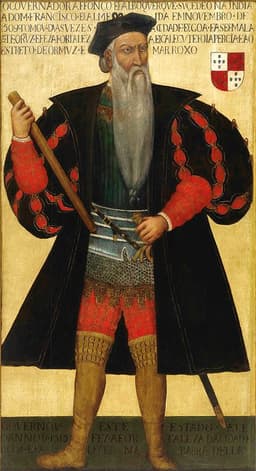
Afonso de Albuquerque
General · Medieval
79.6Total
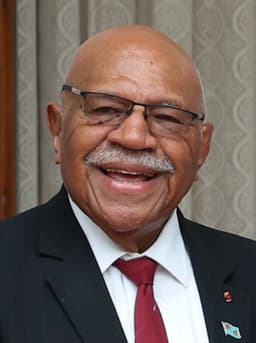
Sitiveni Rabuka
General · Modern
51.7Total
Basic Information
Born
1453
1948
Died
1515
—
Era
Medieval
Modern
Nationality
Portugal
Fiji
Occupation
General
General
Civilization
Western
Other
Score Comparison
Military (10%)
77.5
10.2
Political (20%)
88.0
60.0
Influence (20%)
80.0
53.3
Legacy (20%)
75.0
46.7
Leadership (15%)
78.0
85.0
Strategy (15%)
82.0
39.6
TOTAL
79.6
51.7
Afonso de Albuquerque — Complete Timeline
1503 AD
First voyage to IndiaWar◆ Major
Afonso de Albuquerque led a fleet to India, establishing the first Portuguese fort at Cochin. This voyage laid the foundation for Portuguese control of the Indian Ocean trade.
ExplorationColonialismIndia
Impact: global
1510 AD
Conquest of GoaWar◆ Major
Albuquerque captured Goa from the Sultan of Bijapur. He made Goa the capital of Portuguese India, a position it held for over 400 years.
ConquestColonialismIndia
Impact: regional
1511 AD
Conquest of MalaccaWar◆ Major
Albuquerque led a Portuguese fleet to capture the strategic port of Malacca. This gave Portugal control of the spice trade route between the Indian Ocean and the Pacific.
ConquestSpice TradeSoutheast Asia
Impact: global
1513 AD
Siege of AdenWar
Albuquerque attempted to capture Aden in Yemen but failed. This failure prevented Portugal from controlling the entrance to the Red Sea and limited their influence in the region.
SiegeFailureRed Sea
Impact: regional
1515 AD
Death at seaOther◆ Major
Afonso de Albuquerque died at sea off the coast of Goa, possibly from illness or poison. His death left the Portuguese Empire in the Indian Ocean without its most capable leader.
DeathLeadershipEmpire
Impact: regionaltragic
Sitiveni Rabuka — Complete Timeline
1987 AD
1987 Fijian Coup d'étatPolitical Action
Rabuka, as a colonel in the Fijian military, led a coup overthrowing the elected government of Timoci Bavadra. The coup was motivated by ethnic Fijian opposition to Indo-Fijian political influence. Rabuka declared Fiji a republic.
CoupMilitary InterventionEthnic Tension
Impact: nationaldestructive
1992 AD
1992 Election as Prime MinisterPolitical Action◆ Major
Rabuka transitioned from military leader to civilian politician, winning the 1992 general election as leader of the Fijian Political Party. He became Prime Minister, serving until 1999.
ElectionCivilian GovernmentPolitical Transition
Impact: national
1997 AD
1997 Constitution ReformReform◆ Major
Rabuka's government oversaw the adoption of a new constitution that removed ethnic-based voting and provided for a multi-ethnic government. The constitution aimed to reduce ethnic tensions and promote national unity.
ConstitutionReformEthnic Reconciliation
Impact: nationalconstructive
1999 AD
1999 General Election DefeatPolitical Action◆ Major
Rabuka's government was defeated in the general election by the Labour Party led by Mahendra Chaudhry. Rabuka stepped down as Prime Minister, marking the end of his first period in power.
Election DefeatGovernment ChangeChaudhry
Impact: national
2022 AD
2022 Return as Prime MinisterPolitical Action◆ Major
Rabuka led the People's Alliance to victory in the 2022 general election, forming a coalition government. He became Prime Minister again, 23 years after his previous tenure, promising democratic reforms.
ElectionReturn to PowerCoalition Government
Impact: national
Expert Analysis
Sitiveni Rabuka vs Afonso de Albuquerque
### The Conqueror and the Reformer
History has a peculiar way of placing men of ambition in vastly different theaters. One commands a fleet to seize the nodes of a global spice trade, carving an empire with cannon and cross. Another, born centuries later on a Pacific island, seizes his nation’s government with a whisper of a coup, then spends decades trying to give it back to the people. Afonso de Albuquerque and Sitiveni Rabuka are both generals, but their stories are not of parallel lives. They are a study in how time, geography, and the very definition of power shape the arc of a leader’s destiny.
### Origins
Afonso de Albuquerque was born in 1453, the year Constantinople fell, a date that sent tremors through Christendom and spurred Portugal to seek a sea route to the riches of the East. He was a product of a warrior aristocracy, a second son trained for the sword and the cross, raised on tales of crusade and the urgent need to break the Muslim stranglehold on the spice trade. The world was vast, dangerous, and, to a Portuguese nobleman, there for the taking. His era demanded audacity, a willingness to sail into the unknown and impose order by fire.
Sitiveni Rabuka, born in 1948 on the island of Vanua Levu, inherited a different world. Fiji was a colonial creation, a patchwork of indigenous Fijian and Indo-Fijian communities under British rule. Rabuka was a chief’s son, raised in the Methodist church and the Fijian military, a world where loyalty to tradition and the land was paramount. His era was one of decolonization and the fragile birth of democratic institutions in the Pacific. His battle was not against a foreign sultanate, but against the internal demons of ethnic division and a constitution that felt, to many indigenous Fijians, like a betrayal of their ancestral rights.
### Rise to Power
Albuquerque’s path was forged in salt and blood. In 1503, he led his first voyage to India, a mission that established the first Portuguese fort at Cochin, a toehold on a subcontinent. He was not a court favorite; he was a blunt instrument of imperial policy, often at odds with his own commanders. His true ascent came through sheer, relentless action. He understood that in the Indian Ocean, power was not about land, but about controlling the choke points of trade. His rise was a campaign of strategic violence.
Rabuka’s rise was a single, explosive moment. On May 14, 1987, as a colonel, he led a bloodless coup, overthrowing the newly elected government of Timoci Bavadra, a coalition that many indigenous Fijians saw as dominated by the Indo-Fijian community. It was a shocking act for a nation that prided itself on its peaceful, multi-racial image. Rabuka’s justification was not ambition, but preservation. He claimed he was acting to protect Fijian paramountcy, a belief that the land and political power belonged first to the indigenous people. His rise was a crisis of identity, not of empire.
### Leadership & Governance
Albuquerque governed with the certainty of a man building a new world order. After capturing Goa from the Sultan of Bijapur in 1510, he did not simply sack it. He made it the capital of Portuguese India, marrying Portuguese soldiers to local women, introducing a uniform legal code, and even minting coins. He was a builder as much as a destroyer. In 1511, he seized Malacca, the Venice of the East, smashing the Muslim trading network and giving Portugal control of the spice route to the Moluccas. His strategy was a simple, brutal geometry: control the straits, control the wealth.
Rabuka’s governance was a painful, public evolution. After the coup, he faced international isolation and internal dissent. He could have become a dictator. Instead, he transitioned. In 1992, he won the general election as a civilian politician. As Prime Minister, he oversaw the 1997 Constitution reform, a monumental act that removed ethnic-based voting and created a multi-racial system. It was a direct reversal of the very fears that had motivated his coup. He had broken the nation, and then, with faltering hands, he tried to mend it. His leadership was not about conquest, but about contrition and compromise.
### Triumph & Tragedy
Albuquerque’s greatest triumph was the conquest of Goa in 1510, the jewel in the crown of the Estado da Índia. His greatest tragedy was the Siege of Aden in 1513. He failed to capture the fortress at the mouth of the Red Sea, a failure that meant he could never fully control the flow of spices to the Mediterranean. It was a strategic door left open. He died at sea in 1515, possibly poisoned, possibly from illness, a lonely death off the coast of the empire he had built. His triumph was an empire; his tragedy was that he never saw its full, fragile shape.
Rabuka’s triumph was the 1997 Constitution, a document that promised a shared future. His tragedy was the 1999 election, where his government was soundly defeated by the Labour Party led by Mahendra Chaudhry. He stepped down peacefully, a rare act for a coup leader. He then disappeared from power for over two decades, a figure of controversy and reflection. His return as Prime Minister in 2022, at the age of 74, leading a coalition government, is a testament to his political resilience and the nation’s willingness to forgive.
### Character & Destiny
Albuquerque was a man of iron will and unshakeable purpose. He once wrote, “If we are to be masters of the East, we must be masters of the sea.” His character was destiny itself: he saw the world as a chessboard and himself as the player. There was no room for doubt. He was a force of nature, and his decisions, from the brutal sacking of Malacca to the strategic marriage policies in Goa, were all calculated to create a permanent Portuguese presence.
Rabuka’s character is more complex. He is a man of deep contradictions: a soldier who overthrew a government, yet a democrat who wrote a constitution to protect minorities. He is a chief who respects tradition, yet a politician who embraced change. His destiny was not a straight line, but a series of reversals. He once said, “I am a product of my upbringing, but I am also a product of my mistakes.” His character is not about certainty, but about the capacity for change, for learning from the ruins of one’s own actions.
### Legacy
Albuquerque’s legacy is the Portuguese Empire in Asia. He gave Portugal a century of dominance in the Indian Ocean. His name is carved into the map of Goa, Malacca, and the memory of a maritime age. But his empire was built on force, and it crumbled as other European powers arrived. He is remembered as a conqueror, a man of his violent, ambitious time.
Rabuka’s legacy is more ambiguous and, perhaps, more profound. He is a figure who, like a modern Janus, looks both backward and forward. He is remembered as a coup leader who broke a democracy, but also as the prime minister who helped rebuild it. His 1997 constitution remains the foundation of modern Fiji. In a world of rigid ideologies, his legacy is a question: can a man who seizes power with a gun ever truly lay it down? His return in 2022 suggests that history, unlike a spice route, is not a straight line.
### Conclusion
One man built an empire on the certainty of his age. The other tried to build a nation on the uncertainty of his. Albuquerque and Rabuka are separated by five centuries, an ocean, and an unbridgeable gulf of purpose. Yet both were generals who understood that power, in the end, is not about the force you wield, but about the order you leave behind. Albuquerque’s order was a Portuguese fort on a distant shore. Rabuka’s order is a constitution that, however imperfect, still holds. The conqueror commands the sea; the reformer must learn to command himself.
Rankings
🥇
Afonso de AlbuquerqueLeader
Mil: 77.5Pol: 88.0Inf: 80.0
79.6
🥈
Sitiveni Rabuka
Mil: 10.2Pol: 60.0Inf: 53.3
51.7
+27.9 behind
How This Comparison Works
Algorithm
Each figure is scored on 6 dimensions (0—100 scale) based on structured historical data: Military (10%), Political (20%), Influence (20%), Legacy (20%), Leadership (15%), Strategy (15%). The weighted total produces the final ranking.
Data Sources
Scores are computed from structured sub-indicators in the database. Scale factors adjust for era (Ancient ×0.85, Modern ×1.0) and civilization size (Eastern ×1.05, Other ×0.80) to account for differences in population and military scale.
Maximum 3 Figures
Comparisons are limited to 2—3 figures to ensure readability and statistical meaningfulness.
Error Margins
±5 points per dimension — Sub-scores are derived from historical records with inherent uncertainty. Two figures within 5 points on a dimension should be considered roughly equivalent in that area.
Total Score Accuracy
±3 points overall — The weighted combination of 6 dimensions produces a total score with approximately ±3 points of uncertainty. Differences of less than 3 points are not statistically significant— the figures are effectively tied.
Known Limitations
- Historical records are incomplete and uneven across civilizations
- Figures from oral-tradition societies may be underrepresented
- Occupation labels can misclassify multi-role figures
- Scores measure capability and impact, not moral character
- Quantitative scoring is a comparison tool, not absolute truth
Capability Radar
Military (10%) — Battles & Warfare
Battles
85
5
Win Rate
80
5
Expansion
95
5
Political (20%) — Governance & Reform
Reform
80
50
Diplomacy
85
45
Economy
80
40
Influence (20%) — Cultural & Global Reach
Cultural
70
30
Global
85
20
Legacy (20%) — Historical Impact
Historical
85
40
Longevity
80
30
Leadership (15%) — Power & Stability
Tenure
70
55
Stability
65
35
Strategy (15%) — Tactics & Innovation
Strategy
95
10
Tactics
90
10
Reform
75
5
Similar Comparisons
Comments & Discussion
RABUKA'S SPICE6/16/2026
Sure, Albuquerque seized Goa with cannon fire, but Rabuka's 1987 coup was a silent storm—he took Fiji's government with hardly a shot, then spent a decade handing power back. That takes more guts than any imperialist ever showed. The Portuguese admiral just conquered for a king's vanity; Rabuka conquered his own ambition. History calls him a coup leader, but he's the real reformer here—reforming himself from dictator to democrat. Try that, Albuquerque.CORSAIR_CLIO|en|As a data skeptic, I see app