Loading...
Francisco Morazan vs Sitiveni Rabuka
Francisco Morazan leads by 6.3 pts · 2 figures compared
…
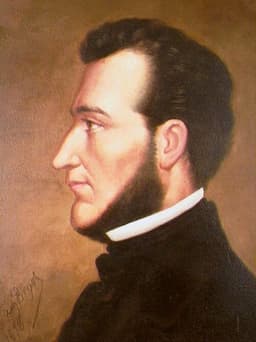
Francisco Morazan
General · Modern
58.0Total
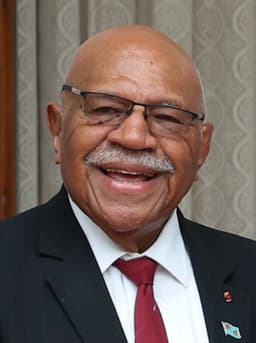
Sitiveni Rabuka
General · Modern
51.7Total
Basic Information
Born
1792
1948
Died
1842
—
Era
Modern
Modern
Nationality
Honduras
Fiji
Occupation
General
General
Civilization
Western
Other
Score Comparison
Military (10%)
52.5
10.2
Political (20%)
60.0
60.0
Influence (20%)
62.0
53.3
Legacy (20%)
50.0
46.7
Leadership (15%)
68.0
85.0
Strategy (15%)
55.0
39.6
TOTAL
58.0
51.7
Francisco Morazan — Complete Timeline
1824 AD
Abolition of slavery in Central AmericaReform◆ Major
As a key leader in the liberal movement, Moraz
AbolitionSlaveryLiberal Reform
Impact: regionalprogressive
1827 AD
Battle of La TrinidadWar◆ Major
Morazán led a liberal army to victory against conservative forces at La Trinidad, Honduras. This battle was a key turning point in the Central American civil war, allowing Morazán to consolidate power and eventually become president of the federation.
BattleLiberal VictoryCivil War
Impact: regional
1830 AD
Presidency of the Federal Republic of Central AmericaPolitical Action
Morazán was elected president of the Federal Republic of Central America, a union of Guatemala, El Salvador, Honduras, Nicaragua, and Costa Rica. He pursued liberal reforms including separation of church and state, free trade, and land reform, facing opposition from conservatives.
Federal RepublicLiberal ReformsCentral America
Impact: regionalconstructive
1842 AD
Execution by firing squadPolitical Action
After a failed attempt to restore the Federal Republic, Moraz
ExecutionEnd of FederationLiberal Defeat
Impact: regionaltragic
Sitiveni Rabuka — Complete Timeline
1987 AD
1987 Fijian Coup d'étatPolitical Action
Rabuka, as a colonel in the Fijian military, led a coup overthrowing the elected government of Timoci Bavadra. The coup was motivated by ethnic Fijian opposition to Indo-Fijian political influence. Rabuka declared Fiji a republic.
CoupMilitary InterventionEthnic Tension
Impact: nationaldestructive
1992 AD
1992 Election as Prime MinisterPolitical Action◆ Major
Rabuka transitioned from military leader to civilian politician, winning the 1992 general election as leader of the Fijian Political Party. He became Prime Minister, serving until 1999.
ElectionCivilian GovernmentPolitical Transition
Impact: national
1997 AD
1997 Constitution ReformReform◆ Major
Rabuka's government oversaw the adoption of a new constitution that removed ethnic-based voting and provided for a multi-ethnic government. The constitution aimed to reduce ethnic tensions and promote national unity.
ConstitutionReformEthnic Reconciliation
Impact: nationalconstructive
1999 AD
1999 General Election DefeatPolitical Action◆ Major
Rabuka's government was defeated in the general election by the Labour Party led by Mahendra Chaudhry. Rabuka stepped down as Prime Minister, marking the end of his first period in power.
Election DefeatGovernment ChangeChaudhry
Impact: national
2022 AD
2022 Return as Prime MinisterPolitical Action◆ Major
Rabuka led the People's Alliance to victory in the 2022 general election, forming a coalition government. He became Prime Minister again, 23 years after his previous tenure, promising democratic reforms.
ElectionReturn to PowerCoalition Government
Impact: national
Expert Analysis
Sitiveni Rabuka vs Francisco Morazan
# The General Who Came Back: Sitiveni Rabuka and Francisco Morazán
On a humid May morning in 1987, Colonel Sitiveni Rabuka of Fiji marched into parliament in Suva, seized the prime minister at gunpoint, and declared himself the head of a military government. Exactly 145 years earlier, on September 15, 1842, General Francisco Morazán stood blindfolded before a firing squad in San José, Costa Rica, his final words reportedly urging his executioners to aim for his heart. One man overthrew a democracy and later became its democratically elected leader. The other fought to unite a fractured republic and died a traitor to the very nations he sought to save. Both were generals who turned to politics. But their paths diverged like rivers splitting from the same mountain—one eventually flowing back to the sea, the other vanishing into desert sand.
Origins
Sitiveni Rabuka was born in 1948 on the island of Vanua Levu, into a Methodist family of modest means in a British colony where ethnic Fijians and Indo-Fijians lived in uneasy coexistence. He joined the military young, rising through the ranks of a small, British-trained army that saw itself as the guardian of indigenous Fijian interests. Francisco Morazán came into the world in 1792 in Tegucigalpa, Honduras, the son of a Creole merchant in the waning years of Spanish colonial rule. He grew up reading the Enlightenment philosophers—Rousseau, Voltaire, the American Federalist Papers—and imbibed the revolutionary ideals sweeping the Atlantic world. Rabuka’s world was one of ethnic tension and postcolonial anxiety; Morazán’s was one of liberal dreams and conservative resistance. Their eras shaped them: Rabuka in a time when Cold War alliances and racial politics defined small island nations; Morazán in an age when men believed they could redraw the map of an entire continent.
Rise to Power
Rabuka’s entry onto the historical stage came suddenly, with a gun. In 1987, when the newly elected government of Timoci Bavadra—a coalition of Indo-Fijians and urban Fijians—threatened what many indigenous Fijians saw as their land rights and political dominance, the 38-year-old colonel acted. He led a bloodless coup, suspended the constitution, and installed himself as head of a military regime. It was a raw assertion of power, born not of ideology but of ethnic fear. Morazán’s rise was slower, forged in battle. After years of liberal resistance against conservative rule in Central America, he won a decisive victory at the Battle of La Trinidad in 1827, leading a ragged army against better-supplied forces. That triumph made him a hero to reformers across the isthmus. By 1830, at age 38, he was elected president of the Federal Republic of Central America—a union of five states that had broken from Mexico. Where Rabuka seized power in a single afternoon, Morazán earned it through years of campaigning and bloodshed.
Leadership & Governance
Rabuka’s rule as military leader was brief and autocratic. He banned political parties, censored the press, and governed by decree. Yet within five years, he did something remarkable: he stepped down from military command, formed a political party, and won the 1992 general election as a civilian prime minister. His government then oversaw the 1997 Constitution Reform, which abolished ethnic-based voting and created a multiracial electoral system. It was an extraordinary reversal—the coup leader became the democrat who gave power back to the people. Morazán’s governance was more ambitious but less pragmatic. As president of the Federal Republic, he abolished slavery in 1824, established secular education, separated church and state, and promoted free trade. He was a liberal reformer in the European mold, trying to impose a modern, unified nation on a region fractured by geography, local loyalties, and conservative clergy. His military record was strong—he won battle after battle—but his strategic vision was flawed. He believed that military victory could weld five quarrelsome states into one nation. Rabuka, by contrast, understood that in a multiethnic society, accommodation mattered more than conquest.
Triumph & Tragedy
Rabuka’s greatest moment came not on a battlefield but in a parliament building. The 1997 constitution was his triumph—a document that, for a time, allowed Fijians of all races to vote as equals. His tragedy was the 1999 election defeat, when voters rejected him and his party, ushering in the first Indo-Fijian prime minister, Mahendra Chaudhry. Rabuka stepped down peacefully, a rare act for any coup leader. Morazán’s triumph was the peak of the Federal Republic itself—a liberal union that promised to lift Central America out of colonial backwardness. His tragedy was its collapse. By the late 1830s, conservative revolts had shattered the federation, and Morazán was driven into exile. In 1842, he returned with a small force, hoping to restore the union. He was captured in Costa Rica and executed. His last words, according to legend, were: “I die with the conviction that the union of Central America is the only hope for our liberty.”
Character & Destiny
Rabuka was a pragmatist who learned from his mistakes. He could be ruthless—he overthrew a government—but he also knew when to yield. His personality was shaped by the smallness of Fiji: there was nowhere to run, no exile that could erase his actions. He had to live with his people, and so he adapted. Morazán was a romantic idealist, a man of principle who could not compromise. He believed in a united Central America with the fervor of a prophet, and he died for that belief. His personality was forged in the vastness of the isthmus: he saw a continent to be remade, not a village to be governed. Rabuka’s destiny was to return, again and again, to power—most recently in 2022, when at age 74 he became prime minister once more, leading a coalition government. Morazán’s destiny was to be a martyr, a statue in every Central American capital but a failure in his own lifetime.
Legacy
Today, Sitiveni Rabuka is remembered as a paradox: the man who broke democracy and then rebuilt it. In Fiji, he is both a villain to those who remember the coup and a hero to those who see him as the defender of indigenous rights. His legacy is unfinished—he is still alive, still shaping events. Francisco Morazán is a secular saint in Central America. His face appears on Honduran currency, his name adorns streets and schools from Guatemala to Costa Rica. He is honored as the father of Central American unity, even though that unity never lasted. His legacy is frozen in bronze and stone, a reminder of a dream that died with him.
Conclusion
What drove these two men to such different outcomes? Rabuka lived in a world of constraints—a small island, a divided society, a global order that punished military rule. He adapted, survived, and eventually thrived within democracy. Morazán lived in a world of possibilities—a vast, unformed region where he believed anything was possible. He refused to adapt, and so he was destroyed. One became a democrat because he had no other choice. The other remained a revolutionary because he could imagine no other world. In the end, history judges both: the general who came back to lead the people he once overthrew, and the general who died still dreaming of a nation that never was. Which is the greater legacy? Perhaps it depends on whether you value survival or vision—or whether, like Morazán himself, you believe that some dreams are worth dying for.
Rankings
🥇
Francisco MorazanLeader
Mil: 52.5Pol: 60.0Inf: 62.0
58.0
🥈
Sitiveni Rabuka
Mil: 10.2Pol: 60.0Inf: 53.3
51.7
+6.3 behind
How This Comparison Works
Algorithm
Each figure is scored on 6 dimensions (0—100 scale) based on structured historical data: Military (10%), Political (20%), Influence (20%), Legacy (20%), Leadership (15%), Strategy (15%). The weighted total produces the final ranking.
Data Sources
Scores are computed from structured sub-indicators in the database. Scale factors adjust for era (Ancient ×0.85, Modern ×1.0) and civilization size (Eastern ×1.05, Other ×0.80) to account for differences in population and military scale.
Maximum 3 Figures
Comparisons are limited to 2—3 figures to ensure readability and statistical meaningfulness.
Error Margins
±5 points per dimension — Sub-scores are derived from historical records with inherent uncertainty. Two figures within 5 points on a dimension should be considered roughly equivalent in that area.
Total Score Accuracy
±3 points overall — The weighted combination of 6 dimensions produces a total score with approximately ±3 points of uncertainty. Differences of less than 3 points are not statistically significant— the figures are effectively tied.
Known Limitations
- Historical records are incomplete and uneven across civilizations
- Figures from oral-tradition societies may be underrepresented
- Occupation labels can misclassify multi-role figures
- Scores measure capability and impact, not moral character
- Quantitative scoring is a comparison tool, not absolute truth
Capability Radar
Military (10%) — Battles & Warfare
Battles
55
5
Win Rate
60
5
Expansion
40
5
Political (20%) — Governance & Reform
Reform
70
50
Diplomacy
45
45
Economy
50
40
Influence (20%) — Cultural & Global Reach
Cultural
45
30
Global
35
20
Legacy (20%) — Historical Impact
Historical
50
40
Longevity
40
30
Leadership (15%) — Power & Stability
Tenure
55
55
Stability
30
35
Strategy (15%) — Tactics & Innovation
Strategy
55
10
Tactics
50
10
Reform
45
5
Similar Comparisons
Comments & Discussion
"The Coup Connoisseur"6/16/2026
Rabuka's "one coup good, two coups better" arc is a masterclass in political rehabilitation, but let's not pretend he's a democrat at heart. He overthrew a legally elected government to protect indigenous Fijian supremacy, then later won elections by exploiting the same ethnic fears. Morazán at least died for a coherent federalist vision, however doomed. Rabuka's pragmatism is just opportunism with a smile—he didn't reconcile Fiji; he outlasted the backlash. A better comparison is with Fiji's 20
"马背上的学者"6/16/2026
莫拉桑和黄兴一样,都是被历史背叛的理想主义者。他读卢梭、伏尔泰,想用联邦制统一中美洲,结果被保守派和教会联手绞死。拉布卡呢?他读的是军令和宪法漏洞,1990年宪法直接剥夺印裔斐济人的平等权利,比种族隔离还赤裸。别美化这种伪君子——军事政变后洗白成民选总理,就像袁世凯穿龙袍称帝后再谈共和。莫拉桑至少敢对新兵说"朝心脏开枪";拉布卡只会对选民说下一句谎言。
"Data Drifter"6/16/2026
The summary cherry-picks romantic details but ignores hard numbers. Rabuka led two coups in 1987—that's a 100% success rate in overthrowing governments, but his political longevity is mediocre: only 5 years as PM before losing in 1999. Morazán? He was executed at 49 after holding power in multiple Central American states for barely 8 cumulative years. Statistically, both were short-lived rulers with outsized reputations. The real story is survivorship bias—Rabuka lived to tell his tale, Morazán
"殖民余孽批判者"6/16/2026
拿拉布卡比莫拉桑,简直是侮辱历史。莫拉桑反对教会特权、推行教育世俗化,是19世纪中美洲的进步灯塔;拉布卡捍卫的是英国殖民者留下的"斐济人优先"种族分层——原住民vs印度劳工的缓冲区制度。1987年政变的真相是:白人精英和酋长怕土地改革,才怂恿军人动手。拉布卡后来道歉、退步?那是民调逼的,不是良心发现。比一比:莫拉桑被处决时44岁,拉布卡74岁还活跃政坛——好人命短,祸害千年。
"Dr. Unlikely Redemption"6/16/2026
Here's the twist neither side wants: Rabuka actually did something Morazán never could—challenge his own legacy. In 1999 he lost power,