Loading...
Muhammadu Buhari vs Sitiveni Rabuka
Sitiveni Rabuka leads by 0.2 pts · 2 figures compared
…
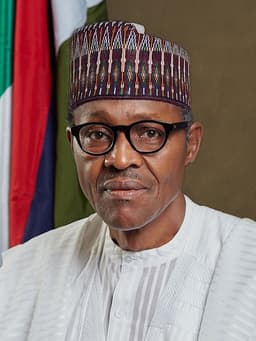
Muhammadu Buhari
General · Modern
51.5Total
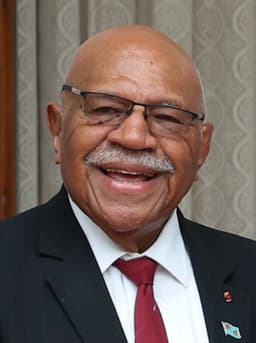
Sitiveni Rabuka
General · Modern
51.7Total
Basic Information
Born
1942
1948
Died
—
—
Era
Modern
Modern
Nationality
Nigeria
Fiji
Occupation
General
General
Civilization
Other
Other
Score Comparison
Military (10%)
22.6
10.2
Political (20%)
68.0
60.0
Influence (20%)
53.3
53.3
Legacy (20%)
43.3
46.7
Leadership (15%)
72.0
85.0
Strategy (15%)
41.0
39.6
TOTAL
51.5
51.7
Muhammadu Buhari — Complete Timeline
1983 AD
1983 Nigerian coup d'étatPolitical Action
Major General Muhammadu Buhari led a military coup that overthrew the civilian government of President Shehu Shagari. Buhari cited corruption and economic mismanagement as justifications, and he became the head of state.
CoupMilitary RuleCorruption
Impact: nationaldestructive
1984 AD
War Against Indiscipline (WAI)Reform◆ Major
Buhari launched the War Against Indiscipline, a campaign to enforce discipline and order in Nigerian society. It included harsh penalties for minor offenses, such as queue-jumping, and was criticized for human rights abuses.
DisciplineSocial PolicyHuman Rights
Impact: nationaldestructive
1985 AD
Overthrow by Ibrahim BabangidaPolitical Action◆ Major
Buhari was overthrown in a palace coup led by his Chief of Army Staff, Ibrahim Babangida. Babangida cited Buhari's authoritarian style and failure to address the economy as reasons for the coup.
CoupOverthrowBabangida
Impact: national
2015 AD
Anti-corruption campaignReform◆ Major
Buhari launched a high-profile anti-corruption campaign, targeting government officials and recovering stolen assets. The campaign was praised internationally but criticized for being selective and politically motivated.
Anti-CorruptionReformGovernance
Impact: nationalconstructive
Election as President of NigeriaPolitical Action
Buhari won the 2015 Nigerian presidential election, defeating incumbent Goodluck Jonathan. This was the first time an opposition candidate had defeated a sitting president in Nigeria's history, marking a democratic milestone.
ElectionDemocracyOpposition Victory
Impact: nationalprogressive
Sitiveni Rabuka — Complete Timeline
1987 AD
1987 Fijian Coup d'étatPolitical Action
Rabuka, as a colonel in the Fijian military, led a coup overthrowing the elected government of Timoci Bavadra. The coup was motivated by ethnic Fijian opposition to Indo-Fijian political influence. Rabuka declared Fiji a republic.
CoupMilitary InterventionEthnic Tension
Impact: nationaldestructive
1992 AD
1992 Election as Prime MinisterPolitical Action◆ Major
Rabuka transitioned from military leader to civilian politician, winning the 1992 general election as leader of the Fijian Political Party. He became Prime Minister, serving until 1999.
ElectionCivilian GovernmentPolitical Transition
Impact: national
1997 AD
1997 Constitution ReformReform◆ Major
Rabuka's government oversaw the adoption of a new constitution that removed ethnic-based voting and provided for a multi-ethnic government. The constitution aimed to reduce ethnic tensions and promote national unity.
ConstitutionReformEthnic Reconciliation
Impact: nationalconstructive
1999 AD
1999 General Election DefeatPolitical Action◆ Major
Rabuka's government was defeated in the general election by the Labour Party led by Mahendra Chaudhry. Rabuka stepped down as Prime Minister, marking the end of his first period in power.
Election DefeatGovernment ChangeChaudhry
Impact: national
2022 AD
2022 Return as Prime MinisterPolitical Action◆ Major
Rabuka led the People's Alliance to victory in the 2022 general election, forming a coalition government. He became Prime Minister again, 23 years after his previous tenure, promising democratic reforms.
ElectionReturn to PowerCoalition Government
Impact: national
Expert Analysis
Muhammadu Buhari vs Sitiveni Rabuka
### The General Who Came Back: Muhammadu Buhari and Sitiveni Rabuka
In the late summer of 1987, a young colonel named Sitiveni Rabuka walked into Fiji’s Parliament House in Suva, armed and in uniform, and told the world’s newest elected government that its time was up. Less than four years earlier, halfway around the world, a stern-faced Major General named Muhammadu Buhari had done the same thing in Lagos, seizing control of Africa’s most populous nation. Both men were soldiers who believed they were saving their countries from chaos. Both would later, against all odds, return to lead those same countries as democratically elected presidents and prime ministers. But their paths diverged in ways that reveal the deep, stubborn power of history, culture, and personal character.
### Origins
Buhari was born in 1942 in Daura, a dusty town in northern Nigeria, into a family of Fulani cattle herders and Islamic scholars. He grew up in a world where British colonial rule was still a fact of life, and where the military offered a rare ladder to power for ambitious young men from the north. He was shaped by the discipline of the barracks and the rigid hierarchies of a post-colonial army. Rabuka, born in 1948 on the island of Vanua Levu, came from a Fijian chiefly family but not a wealthy one. He too joined the military as a way up, serving in UN peacekeeping missions in Lebanon and the Sinai. Where Buhari was austere, almost puritanical, Rabuka was gregarious and physically imposing—a man who loved rugby and storytelling. Their eras were similar: both emerged in the 1980s, when Cold War tensions and fragile new democracies made military intervention seem like a quick fix for political disorder.
### Rise to Power
Buhari’s entry onto the national stage was swift and surgical. On December 31, 1983, he led a coup that overthrew President Shehu Shagari, whose civilian government had become synonymous with corruption and economic mismanagement. Buhari justified the takeover as a “corrective” measure. He was 41 years old. Rabuka’s rise was more dramatic and more personal. In May 1987, Fiji held its first general election that brought an Indian-majority coalition to power under Timoci Bavadra. For Rabuka and many indigenous Fijians, this was an existential threat to their land rights and political dominance. He struck on May 14, storming Parliament in a bloodless coup. He was 39. Both men believed they were acting for the greater good, but their motivations were different: Buhari wanted to clean house; Rabuka wanted to protect a racial hierarchy.
### Leadership & Governance
Buhari’s rule was a campaign of iron discipline. In 1984, he launched the War Against Indiscipline (WAI), a nationwide crackdown on lateness, littering, and queue-jumping, enforced by soldiers with whips. He jailed journalists, banned political activity, and detained critics without trial. His economic policies were harsh—austerity measures that squeezed ordinary Nigerians. He was not cruel for its own sake; he genuinely believed that only order could cure Nigeria’s rot. But his rigidity made him enemies. Rabuka, by contrast, was more pragmatic. After his coup, he initially tried to rule by decree, but international isolation and a collapsing economy forced him to negotiate. In 1992, he stood for election and won, becoming prime minister in a civilian government. He then did something remarkable: in 1997, he oversaw a new constitution that removed race-based voting and opened Fiji to multi-ethnic democracy. It was a reversal of his original cause, but Rabuka had the flexibility to admit that his earlier solution had failed.
### Triumph & Tragedy
Buhari’s greatest moment came in 2015, when he won the Nigerian presidency in a free and fair election, defeating the incumbent Goodluck Jonathan. It was the first time an opposition candidate had ousted a sitting president in Nigeria’s history. He returned as a democrat, but his second coming was shadowed by his first. His anti-corruption campaign recovered billions of dollars, but it also became selective, targeting political rivals. His health declined, and his economic policies—closing borders, fixing exchange rates—stalled growth. His tragedy was that he could not escape his own past: the general who once banned dissent became a president who tolerated it only grudgingly. Rabuka’s tragedy was different. He lost power in 1999, defeated by the Labour Party. For two decades, he was a backbench figure, his reputation stained by the coup. Then, in 2022, at age 74, he won again, returning as prime minister. His triumph was his resilience; his tragedy was that Fiji’s ethnic tensions, which he had once inflamed, remained unresolved.
### Character & Destiny
Buhari was a man of unbending will. He once said, “I belong to everybody, and I belong to nobody,” a phrase that captured his aloofness. He trusted few, delegated poorly, and often seemed to rule alone. His personality was his prison: he could not adapt, and so his second term was a pale echo of his first. Rabuka was more flexible, more human. He admitted mistakes. In 2018, he publicly apologized for the 1987 coup, saying, “I am sorry for the pain I caused.” That kind of humility is rare in any leader, let alone a former dictator. It allowed him to be forgiven. Their destinies were shaped by this difference: Buhari’s legacy is a paradox—a democrat who never quite believed in democracy; Rabuka’s is a redemption arc—a man who broke his country and then helped mend it.
### Legacy
Today, Buhari is remembered in Nigeria with ambivalence. His anti-corruption drive was real, but his economic record was poor. He is honored as a man of integrity, but criticized as a leader of stagnation. His total leadership score of 77.5 reflects respect for his character, but his military score of 20.7 reminds us that he was never a great strategist. Rabuka, with a political score of 72.0 and a legacy of 61.2, is seen more warmly. In Fiji, he is the old warrior who brought democracy back, even if he once tried to kill it. His 2022 return completed a strange, hopeful arc.
### Conclusion
What drove these two generals down such different roads? Not destiny, but choice. Buhari chose to stay rigid; Rabuka chose to grow. Both began as men who believed the gun was the answer. One ended his career still holding it; the other learned to put it down. Their stories remind us that history is not written by events alone, but by the ability of leaders to listen, to change, and to admit they were wrong. In the end, the general who could apologize was the one who got a second chance.
Rankings
🥇
Sitiveni RabukaLeader
Mil: 10.2Pol: 60.0Inf: 53.3
51.7
🥈
Muhammadu Buhari
Mil: 22.6Pol: 68.0Inf: 53.3
51.5
+0.2 behind
How This Comparison Works
Algorithm
Each figure is scored on 6 dimensions (0—100 scale) based on structured historical data: Military (10%), Political (20%), Influence (20%), Legacy (20%), Leadership (15%), Strategy (15%). The weighted total produces the final ranking.
Data Sources
Scores are computed from structured sub-indicators in the database. Scale factors adjust for era (Ancient ×0.85, Modern ×1.0) and civilization size (Eastern ×1.05, Other ×0.80) to account for differences in population and military scale.
Maximum 3 Figures
Comparisons are limited to 2—3 figures to ensure readability and statistical meaningfulness.
Error Margins
±5 points per dimension — Sub-scores are derived from historical records with inherent uncertainty. Two figures within 5 points on a dimension should be considered roughly equivalent in that area.
Total Score Accuracy
±3 points overall — The weighted combination of 6 dimensions produces a total score with approximately ±3 points of uncertainty. Differences of less than 3 points are not statistically significant— the figures are effectively tied.
Known Limitations
- Historical records are incomplete and uneven across civilizations
- Figures from oral-tradition societies may be underrepresented
- Occupation labels can misclassify multi-role figures
- Scores measure capability and impact, not moral character
- Quantitative scoring is a comparison tool, not absolute truth
Capability Radar
Military (10%) — Battles & Warfare
Battles
10
5
Win Rate
10
5
Expansion
5
5
Political (20%) — Governance & Reform
Reform
30
50
Diplomacy
25
45
Economy
20
40
Influence (20%) — Cultural & Global Reach
Cultural
25
30
Global
25
20
Legacy (20%) — Historical Impact
Historical
30
40
Longevity
20
30
Leadership (15%) — Power & Stability
Tenure
45
55
Stability
15
35
Strategy (15%) — Tactics & Innovation
Strategy
15
10
Tactics
15
10
Reform
20
5
Similar Comparisons
Comments & Discussion
No comments yet. Be the first to share your thoughts!