Loading...
Sitiveni Rabuka vs To Lam
Sitiveni Rabuka leads by 1.1 pts · 2 figures compared
…
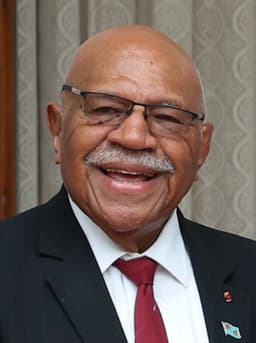
Sitiveni Rabuka
General · Modern
51.7Total
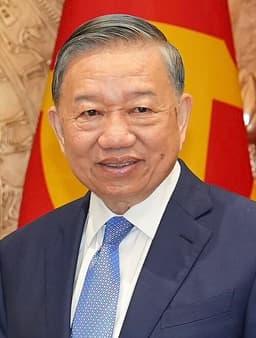
To Lam
General · Modern
50.6Total
Basic Information
Born
1948
1957
Died
—
—
Era
Modern
Modern
Nationality
Fiji
Vietnam
Occupation
General
General
Civilization
Other
Eastern
Score Comparison
Military (10%)
10.2
25.9
Political (20%)
60.0
68.0
Influence (20%)
53.3
51.8
Legacy (20%)
46.7
41.7
Leadership (15%)
85.0
72.0
Strategy (15%)
39.6
36.8
TOTAL
51.7
50.6
Sitiveni Rabuka — Complete Timeline
1987 AD
1987 Fijian Coup d'étatPolitical Action
Rabuka, as a colonel in the Fijian military, led a coup overthrowing the elected government of Timoci Bavadra. The coup was motivated by ethnic Fijian opposition to Indo-Fijian political influence. Rabuka declared Fiji a republic.
CoupMilitary InterventionEthnic Tension
Impact: nationaldestructive
1992 AD
1992 Election as Prime MinisterPolitical Action◆ Major
Rabuka transitioned from military leader to civilian politician, winning the 1992 general election as leader of the Fijian Political Party. He became Prime Minister, serving until 1999.
ElectionCivilian GovernmentPolitical Transition
Impact: national
1997 AD
1997 Constitution ReformReform◆ Major
Rabuka's government oversaw the adoption of a new constitution that removed ethnic-based voting and provided for a multi-ethnic government. The constitution aimed to reduce ethnic tensions and promote national unity.
ConstitutionReformEthnic Reconciliation
Impact: nationalconstructive
1999 AD
1999 General Election DefeatPolitical Action◆ Major
Rabuka's government was defeated in the general election by the Labour Party led by Mahendra Chaudhry. Rabuka stepped down as Prime Minister, marking the end of his first period in power.
Election DefeatGovernment ChangeChaudhry
Impact: national
2022 AD
2022 Return as Prime MinisterPolitical Action◆ Major
Rabuka led the People's Alliance to victory in the 2022 general election, forming a coalition government. He became Prime Minister again, 23 years after his previous tenure, promising democratic reforms.
ElectionReturn to PowerCoalition Government
Impact: national
To Lam — Complete Timeline
2016 AD
Appointed Minister of Public SecurityPolitical Action◆ Major
To Lam was appointed Minister of Public Security of Vietnam, overseeing the country's police and internal security forces. He played a key role in maintaining public order and combating crime.
Ministerial AppointmentSecurity Leadership
Impact: national
2024 AD
Elected President of VietnamPolitical Action◆ Major
To Lam was elected President of Vietnam by the National Assembly, succeeding Vo Van Thuong. He transitioned from security chief to head of state, continuing his influence in national politics.
PresidencyGovernment Leadership
Impact: national
Expert Analysis
Sitiveni Rabuka vs To Lam
# The General Turned Statesman
On a May morning in 1987, Colonel Sitiveni Rabuka of Fiji walked into Parliament in Suva carrying an M-16 rifle. Half a world away and three decades later, General To Lam of Vietnam sat in a Hanoi office, directing the quiet consolidation of power that would eventually lead him to the presidency. Both men were generals who reached the highest political office in their nations. But their journeys, their methods, and their legacies could hardly be more different. What drove a Fijian colonel to stage a coup and then voluntarily submit to democracy? What compelled a Vietnamese security chief to climb the ladder of a one-party state until he reached its summit? The answers lie not just in the men themselves, but in the worlds that shaped them.
Origins
Sitiveni Rabuka was born in 1948 on the island of Vanua Levu, into a rural Methodist family. Fiji in the mid-20th century was a British colony with a delicate ethnic balance: indigenous Fijians, Indo-Fijian descendants of indentured laborers, and smaller communities. Rabuka grew up speaking Fijian and English, attended a Methodist school, and joined the military at 20. His world was one of tradition, land rights, and simmering ethnic tension. By contrast, To Lam was born in 1957 in Hanoi, North Vietnam, just three years after the French defeat at Dien Bien Phu. His childhood unfolded during the Vietnam War, a conflict that forged a generation of disciplined, secretive, and fiercely nationalist security officials. Lam studied law at the People's Police Academy, entering a system where loyalty to the Communist Party was the only path to advancement. Rabuka’s Fiji was a small Pacific democracy struggling with post-colonial identity; Lam’s Vietnam was a war-hardened socialist state fighting for survival and unification.
Rise to Power
Rabuka’s rise came through a single, dramatic act. In 1987, as a colonel, he led a coup against the newly elected government of Timoci Bavadra, which was dominated by Indo-Fijians. Rabuka claimed he was protecting indigenous Fijian rights. The coup was swift, bloodless, and deeply controversial. It made him a hero to some, a villain to others. But Rabuka did not cling to power. Within months, he handed authority to an interim civilian government, then ran for office himself. In 1992, he won the prime ministership through democratic elections. He had transformed from a military usurper into a politician.
To Lam’s rise was slower, more methodical. Appointed Minister of Public Security in 2016, he oversaw Vietnam’s vast internal security apparatus—police, intelligence, border guards. For eight years, he built networks, eliminated rivals, and cultivated allies within the Politburo. When President Vo Van Thuong resigned in 2024 amid a corruption crackdown, Lam was elected president by the National Assembly. He had not seized power; he had been chosen by the party machine he helped shape. Where Rabuka’s path was ruptured by a coup, Lam’s was smoothed by decades of bureaucratic loyalty.
Leadership & Governance
Rabuka’s leadership was paradoxical. As prime minister from 1992 to 1999, he championed the 1997 Constitution Reform, which removed ethnic-based voting and created a multiracial electoral system. This was a remarkable act for a man who had staged a coup to preserve indigenous supremacy. He governed with a coalition of parties, often compromising with his former adversaries. His military score of 19.9 reflects a soldier who was never a great strategist; his political score of 72.0 reveals a pragmatist who learned democracy on the job. He was not a visionary, but he was willing to change.
To Lam’s governance was that of a security state. As minister, he directed anti-corruption campaigns that also served to purge political rivals. As president, he continued the same approach: stability through control. His leadership score of 81.0 is high, but it measures effectiveness in a system where dissent is not tolerated. His military score of 44.6 suggests a man who understood force but rarely used it overtly. Instead, he used surveillance, law, and party discipline. Rabuka led by persuasion and coalition; Lam led by authority and fear.
Triumph & Tragedy
Rabuka’s greatest triumph was the 1997 Constitution. It was a genuine attempt to heal the ethnic wounds his coup had opened. His greatest tragedy came in 1999, when his government was defeated in a landslide by the Labour Party led by Mahendra Chaudhry. Rabuka stepped down peacefully, accepting the verdict of the ballot box. Yet the constitution he created could not prevent another coup in 2000, led by a different faction. His legacy was fragile.
To Lam’s triumph was his elevation to president in 2024, a testament to his survival in a ruthless political environment. His tragedy is that his success came at a cost: the erosion of any independent judiciary, media, or civil society. Vietnam under his influence became more stable but less free. His legacy is one of efficiency without liberty.
Character & Destiny
Rabuka was a man of contradictions: a coup leader who embraced democracy, a nationalist who wrote a multiracial constitution. He was impulsive, charismatic, and capable of self-reflection. “I have learned that power is not permanent,” he once said. His destiny was to be a transitional figure, bridging Fiji’s authoritarian past and its democratic future, however imperfect.
To Lam is a product of his system: disciplined, patient, and opaque. He rarely gives interviews. His character is that of a technocrat who sees politics as management, not vision. His destiny is to be a consolidator, not a reformer. He will likely leave Vietnam with stronger institutions but weaker freedoms.
Legacy
Rabuka is remembered ambivalently. In Fiji, he is both the father of the 1987 coup and the architect of the 1997 constitution. He returned as prime minister in 2022, aged 74, leading a new coalition. His total score of 61.0 reflects a flawed but resilient figure who kept trying. To Lam’s legacy is still forming. His total score of 67.1 is higher, but it measures success within a closed system. History may judge him as a capable administrator who tightened the party’s grip on Vietnam.
Conclusion
Rabuka and To Lam both rose from military ranks to lead their nations. But Rabuka’s story is about the messy, unpredictable journey from dictatorship to democracy; To Lam’s is about the smooth, inevitable path from security chief to president. One man broke the rules to gain power, then learned to follow them. The other followed the rules so perfectly that he became their master. In their differences, we see two faces of modern leadership: one that transforms with its people, and one that controls them.
Rankings
🥇
Sitiveni RabukaLeader
Mil: 10.2Pol: 60.0Inf: 53.3
51.7
🥈
To Lam
Mil: 25.9Pol: 68.0Inf: 51.8
50.6
+1.1 behind
How This Comparison Works
Algorithm
Each figure is scored on 6 dimensions (0—100 scale) based on structured historical data: Military (10%), Political (20%), Influence (20%), Legacy (20%), Leadership (15%), Strategy (15%). The weighted total produces the final ranking.
Data Sources
Scores are computed from structured sub-indicators in the database. Scale factors adjust for era (Ancient ×0.85, Modern ×1.0) and civilization size (Eastern ×1.05, Other ×0.80) to account for differences in population and military scale.
Maximum 3 Figures
Comparisons are limited to 2—3 figures to ensure readability and statistical meaningfulness.
Error Margins
±5 points per dimension — Sub-scores are derived from historical records with inherent uncertainty. Two figures within 5 points on a dimension should be considered roughly equivalent in that area.
Total Score Accuracy
±3 points overall — The weighted combination of 6 dimensions produces a total score with approximately ±3 points of uncertainty. Differences of less than 3 points are not statistically significant— the figures are effectively tied.
Known Limitations
- Historical records are incomplete and uneven across civilizations
- Figures from oral-tradition societies may be underrepresented
- Occupation labels can misclassify multi-role figures
- Scores measure capability and impact, not moral character
- Quantitative scoring is a comparison tool, not absolute truth
Capability Radar
Military (10%) — Battles & Warfare
Battles
5
10
Win Rate
5
10
Expansion
5
10
Political (20%) — Governance & Reform
Reform
50
40
Diplomacy
45
40
Economy
40
30
Influence (20%) — Cultural & Global Reach
Cultural
30
20
Global
20
20
Legacy (20%) — Historical Impact
Historical
40
20
Longevity
30
20
Leadership (15%) — Power & Stability
Tenure
55
50
Stability
35
40
Strategy (15%) — Tactics & Innovation
Strategy
10
10
Tactics
10
10
Reform
5
10
Similar Comparisons
Comments & Discussion
RABUKA-THE-CRUSADER6/16/2026
Rabuka’s 1987 coup wasn’t just about ethnic fear—it was a desperate act to preserve indigenous land rights against Indo-Fijian political dominance. He later showed real courage by surrendering power in free elections, becoming a democratic statesman. That’s a redemption arc few military rulers pull off. To Lam? Just another security apparatchik climbing the Politburo ladder through patronage. No revolution. No conversion. Just ambition wearing a police badge.
THE-BAMBOO-SNAKE6/16/2026
黎笋的徒弟还是新一代鹰犬?阮富仲病重时,苏林加速清洗公安系统异己,不到三个月就拿下三位副部长。这哪是将军从政,分明是特务头子趁火打劫。拉布卡至少敢扛着M-16冲进议会面对面推翻政府;苏林只会在办公室签逮捕令。民主与极权下"将军治国"的差距,比太平洋还要宽。
ETHNIC-CALCULATOR-90006/16/2026
The math doesn’t buddy: Rabuka’s Fiji had 46% indigenous and 49% Indo-Fijian when he struck in ’87. He gambled on military force to lock in Fijian political control forever. To Lam’s Vietnam? Over 85% ethnic Kinh—no demographic panic needed. Lam’s rise is pure bureaucratic survival, not ethnic nationalism. Different threats, different coups. Same old story: when one group fears losing power, uniforms come out.
TEMPLE-AND-BUREAU6/16/2026
拉布卡是酋长国与基督教传统铸就的战士:他1987年政变后在教堂祈祷,1999年大选失败后坦然交接权力。苏林呢?越共体制内爬了四十年,从北宁省民警一路升到总书记,每一步都踩着反腐运动的尸体前进。一个是良心尚未麻木的族长将军,一个是系统养熟的官僚老虎。时代和土地,注定了他们截然不同的宿命。
DEVIL-IN-THE-DETAILS6/16/2026
Everyone romanticizes Rabuka’s "conversion," but don’t forget: his 1997 constitution still entrenched Fijian paramountcy in land and politics—a ticking bomb that exploded in 2000 and 2006. As for Lam, he’s not even a real general—his "combat" record is chasing dissidents and stealing pension funds through the Vietcombank scandal. Two strongmen who never made peace with pluralism, just dressed it in different uniforms.