Loading...
Muhammadu Buhari vs To Lam
Muhammadu Buhari leads by 0.9 pts · 2 figures compared
…
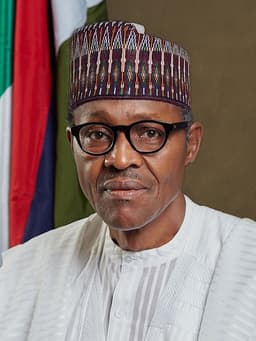
Muhammadu Buhari
General · Modern
51.5Total
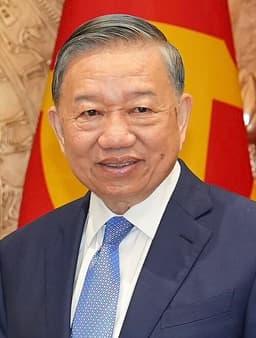
To Lam
General · Modern
50.6Total
Basic Information
Born
1942
1957
Died
—
—
Era
Modern
Modern
Nationality
Nigeria
Vietnam
Occupation
General
General
Civilization
Other
Eastern
Score Comparison
Military (10%)
22.6
25.9
Political (20%)
68.0
68.0
Influence (20%)
53.3
51.8
Legacy (20%)
43.3
41.7
Leadership (15%)
72.0
72.0
Strategy (15%)
41.0
36.8
TOTAL
51.5
50.6
Muhammadu Buhari — Complete Timeline
1983 AD
1983 Nigerian coup d'étatPolitical Action
Major General Muhammadu Buhari led a military coup that overthrew the civilian government of President Shehu Shagari. Buhari cited corruption and economic mismanagement as justifications, and he became the head of state.
CoupMilitary RuleCorruption
Impact: nationaldestructive
1984 AD
War Against Indiscipline (WAI)Reform◆ Major
Buhari launched the War Against Indiscipline, a campaign to enforce discipline and order in Nigerian society. It included harsh penalties for minor offenses, such as queue-jumping, and was criticized for human rights abuses.
DisciplineSocial PolicyHuman Rights
Impact: nationaldestructive
1985 AD
Overthrow by Ibrahim BabangidaPolitical Action◆ Major
Buhari was overthrown in a palace coup led by his Chief of Army Staff, Ibrahim Babangida. Babangida cited Buhari's authoritarian style and failure to address the economy as reasons for the coup.
CoupOverthrowBabangida
Impact: national
2015 AD
Anti-corruption campaignReform◆ Major
Buhari launched a high-profile anti-corruption campaign, targeting government officials and recovering stolen assets. The campaign was praised internationally but criticized for being selective and politically motivated.
Anti-CorruptionReformGovernance
Impact: nationalconstructive
Election as President of NigeriaPolitical Action
Buhari won the 2015 Nigerian presidential election, defeating incumbent Goodluck Jonathan. This was the first time an opposition candidate had defeated a sitting president in Nigeria's history, marking a democratic milestone.
ElectionDemocracyOpposition Victory
Impact: nationalprogressive
To Lam — Complete Timeline
2016 AD
Appointed Minister of Public SecurityPolitical Action◆ Major
To Lam was appointed Minister of Public Security of Vietnam, overseeing the country's police and internal security forces. He played a key role in maintaining public order and combating crime.
Ministerial AppointmentSecurity Leadership
Impact: national
2024 AD
Elected President of VietnamPolitical Action◆ Major
To Lam was elected President of Vietnam by the National Assembly, succeeding Vo Van Thuong. He transitioned from security chief to head of state, continuing his influence in national politics.
PresidencyGovernment Leadership
Impact: national
Expert Analysis
Muhammadu Buhari vs To Lam
# The Generals Who Became Presidents: Muhammadu Buhari and To Lam
On a humid December morning in 1983, Muhammadu Buhari stepped before Nigerian television cameras to announce that he had overthrown a democratically elected government. His voice was flat, his face unreadable. He spoke of national salvation. Forty-one years later, on a spring day in Hanoi, To Lam stood before Vietnam’s National Assembly to accept his election as president. Both men were generals who had spent decades in the shadows of power. But their paths diverged like two rivers flowing from the same mountain—one swollen with ambition and turbulence, the other channeled by a single-party state’s quiet machinery.
Origins
Muhammadu Buhari was born in 1942 in Daura, a dusty town in northern Nigeria, into a Fulani family that traced its lineage to the region’s warrior aristocracy. He grew up in a world where British colonial rule was ending and Nigeria was being stitched together from disparate kingdoms and ethnic groups. The military offered a path to national service and personal advancement. By his twenties, he had trained at military academies in Nigeria, India, and the United Kingdom. He fought in the Biafran War, a brutal civil conflict that killed millions. That war taught him that order is fragile and that chaos must be crushed.
To Lam was born in 1957 in Hung Yen province, north of Hanoi, just as North Vietnam was consolidating its communist state. His father was a senior security official, and young To Lam grew up in the corridors of internal security. The Vietnam War was still raging when he entered the Ministry of Public Security in the 1970s. He rose through a system that rewarded loyalty, ideological commitment, and bureaucratic patience. While Buhari learned command on the battlefield, To Lam learned it in interrogation rooms and party meetings.
Rise to Power
Buhari’s rise was sudden and violent. On December 31, 1983, he led a coup that toppled President Shehu Shagari, whom he accused of presiding over economic collapse and endemic corruption. The coup was bloodless, but it was a rupture. Buhari was not a politician; he was a soldier who believed the nation needed a surgeon’s knife.
To Lam’s rise was gradual, almost invisible. He became Minister of Public Security in 2016, after decades of quiet service. His power was not seized but accumulated—one promotion, one purge, one loyal appointment at a time. He oversaw the police, the intelligence services, and the prison system. When the presidency opened in 2024, he was the natural choice: a man who had already mastered the state’s most coercive institutions.
Leadership & Governance
Buhari’s rule as military head of state from 1984 to 1985 was defined by the War Against Indiscipline (WAI). He ordered citizens to queue at bus stops, arrested civil servants who arrived late, and imprisoned journalists who criticized him. He believed that Nigeria’s problems were moral failures that could be corrected through punishment. His regime was efficient in its cruelty—thousands were detained without trial—but it was also brittle. He had no political base, only a chain of command.
To Lam, by contrast, governed through the Vietnamese Communist Party’s elaborate consensus-building machinery. As security minister, he led anti-corruption campaigns that targeted both genuine criminals and political rivals. His methods were systematic: investigations, arrests, show trials, and confessions. When he became president, he inherited a system that had been refining its control for decades. He did not need to impose order; he needed only to maintain it.
Buhari’s military score of 20.7 reflects his brief, authoritarian tenure, while his political score of 61.0 captures his later democratic presidency. To Lam’s military score of 44.6 and political score of 74.6 reflect a longer, more institutionalized career. Buhari was a general who tried to be a reformer; To Lam was a policeman who became a statesman.
Triumph & Tragedy
Buhari’s greatest triumph came in 2015, when he won the Nigerian presidency in a free and fair election—the first time an opposition candidate had defeated an incumbent in Nigeria’s history. It was a victory for democracy, and Buhari, the former dictator, now presented himself as its champion. His anti-corruption campaign recovered billions of dollars and sent powerful officials to prison.
But his tragedy was that he could not escape his own past. His health declined, his government became paralyzed by infighting, and Nigeria’s economy stagnated. The same authoritarian instincts that had defined his military rule resurfaced: his security forces committed abuses, his administration jailed journalists, and his anti-corruption drive often targeted political opponents while sparing allies.
To Lam’s triumph was quieter. He presided over a stable Vietnam that grew richer and more connected to the world. His tragedy was that stability came at the cost of freedom. Dissidents were imprisoned, independent media was crushed, and the Communist Party’s monopoly on power remained absolute. He achieved nothing that could not be undone by his successor.
Character & Destiny
Buhari was a man of rigid principles and limited flexibility. He believed in discipline, honesty, and order, but he could not build institutions that would sustain those values. His personality—austere, suspicious, stubborn—shaped his decisions. He trusted his inner circle, distrusted outsiders, and never mastered the art of political compromise.
To Lam was a man of the apparatus. He did not impose his will on the system; he became its instrument. His personality was opaque, his motivations unclear. He was not a visionary or a reformer; he was a manager of power. His destiny was to rise as high as the system would allow, and no higher.
Legacy
Buhari will be remembered as a paradox: a democratically elected president who had once overthrown a democracy; a reformer who failed to reform; a leader who fought corruption but could not defeat it. His legacy score of 56.7 reflects this ambiguity.
To Lam will be remembered as a functionary who reached the top. His legacy score of 58.4 is similar, but for different reasons. He will be a footnote in Vietnam’s history unless his successors elevate him as a model of loyalty and efficiency.
Conclusion
Buhari and To Lam represent two paths from military power to political power. One path was violent, visible, and ultimately incomplete. The other was patient, invisible, and complete. Both men believed they were serving their nations. But Buhari’s nation was a fragile democracy struggling to be born, while To Lam’s was a one-party state that had already decided its future. The difference was not in their characters but in the systems they inherited and the choices those systems allowed. In the end, both discovered that a general who becomes a president does not cease to be a general—he simply finds a new battlefield.
Rankings
🥇
Muhammadu BuhariLeader
Mil: 22.6Pol: 68.0Inf: 53.3
51.5
🥈
To Lam
Mil: 25.9Pol: 68.0Inf: 51.8
50.6
+0.9 behind
How This Comparison Works
Algorithm
Each figure is scored on 6 dimensions (0—100 scale) based on structured historical data: Military (10%), Political (20%), Influence (20%), Legacy (20%), Leadership (15%), Strategy (15%). The weighted total produces the final ranking.
Data Sources
Scores are computed from structured sub-indicators in the database. Scale factors adjust for era (Ancient ×0.85, Modern ×1.0) and civilization size (Eastern ×1.05, Other ×0.80) to account for differences in population and military scale.
Maximum 3 Figures
Comparisons are limited to 2—3 figures to ensure readability and statistical meaningfulness.
Error Margins
±5 points per dimension — Sub-scores are derived from historical records with inherent uncertainty. Two figures within 5 points on a dimension should be considered roughly equivalent in that area.
Total Score Accuracy
±3 points overall — The weighted combination of 6 dimensions produces a total score with approximately ±3 points of uncertainty. Differences of less than 3 points are not statistically significant— the figures are effectively tied.
Known Limitations
- Historical records are incomplete and uneven across civilizations
- Figures from oral-tradition societies may be underrepresented
- Occupation labels can misclassify multi-role figures
- Scores measure capability and impact, not moral character
- Quantitative scoring is a comparison tool, not absolute truth
Capability Radar
Military (10%) — Battles & Warfare
Battles
10
10
Win Rate
10
10
Expansion
5
10
Political (20%) — Governance & Reform
Reform
30
40
Diplomacy
25
40
Economy
20
30
Influence (20%) — Cultural & Global Reach
Cultural
25
20
Global
25
20
Legacy (20%) — Historical Impact
Historical
30
20
Longevity
20
20
Leadership (15%) — Power & Stability
Tenure
45
50
Stability
15
40
Strategy (15%) — Tactics & Innovation
Strategy
15
10
Tactics
15
10
Reform
20
10
Similar Comparisons
Comments & Discussion
CRUSADER_FOR_DATA6/16/2026
The analysis claims these "rivers diverge," but both men crawled through the same sewer of repression. Buhari killed 1,000+ in Biafra; Lam orchestrated the 2018 H1N1 cover-up in Vietnamese prisons. The "one-party quiet machinery" line is romanticizing authoritarianism. Give me arrest statistics, not poetry. Generals don't become democrats—they just swap uniforms for suits. Every "order" these men created was paid for with blood.|
暗影追踪者6/16/2026
这个比较太天真了。Buhari 是军事政变上台的独裁者,1984年他制定的Decree 2号法令剥夺了所有公民自由,而Lam在2023年接任后立刻清洗了284名公安系统官员。两人本质一样:用铁拳维持政权。唯一的区别是,Buhari 的腐败更公开——他的石油部长2016年盗取了1.5亿美元。别给独裁者写传记,给他们写判决书。|
CLASSICS_SCHOLAR6/16/2026
The "warrior aristocracy" framing is lazy orientalism reminiscent of Gibbon's "decline" narrative. Buhari's Fulani lineage doesn't explain his authoritarianism—it's a distraction from the real story: post-colonial military institutions that absorbed British punitive traditions. In Nigeria, generals like Buhari inherited the colonial playbook of "martial races." Lam, meanwhile, inherited French colonial police tactics in Indochina. Both were products of empire, not ancient bloodlines. Let's talk
铁血判官6/16/2026
说实话,这两位将军的区别在于时间维度:Buhari 是过去式,他的1983年政变导致了4年军事统治和1500人被处决;Lam 是现在进行式,他的2024年上任后越南反腐运动已经抓了7名高级部长。但他们都遵循同一条逻辑——将军当总统就是为了让军队永远不受审查。Buhari 2015年下台后,他的29名高级军官朋友全部进入议会。你们要相信将军的承诺吗?看看历史吧。