Loading...
Sitiveni Rabuka vs Themistocles
Themistocles leads by 16.7 pts · 2 figures compared
…
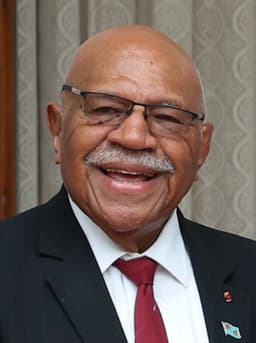
Sitiveni Rabuka
General · Modern
51.7Total
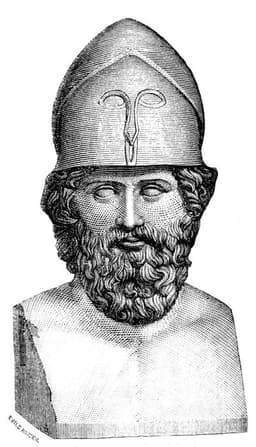
Themistocles
Politician · Ancient
68.4Total
Basic Information
Born
1948
-524
Died
—
-459
Era
Modern
Ancient
Nationality
Fiji
Greece
Occupation
General
Politician
Civilization
Other
Western
Score Comparison
Military (10%)
10.2
80.0
Political (20%)
60.0
72.0
Influence (20%)
53.3
40.0
Legacy (20%)
46.7
80.0
Leadership (15%)
85.0
79.8
Strategy (15%)
39.6
76.0
TOTAL
51.7
68.4
Sitiveni Rabuka — Complete Timeline
1987 AD
1987 Fijian Coup d'étatPolitical Action
Rabuka, as a colonel in the Fijian military, led a coup overthrowing the elected government of Timoci Bavadra. The coup was motivated by ethnic Fijian opposition to Indo-Fijian political influence. Rabuka declared Fiji a republic.
CoupMilitary InterventionEthnic Tension
Impact: nationaldestructive
1992 AD
1992 Election as Prime MinisterPolitical Action◆ Major
Rabuka transitioned from military leader to civilian politician, winning the 1992 general election as leader of the Fijian Political Party. He became Prime Minister, serving until 1999.
ElectionCivilian GovernmentPolitical Transition
Impact: national
1997 AD
1997 Constitution ReformReform◆ Major
Rabuka's government oversaw the adoption of a new constitution that removed ethnic-based voting and provided for a multi-ethnic government. The constitution aimed to reduce ethnic tensions and promote national unity.
ConstitutionReformEthnic Reconciliation
Impact: nationalconstructive
1999 AD
1999 General Election DefeatPolitical Action◆ Major
Rabuka's government was defeated in the general election by the Labour Party led by Mahendra Chaudhry. Rabuka stepped down as Prime Minister, marking the end of his first period in power.
Election DefeatGovernment ChangeChaudhry
Impact: national
2022 AD
2022 Return as Prime MinisterPolitical Action◆ Major
Rabuka led the People's Alliance to victory in the 2022 general election, forming a coalition government. He became Prime Minister again, 23 years after his previous tenure, promising democratic reforms.
ElectionReturn to PowerCoalition Government
Impact: national
Themistocles — Complete Timeline
483 BC
Construction of the Athenian FleetReform◆ Major
Themistocles persuaded the Athenian assembly to use silver from the Laurion mines to build a fleet of 200 triremes. This naval expansion transformed Athens into a major maritime power and was crucial for the victory at Salamis.
AthensNaval PowerReform
Impact: nationalconstructive
480 BC
Battle of SalamisWar
Themistocles commanded the Greek navy against the Persian fleet at Salamis. He lured the Persians into the narrow straits, where the Greek ships destroyed the larger Persian fleet. This victory ended the Persian threat to Greece and preserved Greek independence.
Greco-Persian WarsNaval BattleAthens
Impact: regionalconstructive
472 BC
Ostracism from AthensPolitical Action◆ Major
Themistocles was ostracized by the Athenian assembly, likely due to political rivalries and accusations of arrogance. He went into exile, first to Argos, then to Persia, where he was received by King Artaxerxes I.
AthensExileOstracism
Impact: nationaltragic
465 BC
Service under the Persian KingPolitical Action
After his ostracism, Themistocles fled to Persia and offered his services to King Artaxerxes I. He was granted governorship of Magnesia and other cities in Asia Minor, where he lived until his death. This act was seen as treason by many Athenians.
PersiaExileTreason
Impact: regional
Expert Analysis
Themistocles vs Sitiveni Rabuka
# The Statesman and the Soldier: Themistocles and Sitiveni Rabuka
On a September morning in 480 BCE, a Greek admiral stood on the deck of his trireme, watching the Persian fleet pour into the narrow strait of Salamis. He had gambled everything on this moment—his city, his reputation, his life. Twenty-five centuries later, on a May morning in 1987, a Fijian colonel walked into parliament in Suva, armed men at his back, and arrested the prime minister. Both men had decided that the fate of their nations depended on their actions alone. One would be remembered as the savior of Western civilization; the other, as a coup leader who later sought redemption through democracy. What separates a hero from a villain often depends not on the deed, but on the moment, the context, and the long arc of a life.
Origins
Themistocles was born into the Athenian aristocracy around 524 BCE, but his mother was not Athenian, a stain that haunted him in the city's rigid social hierarchy. He grew up in the shadow of the Persian Empire, which had already swallowed the Greek cities of Ionia. His world was one of fragile city-states, constant warfare, and the looming threat of invasion. He learned early that survival depended on cunning, persuasion, and the ability to read men's ambitions.
Sitiveni Rabuka was born in 1948 on the island of Vanua Levu, in a Fiji still under British colonial rule. His father was a carpenter, his mother a homemaker. He grew up in a world of ethnic tension between indigenous Fijians and the Indo-Fijian descendants of indentured laborers. He joined the military, rose through the ranks, and by 1987 was a colonel in a small army that had never staged a coup. His world was one of post-colonial uncertainty, where democracy was new and fragile.
The difference in their origins is not just one of time and place. Themistocles was born into a competitive political culture that demanded excellence in public debate; Rabuka was born into a hierarchical colonial system that demanded obedience. One learned to persuade; the other learned to command.
Rise to Power
Themistocles rose through the ranks of Athenian politics by sheer force of personality. In 483 BCE, he faced a crucial choice: what to do with the silver from the Laurion mines. His rivals wanted to distribute it among citizens. Themistocles persuaded the assembly to build a fleet of 200 triremes instead. It was a masterstroke of political foresight. Athens had no major naval tradition, but Themistocles saw that the coming war with Persia would be decided at sea. He was not a general, but he understood that power flows to those who prepare for the future.
Rabuka's rise was far more abrupt. On May 14, 1987, he walked into parliament with ten masked soldiers and told the speaker, "This is a takeover." The coup was swift, bloodless, and shocking. Fiji's first democratically elected government, led by the Indo-Fijian Timoci Bavadra, had been in power for only a month. Rabuka claimed he was protecting indigenous Fijian rights. But the real motivation was simpler: he believed that democracy had failed his people, and that only force could restore order.
The contrast is striking. Themistocles rose through persuasion and democratic process; Rabuka rose through the barrel of a gun. Yet both men faced a similar dilemma: how to lead when the existing system seemed inadequate to the crisis at hand.
Leadership & Governance
Themistocles' greatest moment came at the Battle of Salamis in 480 BCE. He did not command the largest fleet—the Spartans had that honor—but he controlled the strategy. He lured the Persian navy into the narrow strait, where their numerical advantage became a liability. The Greek victory was total. Themistocles had saved not just Athens, but the entire Greek world. His political genius was equally impressive: he had convinced the fractious Greek city-states to unite under Athenian leadership, a feat that required immense diplomatic skill.
Rabuka's leadership was more troubled. After the 1987 coup, he ruled as a military dictator, but he quickly realized that governing was harder than seizing power. In 1992, he transitioned to civilian politics, winning the election as leader of the Fijian Political Party. His greatest achievement came in 1997, when his government oversaw a new constitution that removed ethnic-based voting and created a multi-racial democracy. It was a remarkable act of statesmanship from a man who had begun his political career by overthrowing a government.
But where Themistocles' reforms were proactive—building a fleet to meet a known threat—Rabuka's were reactive, a response to the chaos his own actions had created. Themistocles shaped history; Rabuka was shaped by it.
Triumph & Tragedy
Themistocles' triumph was Salamis. His tragedy came later. In 472 BCE, the Athenian assembly ostracized him—sent him into exile for ten years. The reasons are murky: accusations of arrogance, political rivalry, perhaps fear of his growing power. He fled to Persia, of all places, and offered his services to King Artaxerxes I, the son of the very king he had defeated. He was granted governorship of Magnesia, where he lived out his days in the service of his former enemy. The savior of Greece died in Persian exile around 459 BCE.
Rabuka's tragedy is more ambiguous. He lost the 1999 election to Mahendra Chaudhry, the Indo-Fijian leader he had overthrown twelve years earlier. It seemed like poetic justice. But then, in 2000, another coup overthrew Chaudhry again, and Fiji spiraled into decades of political instability. Rabuka watched from the sidelines as his country suffered the consequences of the precedent he had set. For years, he was a pariah, remembered not for the 1997 constitution but for the 1987 coup.
Yet Rabuka's story does not end there. In 2022, at age 74, he returned to lead the People's Alliance to victory in the general election, becoming prime minister again—this time, democratically. It was a redemption arc that Themistocles never had.
Character & Destiny
Themistocles was brilliant, arrogant, and deeply strategic. He saw the future and forced his countrymen to see it too. But his arrogance made enemies, and his success made him a target. He could not adapt to peace; his skills were for crisis, not for normalcy. His exile to Persia was not just a punishment but a reflection of his character: he could not imagine a life without power, even if that power came from a foreign king.
Rabuka was different. He was a soldier who learned to be a politician, a coup leader who learned to love democracy. He admitted his mistakes—something Themistocles never did. In a 2019 interview, Rabuka said, "I have to live with the fact that I set a precedent for military intervention in politics." That self-awareness is rare among historical figures. It allowed him to change, to grow, and ultimately to return as a different kind of leader.
Legacy
Themistocles' legacy is immense. Without his fleet and his strategy, the Persian Wars might have ended differently. Greek democracy, philosophy, and art might never have flourished. Western civilization might look very different. His military score of 64.1 and political score of 69.4 understate his importance; his influence score of 84.7 is more accurate. He is remembered as the father of Athenian naval power and the architect of the Greek victory.
Rabuka's legacy is more complicated. His 1997 constitution was a genuine achievement, but it was undone by later coups. His influence score of 70.3 reflects his impact on Fijian history, but it is a history of instability and ethnic division. He is remembered both as the man who broke Fiji's democracy and as the man who tried to fix it. Whether history will judge him as a villain or a flawed reformer remains an open question.
Conclusion
Themistocles and Rabuka never met, never could have met. One lived in the age of triremes and oracles; the other in the age of television and sanctions. Yet they faced the same fundamental question: when democracy seems to fail, what does a leader do? Themistocles chose to work within the system, building a fleet through persuasion, and was rewarded with glory and exile. Rabuka chose to break the system, seizing power through force, and was rewarded with power and regret.
In the end, the difference between them is not one of character or ability, but of context. Themistocles lived in a world where democratic institutions were new and flexible, where a single persuasive voice could change history. Rabuka lived in a world where those institutions were fragile and contested, where the legacy of colonialism had left deep ethnic wounds. One man's success became the foundation of Western civilization; the other's failure became a cautionary tale for the post-colonial world.
Perhaps the most telling difference is this: Themistocles died in exile, still scheming, still trying to regain power. Rabuka died in office, having earned back the trust of his people. Redemption is a rare gift in history, and Rabuka received it. Themistocles never did.
Rankings
🥇
ThemistoclesLeader
Mil: 80.0Pol: 72.0Inf: 40.0
68.4
🥈
Sitiveni Rabuka
Mil: 10.2Pol: 60.0Inf: 53.3
51.7
+16.7 behind
How This Comparison Works
Algorithm
Each figure is scored on 6 dimensions (0—100 scale) based on structured historical data: Military (10%), Political (20%), Influence (20%), Legacy (20%), Leadership (15%), Strategy (15%). The weighted total produces the final ranking.
Data Sources
Scores are computed from structured sub-indicators in the database. Scale factors adjust for era (Ancient ×0.85, Modern ×1.0) and civilization size (Eastern ×1.05, Other ×0.80) to account for differences in population and military scale.
Maximum 3 Figures
Comparisons are limited to 2—3 figures to ensure readability and statistical meaningfulness.
Error Margins
±5 points per dimension — Sub-scores are derived from historical records with inherent uncertainty. Two figures within 5 points on a dimension should be considered roughly equivalent in that area.
Total Score Accuracy
±3 points overall — The weighted combination of 6 dimensions produces a total score with approximately ±3 points of uncertainty. Differences of less than 3 points are not statistically significant— the figures are effectively tied.
Known Limitations
- Historical records are incomplete and uneven across civilizations
- Figures from oral-tradition societies may be underrepresented
- Occupation labels can misclassify multi-role figures
- Scores measure capability and impact, not moral character
- Quantitative scoring is a comparison tool, not absolute truth
Capability Radar
Military (10%) — Battles & Warfare
Battles
5
75
Win Rate
5
85
Expansion
5
60
Political (20%) — Governance & Reform
Reform
50
75
Diplomacy
45
85
Economy
40
65
Influence (20%) — Cultural & Global Reach
Cultural
30
70
Global
20
75
Legacy (20%) — Historical Impact
Historical
40
85
Longevity
30
80
Leadership (15%) — Power & Stability
Tenure
55
70
Stability
35
60
Strategy (15%) — Tactics & Innovation
Strategy
10
90
Tactics
10
95
Reform
5
80
Similar Comparisons
Comments & Discussion
ATHENS_OR_BUST6/16/2026
Salamis was a tactical genius moment fueled by sheer audacity, but can we stop romanticizing Themistocles as a democratic savior? He tricked his own allies into fighting, threatened to abandon them, and later was ostracized and fled to Persia—the enemy he supposedly crushed. Compare that to Rabuka, who at least faced his coup consequences and won democratic elections later. Themistocles ended up a Persian courtier; Rabuka ended up a prime minister. Context matters, but so does integrity.
沉默的锡兵6/16/2026
把一位靠军事政变上台的军人跟古希腊名将相提并论,太抬举拉布卡了。他1987年搞政变的理由是什么?“保护原住民利益听起来很政治正确,但实际是撕裂了斐济社会二十年。印度裔和原住民之间的仇恨,至今没完全愈合。相比之下,特米斯托克利即使被流放,也没靠枪杆子篡改自己国家的宪法。政变就是政变,包装成民族拯救者就是历史修正主义。”
CLASSICS_AND_BEER6/16/2026
As a classics nerd, I find the parallel compelling but the contrast more telling. Themistocles had to invent an Athenian navy from scratch using silver mines at Laurion—a resource gamble that paid off in two years. Rabuka inherited a functioning state from colonial Britain. One built an empire's rival; the other dismantled a fragile democracy. Themistocles' Athens came out of Salamis stronger; Rabuka's Fiji came out of his coups poorer and more divided. Not all statesmen are equal.
数据挖矿工6/16/2026
说“拯救西方文明”这个标签太宏大叙事了吧。按历史记载,萨拉米斯海战时波斯舰队实际参战船只可能只有600到700艘之间,而不是古典文献说的1200艘。也就是说,特米斯托克利的胜利很大程度上依赖波斯后勤崩溃和天气。再看斐济,拉布卡政变时军队只有不到3000人,而印度裔占总人口48%以上。简单的数学决定谁赢谁输,不是个人“英雄气概”。数据不会骗人,叙事才会。
PALM_TREE_VISION6/16/2026
Rabuka's arc is the more morally interesting story. Themistocles was a one-hit wonder who died serving Persia. Rabuka? He staged a coup, yes, but then spent 12 years in the wilderness, apologized publicly, and won the prime minister's office through the ballot box in 2022. Name one Athenian general who did that. The arc of the moral universe bends toward redemption, but only if you live long enough to walk it. Rabuka did. Themistocles died in exile, bitter and forgotten.
海峡烟火6/16/2026
说到底,这两个人的共同点是他们都靠“危机时刻”崛起。特米斯托克利在薛