Loading...
Sitiveni Rabuka vs Tadeusz Kosciuszko
Tadeusz Kosciuszko leads by 12.4 pts · 2 figures compared
…
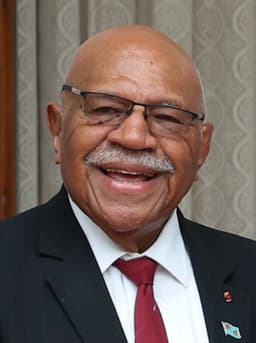
Sitiveni Rabuka
General · Modern
51.7Total
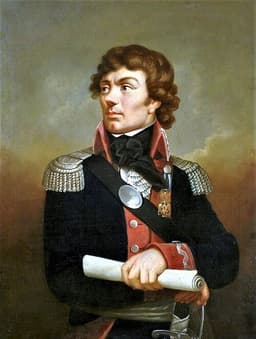
Tadeusz Kosciuszko
General · Modern
64.1Total
Basic Information
Born
1948
1746
Died
—
1817
Era
Modern
Modern
Nationality
Fiji
Poland
Occupation
General
General
Civilization
Other
Western
Score Comparison
Military (10%)
10.2
47.5
Political (20%)
60.0
68.0
Influence (20%)
53.3
68.0
Legacy (20%)
46.7
68.0
Leadership (15%)
85.0
64.5
Strategy (15%)
39.6
55.0
TOTAL
51.7
64.1
Sitiveni Rabuka — Complete Timeline
1987 AD
1987 Fijian Coup d'étatPolitical Action
Rabuka, as a colonel in the Fijian military, led a coup overthrowing the elected government of Timoci Bavadra. The coup was motivated by ethnic Fijian opposition to Indo-Fijian political influence. Rabuka declared Fiji a republic.
CoupMilitary InterventionEthnic Tension
Impact: nationaldestructive
1992 AD
1992 Election as Prime MinisterPolitical Action◆ Major
Rabuka transitioned from military leader to civilian politician, winning the 1992 general election as leader of the Fijian Political Party. He became Prime Minister, serving until 1999.
ElectionCivilian GovernmentPolitical Transition
Impact: national
1997 AD
1997 Constitution ReformReform◆ Major
Rabuka's government oversaw the adoption of a new constitution that removed ethnic-based voting and provided for a multi-ethnic government. The constitution aimed to reduce ethnic tensions and promote national unity.
ConstitutionReformEthnic Reconciliation
Impact: nationalconstructive
1999 AD
1999 General Election DefeatPolitical Action◆ Major
Rabuka's government was defeated in the general election by the Labour Party led by Mahendra Chaudhry. Rabuka stepped down as Prime Minister, marking the end of his first period in power.
Election DefeatGovernment ChangeChaudhry
Impact: national
2022 AD
2022 Return as Prime MinisterPolitical Action◆ Major
Rabuka led the People's Alliance to victory in the 2022 general election, forming a coalition government. He became Prime Minister again, 23 years after his previous tenure, promising democratic reforms.
ElectionReturn to PowerCoalition Government
Impact: national
Tadeusz Kosciuszko — Complete Timeline
1777 AD
Battle of Saratoga (engineering contributions)War◆ Major
Kosciuszko designed fortifications and selected defensive positions for the American army at Saratoga. His work contributed to the American victory, a turning point in the Revolutionary War.
American RevolutionSaratogaEngineering
Impact: regional
1778 AD
Fortification of West PointWar◆ Major
Kosciuszko was assigned to fortify West Point on the Hudson River. He designed and supervised the construction of fortifications that made the site a key American stronghold for the remainder of the war.
American RevolutionWest PointFortifications
Impact: regionalconstructive
1794 AD
Kosciuszko UprisingWar
Kosciuszko led a national uprising in Poland against Russian and Prussian occupation. He proclaimed the Act of Insurrection and won the Battle of Rac
Polish UprisingIndependenceDefeat
Impact: nationaltragic
Battle of RacławiceWar◆ Major
Kosciuszko led Polish forces, including peasant scythemen, to victory over a larger Russian army at Rac
Kosciuszko UprisingBattlePeasants
Impact: national
Capture and imprisonment at the Battle of MaciejowiceWar◆ Major
Kosciuszko was wounded and captured by Russian forces at the Battle of Maciejowice. His capture effectively ended the uprising, and he was imprisoned in St. Petersburg until 1796.
Kosciuszko UprisingCaptureImprisonment
Impact: nationaltragic
Expert Analysis
Sitiveni Rabuka vs Tadeusz Kosciuszko
### The General Who Built, and the General Who Broke
In the autumn of 1777, a Polish engineer in his early thirties surveyed the dense woodlands and winding waterways of upstate New York. His name was Tadeusz Kosciuszko, and he was about to help shape the destiny of a republic yet to be born. Two centuries later and half a world away, in the spring of 1987, a Fijian colonel named Sitiveni Rabuka stood in the humid corridors of Parliament in Suva, his hand on a rifle, ready to topple a government. One man spent his life building fortifications for liberty; the other spent a lifetime dismantling and then rebuilding a democracy. Theirs is a story of two generals, two very different eras, and the strange, winding road between the battlefield and the ballot box.
### Origins
Tadeusz Kosciuszko was born in 1746 to a minor noble family in the Polish-Lithuanian Commonwealth, a vast but increasingly fragile state squeezed between the ambitions of Russia, Prussia, and Austria. He was shaped by the ideals of the Enlightenment and a deep, almost romantic patriotism for a homeland that was being erased from the map. After a military education in Warsaw and Paris, he found himself in America, a young man with a talent for geometry and a burning desire to fight for freedom—any freedom. The American Revolution was not his war, but he made it his own. For Kosciuszko, the struggle was always about principle.
Sitiveni Rabuka was born in 1948, in the village of Dreketi on the island of Vanua Levu, a world away from the salons of Paris. Fiji was then a British colony, a patchwork of indigenous Fijian and Indo-Fijian communities living under a common crown. Rabuka’s background was humble; he excelled in sports and rose through the ranks of the military, a loyal officer in a small, disciplined force. The ideals that shaped him were not those of the Enlightenment but of ethnic loyalty, land rights, and a quiet, simmering anxiety among indigenous Fijians that their political and cultural dominance was slipping away. For Rabuka, the struggle was always about identity.
### Rise to Power
Kosciuszko’s rise was the product of merit and opportunity. In 1777, at the Battle of Saratoga, he was not a commander of armies but the quiet genius behind the earthworks and defensive positions that allowed the American forces to hold their ground and eventually force a British surrender. His military score of 79.2 reflects a solid competence, but his true genius was engineering. He was then sent to fortify West Point, the strategic lynchpin of the Hudson River, designing fortifications that would later be called the “American Gibraltar.” His reputation was built on sweat and soil, not blood and glory.
Rabuka’s rise was far swifter and far more violent. On May 14, 1987, with a military score of only 19.9, he was no strategic mastermind. But he was decisive. After the election of a coalition government led by Timoci Bavadra—an alliance that included many Indo-Fijians—Rabuka led a coup d’état. He was a colonel in a small army, but he had the loyalty of the barracks. The coup was bloodless, but it shattered Fiji’s constitutional order. Rabuka did not rise through the ranks of politics; he seized the stage with a rifle.
### Leadership & Governance
Kosciuszko’s leadership was that of a republican idealist. In 1794, he returned to a Poland that had been partitioned out of existence. He proclaimed the Act of Insurrection and led the Kosciuszko Uprising, a desperate, heroic bid for national survival. At the Battle of Racławice, he famously led peasant scythemen into battle against a larger Russian army and won. It was a moment of pure, improbable glory. But his political score of 84.3 shows a man who understood that victory required more than arms. He issued the Proclamation of Połaniec, promising to free serfs and grant them land—a radical move that alienated the nobility without fully winning the peasants. His governance was visionary but brittle.
Rabuka’s leadership was that of a pragmatist who learned from his mistakes. After the 1987 coup, he ruled as a military strongman, but he soon realized that a nation cannot be governed by bayonets alone. In 1992, he won the election as a civilian politician, and in 1997, his government oversaw a historic constitution reform that removed ethnic-based voting and created a multi-racial democracy. His political score of 72.0 reflects a man who, having broken the system, had to rebuild it. He was not an idealist; he was a fixer, and a flawed one at that. He lost the 1999 election and stepped down, only to return in 2022 as prime minister again, a testament to his resilience.
### Triumph & Tragedy
Kosciuszko’s greatest triumph was Racławice, where the scythe of the peasant met the bayonet of the empire, and the peasant won. His greatest tragedy came just months later, at the Battle of Maciejowice. Wounded and captured, he was thrown into a Russian prison. The uprising collapsed, and Poland would not see independence for another 123 years. His capture was the end of a dream.
Rabuka’s greatest triumph was the 1997 constitution, which gave Fiji a chance at multi-ethnic peace. His greatest tragedy was that he was the one who had broken the peace in the first place. The 1987 coup set a precedent that would haunt Fiji for decades, leading to further coups in 2000 and 2006. Rabuka’s legacy is forever stained by the violence he unleashed, even as he later tried to heal the wounds.
### Character & Destiny
Kosciuszko was a man of principle, perhaps to a fault. He believed in liberty so deeply that he freed his own serfs and left his American pension to buy slaves their freedom. His character was forged in the crucible of the Enlightenment, and his destiny was to be a symbol, not a king. He died in 1817, in exile, his heart preserved in an urn, a martyr to a cause that would outlive him.
Rabuka was a man of instinct, shaped by the raw politics of ethnicity. He was not a philosopher; he was a soldier who stumbled into politics and then tried to learn the craft. His destiny was to be a paradox: the coup leader who became a democrat, the breaker who became a builder. He is still alive, still shaping his legacy.
### Legacy
Kosciuszko is remembered as a hero of two revolutions: the American and the Polish. His name adorns bridges, monuments, and a mountain in Australia. His legacy is clean, heroic, and uncomplicated. He is a saint of liberty.
Rabuka’s legacy is messy and contested. In Fiji, he is either a savior of indigenous rights or a destroyer of democracy. His 2022 return as prime minister shows that his story is not yet finished. He is a man who, having once torn down a house, now lives in it, trying to keep the roof from leaking.
### Conclusion
One general built walls to protect freedom; the other tore down a government to protect a people. Kosciuszko died with his ideals intact, a pure flame in a dark world. Rabuka lives on, a man who broke his country and then spent decades trying to mend it. Both were warriors, but their wars were different: one was a war of liberation, the other a war of identity. And in the end, the difference between a hero and a complicated man is often just the distance of time.
Rankings
🥇
Tadeusz KosciuszkoLeader
Mil: 47.5Pol: 68.0Inf: 68.0
64.1
🥈
Sitiveni Rabuka
Mil: 10.2Pol: 60.0Inf: 53.3
51.7
+12.4 behind
How This Comparison Works
Algorithm
Each figure is scored on 6 dimensions (0—100 scale) based on structured historical data: Military (10%), Political (20%), Influence (20%), Legacy (20%), Leadership (15%), Strategy (15%). The weighted total produces the final ranking.
Data Sources
Scores are computed from structured sub-indicators in the database. Scale factors adjust for era (Ancient ×0.85, Modern ×1.0) and civilization size (Eastern ×1.05, Other ×0.80) to account for differences in population and military scale.
Maximum 3 Figures
Comparisons are limited to 2—3 figures to ensure readability and statistical meaningfulness.
Error Margins
±5 points per dimension — Sub-scores are derived from historical records with inherent uncertainty. Two figures within 5 points on a dimension should be considered roughly equivalent in that area.
Total Score Accuracy
±3 points overall — The weighted combination of 6 dimensions produces a total score with approximately ±3 points of uncertainty. Differences of less than 3 points are not statistically significant— the figures are effectively tied.
Known Limitations
- Historical records are incomplete and uneven across civilizations
- Figures from oral-tradition societies may be underrepresented
- Occupation labels can misclassify multi-role figures
- Scores measure capability and impact, not moral character
- Quantitative scoring is a comparison tool, not absolute truth
Capability Radar
Military (10%) — Battles & Warfare
Battles
5
55
Win Rate
5
60
Expansion
5
30
Political (20%) — Governance & Reform
Reform
50
45
Diplomacy
45
55
Economy
40
35
Influence (20%) — Cultural & Global Reach
Cultural
30
65
Global
20
55
Legacy (20%) — Historical Impact
Historical
40
70
Longevity
30
60
Leadership (15%) — Power & Stability
Tenure
55
40
Stability
35
30
Strategy (15%) — Tactics & Innovation
Strategy
10
65
Tactics
10
70
Reform
5
50
Similar Comparisons
Comments & Discussion
"The Rampart vs. the Revolver"6/16/2026
Rabuka tore down a government with a rifle; Kosciuszko built defenses with a compass. Rabuka's 1987 coup was a short-term power grab, not a principled revolution. Kosciuszko’s engineering at Saratoga and West Point kept the Continental Army alive. Comparing a coup plotter to a freedom engineer is like comparing a wrecking ball to a foundation stone. Rabuka's democracy rebuilding came decades late and only after he lost power.
"Geometry vs. Geography"6/16/2026
This comparison falls flat. Kosciuszko was a military engineer who mastered terrain—think Saratoga’s defenses and the strategic design of West Point. Rabuka was a political opportunist who exploited ethnic divisions. Rabuka overthrew a democratically elected government in 1987, then later repented? That’s not a general’s journey; it’s a dictator’s career arc. Kosciuszko fought for universal liberty; Rabuka fought for Fijian chiefly rule. Apples and oranges.
"Polished Sabre, Rusted Coup"6/16/2026
Kosciuszko’s siegecraft at Ninety Six in 1781 was a textbook on perseverance—he lost the battle but saved the army. Rabuka’s 1987 coup succeeded in hours but destabilized Fiji for years. One built for posterity; the other broke for the present. Rabuka’s later role as PM doesn’t redeem his original sin: he toppled a multiracial government to protect indigenous rights. Kosciuszko never sold out principle for ethnic loyalty.
"复星与复制的将军"6/16/2026
拉布卡的枪声在1987年响起,那是推翻民选政府的政变,而非革命。科希丘什科的堡垒在西点屹立至今,是独立战争的关键。拉布卡后来从政,当了总理,但这像是补丁,不是修复。科希丘什科至死未屈从沙俄,拉布卡却在政变后成了政客。一个用几何学保卫自由,另一个用步枪打破民主。历史不会原谅投机者,只会纪念建造者。
"政变的裂缝与自由的堤坝"6/16/2026
科希丘什科在萨拉托加设计的防御工事,让英军无法突破,那是结构的力量。拉布卡1987年的政变,不过是斐济种族矛盾的裂缝。他后来参政,但民主不是他建的,是被迫修复的。科希丘什科为美国、波兰的自由奋斗终身,甚至解放奴隶。拉布卡却维护土著特权,拒绝多族裔平等。将军的品行,不在于他有多少勋章,而在于他为谁筑墙。