Loading...
Tadeusz Kosciuszko vs Yitzhak Rabin
Yitzhak Rabin leads by 2.3 pts · 2 figures compared
…
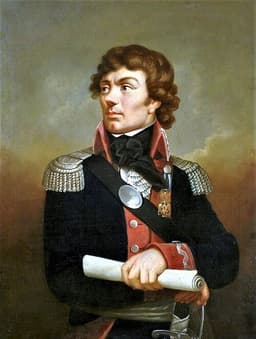
Tadeusz Kosciuszko
General · Modern
64.1Total
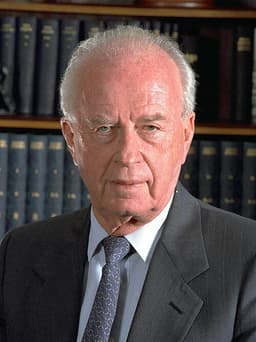
Yitzhak Rabin
General · Modern
66.4Total
Basic Information
Born
1746
1922
Died
1817
—
Era
Modern
Modern
Nationality
Poland
Israel
Occupation
General
General
Civilization
Western
Middle Eastern
Score Comparison
Military (10%)
47.5
61.7
Political (20%)
68.0
82.0
Influence (20%)
68.0
68.0
Legacy (20%)
68.0
55.0
Leadership (15%)
64.5
78.0
Strategy (15%)
55.0
55.0
TOTAL
64.1
66.4
Tadeusz Kosciuszko — Complete Timeline
1777 AD
Battle of Saratoga (engineering contributions)War◆ Major
Kosciuszko designed fortifications and selected defensive positions for the American army at Saratoga. His work contributed to the American victory, a turning point in the Revolutionary War.
American RevolutionSaratogaEngineering
Impact: regional
1778 AD
Fortification of West PointWar◆ Major
Kosciuszko was assigned to fortify West Point on the Hudson River. He designed and supervised the construction of fortifications that made the site a key American stronghold for the remainder of the war.
American RevolutionWest PointFortifications
Impact: regionalconstructive
1794 AD
Kosciuszko UprisingWar
Kosciuszko led a national uprising in Poland against Russian and Prussian occupation. He proclaimed the Act of Insurrection and won the Battle of Rac
Polish UprisingIndependenceDefeat
Impact: nationaltragic
Battle of RacławiceWar◆ Major
Kosciuszko led Polish forces, including peasant scythemen, to victory over a larger Russian army at Rac
Kosciuszko UprisingBattlePeasants
Impact: national
Capture and imprisonment at the Battle of MaciejowiceWar◆ Major
Kosciuszko was wounded and captured by Russian forces at the Battle of Maciejowice. His capture effectively ended the uprising, and he was imprisoned in St. Petersburg until 1796.
Kosciuszko UprisingCaptureImprisonment
Impact: nationaltragic
Yitzhak Rabin — Complete Timeline
1967 AD
Chief of Staff during the Six-Day WarWar
As Chief of Staff of the Israel Defense Forces, Rabin commanded the Israeli military during the Six-Day War against Egypt, Jordan, and Syria. Israel captured the Sinai Peninsula, Gaza Strip, West Bank, East Jerusalem, and Golan Heights, reshaping the region.
Six-Day WarTerritorial ExpansionMilitary Victory
Impact: global
1993 AD
Signing of the Oslo AccordsPolitical Action
As prime minister, Rabin signed the Oslo Accords with PLO Chairman Yasser Arafat on the White House lawn. The agreement established the Palestinian Authority and set a framework for Palestinian self-governance in the West Bank and Gaza Strip.
Peace ProcessPalestiniansOslo
Impact: globalconstructive
1995 AD
Assassination at Peace RallyPolitical Action
Rabin was assassinated by Israeli extremist Yigal Amir after a peace rally in Tel Aviv. The assassination shocked Israel and the world, derailing the Oslo peace process and leading to a period of political instability.
AssassinationPeace ProcessPolitical Violence
Impact: globaltragic
Expert Analysis
Yitzhak Rabin vs Tadeusz Kosciuszko
### The Bridge Builder and the Engineer of Fate
On an autumn evening in 1995, a prime minister sang a song of peace to a crowd of 100,000 in Tel Aviv. Hours later, he lay dead from an assassin’s bullet, a folded sheet of lyrics in his pocket. Two centuries earlier, a Polish engineer had stood on a hilltop in upstate New York, sketching fortifications that would decide the fate of a revolution. He would live to see his own rebellion crushed, his body broken, his country erased from the map. Both men were generals. Both were patriots. But between Tadeusz Kosciuszko and Yitzhak Rabin lies a chasm not just of time, but of what it means to build, to fight, and to fail.
### Origins
Kosciuszko was born in 1746 into the Polish-Lithuanian Commonwealth, a sprawling, fading power already being carved up by its neighbors. He was a child of a rural gentry that still clung to the ideals of liberty in a land where serfdom was law. He studied in Warsaw and Paris, absorbing the Enlightenment’s faith in reason, engineering, and the rights of man. His world was one of empires and ideas, where a man could design a fortress for the American cause in 1777 at Saratoga, and then return home to lead peasants armed with scythes against Russian cannon in 1794.
Rabin was born in 1922 in Jerusalem, then part of the British Mandate of Palestine. His parents were Labor Zionists from Russia, secular pioneers who believed that a Jewish state could only be forged through soil, sweat, and steel. His world was one of survival and creation: a land of deserts to be irrigated, armies to be built, and a nation to be carved from a hostile region. There was no Enlightenment salon for Rabin; his education was the Palmach, the underground strike force, and the harsh geometry of military necessity.
### Rise to Power
Kosciuszko’s path was that of a wandering soldier of fortune. He arrived in America in 1776, a volunteer with no money and little English. His genius lay in his craft: he was an engineer, not a commander of men. At Saratoga, he chose the ground and built the defenses that forced a British army to surrender. At West Point, he designed the fortress that would guard the Hudson for the rest of the war. He rose not through ambition, but through talent. His return to Poland was a homecoming to a nation already bleeding.
Rabin’s rise was methodical, bureaucratic, and total. He became Chief of Staff of the Israel Defense Forces in 1964, at the age of 42. His moment came in 1967, during the Six-Day War, when he commanded a preemptive strike that crushed Egypt, Jordan, and Syria in six days. He did not design fortifications; he orchestrated a blitzkrieg. His power was not that of a volunteer but of a state’s highest military officer. He then transitioned to politics, serving as ambassador to the United States, then as prime minister. His ascent was a ladder, not a wanderer’s road.
### Leadership & Governance
Kosciuszko led by example and by moral conviction. His Uprising of 1794 was not just a military campaign but a social revolution. He proclaimed the abolition of serfdom, promising land to peasants who fought. At the Battle of Racławice, he led peasant scythemen into battle himself, personally charging the Russian guns. His leadership was inspirational, but it was also fragile: he had no state behind him, no treasury, no professional army. He was a rebel with a blueprint for a free Poland, but no means to build it.
Rabin led with calculation, patience, and a cold realism. As prime minister, he did not seek to remake society but to manage its contradictions. He crushed the First Intifada with an iron fist, then turned and shook hands with his sworn enemy, Yasser Arafat, on the White House lawn in 1993. The Oslo Accords were a gamble, not a dream. Rabin knew that peace meant compromise, and compromise meant betrayal. He governed by triangulation, balancing hawks and doves, settlers and Palestinians, security and hope. He was not a revolutionary; he was a pragmatist.
### Triumph & Tragedy
Kosciuszko’s greatest moment was also his most tragic. The victory at Racławice in 1794 was a triumph of will over material—a few thousand peasants with scythes routing a Russian army. But the uprising was doomed from the start. Poland had no allies, no modern army, and no time. At the Battle of Maciejowice, Kosciuszko was wounded and captured. He cried out, “*Finis Poloniae*”—the end of Poland. He was imprisoned in St. Petersburg, and when he was freed, he lived out his days in exile, his country erased from the map until 1918.
Rabin’s triumph was the Oslo Accords, a framework for peace that won him the Nobel Prize. But peace was a knife’s edge. He was hated by the Israeli right, denounced as a traitor, and targeted by extremists. On November 4, 1995, at a peace rally in Tel Aviv, a young Jewish extremist shot him in the back. Rabin died with the lyrics to “Song for Peace” in his pocket. His assassination did not end the peace process, but it shattered its momentum. Israel lost a leader who could make peace, and never found another.
### Character & Destiny
Kosciuszko was an idealist, a man who believed that liberty was universal. He freed his own serfs, fought for America, and then for Poland. His character was that of a builder—of fortifications, of revolutions, of dreams. But his destiny was to be crushed by forces too large for one man. He died in Switzerland in 1817, a lonely exile, but his name became a symbol of resistance. He never saw Poland free.
Rabin was a realist, a man who had seen war from the command post and the battlefield. He was gruff, awkward, and impatient. He did not inspire love; he inspired trust. His character was that of a manager of crises, a man who believed that history could be shaped by steady pressure. His destiny was to be killed by the very hatred he tried to extinguish. He saw the road to peace, but he could not walk it to the end.
### Legacy
Kosciuszko is remembered as a hero of two continents. His name adorns bridges, streets, and monuments in Poland and the United States. He is a symbol of the struggle for freedom, a man who fought for others as well as his own. His legacy is one of courage, not of victory.
Rabin is remembered as a martyr for peace. His assassination is a scar on Israeli history, a warning of what happens when politics turns to blood. His legacy is incomplete: the Oslo Accords are dead, the peace he sought is unbuilt. But his example—a general who chose peace over glory—remains a challenge to every leader who faces the choice between war and compromise.
### Conclusion
One built bridges. The other built a nation. Kosciuszko designed the fortifications that saved the American Revolution, but could not save his own country. Rabin commanded the army that saved Israel, but could not save himself. Both men gave their lives to causes larger than themselves. One died in exile, his dream deferred. One died on a stage, his dream unfinished. In the end, the difference between them is not in their greatness, but in their fate: Kosciuszko failed against the empire of history; Rabin failed against the empire of hatred. Both teach us that the hardest work of a general is not winning a war, but building a peace—and that sometimes, even the best cannot finish what they start.
Rankings
🥇
Yitzhak RabinLeader
Mil: 61.7Pol: 82.0Inf: 68.0
66.4
🥈
Tadeusz Kosciuszko
Mil: 47.5Pol: 68.0Inf: 68.0
64.1
+2.3 behind
How This Comparison Works
Algorithm
Each figure is scored on 6 dimensions (0—100 scale) based on structured historical data: Military (10%), Political (20%), Influence (20%), Legacy (20%), Leadership (15%), Strategy (15%). The weighted total produces the final ranking.
Data Sources
Scores are computed from structured sub-indicators in the database. Scale factors adjust for era (Ancient ×0.85, Modern ×1.0) and civilization size (Eastern ×1.05, Other ×0.80) to account for differences in population and military scale.
Maximum 3 Figures
Comparisons are limited to 2—3 figures to ensure readability and statistical meaningfulness.
Error Margins
±5 points per dimension — Sub-scores are derived from historical records with inherent uncertainty. Two figures within 5 points on a dimension should be considered roughly equivalent in that area.
Total Score Accuracy
±3 points overall — The weighted combination of 6 dimensions produces a total score with approximately ±3 points of uncertainty. Differences of less than 3 points are not statistically significant— the figures are effectively tied.
Known Limitations
- Historical records are incomplete and uneven across civilizations
- Figures from oral-tradition societies may be underrepresented
- Occupation labels can misclassify multi-role figures
- Scores measure capability and impact, not moral character
- Quantitative scoring is a comparison tool, not absolute truth
Capability Radar
Military (10%) — Battles & Warfare
Battles
55
65
Win Rate
60
70
Expansion
30
50
Political (20%) — Governance & Reform
Reform
45
65
Diplomacy
55
85
Economy
35
60
Influence (20%) — Cultural & Global Reach
Cultural
65
55
Global
55
70
Legacy (20%) — Historical Impact
Historical
70
75
Longevity
60
60
Leadership (15%) — Power & Stability
Tenure
40
70
Stability
30
40
Strategy (15%) — Tactics & Innovation
Strategy
65
75
Tactics
70
60
Reform
50
55
Similar Comparisons
Comments & Discussion
The Bridge Scaffolder6/16/2026
Comparing Rabin the pragmatic nation-builder to Kosciuszko the romantic insurgent is like stacking a general contractor against a cathedral architect. Kosciuszko was so devoted to liberty he freed his own serfs, yet his final rebellion failed because he refused to ally with revolutionary France. Rabin, by contrast, signed Oslo knowing full well it could mean his death. Kosciuszko built for glory; Rabin built for survival. The chasm isn't just time—it's about whether you fight for an ideal or for
The Data Skeptic6/16/2026
Let's be real, this comparison is history porn. One led a successful counterinsurgency against the PLO in 1967 and negotiated peace treaties that made Israel a regional player; the other lost his entire country to a three-way carve-up and made cool fortifications in Saratoga. Measured by legacy, Rabin transformed a state; Kosciuszko left a cult of personality. You don't compare a man who ended the Yom Kippur War to a man whose last act was building a monument in Krakow. It's apples and ideologic
城堡军医6/16/2026
谁说波兰工程师就不能比以色列上将?Kosciuszko在1794年起义中发明了"农兵"战术,农民拿镰刀砍俄国龙骑兵,这种创新比Rabin的奥斯陆协议更颠覆性。但看结果:Kosciuszko的波兰被瓜分了123年,Rabin的以色列却成了中东核强国。历史看的是成败,不是眼泪。Kosciuszko输了,Rabin赢了——尽管最后都被自己人出卖。不过至少Rabin死时,他的国家还在地图上。
血色工程师6/16/2026
你们都在谈战术和遗产,我盯着数字:Rabin作为总参谋长在1967年指挥六日战争,用不到100小时打下西奈半岛;Kosciuszko在1794年从克拉科夫起义到Maciejowice战役被俘,只坚持了95天。一个改变了中东地图,一个只留下波兰悲情。但数据会骗人:Rabin有美国特工撑腰,Kosciuszko面对的是叶卡捷琳娜的整个帝国。如果比面对逆境时的韧性,我相信那个在纽约西点设计堡垒的波兰人更胜一筹。
历史缝纫者6/16/2026
把这两个人放一起比较,本身就暴露了西方中心史观的偏见。Rabin是现实主义者,Kosciuszko是理想主义者的化身。Rabin用枪杆子换来和平谈判的资格,Kosciuszko用理想主义的血灌溉了未来民族国家的种子。看看结局:Rabin死于极端犹太复国主义者的子弹,Kosciuszko流亡瑞士仍在为波兰祈祷。数据说Kosciuszko失败了,但每个波兰孩子都记得他的脸