Loading...
Muhammadu Buhari vs Tadeusz Kosciuszko
Tadeusz Kosciuszko leads by 12.6 pts · 2 figures compared
…
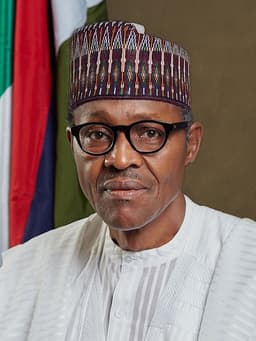
Muhammadu Buhari
General · Modern
51.5Total
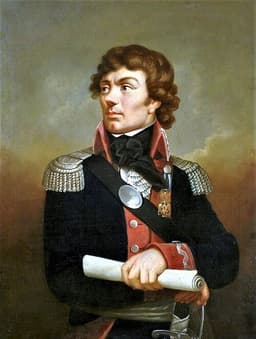
Tadeusz Kosciuszko
General · Modern
64.1Total
Basic Information
Born
1942
1746
Died
—
1817
Era
Modern
Modern
Nationality
Nigeria
Poland
Occupation
General
General
Civilization
Other
Western
Score Comparison
Military (10%)
22.6
47.5
Political (20%)
68.0
68.0
Influence (20%)
53.3
68.0
Legacy (20%)
43.3
68.0
Leadership (15%)
72.0
64.5
Strategy (15%)
41.0
55.0
TOTAL
51.5
64.1
Muhammadu Buhari — Complete Timeline
1983 AD
1983 Nigerian coup d'étatPolitical Action
Major General Muhammadu Buhari led a military coup that overthrew the civilian government of President Shehu Shagari. Buhari cited corruption and economic mismanagement as justifications, and he became the head of state.
CoupMilitary RuleCorruption
Impact: nationaldestructive
1984 AD
War Against Indiscipline (WAI)Reform◆ Major
Buhari launched the War Against Indiscipline, a campaign to enforce discipline and order in Nigerian society. It included harsh penalties for minor offenses, such as queue-jumping, and was criticized for human rights abuses.
DisciplineSocial PolicyHuman Rights
Impact: nationaldestructive
1985 AD
Overthrow by Ibrahim BabangidaPolitical Action◆ Major
Buhari was overthrown in a palace coup led by his Chief of Army Staff, Ibrahim Babangida. Babangida cited Buhari's authoritarian style and failure to address the economy as reasons for the coup.
CoupOverthrowBabangida
Impact: national
2015 AD
Anti-corruption campaignReform◆ Major
Buhari launched a high-profile anti-corruption campaign, targeting government officials and recovering stolen assets. The campaign was praised internationally but criticized for being selective and politically motivated.
Anti-CorruptionReformGovernance
Impact: nationalconstructive
Election as President of NigeriaPolitical Action
Buhari won the 2015 Nigerian presidential election, defeating incumbent Goodluck Jonathan. This was the first time an opposition candidate had defeated a sitting president in Nigeria's history, marking a democratic milestone.
ElectionDemocracyOpposition Victory
Impact: nationalprogressive
Tadeusz Kosciuszko — Complete Timeline
1777 AD
Battle of Saratoga (engineering contributions)War◆ Major
Kosciuszko designed fortifications and selected defensive positions for the American army at Saratoga. His work contributed to the American victory, a turning point in the Revolutionary War.
American RevolutionSaratogaEngineering
Impact: regional
1778 AD
Fortification of West PointWar◆ Major
Kosciuszko was assigned to fortify West Point on the Hudson River. He designed and supervised the construction of fortifications that made the site a key American stronghold for the remainder of the war.
American RevolutionWest PointFortifications
Impact: regionalconstructive
1794 AD
Kosciuszko UprisingWar
Kosciuszko led a national uprising in Poland against Russian and Prussian occupation. He proclaimed the Act of Insurrection and won the Battle of Rac
Polish UprisingIndependenceDefeat
Impact: nationaltragic
Battle of RacławiceWar◆ Major
Kosciuszko led Polish forces, including peasant scythemen, to victory over a larger Russian army at Rac
Kosciuszko UprisingBattlePeasants
Impact: national
Capture and imprisonment at the Battle of MaciejowiceWar◆ Major
Kosciuszko was wounded and captured by Russian forces at the Battle of Maciejowice. His capture effectively ended the uprising, and he was imprisoned in St. Petersburg until 1796.
Kosciuszko UprisingCaptureImprisonment
Impact: nationaltragic
Expert Analysis
Muhammadu Buhari vs Tadeusz Kosciuszko
# The General and the Reformer: Two Paths from the Battlefield to Power
On a spring morning in 1794, Tadeusz Kosciuszko led a ragged army of peasants armed with scythes against the might of the Russian Empire at Racławice. They won. Two centuries later, in December 1983, Major General Muhammadu Buhari sat in a radio studio in Lagos, announcing that Nigeria’s civilian government had been overthrown—and that he now ruled the most populous nation in Africa. Both men were generals. Both believed they could save their countries. But the trajectories of their lives reveal how history, personality, and circumstance can turn a sword into a plowshare—or a burden.
Origins
Kosciuszko was born in 1746 into the Polish-Lithuanian Commonwealth, a fading noble republic squeezed between the rising absolutist empires of Russia, Prussia, and Austria. He studied military engineering in France, imbibing Enlightenment ideals of liberty and republican virtue. When he sailed to America in 1776 to join the Revolutionary War, he carried not just technical skill but a conviction that freedom was universal. Poland, he believed, could be reborn in the same spirit.
Buhari was born in 1942 in Daura, northern Nigeria, into a Hausa-Fulani family of modest means. He joined the Nigerian Army after independence in 1960, a time when young African nations were struggling to build states from colonial wreckage. His world was one of coups, ethnic rivalries, and the raw struggle for power. Where Kosciuszko saw a cause, Buhari saw a crisis.
Rise to Power
Kosciuszko’s path to prominence was forged in service to others. At the Battle of Saratoga in 1777, he selected the defensive positions and designed fortifications that helped secure the decisive American victory. His work at West Point—fortifying the strategic Hudson River stronghold—earned him the gratitude of George Washington and the rank of brigadier general. Yet he never sought command for its own sake. He was a builder, not a conqueror.
Buhari rose through the ranks of a post-colonial army that was itself a political instrument. In 1983, frustrated by corruption and economic collapse under President Shehu Shagari, he led a military coup. He was 41 years old. Unlike Kosciuszko, who fought for a nation that had existed for centuries, Buhari seized power in a country only 23 years old, where the army was often the only institution that functioned.
Leadership & Governance
Kosciuszko’s leadership was defined by its moral clarity. When he returned to Poland in 1792 to fight the Russian invasion, he was not just a general but a symbol. In 1794, he proclaimed the Act of Insurrection, abolishing serfdom and promising land to peasants who fought for independence. At Racławice, he personally led the charge of the scythemen—farmers armed with converted agricultural tools—against Russian cannon. The victory was a miracle of will, but it could not last.
Buhari’s rule was different. His "War Against Indiscipline" (WAI), launched in 1984, was a campaign of forced order: public floggings for lateness, long queues at bus stops enforced by soldiers, and a crackdown on dissent. He jailed journalists, banned strikes, and arrested political opponents. His intentions were anti-corruption and national discipline, but his methods were authoritarian. Where Kosciuszko inspired, Buhari commanded.
Triumph & Tragedy
Kosciuszko’s greatest triumph was also his tragedy. The Kosciuszko Uprising of 1794 was a desperate, heroic gamble. He won at Racławice, but the combined might of Russia and Prussia crushed the rebellion. In October 1794, wounded and captured at the Battle of Maciejowice, he fell from his horse crying, "*Finis Poloniae*"—the end of Poland. The partition powers erased Poland from the map for 123 years. Kosciuszko spent his final years in exile, a living monument to a lost cause.
Buhari’s tragedy was less romantic. He was overthrown in 1985 by his own chief of army staff, Ibrahim Babangida, who cited his "rigid and uncompromising" style. For three decades, he was a footnote—a former military ruler with a reputation for harshness. Then in 2015, in a stunning reversal, he won Nigeria’s presidency in a democratic election, the first opposition candidate to do so. His triumph was a second chance, but the same flaws remained.
Character & Destiny
Kosciuszko was a man of ideals, driven by a vision of liberty that transcended his own nation. He freed slaves in America, fought for Polish independence, and left his American pension to buy the freedom of African-American children. His character was generous, his ambition selfless. His destiny was to be a symbol—a hero who failed in his own time but inspired generations.
Buhari was a man of duty, shaped by the harsh realities of a fragile state. He believed in order before freedom, discipline before democracy. His character was austere, his style paternalistic. His destiny was to be a paradox: a military dictator who became a democratically elected president, yet whose anti-corruption campaign often seemed more about punishing enemies than reforming systems.
Legacy
Kosciuszko is remembered as a national saint in Poland, with monuments in Warsaw, Kraków, and Washington, D.C. His name adorns a mountain in Australia, a bridge in New York, and countless streets. He represents the nobility of failure—the idea that a cause can be just even when lost. His legacy is romantic, inspiring, and bittersweet.
Buhari’s legacy is contested. His supporters praise his anti-corruption drive and his role in stabilizing Nigeria. His critics point to economic stagnation, human rights abuses, and a presidency that too often echoed the authoritarianism of his military years. He left office in 2023 after two terms, a figure who tried to reform a system from within—but never fully escaped the shadow of the general he once was.
Conclusion
One man died in exile, his nation erased from the map, his dream unrealized. The other died in power, his nation still struggling, his record mixed. Both were generals who believed they could heal their countries. But Kosciuszko’s tragedy was that he lost the battle; Buhari’s tragedy was that he won it—and found that victory was not enough. In the end, the difference between them is not just skill or circumstance, but the distance between a cause that ennobles and a power that corrupts. Both took up the sword. Only one knew when to lay it down.
Rankings
🥇
Tadeusz KosciuszkoLeader
Mil: 47.5Pol: 68.0Inf: 68.0
64.1
🥈
Muhammadu Buhari
Mil: 22.6Pol: 68.0Inf: 53.3
51.5
+12.6 behind
How This Comparison Works
Algorithm
Each figure is scored on 6 dimensions (0—100 scale) based on structured historical data: Military (10%), Political (20%), Influence (20%), Legacy (20%), Leadership (15%), Strategy (15%). The weighted total produces the final ranking.
Data Sources
Scores are computed from structured sub-indicators in the database. Scale factors adjust for era (Ancient ×0.85, Modern ×1.0) and civilization size (Eastern ×1.05, Other ×0.80) to account for differences in population and military scale.
Maximum 3 Figures
Comparisons are limited to 2—3 figures to ensure readability and statistical meaningfulness.
Error Margins
±5 points per dimension — Sub-scores are derived from historical records with inherent uncertainty. Two figures within 5 points on a dimension should be considered roughly equivalent in that area.
Total Score Accuracy
±3 points overall — The weighted combination of 6 dimensions produces a total score with approximately ±3 points of uncertainty. Differences of less than 3 points are not statistically significant— the figures are effectively tied.
Known Limitations
- Historical records are incomplete and uneven across civilizations
- Figures from oral-tradition societies may be underrepresented
- Occupation labels can misclassify multi-role figures
- Scores measure capability and impact, not moral character
- Quantitative scoring is a comparison tool, not absolute truth
Capability Radar
Military (10%) — Battles & Warfare
Battles
10
55
Win Rate
10
60
Expansion
5
30
Political (20%) — Governance & Reform
Reform
30
45
Diplomacy
25
55
Economy
20
35
Influence (20%) — Cultural & Global Reach
Cultural
25
65
Global
25
55
Legacy (20%) — Historical Impact
Historical
30
70
Longevity
20
60
Leadership (15%) — Power & Stability
Tenure
45
40
Stability
15
30
Strategy (15%) — Tactics & Innovation
Strategy
15
65
Tactics
15
70
Reform
20
50
Similar Comparisons
Comments & Discussion
IronScytheSavant6/16/2026
Calling this a comparison is like comparing a diamond to a lump of coal. Kosciuszko was a genuine military engineer who designed the fortifications at West Point and led a national liberation uprising. Buhari's greatest battlefield achievement was overthrowing a civilian government in a radio studio. One bled for freedom, the other bled his country's treasury. The scythe at Racławice is still sharper than any decree from Dodan Barracks.
千面药师6/16/2026
把布哈里和科希丘什科放在一起,简直是对历史的不尊重。科希丘什科在美国独立战争中为华盛顿设计要塞,回国后又领导农民起义,这是理想主义者。布哈里呢?1983年政变上台,打着反腐旗号,结果自己统治时期经济更糟。一个是为了自由而战,一个是为了权力而夺权。所谓"两位将军挽救国家"的叙事,不过是政变者的遮羞布。
ByteBackBencher6/16/2026
The analysis tries to draw parallels, but the data doesn't support it. Kosciuszko's Peasant Uprising lasted 7 months before defeat; Buhari's regime lasted 20 months before being overthrown. Yet one is celebrated as a national hero, the other mostly seen as a failed dictator. The difference isn't in battlefield or government performance—it's that Kosciuszko fought against an external empire, while Buhari fought against his own people's democratic aspirations. That's not comparison, it's contrast.
铁幕书架6/16/2026
两位都是将军,但一个在巴黎沙龙里学习启蒙思想,一个在英国桑赫斯特接受殖民军官训练。科希丘什科临终前还释放了自己的农奴,布哈里却恢复了对异见者的军事法庭审判。表面相似,骨子里天差地别。历史不是简单的能力对比,而是价值观的试金石。布哈里可以当个不错的旅长,但科希丘什科是塑造了民族精神的人。差距不在军衔,在灵魂。
KrakowPaddy6/16/2026
The comparison misses the key point: Kosciuszko was a visionary who believed peasants deserved freedom and dignity. His 1794 Proclamation of Połaniec promised land reforms. Buhari's 1984 Decree No. 2 stripped Nigerians of habeas corpus and jailed journalists. One inspired a nation's soul, the other crushed its spirit. You can't equate a man who freed his serfs with one who detained his critics. Different leagues, different legacies.