Loading...
Sengge Rinchen vs Yi Sun-sin
Yi Sun-sin leads by 1.4 pts · 2 figures compared
…
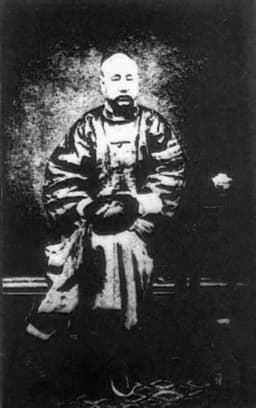
Sengge Rinchen
General · Modern
56.9Total

Yi Sun-sin
General · Modern
58.3Total
Basic Information
Born
1811
1545
Died
1865
1598
Era
Modern
Modern
Nationality
China
Korea
Occupation
General
General
Civilization
Eastern
Eastern
Score Comparison
Military (10%)
70.0
79.1
Political (20%)
43.7
42.3
Influence (20%)
55.0
65.0
Legacy (20%)
54.0
40.0
Leadership (15%)
67.0
68.0
Strategy (15%)
60.7
76.0
TOTAL
56.9
58.3
Sengge Rinchen — Complete Timeline
1859 AD
Battle of Dagu FortsWar◆ Major
Sengge Rinchen commanded Qing forces defending the Dagu Forts against a British and French naval attack. His forces repelled the assault, sinking several enemy ships and inflicting heavy casualties, a rare Qing victory in the Second Opium War.
Second Opium WarBattleVictory
Impact: regional
1860 AD
Battle of PalikaoWar◆ Major
Sengge Rinchen commanded Qing cavalry at the Battle of Palikao against Anglo-French forces. His forces were decisively defeated by superior firepower, leading to the fall of Beijing and the burning of the Old Summer Palace.
Second Opium WarBattleDefeat
Impact: regionaltragic
1863 AD
Suppression of the Nian RebellionWar◆ Major
Sengge Rinchen led Qing forces against the Nian rebels in northern China. He achieved several victories but was ultimately killed in battle against the Nian in 1865, marking a turning point in the rebellion.
Nian RebellionCampaignDeath
Impact: regionaltragic
Yi Sun-sin — Complete Timeline
1592 AD
Introduction of the Turtle Ship (Geobukseon)Invention◆ Major
Yi Sun-sin oversaw the deployment of the turtle ship, an ironclad warship with a spiked iron roof and cannons. These ships played a crucial role in early victories against the Japanese navy, breaking their supply lines and protecting Korean coastlines.
Naval InnovationWarshipImjin War
Impact: regional
1597 AD
Battle of MyeongnyangWar
Admiral Yi Sun-sin, with only 13 ships, defeated a Japanese fleet of over 130 vessels in the Myeongnyang Strait. Using the strong currents and his tactical skill, he inflicted heavy losses without losing a single ship, cutting off Japanese supply lines and turning the tide of the war.
Naval BattleTactical VictoryImjin War
Impact: regional
1598 AD
Death at the Battle of NoryangWar◆ Major
Yi Sun-sin was killed by a stray bullet during the Battle of Noryang, the final major naval engagement of the Imjin War. His death occurred as his fleet was defeating the Japanese, securing a decisive victory that ended the Japanese invasion of Korea.
Death in BattleFinal VictoryImjin War
Impact: regionaltragic
Expert Analysis
Origins
Sengge Rinchen (1811–1865) was a Mongol prince of the Khorchin Banner, born into the Borjigin clan, the lineage of Genghis Khan. He grew up in the Inner Mongolian steppes, trained in horsemanship and archery, and was appointed to military posts in the Qing dynasty. His early career involved suppressing local rebellions, giving him experience in cavalry tactics.
Yi Sun-sin (1545–1598) was born in Seoul, Joseon Korea, into a modest yangban (aristocratic) family. He studied Confucian classics and military arts, passing the military examination in 1576 at age 31. His early career was marked by setbacks due to political infighting, but he was eventually appointed to command naval forces in the Jeolla Province.
Rise to Power
Sengge Rinchen rose rapidly during the Taiping Rebellion (1850–1864). By 1855, he was given command of Mongol cavalry units to fight the Taiping in northern China. His decisive victory at the Battle of Fengyang in 1857 earned him the title of Imperial Commissioner. In 1859, he was ordered to defend the Dagu Forts near Tianjin against Anglo-French forces. His successful defense there made him a national hero.
Yi Sun-sin’s rise came during the Imjin War (1592–1598). After Japanese invasions began in 1592, he was appointed Left Naval Commander of Jeolla Province. He won his first major victory at the Battle of Okpo in May 1592, destroying 26 Japanese ships. His innovative use of turtle ships and aggressive tactics led to a series of victories, including the Battle of Hansando in August 1592, where he destroyed 59 Japanese ships.
Leadership & Governance
Sengge Rinchen led by personal example, often at the front of cavalry charges. He maintained strict discipline and loyalty among his Mongol troops, but his command style was rigid and relied heavily on traditional cavalry tactics. During the Battle of Palikao (1860), he attempted to use massed cavalry charges against Anglo-French infantry and artillery, resulting in a disastrous defeat. His governance of conquered areas was harsh, with forced conscription and requisitioning that alienated local populations.
Yi Sun-sin was a methodical planner who emphasized training, logistics, and intelligence. He developed the turtle ship, an early ironclad, which gave his fleet a technological edge. He fostered strong morale among his men, often sharing hardships. At the Battle of Myeongnyang (1597), with only 13 ships, he used the narrow strait and tides to neutralize the Japanese numerical advantage, sinking 31 enemy ships. His leadership scored 68.0 in leadership, slightly above Sengge Rinchen's 67.0.
Triumph & Tragedy
Sengge Rinchen’s greatest triumph was the victory at the Dagu Forts in 1859, where his forces sank four British warships and forced the Anglo-French fleet to retreat. This was one of the few Chinese military successes against Western powers in the 19th century. However, his tragedy was the defeat at Palikao in 1860, where his cavalry was annihilated by modern firearms. He was killed in 1865 while suppressing the Nian Rebellion, betrayed by his own allies.
Yi Sun-sin’s greatest triumph was the Battle of Myeongnyang, a stunning victory against overwhelming odds. His strategic score of 76.0 reflects his mastery of naval warfare. His tragedy was his death at the Battle of Noryang in 1598, struck by a stray bullet just as victory was secured. Earlier, he had been falsely accused of treason and demoted to a common soldier in 1597, but was reinstated after his successor lost the entire Korean fleet.
Character & Destiny
Sengge Rinchen was stubborn and proud, relying on traditional Mongol tactics even when they were obsolete. His refusal to adapt to modern warfare led to his downfall. Historians note his bravery but criticize his strategic inflexibility. His total score of 56.9 reflects a competent but limited commander.
Yi Sun-sin was resilient and innovative, constantly adapting his strategies. He faced political persecution but remained focused on his duty. His unbroken record of victories (at least 16 major engagements) demonstrates tactical brilliance. His total score of 58.3 edges out Sengge Rinchen by 1.4 points.
Legacy
Sengge Rinchen is remembered in China as a symbol of resistance against imperialism, but his legacy is overshadowed by the failures of the Qing military. He has a monument at the Dagu Forts, but his impact on military doctrine is minimal.
Yi Sun-sin is a national hero in Korea, revered as one of the greatest naval commanders in history. His diaries and letters are studied, and his turtle ship is a cultural icon. He scored 65.0 in influence, compared to Sengge Rinchen's 55.0. His legacy includes the Yi Sun-sin class destroyers in the South Korean Navy.
Conclusion
Yi Sun-sin had greater impact due to his superior strategy (76.0 vs 60.7), consistent success, and enduring legacy. While Sengge Rinchen achieved a notable victory at Dagu, his overall record was marred by defeats and an inability to adapt. Yi Sun-sin’s innovative tactics and unbroken string of victories against superior forces make him the more effective commander.
Rankings
🥇
Yi Sun-sinLeader
Mil: 79.1Pol: 42.3Inf: 65.0
58.3
🥈
Sengge Rinchen
Mil: 70.0Pol: 43.7Inf: 55.0
56.9
+1.4 behind
How This Comparison Works
Algorithm
Each figure is scored on 6 dimensions (0—100 scale) based on structured historical data: Military (10%), Political (20%), Influence (20%), Legacy (20%), Leadership (15%), Strategy (15%). The weighted total produces the final ranking.
Data Sources
Scores are computed from structured sub-indicators in the database. Scale factors adjust for era (Ancient ×0.85, Modern ×1.0) and civilization size (Eastern ×1.05, Other ×0.80) to account for differences in population and military scale.
Maximum 3 Figures
Comparisons are limited to 2—3 figures to ensure readability and statistical meaningfulness.
Error Margins
±5 points per dimension — Sub-scores are derived from historical records with inherent uncertainty. Two figures within 5 points on a dimension should be considered roughly equivalent in that area.
Total Score Accuracy
±3 points overall — The weighted combination of 6 dimensions produces a total score with approximately ±3 points of uncertainty. Differences of less than 3 points are not statistically significant— the figures are effectively tied.
Known Limitations
- Historical records are incomplete and uneven across civilizations
- Figures from oral-tradition societies may be underrepresented
- Occupation labels can misclassify multi-role figures
- Scores measure capability and impact, not moral character
- Quantitative scoring is a comparison tool, not absolute truth
Capability Radar
Military (10%) — Battles & Warfare
Battles
75
85
Win Rate
60
98
Expansion
20
30
Political (20%) — Governance & Reform
Reform
20
30
Diplomacy
50
50
Economy
20
20
Influence (20%) — Cultural & Global Reach
Cultural
40
75
Global
35
65
Legacy (20%) — Historical Impact
Historical
55
80
Longevity
30
75
Leadership (15%) — Power & Stability
Tenure
40
40
Stability
30
35
Strategy (15%) — Tactics & Innovation
Strategy
70
90
Tactics
80
95
Reform
30
80
Similar Comparisons
Comments & Discussion
No comments yet. Be the first to share your thoughts!