Loading...
Sengge Rinchen vs Sitiveni Rabuka
Sengge Rinchen leads by 5.2 pts · 2 figures compared
…
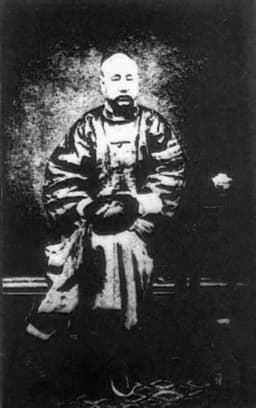
Sengge Rinchen
General · Modern
56.9Total
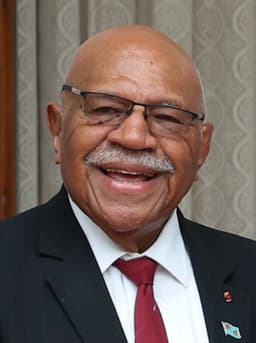
Sitiveni Rabuka
General · Modern
51.7Total
Basic Information
Born
1811
1948
Died
1865
—
Era
Modern
Modern
Nationality
China
Fiji
Occupation
General
General
Civilization
Eastern
Other
Score Comparison
Military (10%)
70.0
10.2
Political (20%)
43.7
60.0
Influence (20%)
55.0
53.3
Legacy (20%)
54.0
46.7
Leadership (15%)
67.0
85.0
Strategy (15%)
60.7
39.6
TOTAL
56.9
51.7
Sengge Rinchen — Complete Timeline
1859 AD
Battle of Dagu FortsWar◆ Major
Sengge Rinchen commanded Qing forces defending the Dagu Forts against a British and French naval attack. His forces repelled the assault, sinking several enemy ships and inflicting heavy casualties, a rare Qing victory in the Second Opium War.
Second Opium WarBattleVictory
Impact: regional
1860 AD
Battle of PalikaoWar◆ Major
Sengge Rinchen commanded Qing cavalry at the Battle of Palikao against Anglo-French forces. His forces were decisively defeated by superior firepower, leading to the fall of Beijing and the burning of the Old Summer Palace.
Second Opium WarBattleDefeat
Impact: regionaltragic
1863 AD
Suppression of the Nian RebellionWar◆ Major
Sengge Rinchen led Qing forces against the Nian rebels in northern China. He achieved several victories but was ultimately killed in battle against the Nian in 1865, marking a turning point in the rebellion.
Nian RebellionCampaignDeath
Impact: regionaltragic
Sitiveni Rabuka — Complete Timeline
1987 AD
1987 Fijian Coup d'étatPolitical Action
Rabuka, as a colonel in the Fijian military, led a coup overthrowing the elected government of Timoci Bavadra. The coup was motivated by ethnic Fijian opposition to Indo-Fijian political influence. Rabuka declared Fiji a republic.
CoupMilitary InterventionEthnic Tension
Impact: nationaldestructive
1992 AD
1992 Election as Prime MinisterPolitical Action◆ Major
Rabuka transitioned from military leader to civilian politician, winning the 1992 general election as leader of the Fijian Political Party. He became Prime Minister, serving until 1999.
ElectionCivilian GovernmentPolitical Transition
Impact: national
1997 AD
1997 Constitution ReformReform◆ Major
Rabuka's government oversaw the adoption of a new constitution that removed ethnic-based voting and provided for a multi-ethnic government. The constitution aimed to reduce ethnic tensions and promote national unity.
ConstitutionReformEthnic Reconciliation
Impact: nationalconstructive
1999 AD
1999 General Election DefeatPolitical Action◆ Major
Rabuka's government was defeated in the general election by the Labour Party led by Mahendra Chaudhry. Rabuka stepped down as Prime Minister, marking the end of his first period in power.
Election DefeatGovernment ChangeChaudhry
Impact: national
2022 AD
2022 Return as Prime MinisterPolitical Action◆ Major
Rabuka led the People's Alliance to victory in the 2022 general election, forming a coalition government. He became Prime Minister again, 23 years after his previous tenure, promising democratic reforms.
ElectionReturn to PowerCoalition Government
Impact: national
Expert Analysis
Sitiveni Rabuka vs Sengge Rinchen
# The General Who Could Not Change, and the General Who Would Not Stay
In the summer of 1860, a Mongol prince named Sengge Rinchen watched his cavalry disintegrate on the plains of Palikao, crushed by British and French firepower that seemed to come from another century. He had known only the horse and the lance, the tactics of the steppe that had served his ancestors for a thousand years. One hundred and twenty-seven years later, on the other side of the world, a Fijian colonel named Sitiveni Rabuka stormed the parliament building in Suva, overthrowing a government in the name of ethnic supremacy—only to spend the next three decades dismantling every pillar of the system he had fought to create. Two men, two coups, two civilizations in crisis. One died fighting the future. The other learned to embrace it.
Origins
Sengge Rinchen was born in 1811 into the Mongol aristocracy of the Qing Empire, a world of horsemen and hereditary privilege that had survived the rise of gunpowder by allying with the Manchu emperors. The Mongol banners were the Qing’s shock troops, their cavalry the terror of rebels and foreigners alike. Sengge Rinchen was raised to believe that the old ways were the strong ways. The vast grasslands of Inner Mongolia were his classroom, and loyalty to the emperor was his creed. By the time he took command, the Qing were drowning in rebellion and humiliation, but no one had told the Mongol prince that the world had changed.
Sitiveni Rabuka, born in 1948 in colonial Fiji, came from a different kind of periphery. His ancestors were Fijian chiefs, but his father was a minor civil servant, and the British had long since pacified the islands with law, sugar, and indentured labor from India. Rabuka grew up in a society where indigenous Fijians owned the land but Indians owned the shops, where democracy was a British gift and ethnic tension was the price. He joined the military, the natural path for ambitious island men, and rose through the ranks of a small, professional army that had never fought a real war. His world was not the steppe but the parade ground, not the lance but the law.
Rise to Power
Sengge Rinchen rose by fighting. In the 1850s, as the Taiping Rebellion tore through central China, he led his Mongol cavalry south and crushed rebel armies with a ferocity that made him famous. The Qing court, desperate for any general who could win, gave him command of the northern defenses. In 1859, he achieved his greatest military moment: at the Dagu Forts, he repelled a British and French naval assault, sinking four ships and killing hundreds of invaders. It was the first time a Chinese force had beaten a Western one in decades. For a brief moment, it seemed the old ways had won.
Rabuka rose by waiting. He was a colonel in 1987 when a coalition government led by Timoci Bavadra, an ethnic Indian, took power. For indigenous Fijians, this was an intolerable reversal: the land was theirs, and now the descendants of indentured laborers ruled them. Rabuka, a devout Methodist and a nationalist, saw his duty. On May 14, 1987, he led ten masked soldiers into parliament, arrested the prime minister, and announced a coup. He claimed he was saving Fiji for the Fijians. The world condemned him, but many of his people cheered.
Leadership & Governance
Sengge Rinchen was a warrior, not a statesman. His leadership was tactical, not strategic. He could win battles—he had proven that at Dagu—but he could not win wars. When the British and French returned in 1860 with a larger fleet and a proper army, he met them at Palikao with 30,000 cavalry charging into modern rifles and artillery. The result was a massacre. His forces were decisively defeated, and the Anglo-French marched into Beijing and burned the Summer Palace. The Qing court blamed him, but they had no one else. Sengge Rinchen spent his remaining years fighting the Nian Rebellion in the north, winning some victories but never mastering the new warfare. In 1865, he was ambushed and killed by Nian rebels. He died as he had lived: on horseback, sword in hand, fighting an enemy he could not outrun.
Rabuka, by contrast, discovered that a coup is easier than a country. After his 1987 takeover, he faced international isolation, economic collapse, and the quiet resistance of the Indian community. He could have become a dictator—many expected it—but instead he did something remarkable. In 1992, he stepped down from the military, formed a political party, and won a democratic election. As prime minister, he governed for seven years, and in 1997 he oversaw the adoption of a new constitution that removed ethnic-based voting and created a multiracial democracy. It was the exact opposite of the system he had seized power to defend. He had broken the old order to save it, and then he had broken himself to fix it.
Triumph & Tragedy
Sengge Rinchen’s triumph was the Battle of Dagu Forts in 1859, a victory that briefly restored hope to a dying empire. His tragedy was Palikao in 1860, where he learned that courage does not matter against technology. He was a man born in the wrong century, fighting the wrong war.
Rabuka’s triumph was the 1997 constitution, a document that transformed Fiji from a ethnic state into a democratic one. His tragedy was that the transformation did not hold. In 1999, his government was defeated by the Labour Party, and in 2000, another coup—this time by a more radical nationalist—overturned much of his work. Rabuka spent the next two decades in political exile, a man who had tried to give back what he had taken and was rejected by both sides.
Character & Destiny
Sengge Rinchen was rigid. He could not adapt because adaptation would have meant abandoning his identity. He was a Mongol prince; his world was the horse and the lance. To change was to cease to exist. So he fought, and he died, and he became a symbol of resistance for a China that would not modernize until it had no other choice.
Rabuka was flexible, perhaps to a fault. He could change because he understood that power is not a fixed point but a process. He had seized power to protect indigenous supremacy, but he governed to create equality. He was a nationalist who became a democrat, a coup leader who became a constitution-maker. In 2022, at the age of 74, he returned as prime minister again, leading a coalition government that promised to heal the wounds he had opened. He had spent his life undoing his own work.
Legacy
Sengge Rinchen is remembered in China as a tragic hero, a man who fought for the old world and lost. His name appears in textbooks as a symbol of Qing resistance, but his defeat is taught as a lesson: the old ways cannot stand against the new. He is a ghost, admired but not emulated.
Rabuka is remembered in Fiji as a paradox. Some call him a traitor to the indigenous cause; others call him the father of modern Fiji. His legacy is the 1997 constitution, which still governs the country, and the example of a man who learned from his mistakes. He is a living reminder that history does not have to be a tragedy.
Conclusion
Sengge Rinchen and Sitiveni Rabuka faced the same question: how does a traditional society survive the modern world? One answered with the sword and the horse, and he died in the dust. The other answered with the ballot and the law, and he lived to see his enemies become his allies. The difference was not courage—both had courage in abundance. It was not intelligence—both were capable men. The difference was humility: the willingness to admit that the old ways are not always the right ways, that the future cannot be fought with the weapons of the past. Sengge Rinchen could not change, and so he was destroyed. Rabuka could change, and so he endured. In the end, the greatest weapon a general can wield is not a sword or a gun, but a mind open to the possibility that he might be wrong.
Rankings
🥇
Sengge RinchenLeader
Mil: 70.0Pol: 43.7Inf: 55.0
56.9
🥈
Sitiveni Rabuka
Mil: 10.2Pol: 60.0Inf: 53.3
51.7
+5.2 behind
How This Comparison Works
Algorithm
Each figure is scored on 6 dimensions (0—100 scale) based on structured historical data: Military (10%), Political (20%), Influence (20%), Legacy (20%), Leadership (15%), Strategy (15%). The weighted total produces the final ranking.
Data Sources
Scores are computed from structured sub-indicators in the database. Scale factors adjust for era (Ancient ×0.85, Modern ×1.0) and civilization size (Eastern ×1.05, Other ×0.80) to account for differences in population and military scale.
Maximum 3 Figures
Comparisons are limited to 2—3 figures to ensure readability and statistical meaningfulness.
Error Margins
±5 points per dimension — Sub-scores are derived from historical records with inherent uncertainty. Two figures within 5 points on a dimension should be considered roughly equivalent in that area.
Total Score Accuracy
±3 points overall — The weighted combination of 6 dimensions produces a total score with approximately ±3 points of uncertainty. Differences of less than 3 points are not statistically significant— the figures are effectively tied.
Known Limitations
- Historical records are incomplete and uneven across civilizations
- Figures from oral-tradition societies may be underrepresented
- Occupation labels can misclassify multi-role figures
- Scores measure capability and impact, not moral character
- Quantitative scoring is a comparison tool, not absolute truth
Capability Radar
Military (10%) — Battles & Warfare
Battles
75
5
Win Rate
60
5
Expansion
20
5
Political (20%) — Governance & Reform
Reform
20
50
Diplomacy
50
45
Economy
20
40
Influence (20%) — Cultural & Global Reach
Cultural
40
30
Global
35
20
Legacy (20%) — Historical Impact
Historical
55
40
Longevity
30
30
Leadership (15%) — Power & Stability
Tenure
40
55
Stability
30
35
Strategy (15%) — Tactics & Innovation
Strategy
70
10
Tactics
80
10
Reform
30
5
Similar Comparisons
Comments & Discussion
MongolEagle18606/16/2026
Palikao wasn't a battle, it was a hunting expedition. Sengge Rinchen charged British Enfield rifles with Mongol bows. That's not courage, it's strategic suicide. A thousand years of steppe tactics meant nothing against industrial warfare, and he refused to adapt when adaptation might have saved his people. Compare that to Rabuka, who at least knew when to pivot. Sengge died a martyr to tradition, but he died a fool.
满清铁骑6/16/2026
说Sengge Rinchen是英雄的人都忽略了一个事实:他本来有机会撤退,却非要拿骑兵去撞炮火。这不是英勇,这是对士兵生命的不负责。1860年的战争已经变了,他偏偏还活在成吉思汗的梦里。最后让三千蒙古骑兵白白送命,这叫愚忠,不叫忠诚。
DataDriller6/16/2026
Let me drop a number: 10,000 vs 50. That's the rough ratio of Qing troops to British/French casualties at the Battle of Palikao. Sengge Rinchen's forces inflicted exactly zero fatalities on the Anglo-French side. Zero. You can romanticize cavalry charges all you want, but when your "shock troops" can't even scratch the enemy, you've failed at basic military math. Rabuka's coup, whatever its moral failures, at least achieved its tactical objective.
太平洋之锤6/16/2026
Fiji不需要另一个军事独裁者,但Rabuka至少明白了一点:当你发现国家走向悬崖的时候,要有勇气踩刹车。他1992年当总理之后,慢慢解构了自己曾经用枪杆子建立的种族歧视体系。这一点,比Sengge Rinchen强太多了。Sengge至死都没想明白,为什么蒙古马刀砍不动洋枪洋炮。不学习的人,注定要被淘汰。
ClassicsScholar6/16/2026
There's a Greek word for Sengge Rinchen: hamartia, the tragic flaw that brings down the hero. His was hubris—a conviction so absolute that Mongol cavalry, the same force that once terrified Europe, could still dominate any battlefield. But by 1860, that was fantasy. He's a figure from epic poetry trying to survive in the age of industrial prose. Rabuka, by contrast, evolved. That makes him the more interesting character: the man who outgrew himself.
草原来的雪6/16/2026
很多人不懂蒙古人的心情。Sengge Rinchen是他的时代的牺牲品,不是蠢,而是整个世界都在抛弃他所属的文明。他从小骑马射箭,把忠诚看得比命重要。英国人来了,他选择站着死,而不是跪着活。虽然从军事上说他是失败的,但从精神上说,他代表了最后的草原荣耀。Rabuka的故事是适应的故事,Sengge的故事是坚守的故事。两个都值得尊敬,但是为了不同的理由