Loading...
Sengge Rinchen vs Yitzhak Rabin
Yitzhak Rabin leads by 9.5 pts · 2 figures compared
…
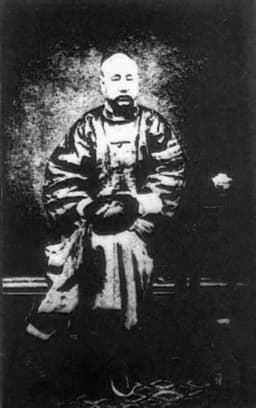
Sengge Rinchen
General · Modern
56.9Total
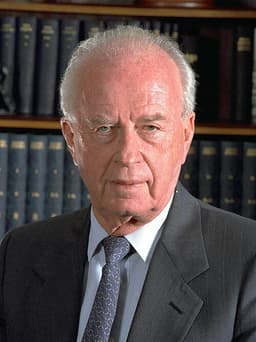
Yitzhak Rabin
General · Modern
66.4Total
Basic Information
Born
1811
1922
Died
1865
—
Era
Modern
Modern
Nationality
China
Israel
Occupation
General
General
Civilization
Eastern
Middle Eastern
Score Comparison
Military (10%)
70.0
61.7
Political (20%)
43.7
82.0
Influence (20%)
55.0
68.0
Legacy (20%)
54.0
55.0
Leadership (15%)
67.0
78.0
Strategy (15%)
60.7
55.0
TOTAL
56.9
66.4
Sengge Rinchen — Complete Timeline
1859 AD
Battle of Dagu FortsWar◆ Major
Sengge Rinchen commanded Qing forces defending the Dagu Forts against a British and French naval attack. His forces repelled the assault, sinking several enemy ships and inflicting heavy casualties, a rare Qing victory in the Second Opium War.
Second Opium WarBattleVictory
Impact: regional
1860 AD
Battle of PalikaoWar◆ Major
Sengge Rinchen commanded Qing cavalry at the Battle of Palikao against Anglo-French forces. His forces were decisively defeated by superior firepower, leading to the fall of Beijing and the burning of the Old Summer Palace.
Second Opium WarBattleDefeat
Impact: regionaltragic
1863 AD
Suppression of the Nian RebellionWar◆ Major
Sengge Rinchen led Qing forces against the Nian rebels in northern China. He achieved several victories but was ultimately killed in battle against the Nian in 1865, marking a turning point in the rebellion.
Nian RebellionCampaignDeath
Impact: regionaltragic
Yitzhak Rabin — Complete Timeline
1967 AD
Chief of Staff during the Six-Day WarWar
As Chief of Staff of the Israel Defense Forces, Rabin commanded the Israeli military during the Six-Day War against Egypt, Jordan, and Syria. Israel captured the Sinai Peninsula, Gaza Strip, West Bank, East Jerusalem, and Golan Heights, reshaping the region.
Six-Day WarTerritorial ExpansionMilitary Victory
Impact: global
1993 AD
Signing of the Oslo AccordsPolitical Action
As prime minister, Rabin signed the Oslo Accords with PLO Chairman Yasser Arafat on the White House lawn. The agreement established the Palestinian Authority and set a framework for Palestinian self-governance in the West Bank and Gaza Strip.
Peace ProcessPalestiniansOslo
Impact: globalconstructive
1995 AD
Assassination at Peace RallyPolitical Action
Rabin was assassinated by Israeli extremist Yigal Amir after a peace rally in Tel Aviv. The assassination shocked Israel and the world, derailing the Oslo peace process and leading to a period of political instability.
AssassinationPeace ProcessPolitical Violence
Impact: globaltragic
Expert Analysis
Yitzhak Rabin vs Sengge Rinchen
# The Peacemaker and the Prince: Two Generals Who Shaped Their Nations
On a balmy November evening in 1995, Yitzhak Rabin stood before a crowd of 100,000 Israelis in Tel Aviv's Kings of Israel Square, singing a song of peace. Moments later, three bullets fired by a fellow Israeli ended his life. Three decades earlier, in the autumn of 1865, a Mongol prince named Sengge Rinchen lay dead on a muddy battlefield in northern China, his severed head presented to his enemies as proof of their victory. Both men were generals who fought wars and sought order. Both died violently at the hands of those they opposed. Yet their journeys could not have been more different—one a modern statesman navigating the treacherous currents of diplomacy, the other a feudal warrior caught between an ancient empire and the relentless tide of Western imperialism.
Origins
Yitzhak Rabin was born in Jerusalem in 1922 to socialist Zionist parents who had emigrated from Russia and Ukraine. His childhood was shaped by the struggle to build a Jewish homeland in British Palestine—a world of collective farms, underground militias, and the dream of national independence. Rabin grew up speaking Hebrew, working the land, and learning that survival required discipline, pragmatism, and an unyielding commitment to the collective cause.
Sengge Rinchen came from a vastly different world. Born in 1811 into the Mongol nobility of Inner Mongolia, he was a prince of the Khorchin Banner, a hereditary military caste that had served the Qing Dynasty for centuries. His upbringing was steeped in the traditions of the steppe—horseback archery, cavalry tactics, and the absolute loyalty owed to the Manchu emperor in Beijing. Where Rabin's world was one of modern nation-building, Sengge Rinchen's was one of imperial loyalty and tribal honor.
Rise to Power
Rabin's ascent was methodical and institutional. He joined the Palmach, the elite strike force of the Jewish underground, and fought in Israel's War of Independence in 1948. By 1964, he had risen to become Chief of Staff of the Israel Defense Forces, a position that placed him at the pinnacle of military power in a young nation constantly under threat. His defining moment came in June 1967, when he commanded the IDF during the Six-Day War. In just six days, Israel captured the Sinai, Gaza, the West Bank, the Golan Heights, and East Jerusalem. The victory was stunning, but it sowed the seeds of a conflict that would define the rest of Rabin's life.
Sengge Rinchen's path was different. He inherited his position as a Mongol prince and military commander, but his rise came through proving his worth in battle. By the 1850s, the Qing Dynasty was crumbling under the weight of the Taiping Rebellion, the largest civil war in human history. Sengge Rinchen was dispatched to lead the imperial cavalry against the rebels, earning a reputation for ferocity and tactical skill. His most famous moment came in 1859, when he repelled a British and French naval assault on the Dagu Forts near Tianjin—a rare victory for Chinese forces against Western invaders.
Leadership & Governance
As a leader, Rabin was famously blunt and pragmatic. He was no charismatic orator; his strength lay in his ability to make hard decisions and stick to them. After serving as ambassador to the United States and as prime minister in the 1970s, Rabin returned to office in 1992 with a clear goal: end the Israeli-Palestinian conflict. In 1993, he signed the Oslo Accords with Yasser Arafat on the White House lawn, shaking hands with a man he had once called an enemy. Rabin understood that military victory could not bring lasting security—only a political settlement could.
Sengge Rinchen was a different kind of commander. He led from the front, riding with his cavalry into battle, embodying the Mongol warrior ideal. His governance was that of a feudal lord: he commanded loyalty through personal bravery and the distribution of spoils. But his world was crashing down around him. In 1860, just a year after his victory at Dagu, he faced the full might of the Anglo-French expeditionary force at the Battle of Palikao. His Mongol cavalry, armed with lances and bows, charged into modern rifles and artillery. The result was a slaughter. Sengge Rinchen learned a bitter lesson: courage could not overcome technology.
Triumph & Tragedy
Rabin's greatest triumph was also his greatest tragedy. The Oslo Accords won him the Nobel Peace Prize in 1994, but they also earned him the hatred of Israeli extremists who saw the agreements as a betrayal. On November 4, 1995, after a peace rally in Tel Aviv, a young Jewish extremist named Yigal Amir shot Rabin three times. The assassin believed he was saving Israel. Instead, he killed the peace process.
Sengge Rinchen's tragedy was more straightforward. After his defeat at Palikao, he retreated to northern China to fight the Nian Rebellion, a peasant uprising that threatened the Qing heartland. He won several victories, but in 1865, he was ambushed and killed in battle. His body was mutilated by the rebels. The Qing Dynasty mourned him as a hero, but his death marked the end of an era—the last great Mongol general fighting for an empire that was already dying.
Character & Destiny
Rabin's character was shaped by a deep sense of responsibility. He once said, "You don't make peace with friends. You make peace with very unsavory enemies." This realism drove him to take risks that most politicians would avoid. He was willing to be hated for the sake of peace.
Sengge Rinchen, by contrast, was a man of absolute loyalty. He served the Qing emperor with the unwavering devotion of a feudal vassal. His tragedy was that he served a cause that was already lost. The Qing Dynasty was too weak, too corrupt, and too backward to withstand the forces of modernity. Sengge Rinchen could win battles, but he could not win the war.
Legacy
Rabin's legacy is a haunting one. In Israel, he is remembered as a martyr for peace, but the peace he sought has not come. His assassination shattered the Israeli left and emboldened the right. The Oslo Accords remain unfulfilled. Yet his example endures: a general who realized that the greatest victory is not conquest, but reconciliation.
Sengge Rinchen is remembered in China as a national hero who fought against foreign imperialism. His statue stands in Tianjin, and his story is taught in schools. But his legacy is also a cautionary tale: a reminder that tradition alone cannot defend a nation against change.
Conclusion
Two generals, two worlds. Rabin and Sengge Rinchen both died for their beliefs—one for peace, the other for empire. One was killed by his own people, the other by his enemies. One sought to build a future, the other to preserve a past. Their stories remind us that the path of a soldier is never simple. Sometimes the hardest battle is the one we fight within ourselves.
Rankings
🥇
Yitzhak RabinLeader
Mil: 61.7Pol: 82.0Inf: 68.0
66.4
🥈
Sengge Rinchen
Mil: 70.0Pol: 43.7Inf: 55.0
56.9
+9.5 behind
How This Comparison Works
Algorithm
Each figure is scored on 6 dimensions (0—100 scale) based on structured historical data: Military (10%), Political (20%), Influence (20%), Legacy (20%), Leadership (15%), Strategy (15%). The weighted total produces the final ranking.
Data Sources
Scores are computed from structured sub-indicators in the database. Scale factors adjust for era (Ancient ×0.85, Modern ×1.0) and civilization size (Eastern ×1.05, Other ×0.80) to account for differences in population and military scale.
Maximum 3 Figures
Comparisons are limited to 2—3 figures to ensure readability and statistical meaningfulness.
Error Margins
±5 points per dimension — Sub-scores are derived from historical records with inherent uncertainty. Two figures within 5 points on a dimension should be considered roughly equivalent in that area.
Total Score Accuracy
±3 points overall — The weighted combination of 6 dimensions produces a total score with approximately ±3 points of uncertainty. Differences of less than 3 points are not statistically significant— the figures are effectively tied.
Known Limitations
- Historical records are incomplete and uneven across civilizations
- Figures from oral-tradition societies may be underrepresented
- Occupation labels can misclassify multi-role figures
- Scores measure capability and impact, not moral character
- Quantitative scoring is a comparison tool, not absolute truth
Capability Radar
Military (10%) — Battles & Warfare
Battles
75
65
Win Rate
60
70
Expansion
20
50
Political (20%) — Governance & Reform
Reform
20
65
Diplomacy
50
85
Economy
20
60
Influence (20%) — Cultural & Global Reach
Cultural
40
55
Global
35
70
Legacy (20%) — Historical Impact
Historical
55
75
Longevity
30
60
Leadership (15%) — Power & Stability
Tenure
40
70
Stability
30
40
Strategy (15%) — Tactics & Innovation
Strategy
70
75
Tactics
80
60
Reform
30
55
Similar Comparisons
Comments & Discussion
WarWearyAnalyst6/16/2026
Sengge Rinchen wasn't just any Mongol general: he was the last man to defeat a Western army in a set-piece battle before the Boxer Rebellion—at Taku Forts in 1859. Rabin won the Six-Day War but then signed Oslo. One died with his honor intact on the battlefield, the other was shot by his own countryman for trying to make peace. I know who I'd rather be.
兵临城下6/16/2026
僧格林沁最大的败笔不是战死,而是1860年八里桥之战时明知蒙古骑兵打不过英法联军的来复枪,还硬要冲锋。三千骑兵,两小时就没了。他不是英雄,是旧时代的殉葬品。拉宾至少懂得什么时候该停战,这个蒙古王爷却连撤退都不肯。
PrimusInterPares6/16/2026
Rabin’s assassination is tragic, but let’s remember he was also the man who authorized the breaking of Palestinian bones—his 1987 "force, might, beatings" policy. Sengge Rinchen fought foreign invaders. Rabin fought children with stones. Context matters, and one of these "generals" had a much clearer sense of who the enemy was.
铁马冰河6/16/2026
你们都说拉宾是和平英雄,可别忘了他是以色列军情局出来的,搞过刺杀,也搞过驱逐。僧格林沁虽然是被历史淘汰的人,但他一辈子没背叛过自己的信仰和部族。拉宾最后被犹太人杀了,僧格林沁是被蒙古人的敌人砍了头。谁死得更像一个汉子,自己想想。
SkepticalSpectacles6/16/2026
Comparing a modern prime minister to a 19th-century feudal lord is like comparing a chess grandmaster to a checkers champion—totally different games. Rabin had nuclear weapons, satellites, and a UN seat. Sengge Rinchen had a bow, a horse, and the Qing Dynasty collapsing around him. The only thing they share is a violent end. Let’s stop romanticizing both.
儒将论史6/16/2026
从军事角度看,僧格林沁的指挥能力被严重高估。他1853年打太平天国北伐军确实赢了,但那是靠人数优势和清军绿营的火力。八里桥之战暴露了他完全不懂近代化战争。反观拉宾,虽然没打过大规模常规战,但他在1967年指挥的闪电战是现代军事史上的经典。一个是冷兵器时代的残影,一个是现代战争的设计师。根本没有可比性。