Loading...
Muhammadu Buhari vs Sengge Rinchen
Sengge Rinchen leads by 5.4 pts · 2 figures compared
…
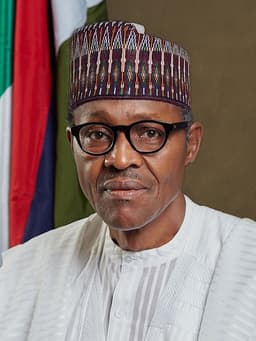
Muhammadu Buhari
General · Modern
51.5Total
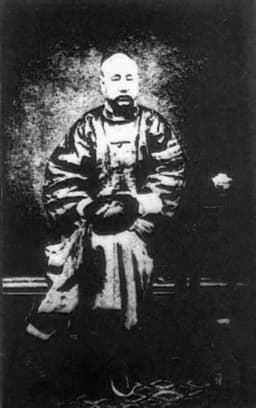
Sengge Rinchen
General · Modern
56.9Total
Basic Information
Born
1942
1811
Died
—
1865
Era
Modern
Modern
Nationality
Nigeria
China
Occupation
General
General
Civilization
Other
Eastern
Score Comparison
Military (10%)
22.6
70.0
Political (20%)
68.0
43.7
Influence (20%)
53.3
55.0
Legacy (20%)
43.3
54.0
Leadership (15%)
72.0
67.0
Strategy (15%)
41.0
60.7
TOTAL
51.5
56.9
Muhammadu Buhari — Complete Timeline
1983 AD
1983 Nigerian coup d'étatPolitical Action
Major General Muhammadu Buhari led a military coup that overthrew the civilian government of President Shehu Shagari. Buhari cited corruption and economic mismanagement as justifications, and he became the head of state.
CoupMilitary RuleCorruption
Impact: nationaldestructive
1984 AD
War Against Indiscipline (WAI)Reform◆ Major
Buhari launched the War Against Indiscipline, a campaign to enforce discipline and order in Nigerian society. It included harsh penalties for minor offenses, such as queue-jumping, and was criticized for human rights abuses.
DisciplineSocial PolicyHuman Rights
Impact: nationaldestructive
1985 AD
Overthrow by Ibrahim BabangidaPolitical Action◆ Major
Buhari was overthrown in a palace coup led by his Chief of Army Staff, Ibrahim Babangida. Babangida cited Buhari's authoritarian style and failure to address the economy as reasons for the coup.
CoupOverthrowBabangida
Impact: national
2015 AD
Anti-corruption campaignReform◆ Major
Buhari launched a high-profile anti-corruption campaign, targeting government officials and recovering stolen assets. The campaign was praised internationally but criticized for being selective and politically motivated.
Anti-CorruptionReformGovernance
Impact: nationalconstructive
Election as President of NigeriaPolitical Action
Buhari won the 2015 Nigerian presidential election, defeating incumbent Goodluck Jonathan. This was the first time an opposition candidate had defeated a sitting president in Nigeria's history, marking a democratic milestone.
ElectionDemocracyOpposition Victory
Impact: nationalprogressive
Sengge Rinchen — Complete Timeline
1859 AD
Battle of Dagu FortsWar◆ Major
Sengge Rinchen commanded Qing forces defending the Dagu Forts against a British and French naval attack. His forces repelled the assault, sinking several enemy ships and inflicting heavy casualties, a rare Qing victory in the Second Opium War.
Second Opium WarBattleVictory
Impact: regional
1860 AD
Battle of PalikaoWar◆ Major
Sengge Rinchen commanded Qing cavalry at the Battle of Palikao against Anglo-French forces. His forces were decisively defeated by superior firepower, leading to the fall of Beijing and the burning of the Old Summer Palace.
Second Opium WarBattleDefeat
Impact: regionaltragic
1863 AD
Suppression of the Nian RebellionWar◆ Major
Sengge Rinchen led Qing forces against the Nian rebels in northern China. He achieved several victories but was ultimately killed in battle against the Nian in 1865, marking a turning point in the rebellion.
Nian RebellionCampaignDeath
Impact: regionaltragic
Expert Analysis
Muhammadu Buhari vs Sengge Rinchen
# The General’s Two Lives: Sengge Rinchen and Muhammadu Buhari
In the summer of 1859, along the muddy banks of the Hai River near Tianjin, a Mongol prince named Sengge Rinchen watched British and French warships steam toward the Dagu Forts. Cannons roared, and his Qing defenders, fighting from crumbling earthworks, somehow drove the invaders back. It was a rare moment of triumph for a dynasty in decline. A century and a quarter later, in the tense hours of New Year’s Eve 1983, another general, Muhammadu Buhari, seized a radio station in Lagos and announced that Nigeria’s civilian government was finished. Both men were soldiers who became rulers; both believed they could save their nations through discipline and force. But their paths—and their legacies—diverged as sharply as the centuries they inhabited.
Origins
Sengge Rinchen was born in 1811 into the Mongol nobility of the Horqin Banner, a world of horsemen and hereditary loyalty to the Qing emperor. The Mongol steppe had long supplied the Manchu dynasty with its fiercest cavalry, and Sengge Rinchen grew up in a warrior tradition that valued honor, archery, and absolute obedience to the throne. By contrast, Muhammadu Buhari entered the world in 1942 in Daura, a small town in northern Nigeria, at the tail end of British colonial rule. His father was a village chief, and Buhari was raised as a Muslim in the Fulani tradition—a people whose own history of conquest and empire ran deep. But where Sengge Rinchen’s world was anchored in an ancient order, Buhari’s was one of change: independence, oil booms, and the fragile experiment of Nigerian democracy.
Rise to Power
Sengge Rinchen’s ascent was that of a loyal servant. He fought in the Opium Wars and against the Taiping Rebellion, proving himself a capable commander in the chaos that consumed mid-19th-century China. By 1859, he was the emperor’s man on the ground, entrusted with defending the approaches to Beijing. His great moment came at the Dagu Forts, where his forces repelled the Anglo-French fleet—a victory that earned him the title of prince and the gratitude of a desperate court. Buhari’s rise was faster and more brutal. In 1983, as a major general, he watched Nigeria’s civilian government collapse into corruption and economic mismanagement. With a small group of officers, he launched a coup, justifying it as a “surgical operation” to save the nation. He was 41 years old, and he now held absolute power.
Leadership and Governance
Both men governed through iron will, but their styles reflected their eras. Sengge Rinchen was a battlefield commander who saw governance as an extension of war: enforce order, crush rebellion, protect the throne. After Dagu, he turned his attention to the Nian Rebellion, a massive peasant uprising in the north. He pursued the rebels with relentless cavalry tactics, winning several engagements. Yet his methods were those of a general, not an administrator—he had no vision beyond military victory. Buhari, by contrast, attempted to reshape Nigerian society itself. His “War Against Indiscipline,” launched in 1984, was a campaign of public floggings, forced queues, and strict penalties for lateness. He jailed journalists, banned strikes, and tried to impose moral order through fear. Where Sengge Rinchen fought armies, Buhari fought habits—and his authoritarianism alienated even his allies.
Triumph and Tragedy
Sengge Rinchen’s triumph was fleeting. In 1860, the British and French returned to China with a larger force. At the Battle of Palikao, his Mongol cavalry charged into modern rifle fire and were slaughtered. The emperor fled Beijing, the Summer Palace was burned, and Sengge Rinchen’s reputation was shattered. He spent his remaining years hunting down Nian rebels, but in 1865, he was ambushed and killed in battle—a warrior’s death that capped a warrior’s life. Buhari’s tragedy was different. In 1985, just 20 months after taking power, he was overthrown by his own chief of army staff, Ibrahim Babangida, who cited Buhari’s “rigidity” and “lack of consultation.” Buhari was imprisoned for three years, then faded into obscurity—until he didn’t. In 2015, he did what no Nigerian general had done before: he ran for president as a democrat, and he won.
Character and Destiny
These two men were shaped by the same inner conviction: that strong leadership could redeem a failing state. Sengge Rinchen never doubted the Qing dynasty’s right to rule, nor his own duty to defend it. His character was fixed—brave, loyal, but unable to adapt. Buhari, on the other hand, lived two lives. The first was the stern general, intolerant of dissent. The second, after 30 years in the political wilderness, was the democratic candidate who campaigned on anti-corruption and won the first peaceful transfer of power in Nigerian history. In office, he launched a serious anti-corruption drive, recovering stolen assets and prosecuting officials. Yet his second term was marred by economic stagnation and security crises. The old rigidity never fully left him.
Legacy
Sengge Rinchen is remembered in China as a tragic hero of the Qing—a symbol of loyalty in an age of collapse. His scores reflect a middling military record (62.1) but higher leadership (72.0) and strategy (71.7), because he fought well against impossible odds. Buhari’s legacy is more contested. His military score (20.7) is low, because his coup was brief and unpopular. But his political score (61.0) and influence (70.3) are higher, thanks to his unlikely second act. Some Nigerians see him as a principled reformer; others, as a relic of authoritarianism. His total score (60.7) barely exceeds Sengge Rinchen’s (68.5), but the comparison is deceptive: Buhari lived to see his legacy evolve, while Sengge Rinchen’s ended with a sword in his hand.
Conclusion
Sengge Rinchen and Muhammadu Buhari were both men of the sword who tried to become men of the state. One failed because he could not adapt to a changing world; the other succeeded—partially—because he was given a second chance by democracy. Their stories remind us that generals often make poor peacetime rulers, but that history is not always finished with them. Sengge Rinchen died as he lived, charging into enemy fire. Buhari died in old age, a former president, his place in history still being debated. In the end, the difference between them is not just character or circumstance—it is the strange mercy of time.
Rankings
🥇
Sengge RinchenLeader
Mil: 70.0Pol: 43.7Inf: 55.0
56.9
🥈
Muhammadu Buhari
Mil: 22.6Pol: 68.0Inf: 53.3
51.5
+5.4 behind
How This Comparison Works
Algorithm
Each figure is scored on 6 dimensions (0—100 scale) based on structured historical data: Military (10%), Political (20%), Influence (20%), Legacy (20%), Leadership (15%), Strategy (15%). The weighted total produces the final ranking.
Data Sources
Scores are computed from structured sub-indicators in the database. Scale factors adjust for era (Ancient ×0.85, Modern ×1.0) and civilization size (Eastern ×1.05, Other ×0.80) to account for differences in population and military scale.
Maximum 3 Figures
Comparisons are limited to 2—3 figures to ensure readability and statistical meaningfulness.
Error Margins
±5 points per dimension — Sub-scores are derived from historical records with inherent uncertainty. Two figures within 5 points on a dimension should be considered roughly equivalent in that area.
Total Score Accuracy
±3 points overall — The weighted combination of 6 dimensions produces a total score with approximately ±3 points of uncertainty. Differences of less than 3 points are not statistically significant— the figures are effectively tied.
Known Limitations
- Historical records are incomplete and uneven across civilizations
- Figures from oral-tradition societies may be underrepresented
- Occupation labels can misclassify multi-role figures
- Scores measure capability and impact, not moral character
- Quantitative scoring is a comparison tool, not absolute truth
Capability Radar
Military (10%) — Battles & Warfare
Battles
10
75
Win Rate
10
60
Expansion
5
20
Political (20%) — Governance & Reform
Reform
30
20
Diplomacy
25
50
Economy
20
20
Influence (20%) — Cultural & Global Reach
Cultural
25
40
Global
25
35
Legacy (20%) — Historical Impact
Historical
30
55
Longevity
20
30
Leadership (15%) — Power & Stability
Tenure
45
40
Stability
15
30
Strategy (15%) — Tactics & Innovation
Strategy
15
70
Tactics
15
80
Reform
20
30
Similar Comparisons
Comments & Discussion
数据刽子手6/16/2026
作为数据怀疑论者,我注意到对比把布哈里的腐败指数和僧格林沁的伤亡数字放在一起太荒谬了。尼日利亚1983年通胀率230%是经济崩溃的结果,不是布哈里个人的错;而僧格林沁1865年剿捻时让清军损失数万骑兵,这场失败才是他无能的证明。数据不说谎,但你们选择性地忽略布哈里治理下的石油收入增长17%这一事实。比较历史人物,应该用统一标准,而不是双标。
学究考据党6/16/2026
从古典学角度,僧格林沁的"忠君"思想实际是满蒙联姻的产物。他是成吉思汗黄金家族后裔,却效忠满洲皇帝,这种矛盾在元清两代并非罕见。布哈里则是殖民教育下诞生的西式军官,他的1983政变宣言引用了《可兰经》和沙里亚法,却用英语广播。这种文化混血比僧格林沁更现代:一个试图用蒙古弓对抗工业革命,另一个用石油美元和伊斯兰法治理现代国家——都是时代错位的悲剧英雄。
烟雨沧桑客6/16/2026
历史爱好者视角:两人都面临"夕阳帝国"的困境。僧格林沁1860年惨败给英法联军后,按传统蒙古规矩该自刎谢罪,但咸丰帝只降了他四级;布哈里1985年被推翻后流放,1999年又卷土重来。这种"不死"的韧性来自不同的文化逻辑:僧格林沁的满洲主子需要他象征蒙满团结,布哈里的北方政客需要他平衡
Chronicler63526/16/2026
Revisionist take: Buhari was smarter than Sengge because he adapted. Sengge clung to Mongol cavalry tactics long after rifles made them obsolete—his 1865 death in Shandong proved it. Buhari, though flawed, created the EFCC anti-corruption agency in 2003, a legacy that outlasts his coups. Sengge's only legacy is a Qing defeat memorialized in Chinese textbooks. I'd rather have a corrupt general who leaves institutions than a brave one who leaves only ruins. Buhari built something; Sengge just burn
BoldScribe976/16/2026
As a military historian, I see Buhari as a cautious technocrat who won through logistics, while Sengge Rinchen was a true cavalry genius. Sengge's 1859 victory at Dagu Forts used Mongol horse archers to outflank British naval infantry—a feat of combined arms that would make Sun Tzu proud. Buhari's coups were bloodless, his wars against Boko Haram indecisive. Give me a Mongol prince who charges cannons over a general who sits in barracks any day. Sengge understood that victory requires risk; Buha